What sensory adaptation allows the Woma Python to hunt small, fast-moving terrestrial prey?
Answer
Acute heat-sensing pits along its lips
Successfully capturing small, agile prey, especially in or around dark burrows, requires specialized sensory input beyond standard vision. The Woma Python has evolved acute heat-sensing pits located along its lips. These pits function as infrared detectors, allowing the snake to perceive the thermal signature of warm-blooded prey, such as rodents and rabbits, even in low-light conditions or underground. This highly refined sensory mechanism is crucial for the python’s ambush and constrict style of hunting centered around its burrow niche.
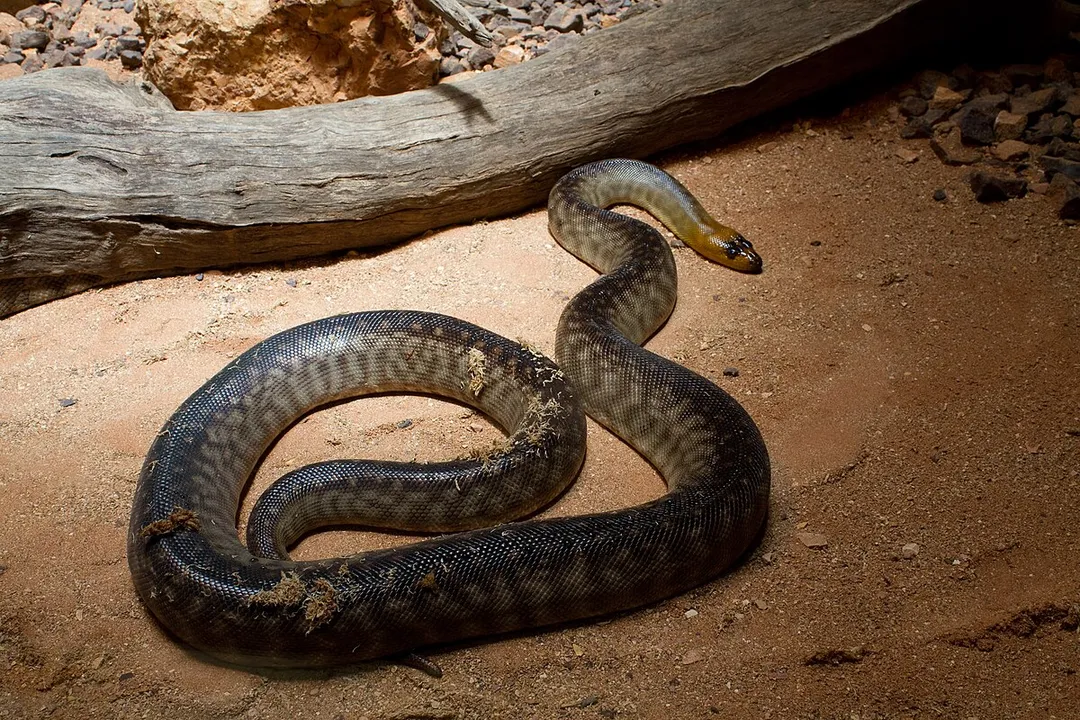
#Videos
AKA Ramsay's or Sand Python. Woma Python Documentary
Related Questions
What geographic distinction sets the Woma Python apart from the Carpet Python?What ancestral reptilian feature is retained by the Woma Python, connecting it to ancient lineages?Which habitat does the Black-headed Python favor over the Woma Python?What is the primary defense strategy of *Aspidites ramsayi* against environmental extremes?How does the Woma Python's head structure aid its subterranean existence?What type of prey does the Woma Python primarily focus on in its diet?What sensory adaptation allows the Woma Python to hunt small, fast-moving terrestrial prey?What geological process drove the divergence between the Woma and Black-headed Python?What key geological factor disproportionately determines the carrying capacity for Womas?Which introduced species fundamentally alter the predator-prey dynamics for the Woma Python?