Did Velociraptors live in Africa?
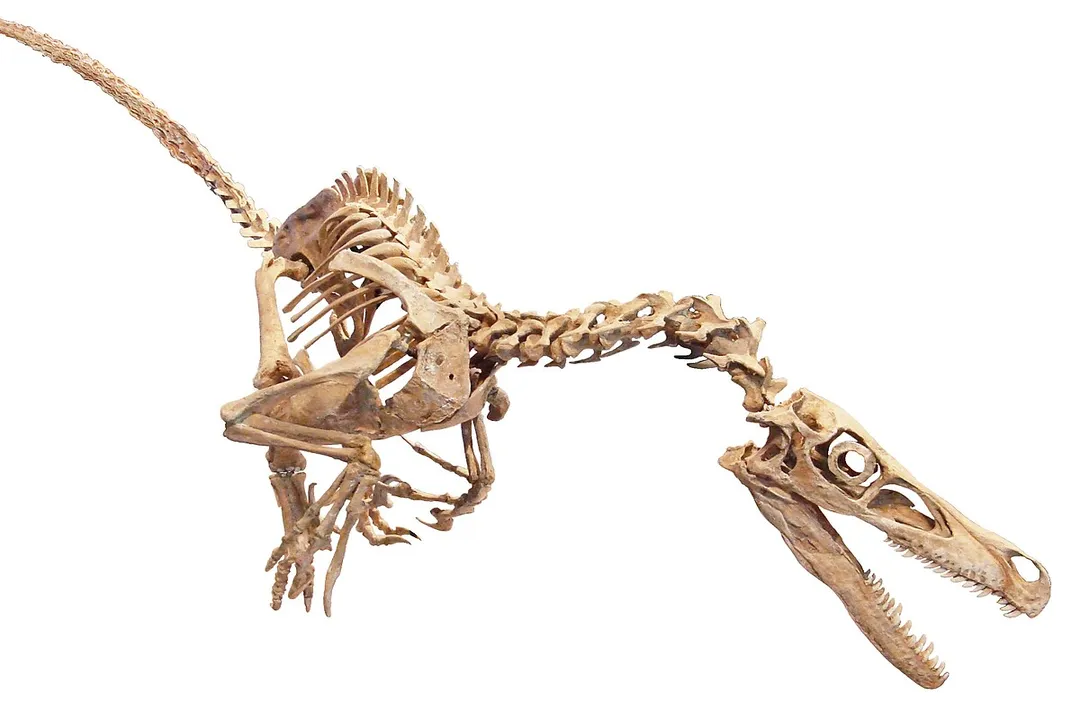
The direct fossil evidence for the famous Velociraptor points overwhelmingly eastward, far from the sands of the African continent. When paleontologists speak of Velociraptor, they are invoking a creature whose entire known fossil record is tightly bound to the Late Cretaceous deposits of Central and Eastern Asia. [1][4] This dinosaur, meaning "swift thief," terrorized the ancient landscape of what is now Mongolia and China, living between approximately 75 and 71 million years ago. [1][3]
To answer the question of its presence in Africa, we must first establish its true home. The type species, Velociraptor mongoliensis, was first described from fossils unearthed in the Djadochta Formation of the Mongolian Gobi Desert. [1][3] Subsequent discoveries, including a second recognized species, V. osmolskae, were recovered from the Bayan Mandahu Formation in northern China. [1] These environments were characterized by arid settings, dominated by wind-blown sands and dunes, suggesting a creature adapted to harsh, semi-arid climates. [1][8]
# Asia's Swift Predator
The Velociraptor that paleontologists study is a far cry from its cinematic counterpart. In reality, this dromaeosaur was surprisingly petite, often compared to a modern wild turkey in size. [1][5] Adults typically measured between 4.9 to 6.8 feet in length and weighed in the range of 31 to 43 pounds. [1][3] This small stature, combined with a long, low skull distinct from its cousins, suggests a lifestyle revolving around smaller, fast-moving prey in the dunes of Asia. [1]
Fossil evidence offers fascinating glimpses into its predatory adaptations. Its most famous weapon was the enlarged, sickle-shaped claw on the second toe of each foot. [1][4] Experiments suggest this claw was designed not for slashing open large bellies, but for piercing the skin and gripping flesh to subdue struggling quarry. [1] The famous "Fighting Dinosaurs" specimen, preserving a Velociraptor locked in combat with a Protoceratops, shows the raptor’s claw embedded in the throat of its adversary, supporting the idea of using the claw to pin or stab vital areas. [1][3][8] Furthermore, studies of its skull anatomy suggest an acute sense of balance and sensitivity to a wide range of sounds, marking it as an active hunter, though one opportunistic enough to scavenge carrion when necessary. [1] Many scientists also agree that Velociraptor was likely covered in feathers, indicated by quill knobs found on a forearm specimen. [1]
# Continental Cousins
The reason for the confusion about Velociraptor's geographic range often stems from its family tree. Velociraptor belongs to the Dromaeosauridae, a group of theropods that were present across the globe during the Cretaceous Period. [5][7] This distribution is key to understanding why the answer for Africa is generally "no" for the genus itself, even if its relatives were present elsewhere.
The dinosaur most often mistaken for Velociraptor in popular culture, the large, human-sized predator, is actually Deinonychus. [1][5] Deinonychus roamed North America during the Early Cretaceous, evolving millions of years before Velociraptor. [1] It was nearly twice the length of its Asian relative. [1] Similarly, the massive Utahraptor, which possessed the defining dromaeosaur sickle claw, was also native to North America. [5][8] The presence of these larger, distinct genera in the Americas highlights a fascinating pattern in dinosaur evolution: similar predatory niches were filled by different, geographically separated species within the same family. [1][5] This phenomenon, where distinct but related species evolve similar traits in isolation, is a major theme in Late Cretaceous paleobiogeography. If we were to overlay a map of dromaeosaur finds across the continents, we would see dense clusters in Asia and North America, but not the specific signature of Velociraptor in Africa. [1][5]
# The African Dinosaurian Context
When examining the fossil record of Africa during the Late Cretaceous, when Velociraptor was thriving in Asia, we find a rich but distinct assemblage of giant predators and herbivores, but a conspicuous absence of the Velociraptor genus itself. [4][7] Theropods, the larger group to which raptors belong, did inhabit the African continent, with fossils found across the landmasses during the Mesozoic Era. [7] However, the specific Dromaeosaurid group represented by Velociraptor seems to have been absent from the Southern African region specifically. [5]
The fauna of Late Cretaceous Africa was dominated by massive titanosaurs and enormous carnivorous theropods like Spinosaurus and Carcharodontosaurus in earlier periods, with other large hunters dominating later on. [7] While the broader Dromaeosauridae family appeared globally, the specific isolation of Velociraptor to Asia suggests that during the time this particular genus existed, there was either no viable connection or a competitive exclusion preventing its establishment in the African ecosystems. [1][5] It is entirely possible that specialized, smaller dromaeosaurs did evolve in Africa, perhaps similar to V. osmolskae's skull morphology adaptation for selective feeding, but they would have carried different generic names reflecting their separate evolutionary paths from the Asian Velociraptor lineage. [1] The absence of Velociraptor fossils south of Eurasia is a geological reality, even if the broader family tree suggests its relatives were out there somewhere else. [5]
# Size and Misconception
The enduring popular image of the Velociraptor as a cunning, six-foot-tall hunter is perhaps the single greatest reason this question arises, leading people to expect it to have been globally distributed like other "famous" dinosaurs. [1][5][8] The reason for this exaggerated size is directly tied to the North American Deinonychus. [1][5] Michael Crichton consulted with Deinonychus discoverer John Ostrom while writing Jurassic Park, but chose the more "dramatic" name Velociraptor for his novel, applying Deinonychus's proportions to the name. [1][7]
This confusion between size and name can obscure the true ecological role of the real animal. A turkey-sized predator, even one armed with a fearsome sickle claw, is not going to be tackling the massive herbivores of the African or North American landscape. Instead, the real Velociraptor was likely targeting creatures similar in size to its contemporary, Protoceratops, or smaller animals like lizards and mammals, relying on agility and its specialized claws for defense and takedowns. [1][4][8]
When considering the sheer scale of predatory dinosaurs, it is easy to mentally group all "raptors" together as apex predators of the same magnitude. However, recognizing the specific, smaller scale of Velociraptor helps us appreciate the incredible diversity within the dromaeosaur family. For example, Utahraptor dwarfed Velociraptor, leading some to joke that Velociraptor was the "small one" of the family, a term that is only meaningful when compared to its much larger cousins. [5] This distinction is crucial because the hunting strategies and preferred prey of a 40-pound carnivore are vastly different from those of a 200-pound one. [1][8]
# Geographic Isolation Clues
The fact that Velociraptor is confined to the Gobi region while its close relative Deinonychus is firmly rooted in North America presents an interesting puzzle regarding continental drift and migration paths during the Late Cretaceous. [1] Although the Dromaeosauridae family achieved a wide reach, the specific members we identify—like Velociraptor—are tied to specific landmasses. [5]
This geographic segregation suggests that during the Late Cretaceous, the ancient connection routes that allowed Eurasian fauna to freely move into Africa may have been restricted or unavailable for this particular group of predators. Had Velociraptor managed to disperse south, we would likely expect to find its specific skeletal characteristics mingled with the African fauna of that time. Its absence acts as a subtle but important marker of the prevailing paleogeography—the configuration of continents and the ecological barriers between them—at the close of the Mesozoic Era. [1][5] It reinforces a key lesson in paleontology: just because a family of animals is successful globally does not mean every genus within that family will colonize every available habitat. [5]
In summary, while the larger, feathered dromaeosaur family certainly had a diverse presence across several continents, the specific genus Velociraptor, known from the fossil beds of Mongolia and China, never made its home in Africa. [1][4] The swift thief remained an exclusively Asian resident of the Late Cretaceous world. [5]
#Videos
There Are So Many Velociraptors In Mongolia! Meet Another!
Related Questions
#Citations
Velociraptor - Wikipedia
Velociraptor | Prehistoric Earth: A Natural History Wiki - Fandom
Velociraptor | Description, Size, Diet, & Facts - Britannica
There Are So Many Velociraptors In Mongolia! Meet Another!
Velociraptor Wasn't the Big, Scary Monster From the Movies
Raptors - Paleo Joe
r/Dinosaurs on Reddit: Here is a helpful little guide I made for ...
Velociraptor - Q-files - Search • Read • Discover