Can frogs purr?
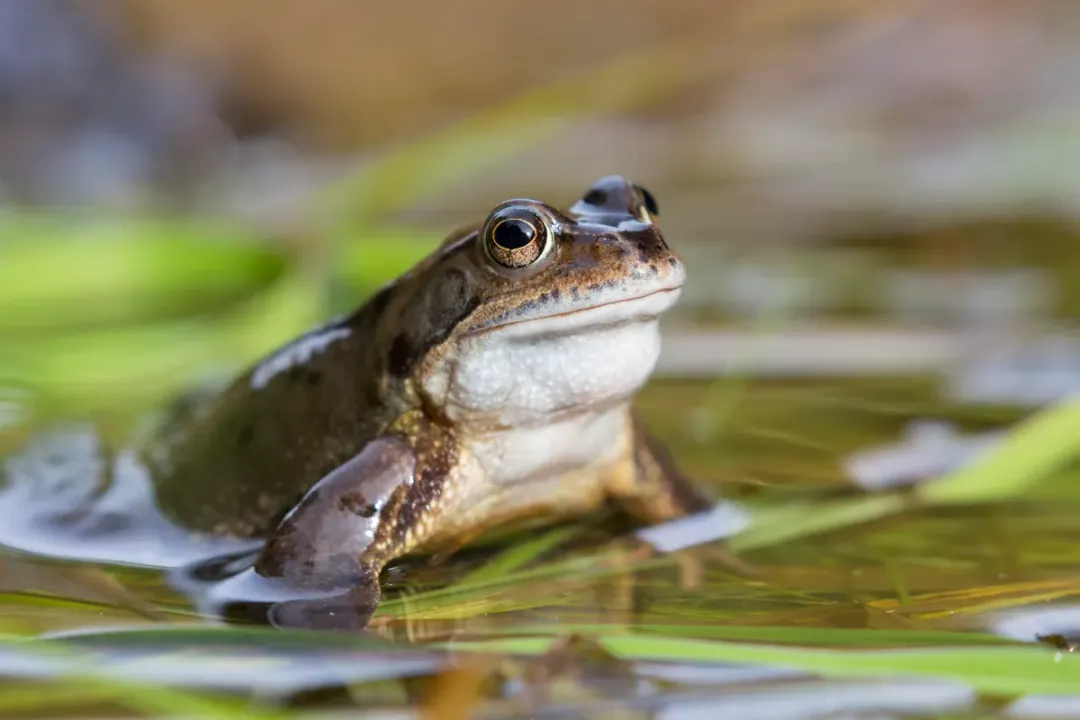
The characteristic ribbit so often associated with amphibians in cartoons is, for many species, entirely inaccurate. When listening closely to the chorus near a pond in the early season, one might encounter a sound far less abrupt and more resonant—a genuine purr. This phenomenon is particularly noted in relation to the common frog (Rana temporaria), whose music during the breeding period has been described as a "soft, continuous purr".
# Chorus Texture
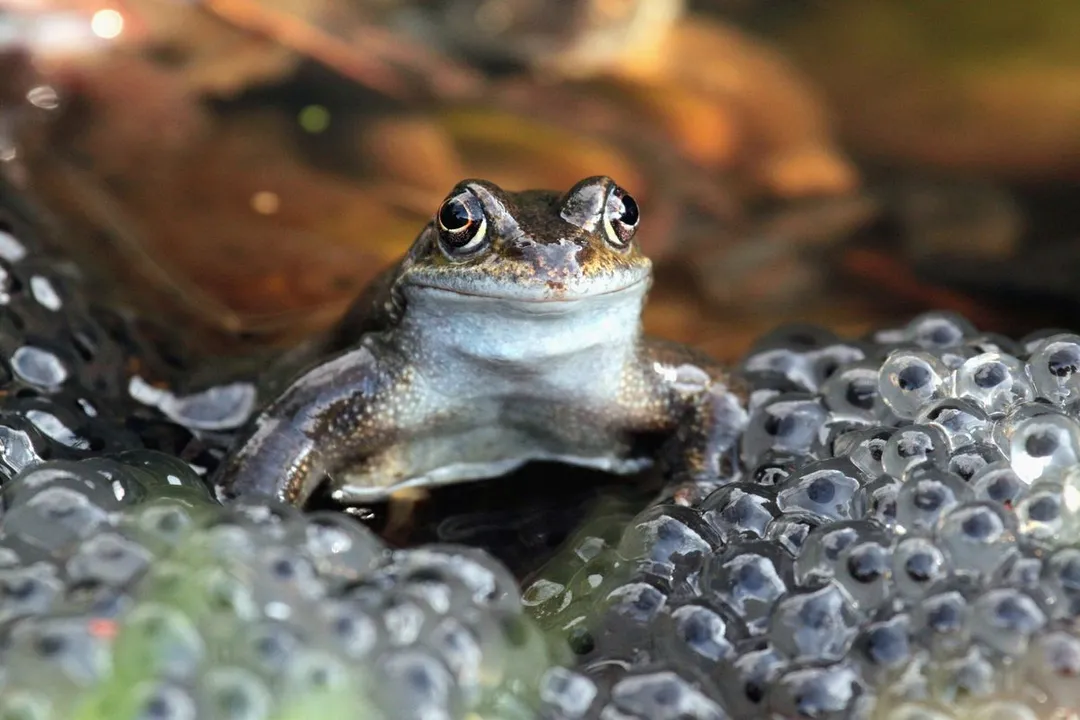
The sound produced by common frogs is a fundamental distinction from the clipped, single-note utterances often imagined. The Guardian observer noted that this chorus is definitely not a "ribittt". Instead, it carries an extraordinary impact despite its quietness. For male common frogs, this low purring sound is specifically employed during the breeding season to draw in females, who remain largely silent during this time.
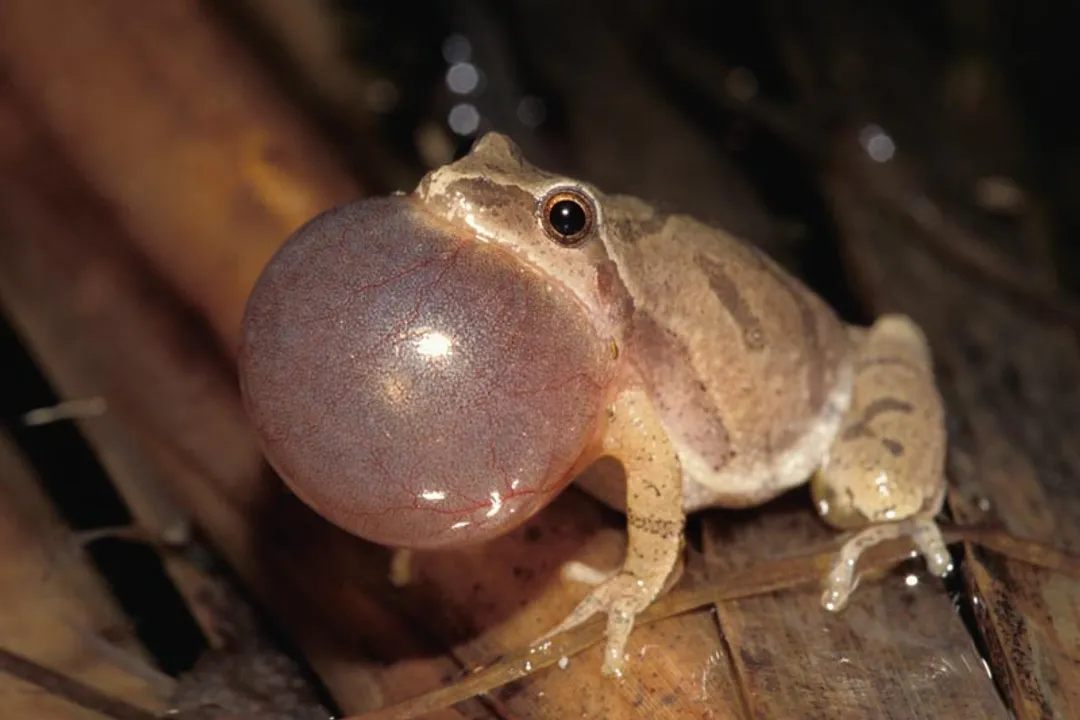
The vocal output of frogs, whether a croak, trill, or purr, relies on a relatively standard anatomical mechanism. Air is channeled from the lungs through the larynx, where the vocal cords vibrate to create the initial sound waves. This sound is then drastically amplified by one or more vocal sacs that inflate, projecting the sound much farther than the frog could manage otherwise. In the case of the common frog's purr, observers have noted the male's voluminous white throat ballooning out to twice the width of its head at the peak of the vocalization, resembling an almost luminous bubble before deflating.
When a chorus of these frogs is in full swing, the cumulative effect has been compared to something quite grand, perhaps like the long-distance rumbling infrasound made by elephants, or as if the very "sap and juices of an awakening Earth could find a way to express their seasonal uprising". This depth of sound suggests a low-frequency component that can sometimes be felt as much as heard. One observer even remarked that the frog chorus sounded "like a Harley Davison rally" due to its intensity, despite the individual notes being soft.
# Vocal Similarities
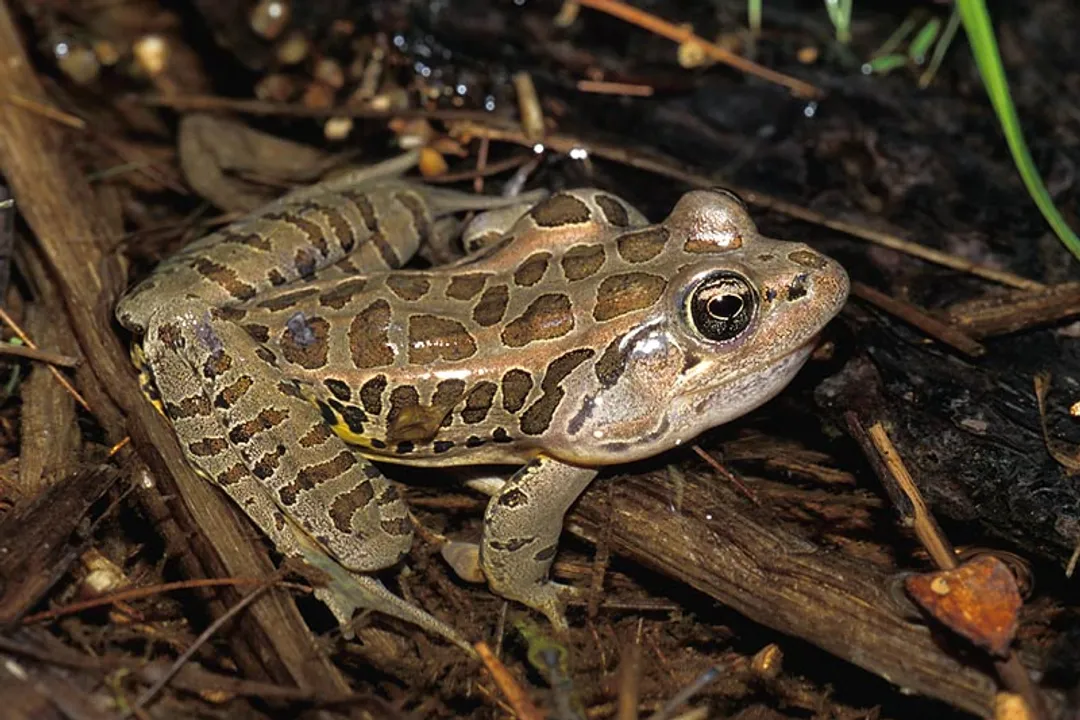
While the common frog's vocalization is described as a purr, it is worth noting that other amphibians produce sounds that verge on the textural description of a purr or a low rumble, though their biological context may differ. The Pickerel Frog (Rana palustris) produces a call that has been characterized both as a "soft grating snore" and a "fast, nasal purr". This is different from the American Bullfrog's signature sound, which is a resonant bass note often transliterated as “jug-o-rum”.
It is important to separate these reproductive or territorial calls from distress sounds. When frogs are threatened, they may scream, though this is uncommon in many species, reserved for certain types like the Budgett's frog, or produced as a last resort by others when in fear or pain. Even the tactile experience of one creature being touched can elicit a loud vocalization; a report of a toad "purring like a cat" while being petted was interpreted by others in the community not as contentment, but as an instinctive noise of distress or an attempt to ward off a perceived threat. Furthermore, handling amphibians is generally discouraged, as the oils on human skin can harm their sensitive skin.

# Acoustic Differentiation
The world of frog calls is rich with distinct acoustic signatures, which helps differentiate species, even when they are calling in the same pond. While the common frog offers a sustained purr, the Spring Peeper (Pseudacris crucifer) provides a high-pitched, piercing whistle or peep as its primary advertisement call. When Spring Peepers gather, their combined sound can be deafening. If a peeper becomes aggressive toward a rival, it switches to a "stuttering trill, reminiscent of the calls of chorus frogs".
The American Toad offers another contrast with its long, musical trill, which can last anywhere from five to thirty seconds, with individuals in a chorus calling at slightly different pitches.
| Species | Primary Call Description | Purpose/Context |
|---|---|---|
| Common Frog | Soft, continuous purr; subterranean rumble | Male attraction call during breeding season |
| Spring Peeper | Nearly pure-tone whistle or peep | Advertisement call; aggressive encounters produce a trill |
| Pickerel Frog | Soft grating snore; fast, nasal purr | Advertisement call |
| American Toad | High-pitched trill, often 6–12+ seconds long | Advertisement call |
The very nature of the frog’s purr contrasts with the biological mechanism of feline purring, which involves reciprocal airflow and vibration within the larynx while both inhaling and exhaling. The amphibian sound, while texturally similar, is a product of forced exhalation through the vocal cords, leading to a prolonged, rumbling vibration rather than a true, dual-phase purr.
# Listening for the Rumbles
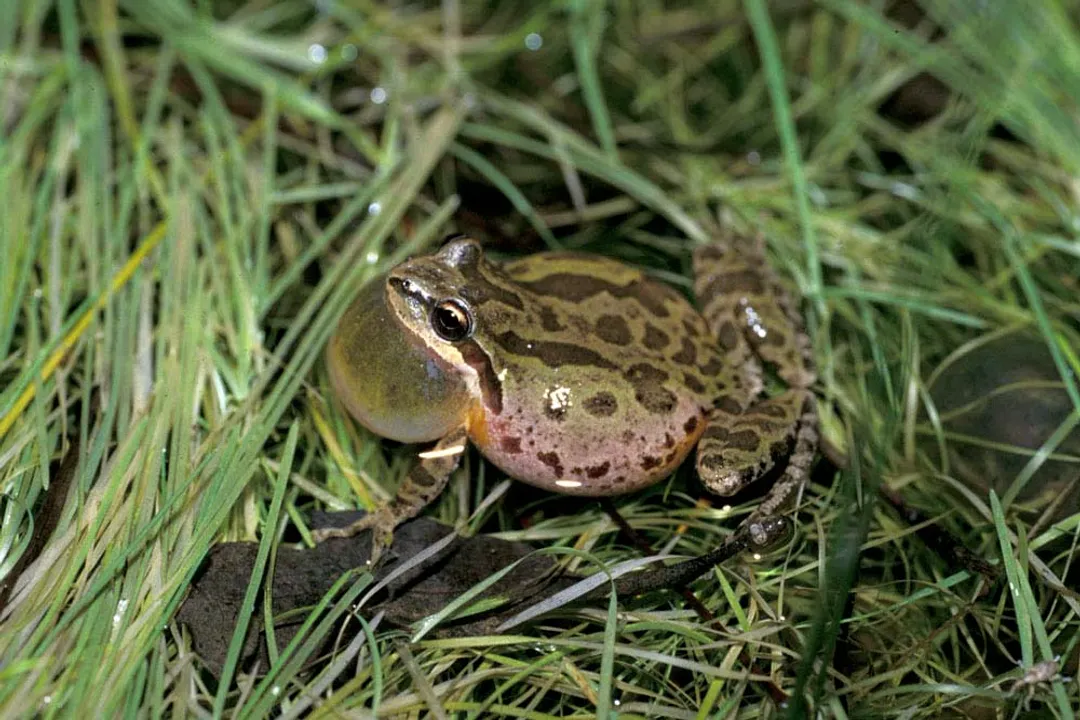
Discovering these subtle sounds requires attention to timing and environment. The key species associated with the purr—the common frog—is most active in this behavior during its breeding season. For observers in the northern hemisphere, this often means the very beginning of spring, sometimes as early as November in milder southern locales like parts of Cornwall, though later is more typical for many regions.
If you are keen on identifying this subterranean choir, understanding where and when to listen can enhance your success. The breeding choruses, especially those featuring the common frog, are often nocturnal affairs. When environmental conditions are right for mass breeding—damp, relatively still evenings—you increase your chances of hearing the collective, rumbling effect. Conversely, sounds that involve rapid pulsing, like the Spring Peeper's whistle, might be easier to pick out individually during periods of slightly higher temperature swings or when wind noise is low, as these sharp calls cut through the air differently than a low-frequency rumble. The collective power of a large chorus, whether described as a purr or a rumble, signifies the Earth stirring, marking a change in the season that is more profound than a simple croak suggests. Pay attention not just to what you hear, but how long the sound sustains itself; duration is often the telltale sign separating a short trill from a protracted purr or snore.
#Videos
Frogs laying frogspawn and purring! - YouTube
Related Questions
#Citations
Frogs laying frogspawn and purring! - YouTube
Country diary: This frog chorus is a purr, not a ribbit - The Guardian
Tonight I was petting a toad and it purred like a cat. The little buddy ...
Calls of Frogs and Toads of the Northeast | Music of Nature
Common frog guide: how to identify, what they eat, and how to help ...
The songs of frogs and toads - Mike Benard
Why Do Frogs Scream? - A-Z Animals