Are scissor-tailed flycatchers aggressive?
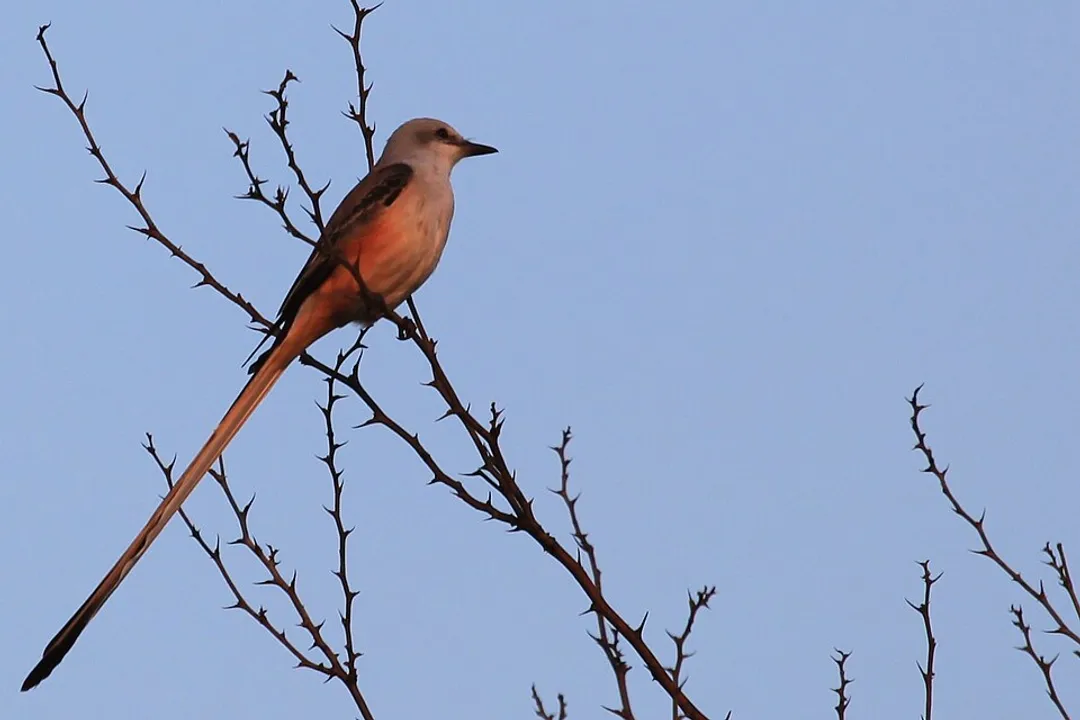
The scissor-tailed flycatcher, with its dramatic, deeply forked tail streaming behind it like a ribbon, commands attention across the open landscapes of the central and southern United States. [1][4] These birds are instantly recognizable, especially the males whose elongated outer tail feathers can sometimes exceed the length of their body. [4] When observing such an active and striking species, it is natural to wonder about its temperament, particularly whether its bold movements and aerial pursuits translate into aggressive behavior toward other creatures, including humans. While they are not typically considered malicious, their dedication to protecting their nesting sites can certainly be mistaken for outright belligerence. [2]
# Tail Length
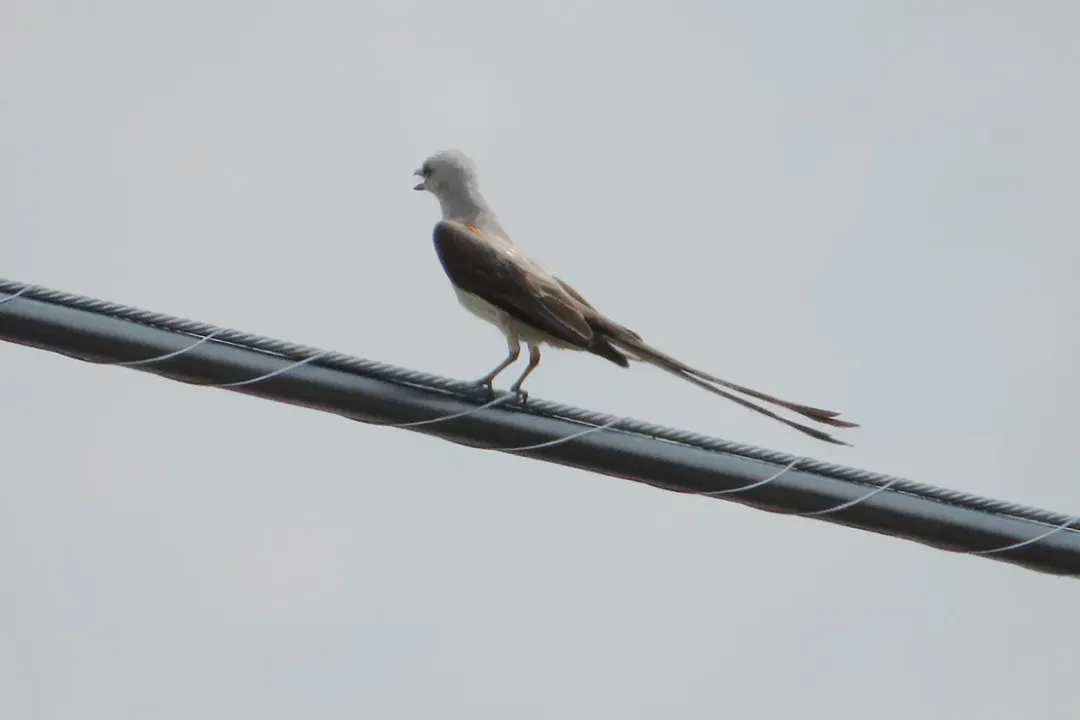
The silhouette of the scissor-tailed flycatcher is unforgettable. The tail is the defining feature, giving the bird its common name. [4] In breeding males, this appendage is significantly longer than in females or non-breeding individuals. [4] They use this impressive tail in aerial displays, often seen making graceful, looping flights while foraging for insects. [1] Their appearance is often described as elegant, with pale pink or salmon-colored washes on the underwing coverts and lower flanks visible when they fly, contrasting with their ash-gray head, blackish back, and pale breast. [1][7] Adults possess a dark gray to black back, light breast, and a dusky head, creating a sharp, clean look against the bright sky. [5]
# Insect Catching
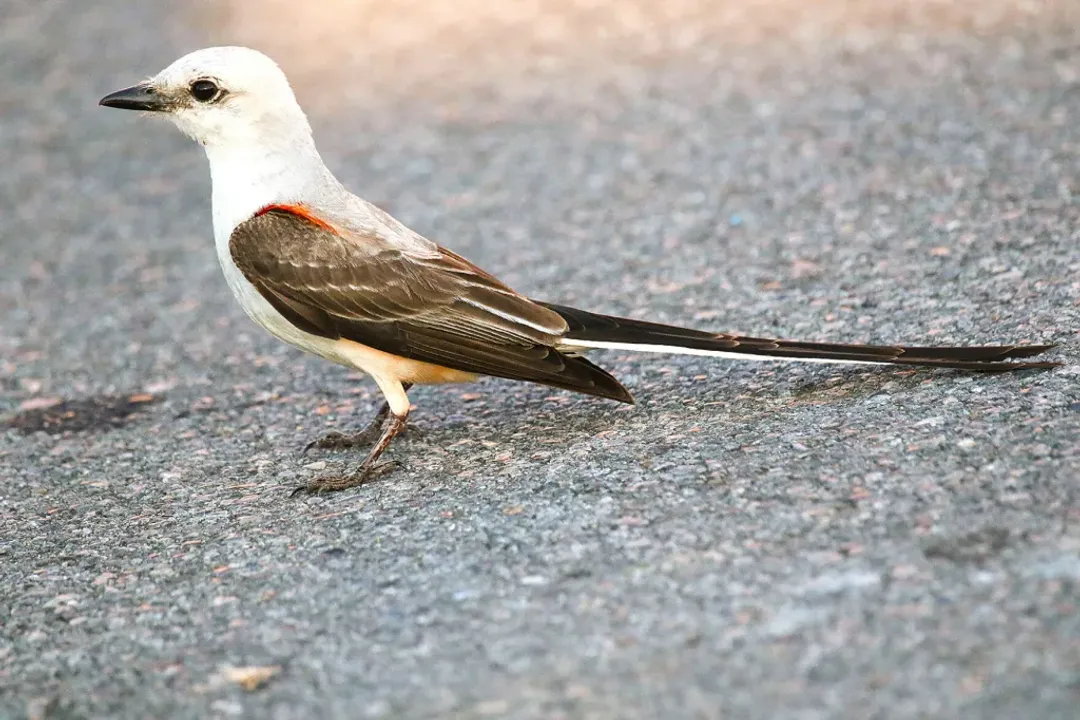
Like other members of the flycatcher family, their primary diet consists of insects caught mid-air. [1][5] They are adept aerialists, snatching beetles, grasshoppers, dragonflies, and other invertebrates right out of the atmosphere. [5] This constant, swift pursuit of prey involves rapid, acrobatic maneuvers—a necessary part of their survival strategy for securing food. [1] They often perch conspicuously atop isolated structures like wires, fences, or dead trees, waiting for prey to become visible before darting out to capture it. [1][5] This habit of positioning themselves prominently might place them in closer proximity to human activity than shyer species, increasing the chances of an observer witnessing their more defensive actions.
# Nest Defense
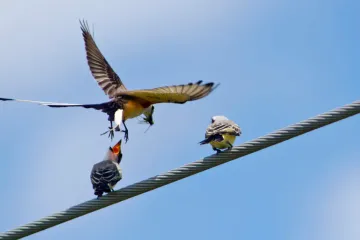
The perception of aggression stems almost entirely from their fierce protectiveness during the breeding season. [2] Scissor-tailed flycatchers establish territories and will vigorously defend the area surrounding their nests against any perceived threat, whether that threat is a larger bird, a mammalian predator, or an inquisitive human. [5][2] One common report from wildlife photographers details a bird that showed no fear, aggressively swooping at the photographer to defend its young. [2] This is not generalized aggression; it is targeted, focused defense of the nest, eggs, or chicks. [5] They will actively chase away intruders, employing loud calls and repeated dives. [2] When viewing a bird engage in this behavior, one must appreciate that the intensity of the display is directly proportional to the perceived danger to its immediate offspring, rather than an indicator of the bird’s baseline disposition toward non-threats. It is an act of parental necessity, not random hostility.
# Territory Needs
Their habitat preference further dictates when and where these defensive behaviors are most likely to occur. They favor open country, pastures, scattered trees, and areas with low vegetation, making them common sights in ranchlands and fields across their range. [1][6] During the non-breeding season, they tend to gather in larger, more social flocks, often roosting together in substantial numbers. [4] In these communal settings, the competitive edge often dulls into coexistence. However, upon arriving at northern breeding grounds—which stretch from the southern Plains states northward [4]—the dynamic shifts. Pair bonds solidify, and the focus turns inward to securing a safe spot to raise young. [5] This shift in focus is what brings the bird’s assertive side to the forefront. If you happen to be near a nesting site, even simply walking by might trigger a dramatic dive-bombing sequence aimed at convincing you to leave the vicinity. [2]
The timing of nesting is also noteworthy. In many parts of their range, they are summer residents, arriving in the spring and departing by late summer or early fall. [9] This means the period of intense territorial defense is relatively brief, concentrated between late April and perhaps early July, depending on latitude and the specific nesting cycle. [5][9] If you are birdwatching in these open areas outside of that window, you are far more likely to observe their relatively peaceful, insect-gathering habits. [4]
# Observing Caution
It is insightful to compare the scissor-tailed flycatcher’s defense tactics to those of other, more stereotypically aggressive songbirds, such as Blue Jays or Northern Mockingbirds, which also engage in harassment of predators near nests. [5] The flycatcher’s advantage lies almost entirely in its aerial mastery and long tail providing dramatic visual effects during pursuit. While a flycatcher is unlikely to inflict physical harm, the sheer speed and boldness of its aerial attack can be startling to an unaware person. [2]
For those interested in observing or photographing these birds during their nesting phase, keeping a respectful distance becomes a practical consideration that benefits both parties. If a bird begins repeated low passes or vocalizations directed specifically at you, it is a clear signal to slowly back away from that immediate area. [2] A successful approach, in this context, is one that results in an observation without causing the parent bird to expend unnecessary energy on a perceived threat, thereby conserving its resources for feeding the young. When they are perched, they are often quite placid, allowing for good views, but the moment you approach what they deem too close to the nest structure—often an open fork in a tree or a post—the aerial acrobatics begin. [5] Recognizing this shift from passive perching to active defense is key to appreciating their behavior without provoking conflict.
# Status Trends
While their behavior is localized and tied to reproduction, it is important to consider the species' overall context. The scissor-tailed flycatcher is currently listed as a species of low concern globally, but its populations have shown a decline across much of its range in recent decades. [6] This decline is largely attributed to habitat loss—specifically the reduction of the open rangelands and scattered perches they require for foraging and nesting. [6] In areas where they are still common, like certain parts of Texas or Oklahoma, encounters might be frequent, leading to more opportunities to witness their defensive posturing. [4] Conversely, in regions experiencing heavy development or intensive agriculture that eliminates suitable perching sites, sightings become rarer, and thus, interactions, aggressive or otherwise, decrease simply due to absence. [6] Understanding their habitat needs adds a layer to understanding their interactions; they are birds of open spaces, and our encroachment into those spaces is what forces the close-quarters encounters that reveal their parental ferocity.
Related Questions
#Citations
Scissor-tailed Flycatcher - | Outdoor Alabama
Scissor Tailed Flycatcher Fearlessly defending its territory - Reddit
Scissor-tailed flycatcher aggressive bird behavior - Facebook
Scissor-tailed flycatcher - Wikipedia
Scissor-tailed Flycatcher - All About Birds
State of the Species: Scissor-tailed Flycatcher (Tyrannus forficatus)
Scissor-Tailed Flycatcher - Facts, Diet, Habitat & Pictures ... - Animalia
Scissor-tailed flycatcher's tale takes a twist | Kingsport Times News
Scissor-tailed flycatchers making Jonesborough a summer home