What does a scissor-tailed flycatcher eat?
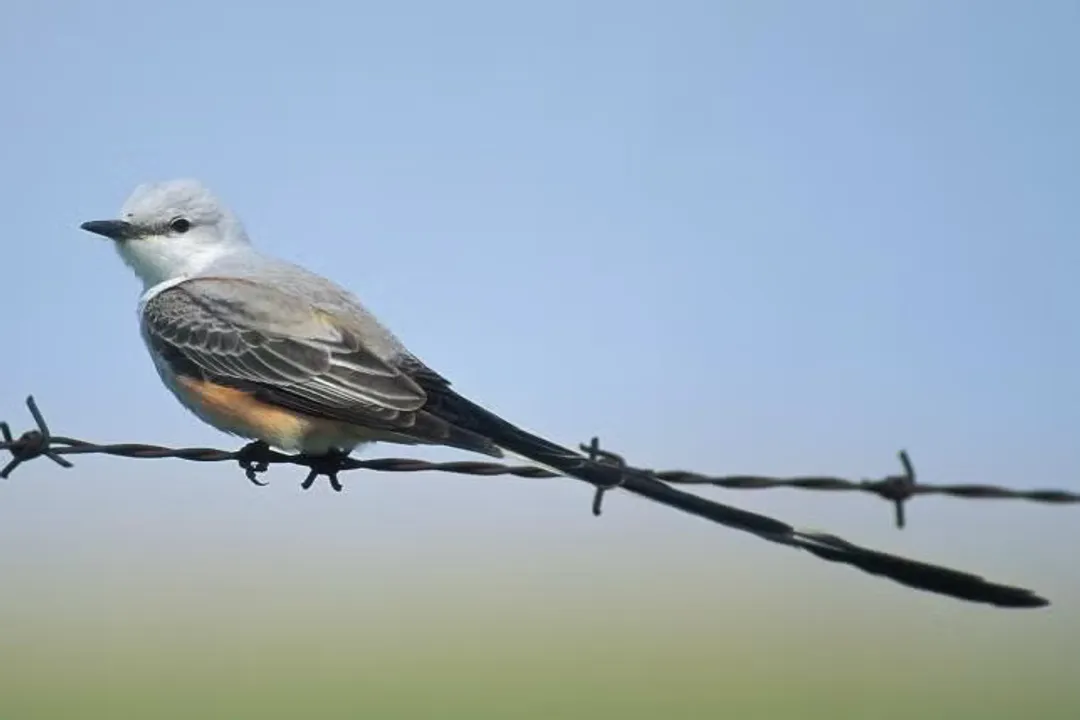
The Scissor-tailed Flycatcher, instantly recognizable by its spectacular, elongated tail, is a creature whose life revolves around the aerial pursuit of prey. As a member of the Tyrannus genus, commonly known as kingbirds, its primary energy source is derived from the animal kingdom, classifying it fundamentally as an insectivore and a carnivore. The vast majority of its diet, particularly during the active breeding season across the south-central United States, consists of insects caught on the wing.
# Primary Insect Targets
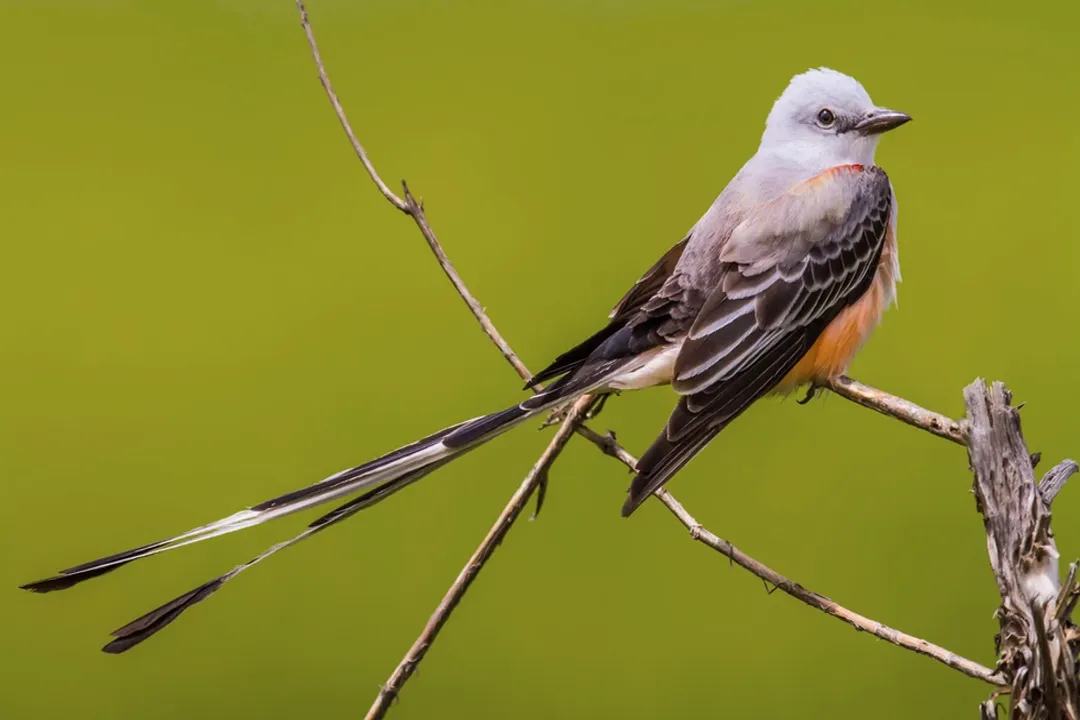
The staple diet for the Scissor-tailed Flycatcher centers around large, conspicuous insects prevalent in the open grassland and savanna habitats they favor during the summer months. The most frequently cited and important food items are large arthropods such as grasshoppers, crickets, and beetles. In certain areas, such as Oklahoma, this reliance on grasshoppers is particularly pronounced, with these insects sometimes accounting for over half—more than 50 percent—of their entire diet during that period.
Beyond these robust ground-dwelling insects, their aerial pursuits capture a wider variety of flying bugs. Sources confirm their consumption of creatures like robber-flies and dragonflies, as well as bees and wasps. The list of captured invertebrates further includes spiders, true bugs, caterpillars, and moths. This extensive insectivorous diet makes the Scissor-tailed Flycatcher a welcome visitor around agricultural fields, as they naturally help to control populations of insects that can harm crops.
# The Art of the Hunt
Like all birds in the flycatcher family, the Scissor-tailed Flycatcher is a master of the "perch-and-sally" technique. They select an exposed vantage point—often a fence post, utility wire, or the top of a scattered tree branch—and wait patiently for an insect to pass by. When a target is sighted, they explode from the perch in a swift, often straight-line flight, snatching the prey item in mid-air before returning to their original lookout. This hunting style requires significant maneuverability, which their long, forked tail aids when flaring wide during mid-air adjustments.
Foraging activity generally occurs in the air between ground level and about 30 feet up, though they may occasionally descend to glean insects from low vegetation or the ground itself. When they return to the perch, the fate of the prey is determined by its size. Smaller items are often swallowed whole during the flight back to the perch. However, for larger, tougher insects like the grasshoppers that dominate their menu, the bird will typically employ a forceful strategy: it beats the prey item repeatedly against the perch before consuming it. This action is likely necessary to subdue or break up the hard exoskeletons of their larger insect meals. While they are known for aerial hawking, they also engage in gleaning from foliage while hovering, and very rarely, they might hop between branches to capture food or berries.
# Seasonal Adjustments to the Menu
While insects are paramount throughout the breeding season, the Scissor-tailed Flycatcher exhibits flexibility when its main food source becomes scarcer or when migrating to its wintering grounds in Mexico and Central America. On these non-breeding ranges, the diet supplements itself with berries and small fruits. This shift is not incidental; the consumption of fruit increases noticeably during the winter period. When they consume these plant materials, they also participate in ecosystem maintenance by likely aiding in seed dispersal as they travel across their wintering grounds. This pattern—heavy reliance on flying insects during the energy-intensive breeding season and supplementing with available fruit during leaner non-breeding months—is typical for many insectivorous migratory birds.
# Behavior and Feeding Context
The context of feeding changes dramatically depending on the time of year. During the breeding season, males aggressively defend territories, and birds generally forage alone or in pairs. This contrasts sharply with the late summer and fall, when they gather into very large, communal roosts, sometimes numbering in the hundreds or even reaching up to 1,000 birds.
Observing the habits around these massive roosts can offer a unique opportunity to see feeding activity concentrated. In the late summer and fall, these birds will fan out from the roost at dawn to forage throughout the day, returning just before dusk. For birdwatchers or property managers interested in observing these birds, monitoring roadsides and fence lines near known large roosting trees in the early morning hours after sunrise may provide the highest chance of witnessing intense feeding activity as the flock disperses for the day’s hunt. During the migratory staging period, the sheer concentration of individuals means a high volume of insect capture occurring simultaneously across the local area.
Considering the specialized handling of their preferred prey—the beating of large insects against a perch—it suggests an adaptation tied directly to the abundance of high-calorie, tough-bodied prey like grasshoppers in their primary North American breeding range. While most flycatchers are opportunistic, the Scissor-tail appears particularly well-equipped to process the heftier insects found in the Great Plains prairies. Furthermore, their preference for open perches means that the structure of human-altered landscapes—fences, wires, and scattered trees in pastures—perfectly aligns with their feeding ecology, making them highly visible predators within those habitats. The use of human refuse like string and cigarette filters in nest construction, while fascinating from a construction standpoint, offers a subtle insight into how integrated these birds have become with the roadside environments where they hunt.
Related Questions
#Citations
Scissor-tailed Flycatcher Life History - All About Birds
Scissor-tailed Flycatcher | Audubon Field Guide
Scissor-tailed Flycatcher | Oklahoma Department of Wildlife ...
Scissor-tailed Flycatcher - | Outdoor Alabama
Scissor-Tailed Flycatcher - Missouri Department of Conservation
Tyrannus forficatus (scissor-tailed flycatcher) - Animal Diversity Web
Scissor-Tailed Flycatcher - Facts, Diet, Habitat & Pictures ... - Animalia