Are Rainbow Kribensis aggressive?
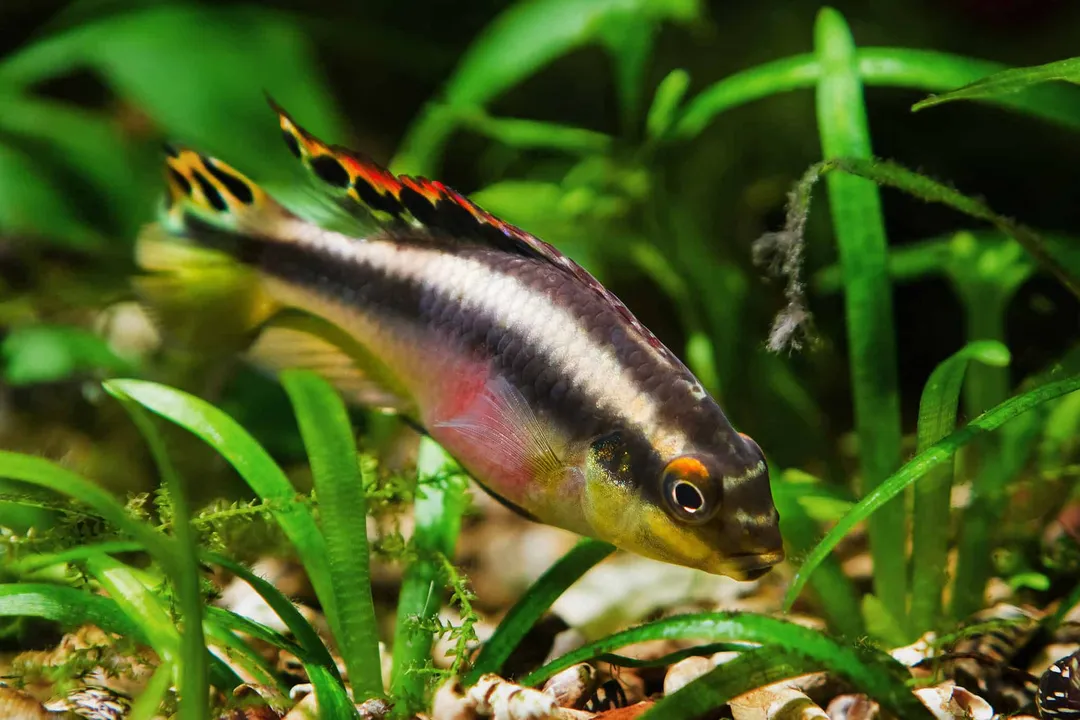
Rainbow Kribensis, scientifically known as Pelvicachromis pulcher, are prized inhabitants of freshwater aquariums, often celebrated for their brilliant coloration, especially the males' iridescent blues and reds. [3][6] They belong to the dwarf cichlid group, which immediately signals a delicate balance in temperament. While they are frequently recommended for community tanks, the question of their compatibility often arises because, like many cichlids, they possess a dual nature: peaceful enough for mixed company most of the time, but capable of significant territorial defense. [8] Understanding the context of their behavior—when they are displaying dazzling colors versus when they are aggressively defending a corner of the substrate—is key to successful keeping. [4]
# General Nature
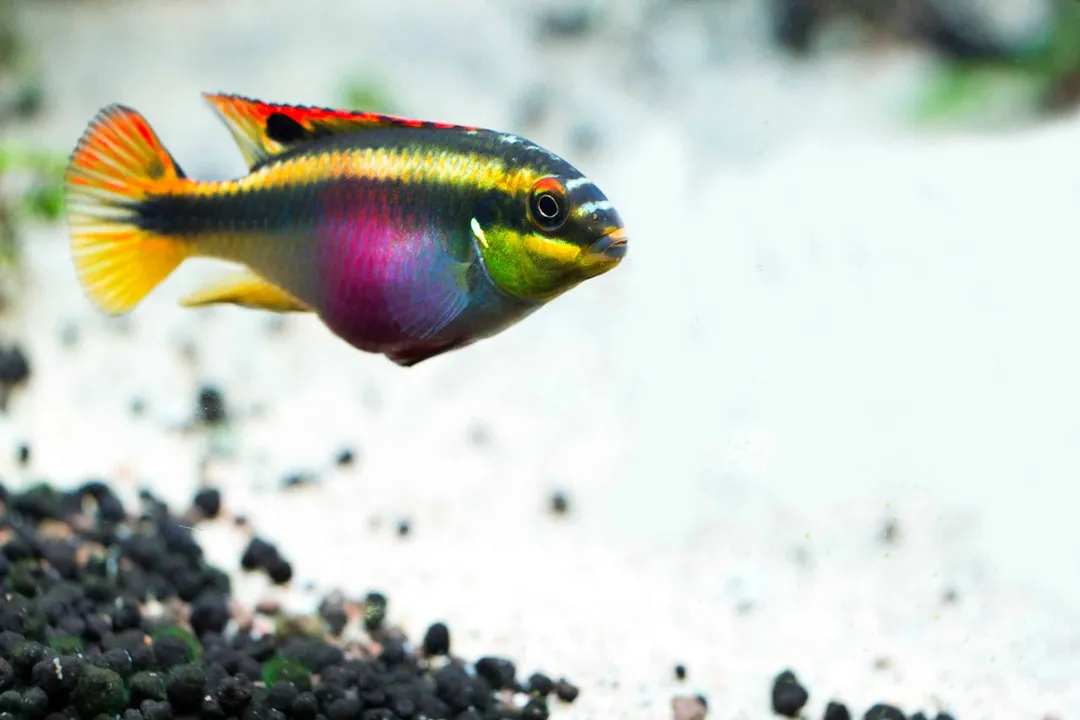
Kribensis originate from West Africa, inhabiting slow-moving streams and coastal areas, often where the water is soft and slightly acidic. [3] They are generally described as being relatively small for a cichlid, typically reaching lengths around 3 to 4 inches. [6][9] This dwarf status contributes to their popularity among aquarists who desire cichlid personality without the massive space requirements or overwhelming aggression of larger species. [8] Generally, they are noted for being peaceful, especially when compared to more notoriously aggressive cichlids. [4] They are often sold as being suitable for community tanks, and many aquarists report success keeping them alongside community fish like tetras or corydoras. [4] However, their behavior is not monolithic; what one person experiences as mild boundary-setting, another might experience as outright bullying, leading to frustrations when they become, in some hobbyist terms, the "bane of [the] existence" in an otherwise peaceful setup. [1]
# Temperament Factors
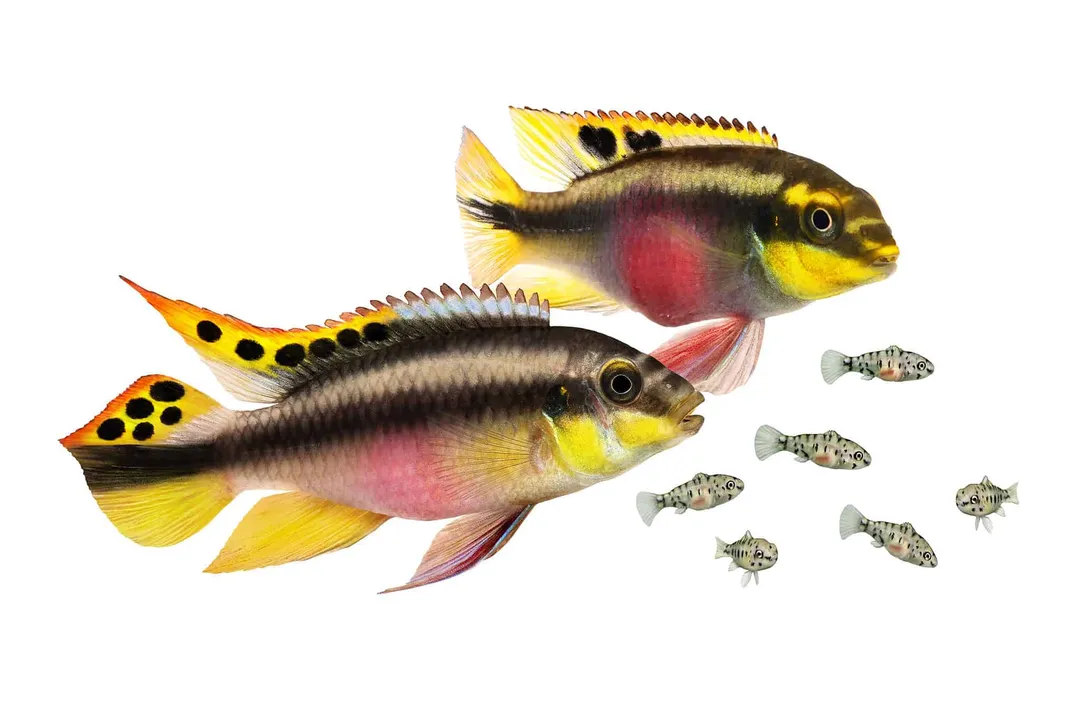
The aggression level displayed by Kribensis is highly situational and dependent on several interacting factors, chief among them being sex, breeding status, and environmental stress. [4][8]
In a typical setup with a single male and female, the pair may show minor disputes or "squabbles," often involving some chasing, which is generally considered normal interaction within the species. [4] The female, in particular, can exhibit more pronounced aggression than the male, especially when she is preparing to lay eggs or guarding fry. [3][8]
A significant source of conflict arises when hobbyists attempt to keep multiple pairs or individuals of the same sex. Housing more than one breeding pair in a tank, even a reasonably sized one, often leads to severe territorial battles. [7] If the tank is too small or lacks adequate visual barriers, one dominant pair can harass or even kill subordinate fish. [2][4] Keeping only males together almost guarantees conflict as they fight for dominance, while housing only females together can also lead to aggression, though perhaps less frequently severe than male-male conflict. [4]
Environmental stress amplifies any latent aggression. A tank that is too small, overstocked, or has poor water quality can turn a normally reserved Krib into a stressed aggressor. [5] Furthermore, the presence of suitable spawning sites encourages breeding behavior, which in turn triggers high levels of territoriality in both parents. [8]
It is an interesting observation that in a very large aquarium, the spatial distribution of resources might allow multiple pairs to coexist by establishing distinct, non-overlapping territories; however, this requires significant tank volume and meticulous aquascaping to ensure each pair feels secure in its own domain, away from visual contact with rivals. [7]
# Tank Needs
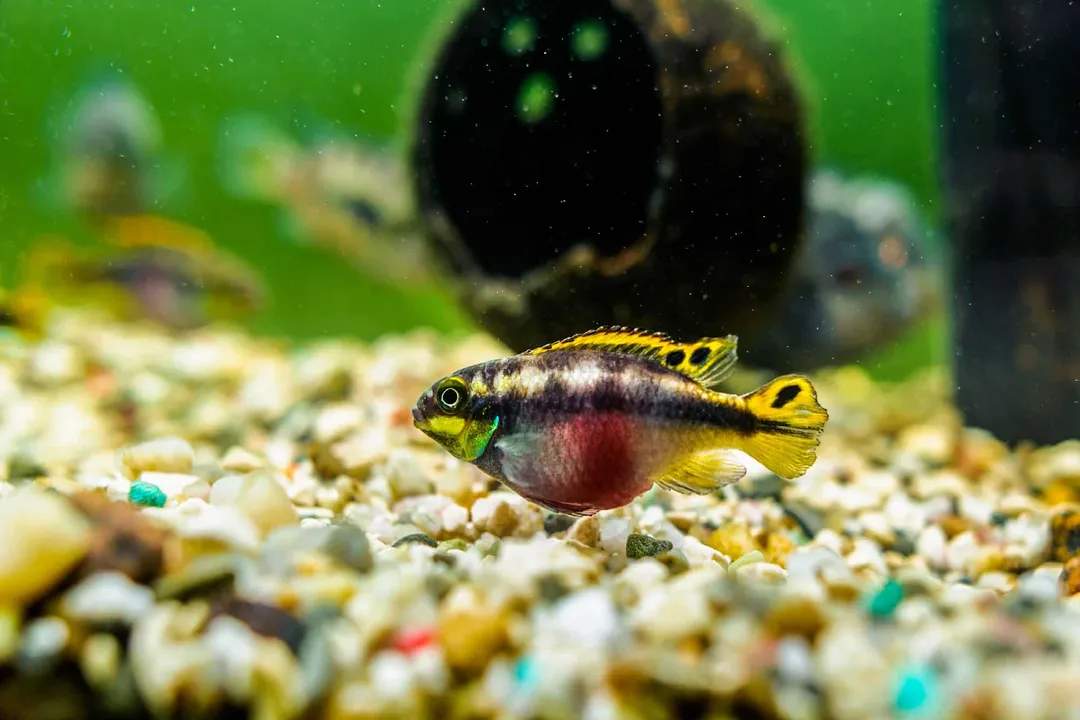
Creating a suitable environment is perhaps the most direct action an aquarist can take to manage potential aggression. Kribensis thrive when they have clear divisions of space. [8] This means providing ample hiding places, caves, and visual breaks. Items like driftwood, dense planting, and stacked rocks are invaluable. [3][9]
A well-decorated tank allows subordinate fish to escape a dominant individual and also permits a pair, once they begin to spawn, to establish a defended area without feeling constantly threatened by other tank inhabitants encroaching from every angle. [7] The caves themselves are critical; Kribs prefer to breed in dark, confined spaces, such as clay pots, coconut shells, or drilled caves. [8]
When considering tank size, while they are small cichlids, the minimum recommended size for a breeding pair is often cited as around 20 gallons, though larger is always better to dilute potential conflicts. [4] If keeping a mixed community, aiming for 30 gallons or more for a single pair provides a buffer zone that discourages hyper-focus on a single small area.
If you are setting up a tank specifically for one pair, think about the layout in terms of territory density. If the tank is long and narrow, a pair might claim the entire length. If it's a square tank, placing a cave at one end and dense planting at the opposite end effectively splits the perceived territory, which can sometimes calm behavior by giving the fish distinct zones of control rather than one large contested area. [8]
# Mates Selection
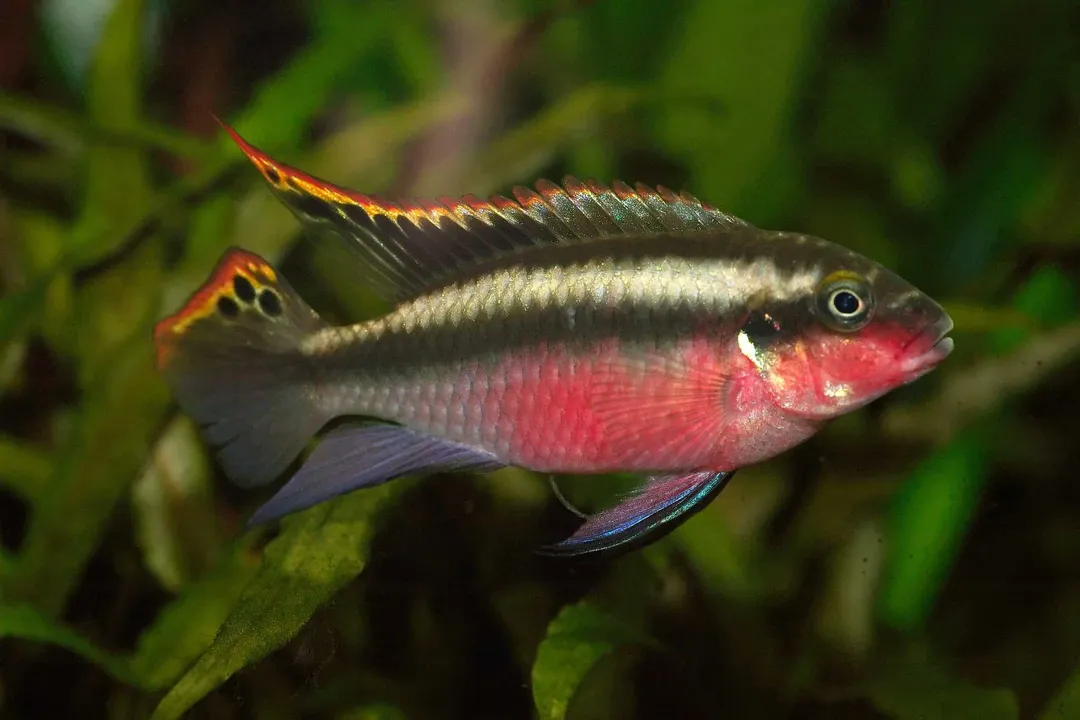
Choosing appropriate tank mates is another essential component of keeping peaceful Kribs. Their behavior often dictates what fish can safely share their space. Generally, fish that are too small and slow-moving, such as small tetras, guppies, or neon tetras, are at risk of being nipped or harassed, especially by a protective female. [4][9] Aggressive or large fish should also be avoided, as they may outcompete the Kribs for food or intimidate them, leading to stress-induced aggression from the Kribs toward smaller neighbors. [8]
When housing Kribs in a community setting, successful pairings often involve mid-water, fast-moving, or significantly larger, non-territorial fish that are too large to be seen as prey or direct competitors. [4] Good companions might include larger schooling fish like larger Barbs (if the Kribs aren't overly dominant) or bottom dwellers that occupy a different niche, such as Corydoras catfish, provided the Kribs are not aggressively guarding the entire substrate. [4] Conversely, keeping them with other dwarf cichlids, especially other Pelvicachromis species or similarly sized, cave-dwelling cichlids, is a recipe for boundary disputes and potential injury. [7]

# Breeding Changes
The most dramatic shift in a Krib's personality occurs when they decide to breed. This transformation is immediate and profound, as both parents become fiercely protective of their chosen spawning site and any subsequent fry. [8][9] The normally shy female can become quite bold, aggressively confronting anything that approaches her chosen cave or territory, sometimes even the aquarist's hand. [3] The male also intensifies his guarding duties.
During this period, the established aggression thresholds completely change. Fish that were tolerated yesterday become enemies today. This is when hobbyists who previously considered their pair "mildly aggressive" suddenly report their Kribs being "the bane of [their] existence" because the entire tank seems under siege. [1] Successful breeding aggression management relies entirely on the tank layout already supporting defined territories and ensuring that other fish have clear escape routes to the other side of the tank where the dominant pair is not currently patrolling. [7]
When a pair is successfully breeding, the dynamics of multi-pair setups often break down entirely. If you have two pairs, the one that spawns first will often attempt to drive the second pair entirely out of the tank, leading to sustained harassment that can result in the weaker pair becoming severely stressed or killed. [7] This situation highlights a trade-off for the keeper: maintaining a peaceful community means potentially preventing a pair from breeding, while allowing breeding means accepting high levels of localized aggression for several weeks until the fry are free-swimming and the parents calm down. [8] For the aquarist whose primary goal is minimizing conflict, this inherent biological drive towards territorial defense during reproduction must be acknowledged as a necessary, albeit temporary, downside of keeping these beautiful fish. [9]
# Behavior Spectrum
The range of reported aggression among Pelvicachromis pulcher in home aquaria is wide, which contributes to the confusion surrounding their general disposition. [4] At one end of the spectrum, some keepers describe their Kribs as being nervous and shy, hiding frequently unless food is presented, showing little interest in their tank mates. [3] This behavior is more common in very large tanks or when Kribs are housed with slightly too-large, confident tank mates.
On the other end, observations detail near-constant chasing, fin-nipping directed at slower swimmers, and outright territorial defense that clears a significant radius around the pair's preferred cave. [1][2] Some owners have reported being unable to keep any other fish in the tank with a pair of Kribs after they settled in and paired off. [4]
A key distinction often made in forums is between chasing and attacking. Occasional chasing, where one fish darts at another and then breaks off, is often just an assertion of dominance or play. True aggression involves sustained pursuit, nipping fins, or physical confrontation near a defended resource like food or a cave. [4] Observing the type of interaction helps determine if intervention is required. If only mild posturing is observed, it might be tolerable, but prolonged, one-sided harassment necessitates a change in tank dynamics, often by rehoming the aggressor or rearranging the decor to break up established sightlines. [7]
Related Questions
#Citations
Rainbow Kribs....the bane of my aquarium existence
Kribensis: The river rainbows
Are Kribensis aggressive? - Cichlid Forum
how to calm aggression in rainbow kribensis?
Rainbow Kribs (Kribensis) - Pelvicachromis pulcher
What would be the best way to keep multiple Kribensis with ...
Keeping Kribs: The Culture of Pelvicachromis Cichlids
Kribensis | NT Labs Knowledge Hub