Zonkey Evolution
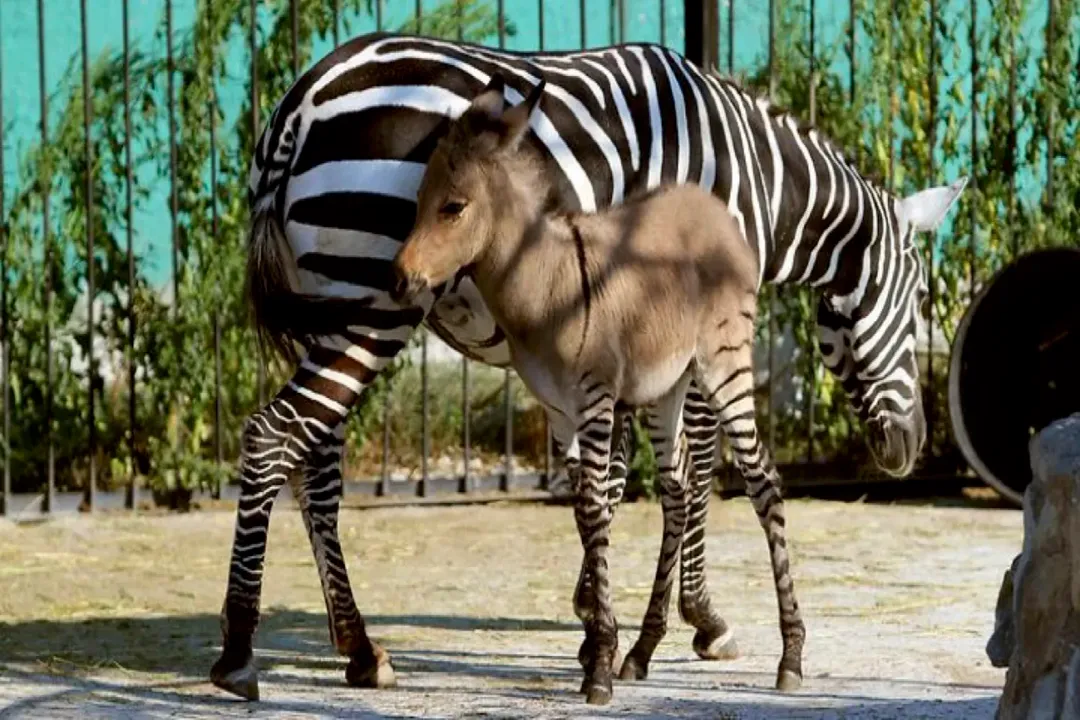
The birth of a zonkey, a hybrid offspring resulting from the union of a zebra and a donkey, captures immediate public interest, largely because it produces an animal distinctly recognizable yet strangely unfamiliar. This cross between two members of the Equidae family—the same family that includes horses—demonstrates the limits and possibilities of interspecies breeding in the animal kingdom. These mixed offspring are categorized broadly under the term zebroid, a blanket name for any hybrid involving a zebra and another equine species.
# Hybrid Parentage
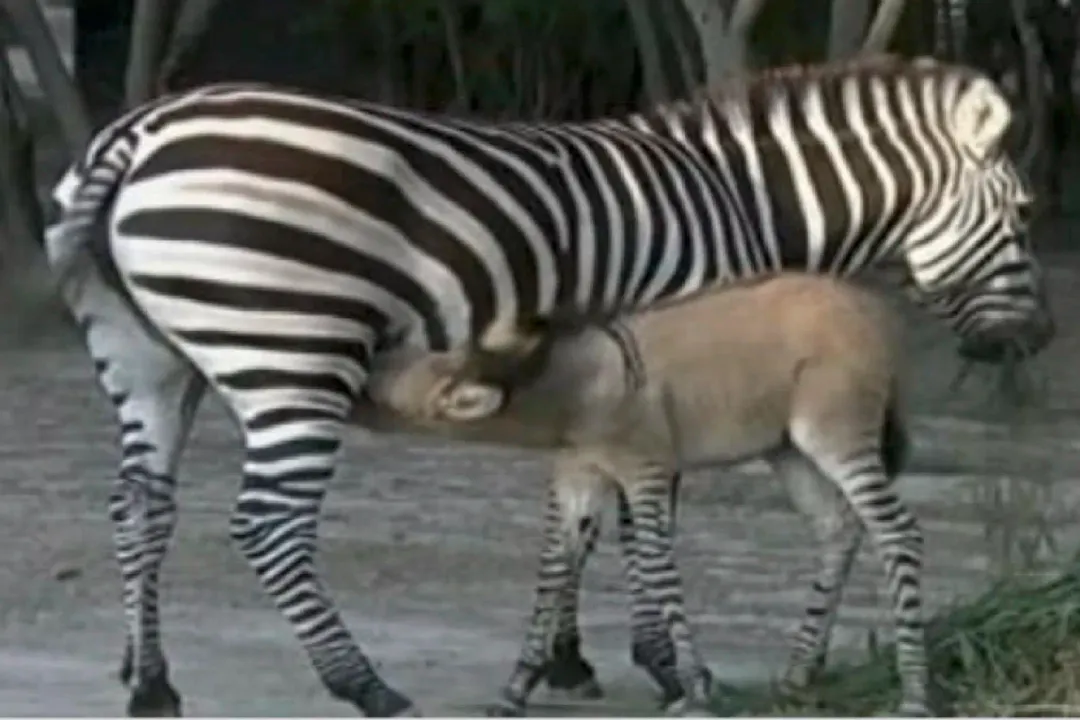
The designation "zonkey" is specific to the pairing involving a zebra and a donkey, though terminology can sometimes overlap with "zedonk" or "donkra". Typically, the pairing that results in a zonkey involves a zebra stallion and a female donkey, known as a jenny or jennet. However, the reverse pairing, a donkey stallion breeding with a female zebra (a zebra mare), is also possible, although perhaps less common in documented instances.
The existence of this cross immediately raises questions about the genetic closeness of zebras and donkeys. While both are equids, they belong to different genera in the wild. Donkeys belong to the genus Equus, along with horses and asses, but they are distinct enough from zebras to cause immediate biological barriers when attempting to reproduce. A zonkey represents a successful, albeit sterile, merging of two closely related, yet distinct, animal types.
# Physical Characteristics
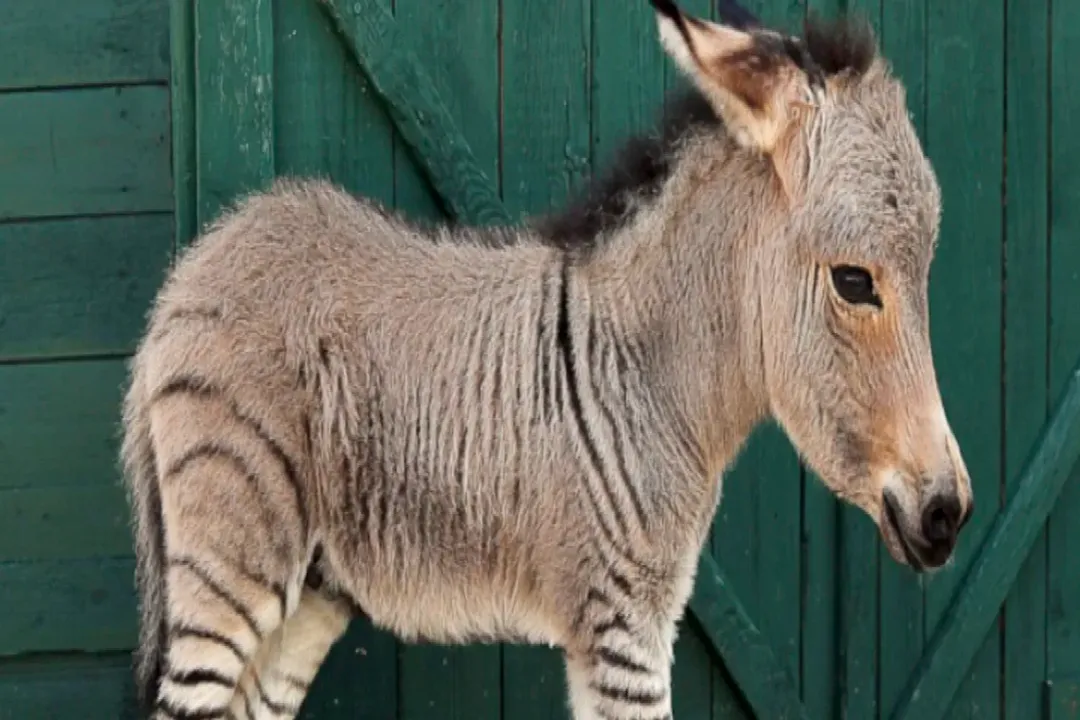
A zonkey’s appearance is a striking mosaic of its two parents. The most defining feature inherited from the zebra parent is the striping. Generally, the striping pattern on a zonkey is not as comprehensive as that on a pure zebra. Instead, the stripes tend to be confined primarily to the legs, hindquarters, and sometimes around the neck or shoulders. The base coat color is usually the solid hue of the donkey parent—often grey or brownish—with the zebra's characteristic black or dark brown stripes overlaid upon it.
In terms of body structure, the zonkey usually leans toward the donkey’s build. Donkeys are typically smaller and sturdier than many zebra species, and the resulting hybrid often exhibits this more compact, robust conformation. Temperament is another interesting blend. Zebras are known for their strong, sometimes aggressive, nature and powerful flight response, while donkeys possess a reputation for stubbornness and endurance. A creature inheriting traits from both can display a unique and sometimes challenging personality that requires experienced handling.
One noticeable aspect that varies considerably between documented zonkeys is the density and extent of the striping. It is interesting to note that the pattern expression seems almost independent of the hybrid's overall size or bone structure. For example, one individual might have faint leg stripes, while another, potentially from a different zebra subspecies, might show partial striping along its back, even if both share similar donkey parentage. This variation speaks less to macroevolutionary leaps and more to the specific, somewhat random, way that the genes for pigment distribution are expressed when the two parental genomes are spliced together.
# Genetic Disparity
The fundamental reason why zonkeys, and most other equid hybrids like mules (horse/donkey) or zorses (zebra/horse), cannot reproduce lies in their chromosome counts. Chromosome counts in equids vary significantly. A typical domestic donkey has 62 chromosomes. Zebras, depending on the specific species, carry differing numbers, often around 44 or 46 chromosomes.
When these two parents reproduce, the offspring inherits half the chromosomes from each—in this case, a donkey contribution of 31 and a zebra contribution of 22 or 23, resulting in a total chromosome count for the zonkey that is uneven and irregular (e.g., 53 or 54). This uneven pairing prevents the successful formation of viable gametes (sperm or eggs) during meiosis, rendering the zonkey sterile. This inability to produce fertile young is a hallmark of crossing animals that, while closely related enough to mate, belong to biologically distinct groups or "kinds".
# Contrasting Interpretations
The existence of animals like the zonkey is frequently discussed within two very different scientific or philosophical contexts: evolutionary biology and creation science. From a purely evolutionary perspective, the successful hybridization confirms that zebras and donkeys share a relatively recent common ancestor, close enough for their reproductive cells to combine and create a viable, though sterile, organism. The hybrid status illustrates a point along the continuum of speciation—they are close enough to hybridize but distinct enough that natural selection has fixed traits (like behavior and specific chromosome numbers) that prevent true species blending.
Conversely, within creationist literature, the zonkey is often presented as evidence supporting the concept of baraminology—the idea that life was created in distinct "kinds" that can interbreed with others within that same kind, but not outside it. In this view, the zebra and the donkey are both part of the larger "horse kind". The creation of a sterile hybrid like the zonkey is seen as demonstrating the boundary of that kind. It shows that while the donkey and zebra are related enough to produce offspring, the genetic barrier that prevents fertility confirms they are outside the breeding limits of a single created kind, reinforcing the designed limits of creation. The debate centers not on if the cross is possible, but what that possibility signifies regarding deep time versus the specific design limits of animal groups.
# Care Consideration
While zonkeys are not typically bred for agricultural work or riding due to their unpredictable temperament and hybrid vigor issues, instances exist where they are kept by private owners or on specialized ranches. Anyone involved in caring for a zonkey must account for the composite nature of its physical and behavioral genetics. Unlike a purebred donkey, which has centuries of domestication history behind it, the zonkey carries a stronger element of wild behavior inherited from the zebra side. This often means their reaction to stress or restraint can be far more volatile than a typical donkey or mule. Planning for their environment requires recognizing that they need more space and perhaps less intensive handling than a purely domesticated equine, respecting that inherent wild streak that resists complete taming. Understanding this behavioral inheritance, which cannot be perfectly predicted by looking only at the parents' domestication status, is essential for responsible animal husbandry in these unique cases.
The zonkey remains a compelling example of genetic possibility, illustrating the fine line between relatedness and distinct species classification, a line clearly drawn by the mathematics of chromosome counts.
Related Questions
#Citations
Behold: a zonkey is born - Why Evolution Is True
Zebra-donkey Hybrids (Zonkeys) - Macroevolution.net
Zenkey, zonkey, zebra donkey! - Creation Ministries International
Zebroid - Wikipedia
Zonkey Facts, Worksheets, Evolution, Anatomy & Appearance For Kids
Zonkeys, Geeps, and Noah's Ark | The Institute for Creation Research
Truth from Telegraph, the World's Newest Zonkey
Behold: a zonkey is born … leading to thoughts about ancient ...
Zonkey - Bionity