Xenotarsosaurus Evolution
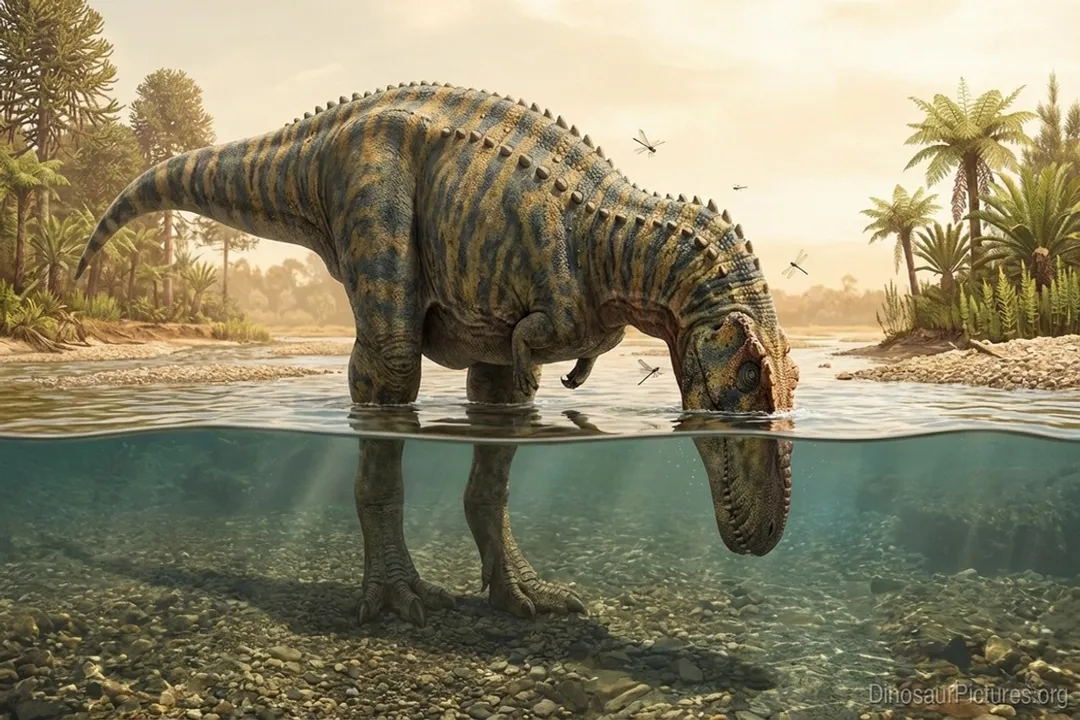
The evolutionary path of Xenotarsosaurus provides a fascinating glimpse into the unique predatory landscape that developed in South America during the Late Cretaceous period. As a member of the abelisaurid family, this dinosaur represents a distinct evolutionary trajectory separate from the more famous tyrannosaurids that dominated Laurasian ecosystems at the same time. [2] Understanding Xenotarsosaurus is less about tracking a long, branching lineage and more about appreciating the specialized success of its immediate family group in the isolated southern continents following the breakup of Gondwana. [6]
# Naming Origin
The name Xenotarsosaurus bonapartei itself offers the first clue into its scientific significance. The genus name, Xenotarsosaurus, translates roughly to "strange-ankle lizard". [2] This moniker was chosen specifically because of the unusual structure of the tarsus, the group of bones making up the ankle connecting the lower leg to the foot. [2][6] This distinctive ankle morphology immediately set it apart from other large theropods known at the time of its description. [6] The specific epithet, bonapartei, honors the distinguished paleontologist José Bonaparte, recognizing his extensive contributions to understanding South American dinosaur fauna. [6][2]
# First Findings
The remains that define Xenotarsosaurus were unearthed in the Chubut Province of Argentina. [6] Specifically, this predator is associated with the Bajo Barreal Formation. [6] This geological unit dates to the Late Cretaceous epoch, placing Xenotarsosaurus in an environment roughly contemporaneous with the later stages of dinosaur evolution before the K-Pg extinction event. [2] The initial description and formal naming process were documented by Gasparini, Albino, and Chong in the early 1990s, though ongoing research continues to refine our understanding of these specific specimens. [6] The holotype specimen, which serves as the official reference for the species, consists of significant skeletal elements that allow paleontologists to classify it accurately within the Theropoda. [6]

# Family Ties
Xenotarsosaurus belongs firmly within the Abelisauridae, a group of medium to large carnivorous dinosaurs that thrived primarily in the Southern Hemisphere landmasses during the Cretaceous. [2][6] This family is nested within the larger clade Carnosauria, though more specifically, abelisaurids are often discussed in relation to other Gondwanan predators. [6]
The evolutionary divergence leading to abelisaurids is a key concept when studying creatures like Xenotarsosaurus. While North American and Asian ecosystems saw the rise of the Tyrannosauridae—characterized by massive skulls and relatively small forelimbs—abelisaurids evolved along a parallel but separate path. [2] Their defining characteristics often included deep, relatively short skulls, extremely reduced forelimbs (sometimes even more diminutive than those of tyrannosaurids), and robust hindquarters built for power. [2]
Consider the biogeographical context: as the supercontinent Gondwana continued to fracture, the dinosaur faunas of South America became geographically isolated from those in the north. [1] This isolation allowed abelisaurids, including Xenotarsosaurus, to occupy the niche of apex predator, filling the ecological role that tyrannosaurs held elsewhere. [2] This phenomenon of similar ecological niches being filled by unrelated groups in geographically separated regions is a classic example of convergent evolution, though the specific cranial and limb structures of abelisaurids ensured they were not merely small copies of their northern cousins. [2]
# Skeletal Uniqueness
The defining feature, the strange ankle, highlights the distinct morphology within this group. While a full comparison of every bone is beyond the scope here, the focus on the tarsus suggests that unique adaptations in locomotion or weight bearing characterized this lineage. [6] Furthermore, abelisaurids in general, including Xenotarsosaurus, often show features in their vertebrae and pelvic girdle that differ significantly from Tyrannosaurs, pointing towards different biomechanical solutions for terrestrial pursuit or ambush predation. [1]
If we were to summarize the major physical traits that place Xenotarsosaurus within the context of its relatives, a comparison clarifies its evolutionary standing:
| Trait | Xenotarsosaurus (Abelisaurid) | Tyrannosaurid (e.g., T. rex) | Evolutionary Implication |
|---|---|---|---|
| Forelimbs | Extremely reduced, often vestigial | Reduced but somewhat robust | Parallel evolution of reduced arm size |
| Skull Shape | Deeper, shorter snout | Longer, more robust snout | Different bite mechanics and prey specialization |
| Geographic Center | Southern Continents (Gondwana remnants) | Northern Continents (Laurasia remnants) | Biogeographic isolation driving divergence |
| Tarsus Structure | Distinctive, leading to genus name | Typical Theropod ankle structure | Unique pedal specialization in this lineage |
This comparative view underscores that the evolution of Xenotarsosaurus was not about being an early or transitional form, but rather about being a highly derived, successful predator within its specific southern ecosystem. [2] Its very existence confirms the ecological diversity present in the Late Cretaceous South American floodplains and forests. [3]
# Environmental Context
Life in the Bajo Barreal Formation required specialized survival skills. The environment of ancient Chubut, where Xenotarsosaurus roamed, was not static; it experienced seasonal changes typical of many Cretaceous environments. [1] Predators like Xenotarsosaurus would have contended with a variety of prey items, likely including sauropods (though perhaps smaller than their Jurassic ancestors), ornithopods, and other smaller reptiles. [3] The success of an apex predator is intrinsically linked to the diversity and availability of its food sources, suggesting that the ecosystem supported a substantial biomass capable of sustaining large carnivores. [1] The fact that the specimen was found in a floodplain environment suggests it was adapted to that terrain, which might influence how its unique ankle structure functioned in soft or uneven substrates. [6]
# Insights into Southern Evolution
The study of Xenotarsosaurus allows paleontologists to model the specific selective pressures acting on South American fauna during the final stages of the Mesozoic Era. One particularly interesting observation arising from the study of abelisaurids is the tendency towards lighter overall skeletal construction, especially in the skull, compared to their Northern Hemisphere counterparts. [2] While Xenotarsosaurus was certainly powerful, the underlying bone architecture likely prioritized speed or maneuverability over the sheer bone-crushing specialization seen in tyrannosaurs. This suggests that Late Cretaceous South America may have favored predators that were quick, agile hunters of diverse prey, rather than those specialized in tackling the largest herbivore species with the most heavily armored defenses. [2] The specialization of the tarsus, specifically, suggests that even minor adaptations in foot mechanics—perhaps offering better purchase during turns or quick accelerations—were significant enough to warrant its own genus designation, indicating strong selective pressure on locomotion. [6]
Furthermore, the relatively sparse fossil record for many specific abelisaurids, compared to the wealth of Late Cretaceous North American finds, means that each new analysis, such as the one published in Cretaceous Research in 2021 concerning these Gondwanan predators, adds significant weight to our understanding of the clade's diversity. [1][3] When we compare the few known abelisaurid body plans to the sheer variety within Tyrannosauridae, it suggests either an actual lower diversity in the south, or simply that the preservation conditions in regions like the Bajo Barreal Formation have been less favorable over geological time. [3] Regardless of the preservation bias, Xenotarsosaurus stands as a concrete example of the high evolutionary ceiling reached by the Abelisauridae in isolation. [2]
The fossil evidence, however fragmentary it might seem compared to a complete skeleton, acts as a critical anchor point. It helps ground phylogenetic hypotheses about how the earlier, less specialized theropods branched into the massive, specialized carnivores that defined the end of the dinosaur age in opposite hemispheres. [6] The specific details of the Xenotarsosaurus ankle serve as a clear morphological marker that links it securely into the Abelisaurid family tree, confirming its South American heritage and its role as an evolutionary endpoint for that specific lineage in that continent. [2]
Related Questions
#Citations
A detailed osteological description of Xenotarsosaurus bonapartei ...
Xenotarsosaurus - Wikipedia
A detailed osteological description of Xenotarsosaurus bonapartei ...
I Know Dino Podcast Show Notes: Xenotarsosaurus (Episode 167)
Xenotarsosaurus | Fossil Wiki - Fandom
(PDF) Xenotarsosaurus bonapartei Nov. Gen. et Sp. (Carnosauria
Xenotarsosaurus - Mindat
[PDF] THE ORIGIN AND EVOLUTION OF THE DINOSAUR INFRAORDER ...
Xenotarsosaurus is a genus of abelisaurid theropod dinosaur that ...
Xenotarsosaurus - - Dinos and Designs