Xenotarsosaurus Diet
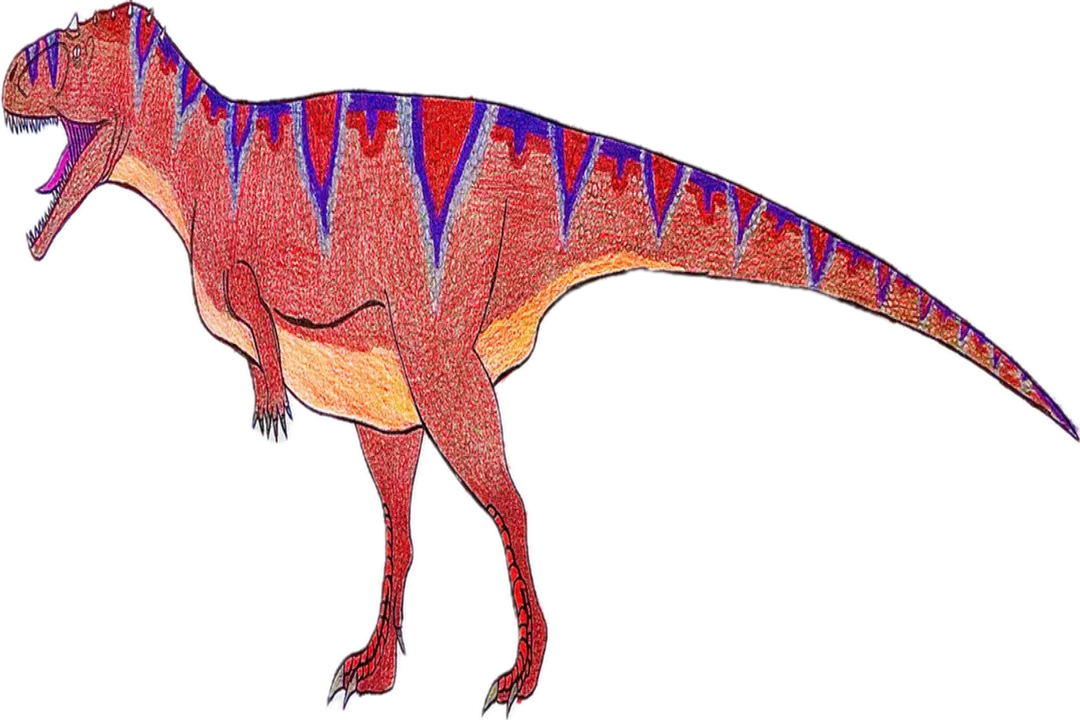
The evidence gathered regarding Xenotarsosaurus strongly points toward an established dietary classification, one rooted firmly in its placement within the greater group of theropod dinosaurs. [1][5] As a member of the diverse clade Theropoda, the default assumption for its feeding strategy leans heavily toward a carnivorous existence. [3][5] This classification is not merely a placeholder; it reflects the shared anatomical traits and inferred lifestyle of its relatives. More specifically, Xenotarsosaurus bonapartei is classified within the family Abelisauridae, [3][4][5][9] a distinctive group of carnivorous dinosaurs that thrived during the Cretaceous period, particularly prominent in the southern continents. [7] While detailed, direct evidence outlining the exact menu for this specific Patagonian resident might still be developing, its family history provides a clear indication of its primary energy source: meat. [4]
# Abelisaurid Context
Understanding the diet of Xenotarsosaurus requires looking at the Abelisauridae family as a whole, as specific feeding habits for every species are often inferred from skeletal structure and geographic neighbors rather than direct fossilized gut contents. Abelisaurids, such as the well-known Carnotaurus, were generally characterized by unique skull features, often featuring stout, deep snouts and relatively short, heavily muscled necks. [9] These features suggest powerful bite mechanics, suitable for tearing and processing animal flesh. The very definition of a theropod places Xenotarsosaurus in a group renowned for its predatory nature. [1][5] The fact that osteological descriptions focus on its phylogenetic implications within the Abelisauroidea group further solidifies its role as a specialized predator or scavenger within the Late Cretaceous ecosystem of what is now Argentina. [7][9]
Considering its classification, it is reasonable to infer that Xenotarsosaurus fed on the herbivores roaming its environment, which included sauropods and ornithischians present in the region during the Late Cretaceous. [7] For a creature belonging to this lineage, the diet would have centered on vertebrates, making it an active hunter, a dedicated scavenger, or, most likely, an animal employing both feeding strategies to survive. [4]
# Scavenging Behavior Evidence
One of the more compelling, albeit behaviorally suggestive, pieces of information linking Xenotarsosaurus to a specific feeding tactic involves the interpretation of artwork depicting it scavenging. [2] This visual representation suggests that this abelisaurid was not exclusively reliant on the high-energy output required for actively pursuing and overpowering large prey. Instead, the scenario proposed involves Xenotarsosaurus feeding on a beached carcass. [2]
This behavior, when considered ecologically, speaks volumes about resource exploitation. Active predation carries significant risk—injury from large prey can be fatal or debilitating, leading to starvation. Scavenging, conversely, is a lower-risk activity, capitalizing on food resources already expended by other causes, such as natural death or predation by larger contemporary carnivores. An animal that incorporates scavenging into its repertoire is exhibiting dietary flexibility. For an abelisaurid of its apparent size, accessing a large, already dead animal would represent a substantial, relatively safe caloric intake. This flexibility is often a hallmark of highly successful dinosaur groups that persist across geological time frames.
It’s interesting to contemplate the logistics of this scavenging event. If the carcass was indeed "beached," this could imply proximity to coastal areas, large inland floodplains, or major river systems prevalent in the region during that epoch. [7] In such environments, large animals could perish far from the main forest cover, making the carcass highly visible and accessible to opportunists like Xenotarsosaurus. [2] A creature adapted for tearing flesh, as implied by its family traits, would be perfectly equipped to quickly exploit such a find before it was fully consumed by competitors or decomposed beyond edibility.
# Dietary Mechanics and Inference
While the provided sources do not offer a detailed description of Xenotarsosaurus's dentition, we can make some educated comparisons based on the known features of Abelisauridae. [9] Typically, theropod teeth are designed for slicing flesh rather than crushing bone, though some variations exist. The general predatory toolkit for an abelisaurid revolves around making deep, raking wounds during a struggle or delivering disabling bites.
If we frame this within a comparative ecological context, we might ask how Xenotarsosaurus compared to co-occurring predators. For instance, if it shared space with larger, perhaps more robustly built carnivores, it might have occupied a niche that favored efficiency and opportunism over pure brute force hunting. Its feeding strategy, therefore, might have been characterized by brief, forceful lunges to subdue smaller prey or swift, efficient processing of carrion. [2]
Consider the energetic cost. Hunting large sauropods or even medium-sized ornithischians requires significant energy investment. If Xenotarsosaurus was closer to the medium end of the abelisaurid size spectrum, relying on scavenging for a significant portion of its diet would be an energy-saving strategy, allowing it to thrive even when active hunting success rates were low. This balance between opportunistic feeding and active pursuit—a spectrum rather than a binary choice—is likely where the Xenotarsosaurus diet resided. In essence, its diet was likely defined by whatever meat presented itself, secured either through effort or fortune.
# Environmental Context and Prey Availability
Xenotarsosaurus inhabited the Late Cretaceous landscape of Argentina. [7] This environment was crucial in shaping what would be available for consumption. The availability of prey is a primary driver for the evolution of dietary specialization or generalization. If the ecosystem supported numerous large herbivorous dinosaurs, the potential for finding large carcasses—either from predation or natural attrition—would be high, favoring the scavenging component hinted at in the available imagery. [2]
When examining the broader picture of dinosaur ecology, predator-prey ratios are always a consideration. A certain percentage of the herbivore population would inevitably die from non-predatory causes. This forms the base layer of the scavenging niche. The relative abundance of different plant-eaters, such as the large titanosaurs that were common in Cretaceous South America, would dictate the size and quality of the carrion available for scavengers like Xenotarsosaurus. [7] A successful scavenger needs to be able to contend with the size of the meal, and its robust classification within Abelisauridae suggests it was equipped to handle substantial pieces of flesh.
This ties back into the analysis of its probable physical attributes. While the specific osteological reports detail its structure for phylogenetic placement, [9] any theropod’s build—limb proportion, neck musculature, and even the structure of its pelvis (indicated by the name Xenotarsosaurus, meaning "strange ankle lizard")—must support the mechanics of feeding. If it was primarily a pursuit predator, its limbs would need adaptation for speed. If it was more of a bulk scavenger, the jaw and neck might be built for pulling and tearing large hunks of decaying meat. The integration of its anatomy with its inferred opportunistic diet suggests an animal well-suited to the fluctuating resource landscape of its time.
# Distinguishing Roles in the Ecosystem
In many Mesozoic ecosystems, there was often a stratification of carnivores. We can infer that Xenotarsosaurus occupied a specific stratum based on its classification as an abelisaurid, which generally occupied the apex or near-apex predator roles in their environments, distinct from, for example, co-occurring megaraptorans or tyrannosauroids found elsewhere. [5]
If larger carnivores existed in the same region, Xenotarsosaurus might have specialized in smaller, more agile prey that the larger animals overlooked, or it might have become a secondary scavenger, feeding on the leftovers of kills made by others. [2] The scavenging depiction lends credence to this secondary role, or at least a supplementary one. A tertiary, or completely specialized scavenger, relies almost entirely on death rather than dispatching living prey. The fact that its family affiliation suggests a capable predator implies that Xenotarsosaurus likely sat in a zone of mixed feeding: active hunting for small to medium game, and opportunistic scavenging for the largest available food packages.
To put this into perspective, imagine the food web in that Late Cretaceous Argentinian ecosystem. There were the massive primary consumers (herbivores) which constituted the ultimate biomass pool. Then came the primary predators, perhaps the largest abelisaurids or carcharodontosaurids if they coexisted. Xenotarsosaurus, being an abelisaurid, would be a major player, but perhaps not the absolute largest. This position dictates diet: if you cannot reliably kill the biggest animals, you must be proficient at capitalizing on their deaths. This balance is what paleontologists often seek when piecing together a diet from fossil evidence, and the suggestion of scavenging gives us a valuable clue into this necessary compromise for survival. [2] The very existence of the animal itself, represented by its fossils and described osteologically, [9] proves that its dietary strategy, whatever the exact balance between hunting and scavenging, was successful enough to sustain a breeding population over a significant period.
# Conclusion on Feeding Habits
In summary, the available scientific classification places Xenotarsosaurus as a carnivore belonging to the Abelisauridae family. [4] This fundamentally establishes its diet as meat-based. [1][3] The ecological suggestion of scavenging on large, stranded animals provides a critical behavioral insight, indicating a necessary opportunism in its feeding habits, which would have been vital for nutritional stability in its ancient habitat. [2] While the specifics of tooth morphology or stomach contents remain an area for future osteological research to fully illuminate, [9] the combined evidence points toward a generalized carnivorous niche, heavily supplemented by low-risk scavenging of large vertebrate resources in the Late Cretaceous of South America. [7] This dual approach is a testament to the survival adaptations within the Abelisauridae lineage. [5]
Related Questions
#Citations
Xenotarsosaurus - Prehistoric Wiki - Fandom
A Xenotarsosaurus scavenging on a beached Plesiosaurs - Reddit
Xenotarsosaurus - Age of the dinosaurs Wiki | Fandom
Xenotarsosaurus - Prehistoric Wildlife
Xenotarsosaurus - Wikipedia
Xenotarsosaurus bonapartei - Mindat
I Know Dino Podcast Show Notes: Xenotarsosaurus (Episode 167)
Xenotarsosaurus by Gustthank on DeviantArt
A detailed osteological description of Xenotarsosaurus bonapartei ...