Why are blanket octopuses so rare?
The allure of the blanket octopus stems from its ethereal appearance and its extreme elusiveness. It is not a creature one casually encounters while exploring coral gardens or near the shore; its rarity is intrinsically linked to where and how it spends its entire existence. To understand why these animals seldom grace scientific journals or deep-sea footage, we must examine their chosen habitat, the bizarre nature of their sexual development, and the sheer difficulty of capturing them on film or in net samples. [5][8]
# Pelagic Life
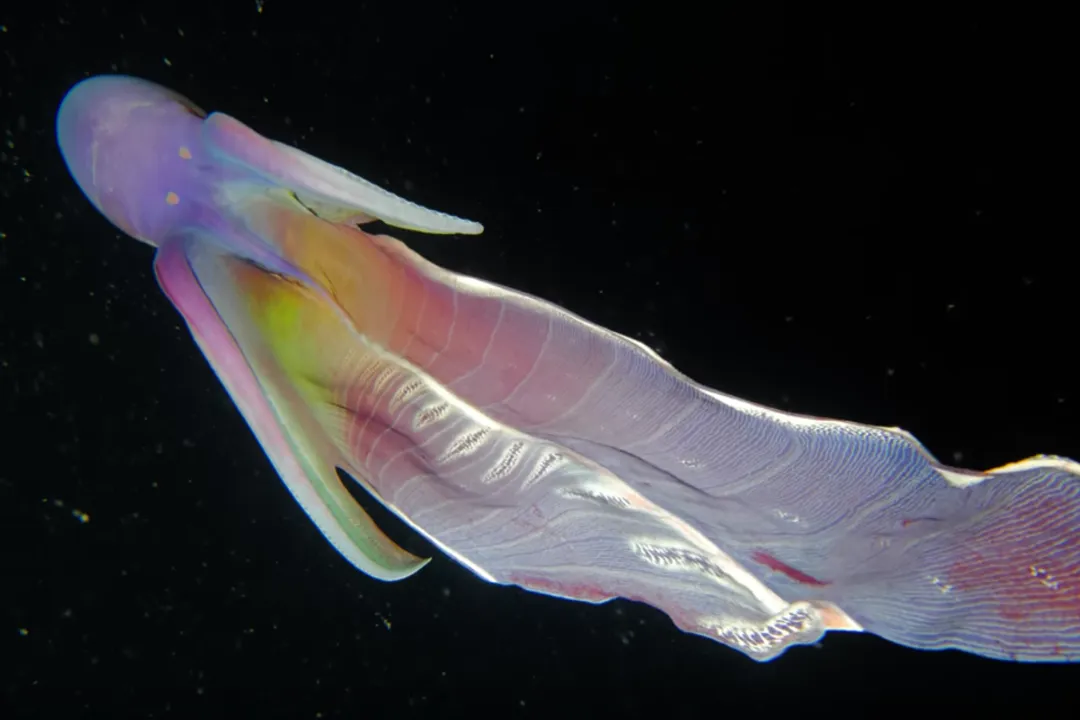
The single biggest factor contributing to the infrequent sightings of Tremoctopus species is their lifestyle. These octopuses are inhabitants of the open ocean, or the pelagic zone. [5][8] Unlike their benthic cousins, which cling to the seafloor, blanket octopuses drift through the water column across tropical and subtropical seas worldwide. [2]
Living permanently in the mid-to-upper open water means they lack the familiar anchor points of reefs or coastal shelves that draw human observation. They are essentially nomads of the blue water, meaning any encounter is likely to be accidental or the result of specialized, deep-ocean surveying equipment. [5] This constant, unstructured movement through vast expanses of water dramatically decreases the probability of an observer, whether a diver, a researcher, or a submersible camera, crossing paths with one. [6] Furthermore, some accounts suggest they may actively avoid areas of high human activity or prefer deeper, less disturbed layers of the water column, cementing their status as creatures of rumor rather than concrete observation. [5]
# Size Difference
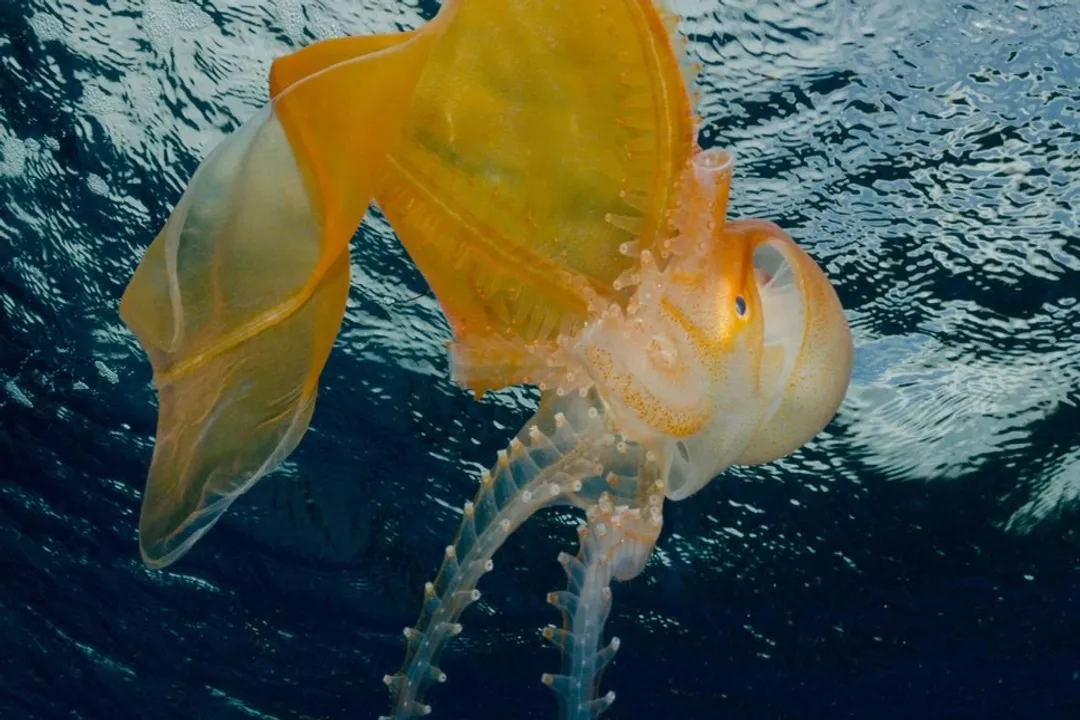
Compounding the issue of habitat is the most dramatic sexual dimorphism found in any cephalopod species—the difference in size between males and females. [7] If you hear about a blanket octopus sighting, it is almost certainly the female being described.
The adult female can be truly massive, sometimes reaching lengths up to 2 meters (about 6.6 feet) or even more in older reports. [7][8] This large size, coupled with her dramatic, flowing web or "blanket" of skin connecting her dorsal arms, makes her visually striking when finally observed. [2][8] She is the specimen that can "dance through the water" using her web, a rare sight captured on film. [9]
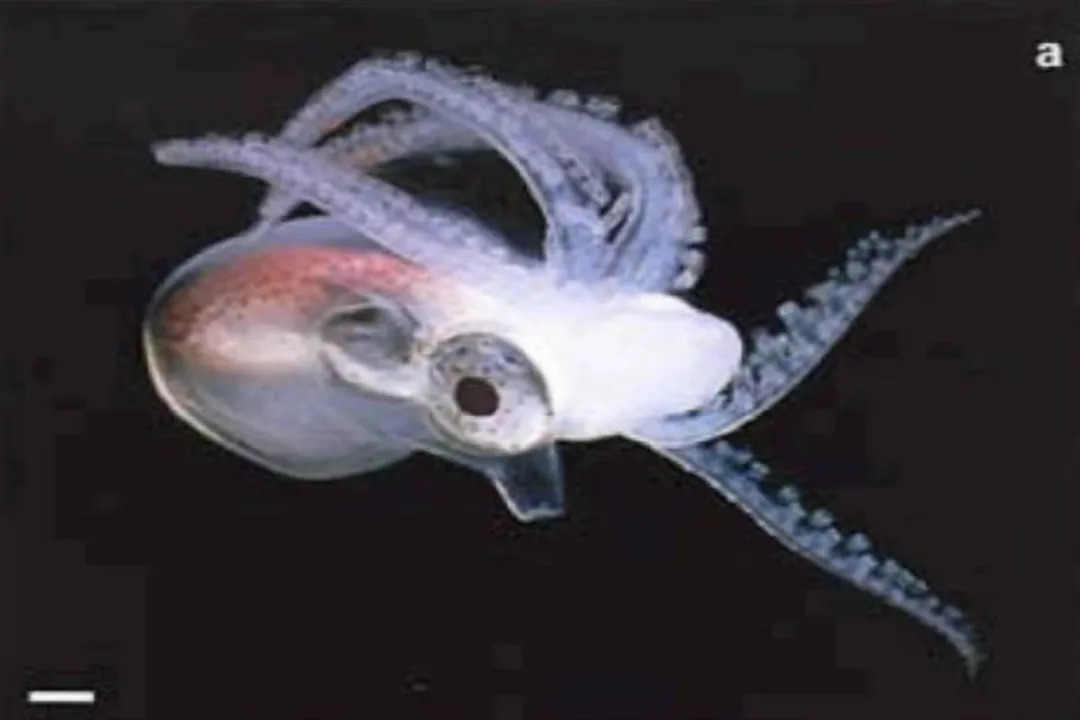
Conversely, the male is minuscule. [7] While females can measure meters, males rarely exceed a few centimeters in length, sometimes cited as small as 2 centimeters. [4][7] This vast gulf in scale means that when researchers sample the water column, they are far more likely to capture or record the large female than the tiny, almost invisible male. [1][7] The biological imperative for the male is simply to find the female, mate, and pass on his genes; he has no need for the enormous, visible cloak that defines his counterpart. [1][7]

# Male Discovery
The consequences of this extreme size disparity manifest clearly in the timeline of scientific understanding. For decades, scientists understood the massive female but had no concept of the male's actual appearance or existence, theorizing based on the discovery of very small, separate specimens. [4] It wasn't until 2002 that scientists confirmed the existence of a single, separate male specimen, marking a significant milestone in understanding the species. [4]
It is fascinating to consider that this extreme dimorphism isn't just about physical scale; it suggests potentially different oceanic niches occupied by the sexes. While both are pelagic, the sheer physical requirements of the small, lightweight male might necessitate that he occupies a slightly different stratification—perhaps consistently deeper, cooler, or more neutrally buoyant waters—than the larger female. [4] If the sexes spend their early lives or even adulthood in marginally separated water layers, the chance of observing both types of individuals during a single research dive or net haul plummets, further explaining why the male remained functionally undiscovered for so long. [1][4] This separation compounds the general rarity of encountering any blanket octopus in the first place.
# Observation Challenges
Even when the large, impressive female is present, observing her behaviors is challenging due to her unique morphology and the environment. [8] The eponymous blanket is a massive cloak of skin stretching between the dorsal arms, which the female can unfurl for defense, display, or perhaps even propulsion. [2][8] When threatened, she can wrap this material around herself, effectively becoming a less identifiable, drifting blob, which is likely an effective anti-predator adaptation in the featureless blue environment. [1]
The rarity of verified sightings means that scientific knowledge is often built upon opportunistic encounters rather than sustained study. Think of the recent sighting in the Great Barrier Reef—this was noteworthy precisely because such events are so unusual. [9] Researchers often rely on brief video clips or the analysis of specimens captured incidentally in fishing nets, which provides limited context about natural behavior. [6][9]
If we were to summarize the difficulty in gathering data, it could be structured as a compounding problem:
| Factor | Description | Impact on Rarity Assessment |
|---|---|---|
| Habitat | Pelagic open ocean drift [2][8] | Low encounter probability due to vast, unstructured space. |
| Female Size | Large (up to 2m) [8] | High visibility if encountered, but encounters are rare. |
| Male Size | Tiny (down to 2cm) [4][7] | Near invisibility; easily missed even in successful female sampling. |
| Behavior | Mantle used for concealment [1] | Potential for active evasion when disturbed by equipment. |
Because our understanding of their social structure, mating rituals, and feeding ecology is derived almost entirely from these fleeting, random moments, every new film or photograph holds immense scientific weight. [9] Unlike species tied to specific reefs, the blanket octopus offers few repeatable opportunities for dedicated study, keeping the core questions about its life cycle answered only sporadically through sheer luck. [6] The rarity, therefore, isn't just about population size; it's about the near-perfect combination of an enormous, sparsely populated habitat and extreme biological specialization that keeps them hidden from view. [5][8]
Related Questions
#Citations
Six Reasons the Blanket Octopus is My New Favorite Stunning Sea ...
Blanket Octopus - Great Barrier Reef Foundation
The dazzling blanket octopus is a rare sight indeed! This pelagic ...
TIL scientists didn't discover a single male Blanket octopus until ...
Our Favourite Blanket Octopus Facts - Original Diving
'Dancing through the water': rare sighting of blanket octopus in Great ...