Where does a sei whale live?
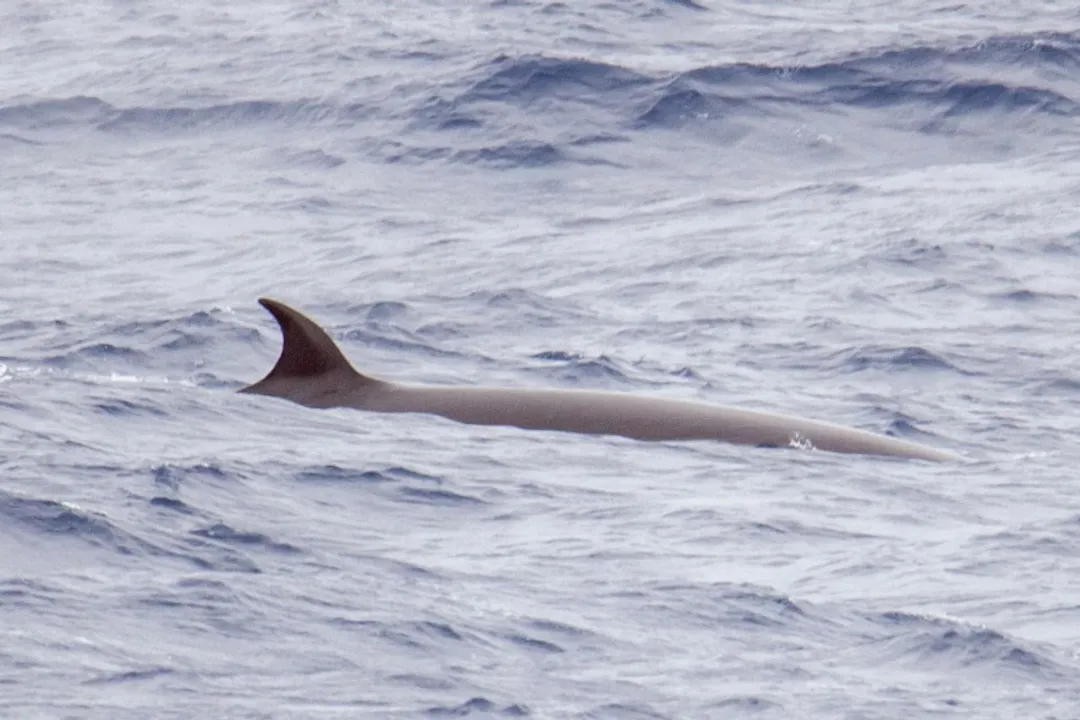
The global home of the sei whale, Balaenoptera borealis, is one of vastness, yet it remains characterized by tantalizing gaps in our understanding. These magnificent, sleek baleen whales roam across virtually all of the world’s open oceans, spanning subtropical, temperate, and subpolar latitudes. [3][2] They are creatures of the deep, preferring deep offshore waters rather than shallow coastal shelves, and are typically found in ocean basins or the open seas far from the sight of land. [3][2] This general preference means that while their global range is immense, direct encounters are rare for those studying or viewing them close to shore. [3]
# Global Coordinates
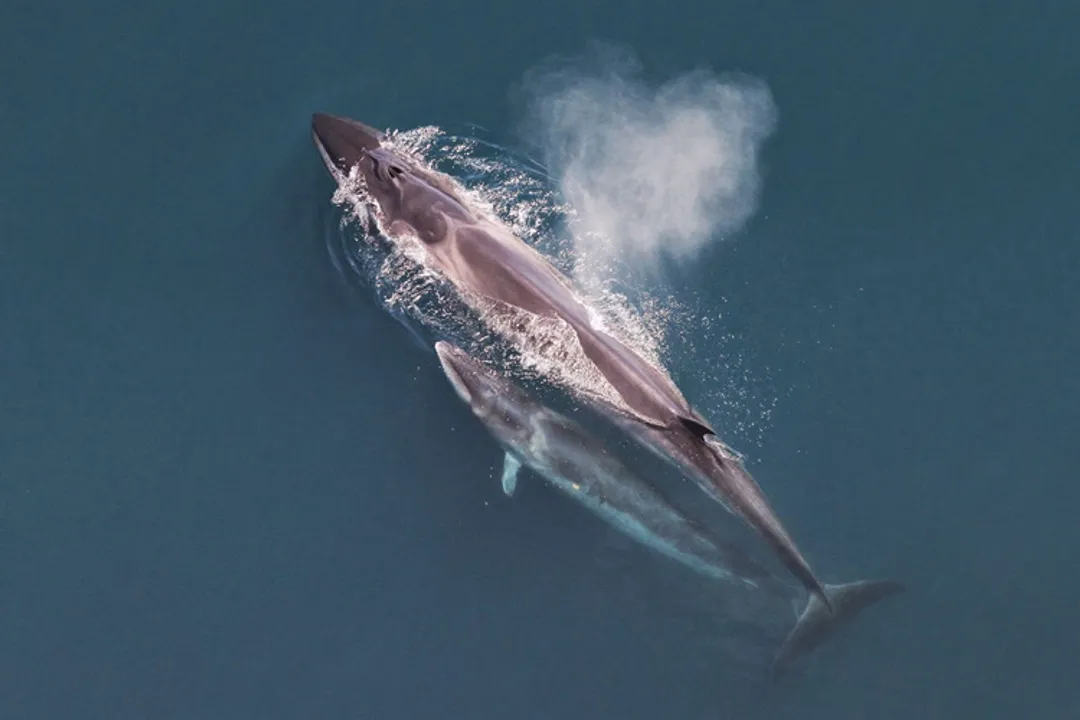
To truly grasp where a sei whale lives, one must first understand the boundaries they respect and those they actively avoid. Sei whales are true oceanic travelers, inhabiting the Atlantic, Indian, and Pacific Oceans. [2] However, their habitat is distinctly mid-water. They are known to shun the extreme cold of the polar seas and the persistently high temperatures of the tropics. [3][1] The distribution is less about strict lines on a map and more about the ocean’s productivity layers. They follow the concentrations of their preferred prey—zooplankton, copepods, krill, and small schooling fish—which dictates their shifting seasonal range. [3][2]
This reliance on variable food sources contributes to one of the most peculiar aspects of their spatial behavior: unpredictability. Unlike some large whale species that return to the same precise feeding grounds year after year, sei whales can exhibit erratic distribution patterns. [2] A location might host a healthy feeding aggregation one year, only to see those whales vanish for years or even decades before reappearing. [2] This variability makes defining fixed boundaries exceptionally challenging for researchers and conservationists alike. [3]
A fascinating corollary to this unpredictability is the evidence of current-riding during migration. While the general north-south migration pattern is understood, specific pathways are not always clear. [3] For instance, satellite tagging in the Azores showed one individual traveling over 4,000 kilometers toward the Labrador Sea, appearing to utilize prevailing currents—like hitching a ride on the flow—to reach northern feeding grounds. [3] This suggests that while prey availability dictates the destination, oceanographic features like currents may dictate the path taken between seasons. [3] The fact that some individuals return to areas like Iceland annually, evidenced by tagging data, implies that some degree of site fidelity exists, even within this generally unpredictable species. [3]
# North Atlantic Range
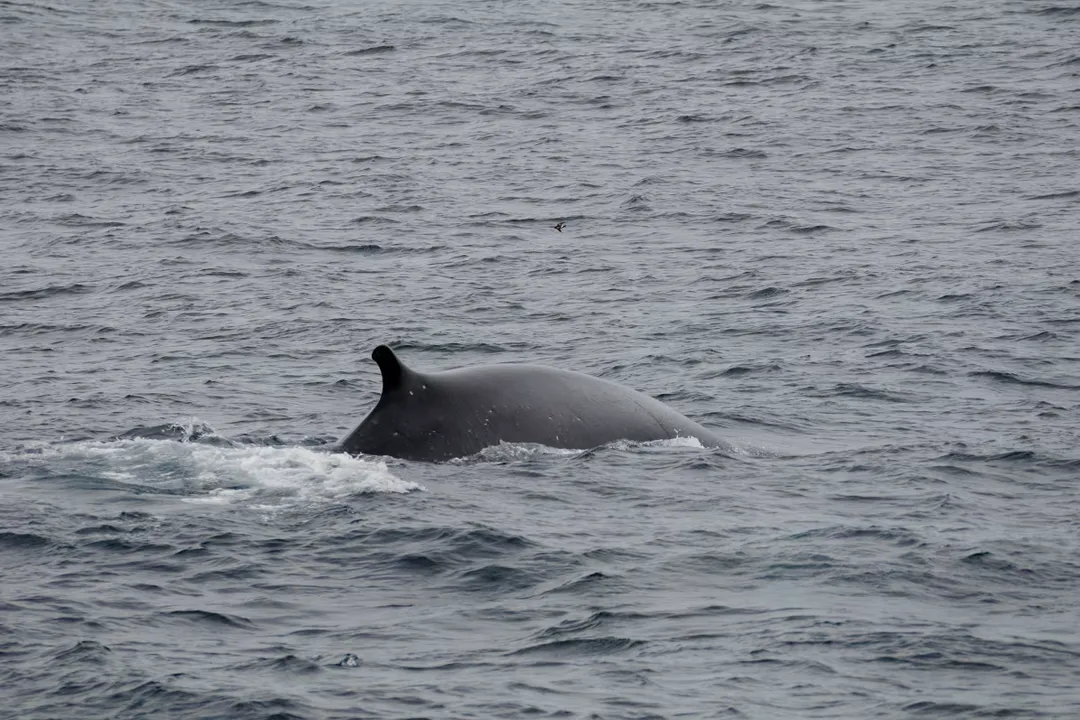
The North Atlantic represents a critical sector of the sei whale’s territory, marked by pronounced seasonal movements between the cooler northern waters for summer feeding and the warmer southern waters for winter breeding. [3]
In the summer months, the whales move north to forage. In the western North Atlantic, this includes key areas off the U.S. coast such as the Gulf of Maine, Georges Bank, and Stellwagen Bank. [2] Sightings and historic catch data suggest a northward progression along the shelf edge, arriving in these areas by mid- to late-June. [3] The summer feeding range in the western North Atlantic can extend as far north as Greenland and Iceland. [2][3]
For the Massachusetts ecosystem, this means the sei whale is most active and observable in the spring when they concentrate along the eastern and southwestern edges of Georges Bank, moving into the Northeast Channel and south of Nantucket. [2] Remarkably, they appear to frequent the vicinity of Georges Bank year-round, though they are generally offshore in deeper water, which is why they are seldom seen up close. [2] An unusual concentration of up to 40 individuals was noted in Cape Cod Bay in April 2017, demonstrating that the "offshore" rule has occasional, significant exceptions, often linked to dense prey blooms. [2]
Moving further south along the U.S. eastern seaboard, the habitat becomes a migratory corridor rather than a primary feeding area. For New Jersey, for example, conservation experts note that sei whales are not typically encountered in their coastal waters, which extend only three nautical miles from the shore. [2] It is highly probable that they utilize the deeper ocean waters beyond this limit as a migratory pathway linking their northern summer feeding grounds with their unknown southern winter breeding grounds. [2] The general western North Atlantic range is considered to stretch from southern Europe or northwestern Africa up to Norway in the north, and down from the southern United States toward the Caribbean and the Gulf of Mexico in the south. [3][2] The historical southern extent of confirmed records even includes strandings in the northern Gulf of Mexico and the Greater Antilles. [3]

# Pacific Distribution Corridors
The vast expanse of the North Pacific also supports a significant population, though its historical distribution was drastically altered by intensive whaling. [3] In this ocean basin, the seasonal shift in latitude is quite pronounced.
During the summer, when they are concentrated on feeding grounds, sei whales in the eastern North Pacific are found ranging from off the coast of California all the way up to the Gulf of Alaska. [3] Wintering grounds are much further south, extending from central California southward, potentially reaching the equator. [3] Research involving tagged whales suggested a migratory connection between the deep waters off California and the coastal areas of Washington and British Columbia. [3]
Historically, the western North Pacific, particularly the Sea of Japan and the Sea of Okhotsk, was a known habitat, frequently referred to as a "sei–ground". [3] Today, however, whales are far less common there, with sightings indicating that the historical abundance has not returned following the cessation of commercial hunting. [3]
When considering the entire span of the eastern Pacific from California northward, it is worth noting that the bulk of the population—around 75%—resides east of the International Date Line. [3] Furthermore, the habitat preference for deep water means that while they are present off the West Coast, they are usually detected through acoustic monitoring or research surveys rather than by casual observers near the beaches. [2]
# Southern Waters Residency
The Southern Hemisphere’s habitat information is largely derived from historical whaling data, which showed distinct summer and winter distributions, though the precise winter locations remain less certain today. [3]
During the southern summers, historic catch data places sei whales between approximately and in the South Atlantic and southern Indian Oceans. [3] In the South Pacific, the summer range extended further south, between and . [3] Several of the Antarctic destinations frequented by modern expedition cruises, such as the Falkland Islands and South Georgia, are known areas within this broad southern envelope. [1] In the case of the Falklands, there is a peculiar observation that suggests a preference for staying inshore, sometimes venturing into large bays, which contrasts with the general offshore preference seen elsewhere. [3]
The historic wintering grounds were recorded significantly closer to the equator, specifically off the coasts of northeastern Brazil (around ) and Peru (around ). [3] Along the South American continent, they are generally distributed along the west coast, extending down the entire Chilean coast to the Beagle Channel. [3] Despite the large historic catches in the Southern Ocean, the current status of these populations remains severely depleted compared to the North Atlantic and North Pacific estimates. [2]
# Analyzing Habitat Drivers: Depth and Prey Dynamics
When we synthesize the data on depth and location, a clear picture emerges of the sei whale as an offshore specialist. They are not typically found in enclosed or semi-enclosed seas, nor are they found near continental shelves where shallower waters dominate. [3][2] This strong tendency to favor deep water has profound implications for understanding their movements and assessing their risks.
For instance, the observation that they are rare in New Jersey coastal waters but likely use the deep offshore waters beyond the three-mile limit perfectly illustrates this preference. [2] For coastal observers, this means that when they do see a large baleen whale, it is far more likely to be a migrating humpback or a resident right whale, rather than a sei whale. The sei whale’s home is generally in the deeper, pelagic zones, making their feeding aggregations an event tied to subsurface features like seamounts or continental slope edges, where prey layers are reliably found. [2]
This specific depth preference also highlights a unique challenge in modern conservation management. While vessel strikes and entanglement are major threats globally, the specific placement of shipping lanes versus sei whale foraging grounds is constantly shifting because the whales track their food. [2] A large concentration of copepods moving slightly deeper or further offshore due to subtle temperature changes can pull the whales out of areas monitored for vessel traffic, only for them to reappear years later when the conditions are right again. [2] This dynamic is a key factor in the species' unpredictable distribution that confounds simplistic spatial management tools designed for species with more stable migratory routes. [3][2] It suggests that any successful conservation strategy for this species must be dynamic and responsive to oceanographic data, rather than relying solely on fixed seasonal boundaries. The location of the sei whale is, first and foremost, the location of its preferred plankton bloom, which is the ultimate director of its annual geography. [2][3]
Related Questions
#Citations
Sei Whale | NOAA Fisheries
Sei whale - Wikipedia
Sei whale - Conserve Wildlife Foundation of NJ
Sei Whale - Mass.gov
Facts, pictures & more about Sei Whale - Oceanwide Expeditions
[PDF] Sei Whale