Where are the oriole birds right now?
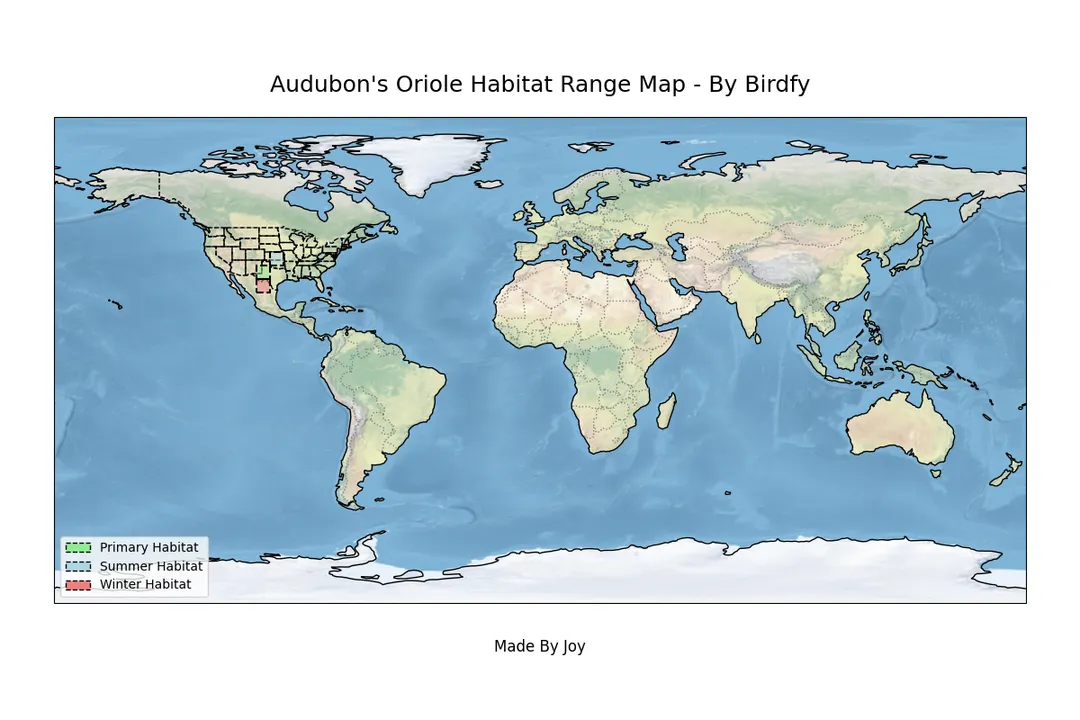
The answer to where the oriole birds are depends entirely on the time of year, and as the calendar flips to the end of December, the vibrant flashes of orange and black we look for in North American yards are currently far south of our borders. For the most commonly observed species in the East, the Baltimore Oriole, their time in the northern breeding grounds is long past. [1][3] Right now, these energetic migrants are settled in their non-breeding habitats, primarily across Central America and the northern fringes of South America. [1][3]
# Current Geography
The general consensus, supported by migration maps and range data, places the bulk of the Baltimore Oriole population in regions like Southern Mexico, Panama, and points further south. [1][3] Their arrival in these wintering areas is a crucial survival strategy, allowing them to access abundant insect life and fruit sources through the colder months when northern resources vanish. [1] While specific, real-time, day-to-day tracking maps like those provided by BirdCast are invaluable during the spring push north, they predominantly show low detection rates or southward movement during the late fall and winter months, confirming the general southward dispersal. [5]
# Range Dynamics
To appreciate their current location, it helps to understand the scope of their annual travels. The Baltimore Oriole's breeding range stretches across the eastern and central United States and southern Canada. [3] When they depart, they undertake significant migratory legs. Some sources detail the pathways, showing a broad front moving south from their nesting sites, often utilizing coastal routes or staging in areas before crossing larger bodies of water. [4] Contrast this with their summer presence: if we were asking this question in early May, the range maps would show them steadily filling in the eastern half of the continent, from the Great Plains eastward. [3] The current location is the mirror opposite of that spring expansion.
It is worth noting that not all orioles are the same. While the Baltimore Oriole dominates eastern North American migration conversations, other species exist, such as the Bullock's Oriole in the West. [10] The Bullock's Oriole also moves south for the winter, typically heading toward Mexico and sometimes into Central America, following a similar seasonal rhythm to its eastern cousin. [10] Knowing which local oriole you are interested in helps narrow down the potential wintering location, though both share the necessity of moving south when northern weather turns cold. [10]
# Migration Timing Context
Though they are currently absent, the timing of their departure and return dictates when we can expect to see them again. Reports detailing arrival often focus on the "first sight" observations across various states. [8][9] For instance, reports from Massachusetts and Rhode Island in the spring of previous years give us a reference point: arrival often begins mid-to-late April, with higher concentrations following in early May. [8] The general expectation for the species is that they will generally arrive when the weather warms sufficiently, usually after their primary food sources begin emerging. [9]
This seasonal timing presents an interesting contrast when viewing the abundance maps. A weekly abundance map for the Baltimore Oriole, such as those derived from eBird science data, shows a distinct "bullseye" of high abundance centered over the breeding range in summer, which completely collapses toward the south during the winter months. [7] If you check that data in July, 90% of the birds are north of the U.S. border; checking it in January shows that concentration shifting south, illustrating the sheer scale of the population shift we are currently experiencing. [7]
Considering the documented arrival windows across New England—where residents sometimes anxiously await the first jelly-eater around the second week of May—one can infer the necessary lead time for preparation. [8] A key takeaway for hopeful watchers is to recognize that the migratory clock resets the moment they leave. The date they arrive next spring is somewhat decoupled from the winter weather they experience; rather, it is keyed to photoperiod changes and weather fronts that trigger the northward push from Central America. [9]
# Species Diversity
While we focus heavily on the Baltimore Oriole, understanding the broader oriole family offers necessary context for the question of "oriole location". [10] The term "oriole" covers a wide array of colorful birds globally. [10] For instance, North America also hosts the Orchard Oriole, which, while migratory, tends to winter slightly further north than the Baltimore Oriole, often remaining in Mexico rather than pushing as far south as the Pacific coast of Central America. [10]
In Europe, the Orioles are represented by species like the Eurasian Golden Oriole. [10] These birds follow their own migratory routes, typically wintering in Africa south of the Sahara Desert. [10] This highlights that the "current location" is not a single spot on the globe, but rather several distinct, seasonally appropriate wintering grounds depending on the species in question. For anyone interested in the birds found in the United States, however, the focus remains firmly on the transit and current wintering of the Baltimore and Bullock's species. [10]
# Monitoring Tools and Interpretation
To gain insight into the birds' movements when they are moving, several tools are employed by birders and researchers. Live migration maps, for example, utilize acoustic monitoring and radar data to paint a picture of nocturnal flight corridors. [5] During spring migration, these tools show massive nocturnal movements across the central and eastern U.S. when birds are actively flying between staging areas. [5]
When you examine these migration maps in late December, they are essentially empty relative to the spring rush. The lack of high-volume detections on these radar-based maps serves as a powerful confirmation that the birds are not currently undertaking long-distance nocturnal flights; they are settled. [5] This is a useful diagnostic for birders: if you are accustomed to seeing high migration traffic on these maps in April, their absence in December confirms their wintering strategy.
Furthermore, crowd-sourced data, such as sighting reports provided to resources like All About Birds or Audubon Explorer, paints the current picture by omission. [1][4] The lack of recent sightings in northern latitudes during winter confirms the southward distribution. [1][4] A dedicated birder tracking migration might notice that while the Baltimore Oriole sightings cease in their home state by early October, the pattern of confirmed sightings in the southern range begins to intensify around that same time. [3]
# Preparing for the Spring Return
Since their current location is distant, the most practical application of this information for a North American reader is preparing for their return next season. A common query during the winter is when to put out the welcome mat, specifically the preferred food sources like grape jelly or sugar water. [9] Relying on historical arrival data is the best predictor. If a region like Massachusetts typically sees its first arrivals in the last week of April, a proactive birder could begin placing fresh jelly out during the third week of April to be ready before the main wave arrives. [8]
This preparation requires an understanding of the local environment's readiness. The expected arrival of orioles often corresponds with the availability of certain resources, which can be cross-referenced with local phenological calendars—something the migration reports often hint at without explicitly stating a formula. [9]
Here is a generalized timeline framework based on typical arrival patterns cited across various regional reports, designed to help time feeder deployment:
| Region (General) | Typical First Sightings | Optimal Feeder Setup Window |
|---|---|---|
| Southern States (e.g., Texas, Gulf Coast) | Mid-March to Early April | Mid-March |
| Mid-Atlantic States (e.g., PA, NJ, MA) | Mid-April to Early May | First week of April |
| Northern Tier States/Canada | Late April to Mid-May | Third week of April |
| [8][9] |
This timing framework assumes a normal year. If a birder notices an unusually warm or cold spring preceding the expected arrival month, they might adjust their feeder deployment by a few days, knowing that strong southerly winds or a sudden cold snap can stall the leading edge of the migration front even when the birds are physically close. [9]
Another subtle action point relates to habitat modification. Orioles prefer areas with mature trees and open lawns, often favoring areas near water sources or flowering nectar plants. [1] While they are in Central America now, ensuring that the native shrubs and fruit-bearing trees on your property are healthy this winter—perhaps by pruning or pest management—ensures that when they return from their long flight, your yard offers the immediate caloric reward they need after their demanding journey. [1] The work done in January and February directly impacts July nesting success, even though the birds are currently thousands of miles away.
Ultimately, while the oriole birds are currently enjoying the warmth and sustenance of their southern refuges, their predictable annual cycle allows us to track their absence and prepare diligently for their inevitable, vibrant return. By understanding the current winter geography provided by range maps and anticipating the regional arrival patterns documented in migration news, we connect the quiet winter landscape to the explosive color of spring.: [1] https://www.allaboutbirds.org/guide/Baltimore_Oriole/maps-sightings: [2] https://journeynorth.org/tm/oriole/News.html: [3] https://www.allaboutbirds.org/guide/Baltimore_Oriole/maps-range: [4] https://explorer.audubon.org/explore/species/1212/baltimore-oriole/migration: [5] https://birdcast.info/migration-tools/live-migration-maps/: [6] https://journeynorth.org/oriole/: [7] https://science.ebird.org/status-and-trends/species/balori/abundance-map-weekly: [8] https://www.telegram.com/story/news/environment/2024/04/26/baltimore-oriole-migration-tracker-map-massachusetts-rhode-island-new-hampshire-vermont/73436061007/: [9] https://www.birdsandblooms.com/birding/birding-basics/will-baltimore-orioles-arrive/: [10] https://www.birdfy.com/blogs/blogs/oriole-species-to-know-across-america-and-europe?srsltid=AfmBOoqHO_KKluqGCLSrX0CdyJKnfvid5UJAkZHoY6pNbAnV5s0ahnfD
Related Questions
#Citations
Baltimore Oriole Sightings Map - All About Birds
Oriole Migration and Annual Cycle | Baltimore Orioles - Journey North
Baltimore Oriole - Bird Migration Explorer - National Audubon Society
Live bird migration maps - BirdCast
Baltimore Oriole - Weekly Abundance Map - eBird Status and Trends
Bird Migration Map: Track Baltimore oriole return to New England
When Will Baltimore Orioles Arrive in Spring? - Birds and Blooms
Oriole Species To Know Across America And Europe - Birdfy