What two breeds make a Caucasian Shepherd?
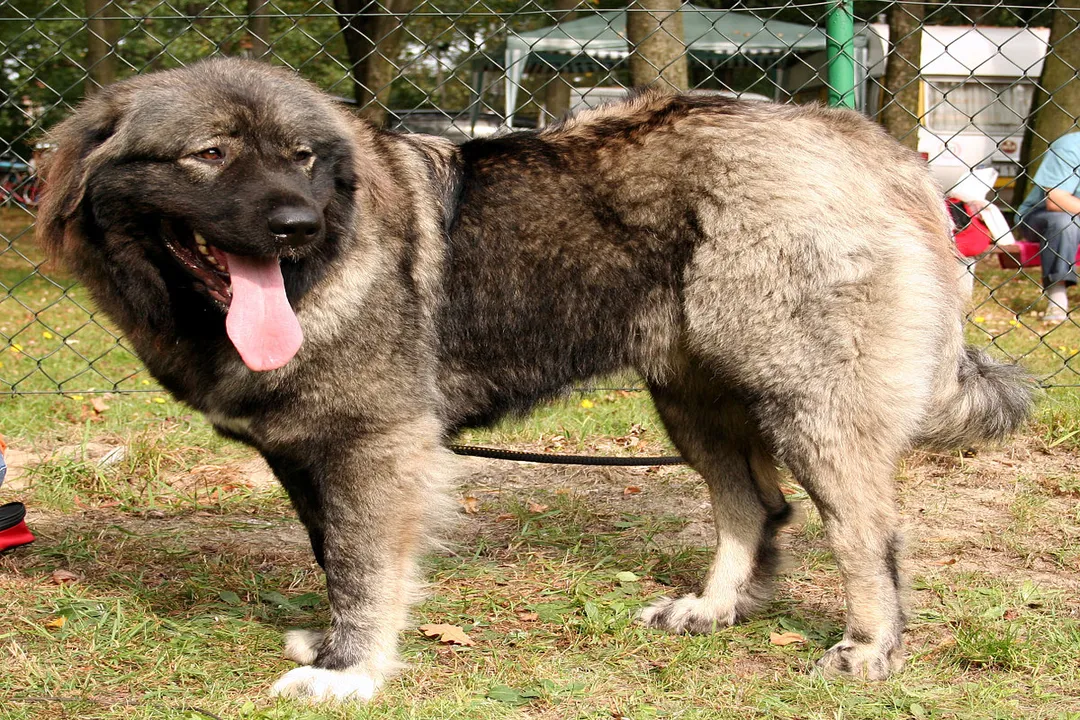
The Caucasian Shepherd Dog, known formally by various names depending on the region, is less a singular, defined breed created by crossing two specific lines and more a collection of ancient livestock guardian dogs developed across the vast Caucasus Mountain range. [1][3] To ask what two breeds make this impressive canine often misses the historical reality: it is an old landrace, a type shaped by geography and necessity over millennia, rather than a modern creation stitched together from two distinct pedigrees. [2] Its existence predates the modern kennel club system that seeks to rigidly define breeds. [3]
# Ancient Lineage
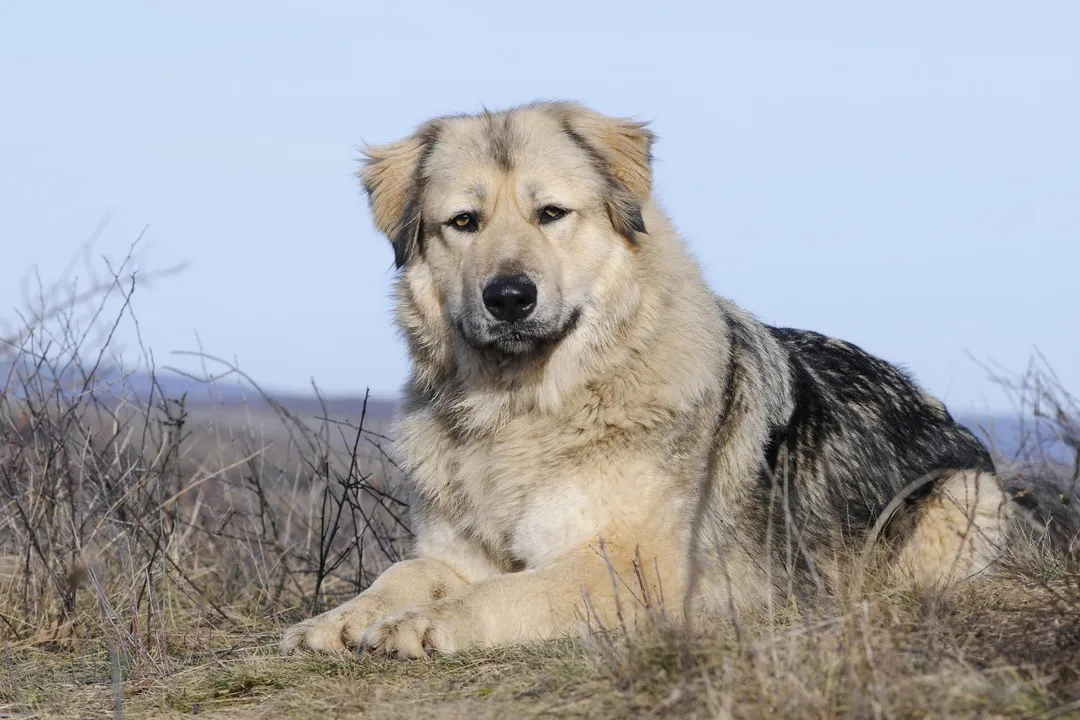
This imposing dog finds its heritage in the rugged terrain stretching from the Caucasus Mountains, an area spanning countries like Georgia, Armenia, and Azerbaijan. [1] For countless generations, these powerful dogs worked alongside nomadic shepherds, their primary duty being the protection of flocks from formidable predators such as wolves and bears. [1][3][6] This demanding lifestyle ensured that only the strongest, most independent, and fearless dogs survived and reproduced, leading to a powerful working dog type rather than a standardized appearance. [2] They are fundamentally flock guardians, whose inherent nature is tied to vigilance and territorial defense. [6]
The very concept of the "Caucasian Shepherd Dog" (CSD) is broad, encompassing dogs from different corners of that expansive area, and this regional diversity is key to understanding its composition. [9] When people refer to the CSD, they are often referring to a general phenotype or a specific national standard recognized by certain organizations. [1]
# Regional Components
Instead of two parent breeds, the CSD is best understood as being composed of several distinct regional types or variants that share a common ancestry and function. [9] These variations developed due to isolation and differing local predator pressures, leading to subtle differences in size, coat, and temperament. [1]
Several distinct types are frequently identified:
- The Georgian Shepherd: Often associated with a very large and powerful build, these dogs were instrumental in guarding livestock in the high mountain pastures of Georgia. [1]
- The Armenian Shepherd: Similarly large, this variant also maintained a strong guarding instinct suitable for its homeland. [1]
- The Circassian Shepherd: Associated with the northern slopes of the Caucasus. [1]
- The Dagestani Shepherd: Developed in the region of Dagestan. [1]
- The Stavropol and Kuban Types: These types are sometimes grouped with the South Russian Shepherd Dog or considered distinct historical strains. [1]
The South Russian Shepherd Dog is a particularly important variant to consider, as it is sometimes recognized as a separate breed entirely, yet shares deep roots with the CSD group. [1][9] This close relationship highlights the difficulty in drawing sharp lines between these ancient landraces.
A helpful way to conceptualize this is to think of the CSD as a canine umbrella sheltering several closely related, but locally refined, populations. [9] The variation is so significant that the physical appearance between a short-coated Dagestani dog and a long-coated Georgian dog can be quite pronounced, even though both fall under the broad CSD grouping. [1][5]

# Closely Related Canines
To truly understand the makeup of the CSD type, it is necessary to contrast it with other major flock guardians from the surrounding regions, as these breeds are frequently linked or historically confused with the CSD—sometimes being viewed as branches that split off centuries ago. [8][9]
The Central Asian Shepherd Dog (CAO), or Alabai, is perhaps the closest relative. [8] While both are massive livestock guardians developed in surrounding regions, breed standards and kennel clubs typically treat them as separate entities today. [9] The CAO generally originates from areas further east and south of the primary Caucasus Mountains, and while their functions are identical, their precise breeding histories and resulting physical standards diverge. [2][8] Understanding the CSD requires acknowledging the CAO as its near cousin, stemming from the same ancient stock but evolving separately under different local management. [9]
Another related dog is the South Russian Shepherd Dog (SRSD), which the Wikipedia source lists as a recognized type of Caucasian Shepherd, suggesting a direct historical overlap or inclusion within the broader CSD umbrella depending on the registry. [1][9] The SRSD often features a distinct, long, shaggy white coat, differentiating it visually from many other CSD variants. [9]
If one were forced to simplify the composition into two main conceptual influences, it would not be two breeds, but rather the indigenous Caucasian mountain dog combined with the shared, very ancient molosser ancestry common to many large guardian breeds across Asia and Europe. [2]
# Varietal Comparison
The distinctions between the common types that make up the CSD concept are significant enough to warrant careful attention, especially for those interested in the breed's history or function. The differences primarily relate to coat length, body structure, and regional temperament preferences based on local needs.
| Regional Type | Primary Location | Typical Coat Length | General Function Emphasis |
|---|---|---|---|
| Georgian | Southern Caucasus | Long, thick | Strength, imposing presence |
| Dagestani | Eastern Caucasus | Shorter, dense | Endurance, weather resistance |
| South Russian Shepherd | Border Regions | Very long, shaggy | Camouflage, extreme cold tolerance |
| Central Asian Shepherd | Eastern Neighbors | Variable, often medium | Independence, vast territory guarding |
| [1][9] |
Observing how the coat length shifts between the shorter-coated Dagestani types and the longer-coated Georgian types shows that environmental pressure was a key factor in shaping this "breed" group. [1] A practical takeaway for any prospective owner or enthusiast is that searching for a "Caucasian Shepherd" is an exercise in specificity; you are selecting a regional variant whose needs might differ slightly from the generalized standard often published by international bodies. [9]
# Ancestry Nuance
The challenge in defining the CSD by two breeds arises because its history is one of preservation through utility, not planned pairing. Imagine a shepherd in the 1700s needing a dog capable of stopping a wolf attack; they would select the largest, bravest dog they knew that had protected flocks before, regardless of its precise lineage documentation—which did not exist. [3] This selection process, repeated across centuries and valleys, resulted in distinct regional populations that all shared the core guardian traits: massive size, thick coat, profound territorial instinct, and courage. [2][6]
It is this continuous, functional selection pressure that cemented the CSD as a type rather than a specific crossbreed. [3] If the goal was to create a modern hybrid, one might intentionally pair a Great Pyrenees with a Mastiff, for instance. The CSD evolved organically, meaning its "parents" are thousands of years of working ancestors from the specific geographic region. [1] The closest we come to a two-part answer is recognizing the main split between the dogs developed in the western/central Caucasus (often aligning with the CSD standard) and those developed further east (often aligning with the CAO standard). [9]
# Guardian Mindset
Understanding the dog’s ancestral role is crucial for modern ownership, and this insight comes directly from recognizing its inherent composition as a highly independent guardian. [2] Because these dogs were expected to work without direct human oversight for long periods while defending flocks across huge territories, their core programming prioritizes independent decision-making and absolute territorial defense. [6]
When integrating this type of dog into a modern family setting, the owner must respect this independent spirit. Unlike breeds developed for close partnership, like many modern sporting or companion dogs, the CSD requires a confident, experienced leader who understands that the dog’s natural inclination will be to view the property and family as a flock needing protection from perceived threats. [2] This means training must be based on establishing clear boundaries and respect early on, rather than relying solely on appeasement or constant direction. [3] Their relationship with children, for example, often mirrors their approach to sheep—they become fiercely protective of their 'flock' members, provided they are raised together. [8] This intense protective nature is not learned; it is inherited from its ancestral make-up. [6]
Ultimately, the Caucasian Shepherd Dog’s identity is a rich mosaic of regional mountain dogs, solidified by function over fashion. It is not composed of two specific breeds, but rather an amalgamation of several long-established guardian types that thrived in one of the world’s most demanding canine environments. [1][3]
Related Questions
#Citations
Caucasian Shepherd Dog - Wikipedia
Caucasian Shepherd Dog - American Kennel Club
Caucasian Shepherd: Dog Breed Characteristics & Care
Huge Caucasian Shepherd. I'll be meeting 4 different types of flock ...
The Caucasian Shepherd Dog is a large livestock guardian ... - Reddit
Caucasian Shepherd Dog - Europetnet
Caucasian Shepherd, Alabai/Central Asian Ovcharka or Boerboel?
Caucasian Shepherd Dog Variants: Types & Characteristics