What is a Parasaurolophus favorite food?
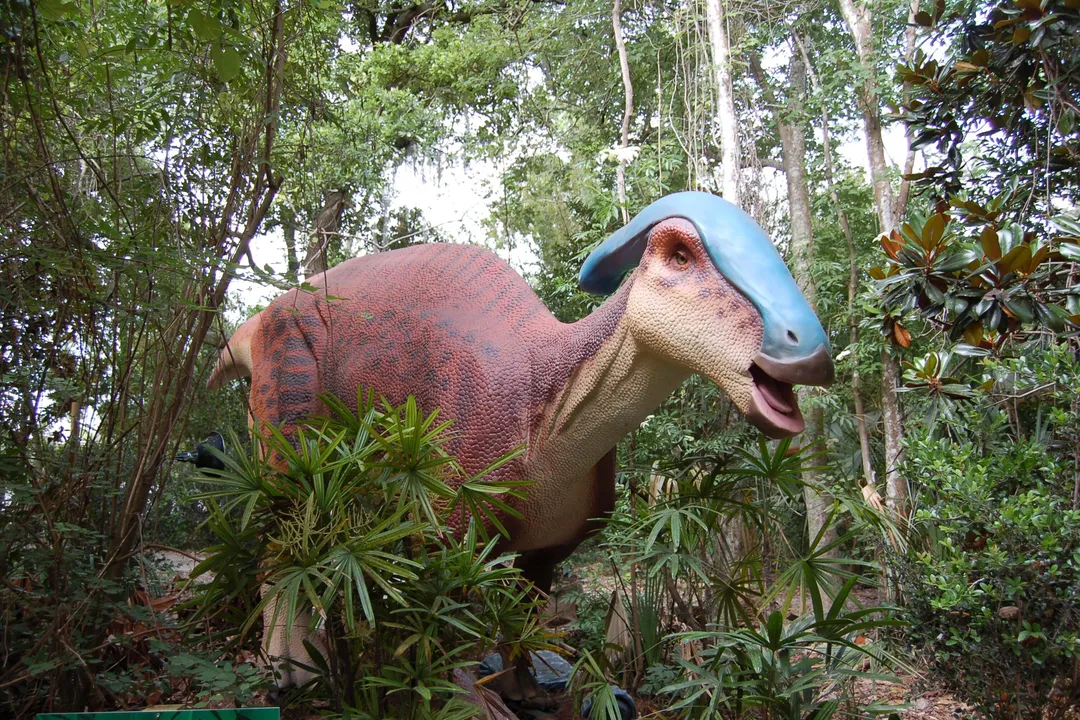
The distinctive, long, backward-sweeping crest atop the skull immediately identifies the Parasaurolophus, an iconic dinosaur from the Late Cretaceous period. While the visual distinctiveness of this animal often captures the public imagination, the nature of its daily meals—the specific plants it prioritized—is central to understanding its life. Like its relatives in the hadrosaur family, this dinosaur was firmly established as a herbivore. Its existence was entirely dependent on the flora available in the swampy floodplains and forests where it lived.
# Herbivore Role
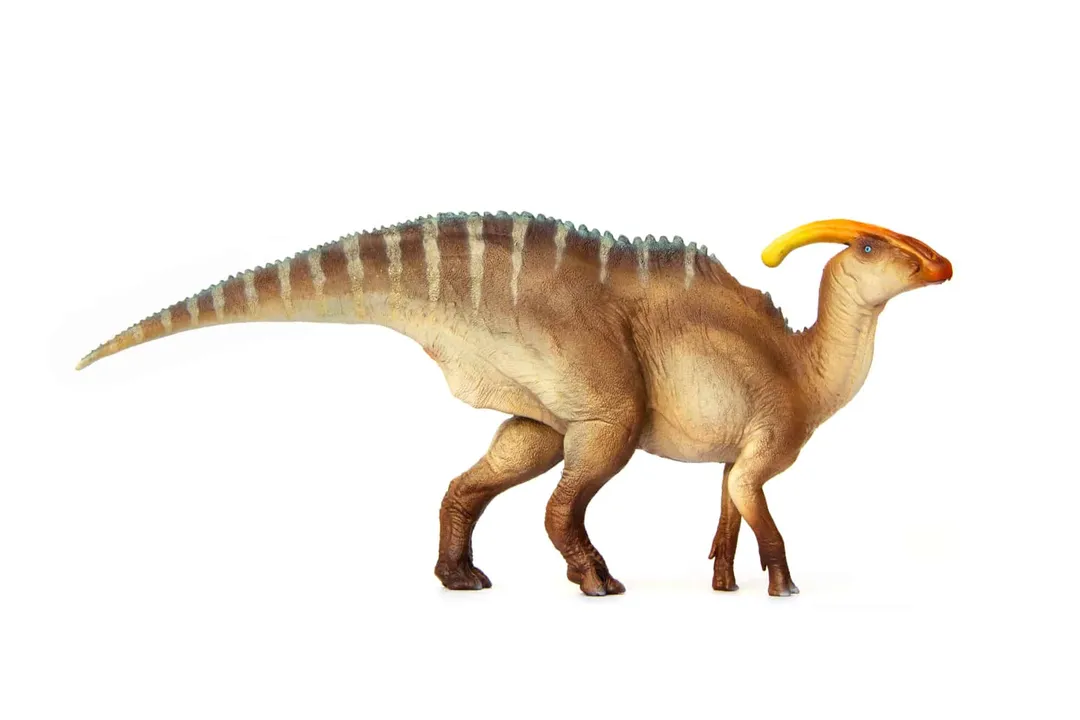
Establishing Parasaurolophus as a plant-eater defines the entire scope of its dietary quest. It subsisted solely on plant matter. As a large dinosaur, its sheer body mass necessitated a substantial and continuous input of calories, meaning its diet wasn't just about what it ate, but how much of it was available and accessible throughout the year. Its classification places it among the Ornithischia, the "bird-hipped" dinosaurs, many of which evolved specialized methods for processing copious amounts of vegetation.
# Plant Types
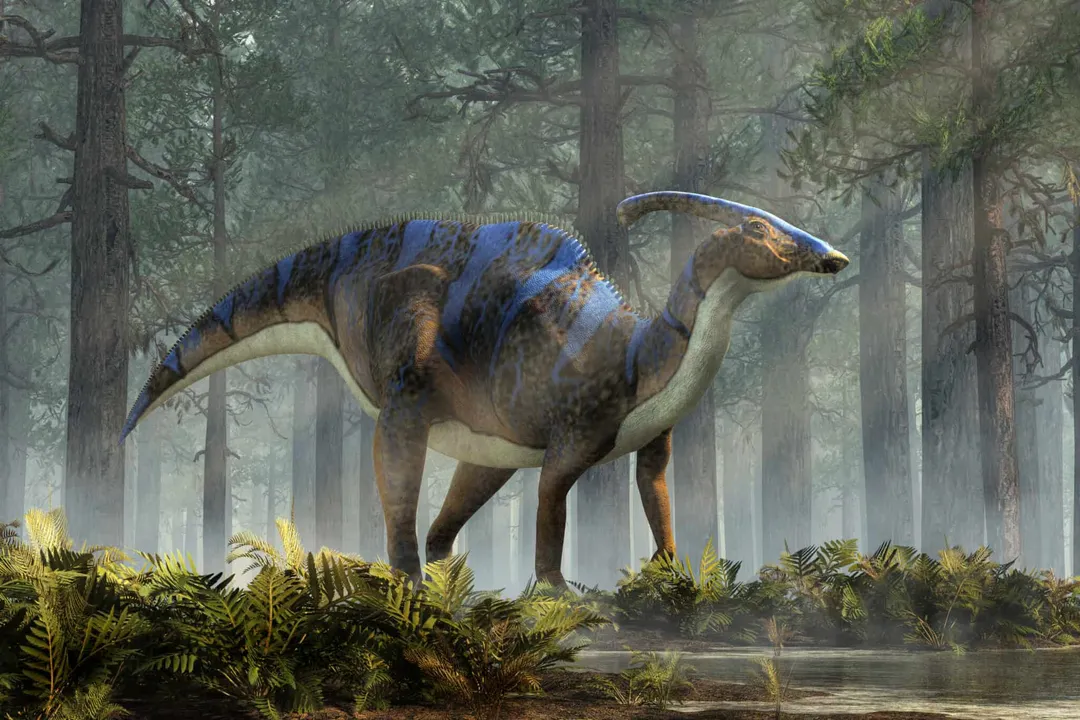
While pinning down a singular "favorite" food in the way a modern animal might choose between berries or leaves is impossible without direct fossilized stomach contents showing preference, paleontologists can deduce the likely menu based on its anatomy and the flora present during the Campanian stage of the Late Cretaceous period. The evidence points toward a diet composed primarily of tougher, more primitive plant groups prevalent at the time.
The menu for Parasaurolophus likely included ferns, cycads, and conifers. These plants represent structural components that are considerably more fibrous and harder to digest than the soft, broad leaves of many flowering plants that would become dominant later in dinosaur evolution. Conifers, for instance, have rigid needles and hard seed cones, while cycads possess tough, palm-like leaves.
If we consider the environment, Parasaurolophus inhabited North America millions of years ago when flowering plants (angiosperms) were present but perhaps not as diverse or widespread as they would become later. Therefore, the staple diet would necessarily rely on these more ancient, structurally resilient forms of vegetation.
# Feeding Structure
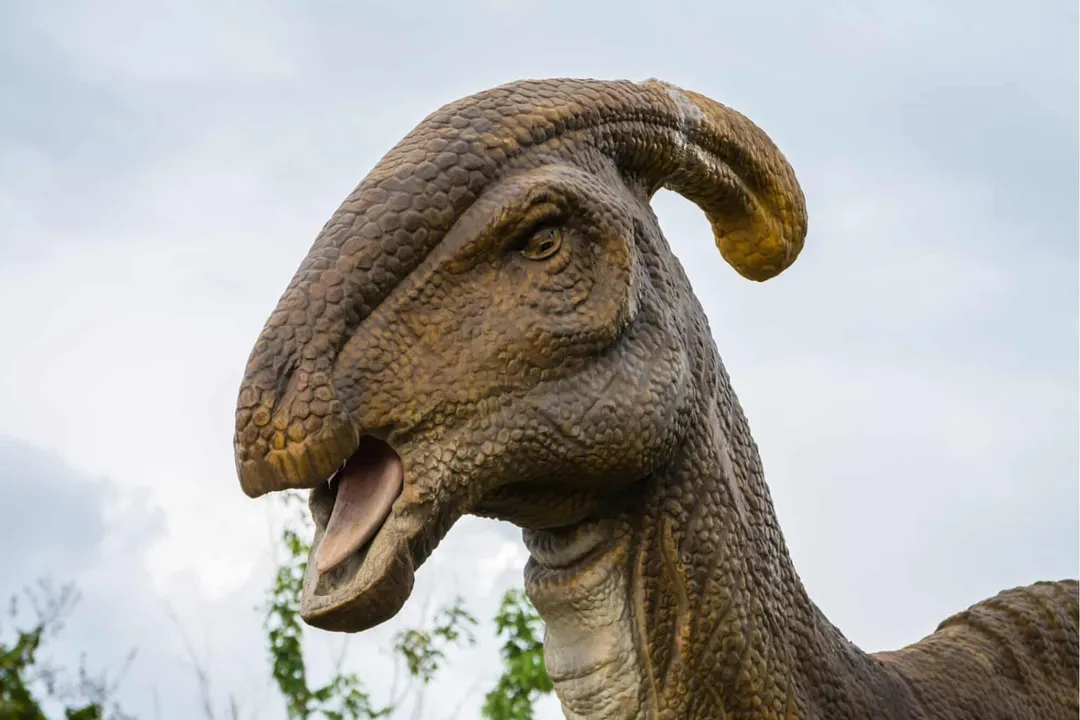
The means by which Parasaurolophus processed these fibrous plants offers insight into which textures it could handle best. This animal possessed the characteristic duck-like beak of the hadrosaurids. This beak was not designed for tearing flesh but for cropping or snipping large amounts of vegetation quickly.
The real magic, however, happened further back in the jaw. Hadrosaurs are famous for their incredible dental batteries—dense, grinding surfaces composed of hundreds of tightly packed, constantly replaced teeth. This structure suggests that while the beak was good for harvesting large amounts of roughage, the teeth were crucial for the actual breakdown. The immense grinding power available would be highly beneficial when dealing with the woody stems of cycads or the tough needles of conifers.
This need for powerful grinding leads to a small analytical point: the sheer mechanical requirement of processing conifers and cycads suggests that the animal was built to handle significant bulk and toughness. While flowering plants might offer more concentrated sugars or easier nutrients, the Parasaurolophus was clearly equipped, perhaps favoring sheer volume of available, high-fiber material over the occasional softer meal. The constant abrasion from this diet meant a continuous need for tooth replacement, a necessary adaptation for an animal whose survival depended on its ability to chew efficiently day in and day out.
# Ecological Considerations
Understanding the Parasaurolophus diet also requires looking at the competition and its position in the food chain. As a large, relatively slow-moving herbivore, it occupied a niche similar to modern-day large grazing or browsing mammals. To support its size, it needed constant access to food, placing intense pressure on local plant resources.
It is plausible that the Parasaurolophus acted as a major ecosystem engineer simply by consuming so much woody and fibrous material. The sheer quantity of plant matter that must have passed through an animal of this size—potentially weighing several tons—would significantly alter the landscape by clearing undergrowth and dispersing seeds.
When considering what might have been its "favorite," we might rephrase the question to ask what was most efficiently utilized. Given the environment, the plants it consumed—ferns, cycads, and conifers—were likely abundant. An organism rarely has a "favorite" when survival depends on constant foraging; rather, its preference leans toward whatever is easiest to acquire in mass quantities while meeting its energy demands. If a patch of young conifer sprouts offered a good balance of readily accessible material and necessary caloric density compared to older, perhaps drier ferns, that patch would certainly see heavy traffic from the herd.
Another deduction arises when comparing this diet to that of contemporary herbivorous dinosaurs. If other, smaller herbivores specialized in softer, low-lying ground cover (perhaps smaller ferns or mosses), the Parasaurolophus, with its height and powerful jaws, might have naturally focused on browsing medium-height vegetation—the tops of ferns or the lower branches of conifers—effectively specializing in a slightly different vertical stratum of the available flora. This specialization reduces direct competition with smaller grazers that might be competing for the ground-level food sources.

# Foraging Behavior
The presence of the large cranial crest, theorized to be involved in sound production for communication, might also indirectly relate to feeding. If these dinosaurs lived in herds, coordinating movement to new, rich feeding grounds would be vital. A successful herd could locate and exploit a productive stand of cycads or a particular growth cycle of ferns more effectively than solitary animals. This social aspect suggests that the "favorite food" might shift seasonally based on herd movement and communal discovery rather than individual preference.
The sheer volume required means that foraging likely dominated a significant portion of the daylight hours. If we estimate, based on modern large herbivores processing fibrous diets, that Parasaurolophus needed to consume hundreds of pounds of material daily, the goal wasn't delicate selection but continuous consumption. The structure of the beak and the crushing power of the dental battery imply an adaptation for bulk processing rather than selective nibbling.
In summary, the specific plant a Parasaurolophus found most appealing remains an enjoyable mystery, but the facts point to a demanding diet of tough, ancient flora. Its survival was rooted in its ability to efficiently grind the abundant ferns, cycads, and conifers of its time using its specialized beak and complex dental structure.
#Videos
parasaurolophus - YouTube
Related Questions
#Citations
Parasaurolophus | Paleo Pines Wiki - Fandom
Parasaurolophus - Wikipedia
Parasaurolophus - Jacksonville Zoo
Parasaurolophus sp. (S/F) / (S/F-T/G) - Jurassic-Pedia
Parasaurolophus | Jurassic Park Wiki - Fandom
Parasaurolophus - A-Z Animals
Anyone else have Parasaurolophuses as their favourite dinosaur?
parasaurolophus - YouTube
Parasaurolophus Facts For Kids | AstroSafe Search - DIY.ORG