What is bluegill's favorite food?
Bluegill are one of North America's most recognized and frequently sought-after sunfish, found in environments ranging from small backyard ponds to sprawling natural lakes. [2][5] While anglers often debate the best lure or technique to entice a strike, understanding the bluegill's natural appetite is the real key to success, whether you are trying to catch them or raise them in a controlled environment. [1][5] Their preferred menu is surprisingly diverse, shifting dramatically based on their age, the season, and what their immediate surroundings offer. [1][6]
# Omnivore Habits
The bluegill operates as an opportunistic omnivore, meaning they will consume nearly anything edible they encounter in their aquatic habitat. [1][5] This adaptability is a major reason for their widespread success across different water bodies. [1] They are not strict carnivores, nor are they purely herbivores; instead, their diet is a mixture dictated by availability. [5] In natural settings, their diet generally leans heavily toward animal matter, but they readily supplement this with plant materials when necessary. [1][5]
When observing their feeding habits, it becomes clear that bluegill use both sight and opportunistic grabbing to capture meals. [1] They often feed near the surface or just beneath it, especially when aquatic or terrestrial insects are falling into the water. [1] Conversely, in deeper water or when actively seeking smaller organisms, they consume food suspended in the water column or found along the bottom. [5]
# Wild Food Sources
The bluegill's diet in the wild can be broken down into a few major categories: small invertebrates, larger prey, and plant matter. [1][5] The backbone of their sustenance is usually composed of insects and insect larvae. [1]
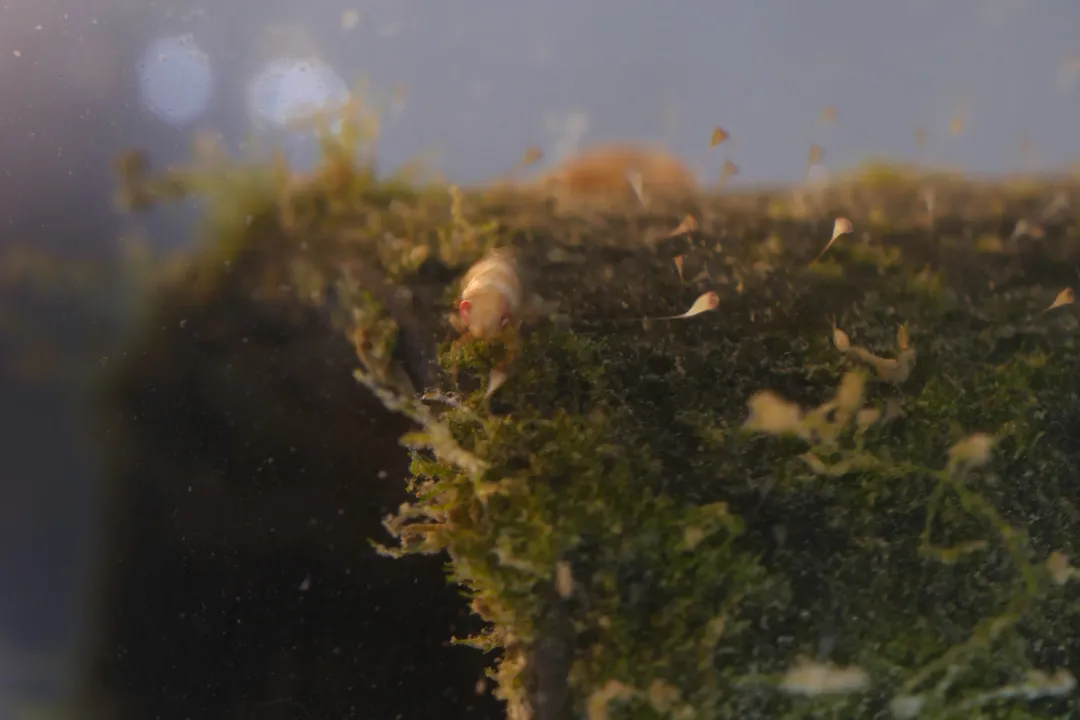
Aquatic insects are a prime target. This includes the larvae and nymphs of mayflies, midges, dragonflies, and caddisflies. [1][5] These smaller creatures provide consistent, high-protein meals throughout much of the year. [1] Terrestrial insects that accidentally land on the water's surface—like ants, grasshoppers, and beetles—are also readily consumed. [1] For the smaller bluegill, these surface-feeding opportunities are often a favorite, as the movement on the water's surface is an easy visual trigger. [1][5]
Beyond insects, bluegill consume various small crustaceans, such as Daphnia (water fleas) and copepods, especially when they are very young. [5] While the smallest bluegill subsist almost entirely on zooplankton, this reliance lessens as they grow. [5] A notable component of their diet, particularly when resources are plentiful or they are seeking bulk, includes algae, seeds, and small bits of plant matter. [1][5] Though they are often seen as predators, they are also significant consumers of this vegetation. [1]
A significant contrast exists between what an average-sized bluegill seeks and what a truly trophy bluegill targets. [6] Larger individuals shift their focus dramatically away from tiny insects and plankton towards more substantial prey. [6] These larger fish develop a strong preference for small minnows and even the fry (young) of other species, including bass and even smaller bluegill. [1][6] This predatory shift means that in lakes with high populations of small baitfish, the largest bluegill will focus heavily on stocking up on those fish for rapid growth. [6]
| Food Category | Primary Life Stage | Example Organisms | Notes on Preference |
|---|---|---|---|
| Zooplankton | Juvenile | Daphnia, copepods | Essential early in life [5] |
| Insects | All Ages | Mayfly nymphs, terrestrial ants | Consistent protein source [1] |
| Crustaceans | Juvenile/Adult | Amphipods, scuds | Found near structure or bottom [1] |
| Small Fish | Mature/Trophy | Minnows, fry of other species | Necessary for significant size gains [6] |
| Plant Matter | Adult (Supplement) | Algae, seeds | Used to bulk up diet when prey is scarce [1][5] |
If we look at this dietary progression, one can observe a distinct physiological tipping point. A bluegill measuring around 4 to 5 inches might still rely heavily on insects and crustaceans, but once it consistently exceeds 6 inches, the caloric demand often mandates a higher proportion of vertebrate prey like minnows to achieve trophy status. [6] This transition isn't always smooth; if a lake lacks a dense population of small forage fish, even large bluegill may have to subsist on a high volume of insects and algae, which naturally limits their maximum size potential. [6]
# Culture Feeding
When bluegill are raised in a managed pond setting, their favorite food choices become less about natural hunting and more about efficient nutrition delivery. [2][5] In this controlled environment, the primary goal is to provide a diet that promotes fast, healthy growth using commercially available feed. [2]
The overwhelming favorite for pond management is a high-quality floating fish pellet. [2][5] Floating pellets are preferred by those managing ponds because they allow the caretaker to easily observe consumption rates and ensure the fish are eating actively. [2] If the food sinks too quickly, it can settle on the bottom, fouling the water quality, which is a common pitfall for new pond owners. [2] Ideal pellets should sink slowly or float reliably, allowing the bluegill to consume them near the surface or just below. [2]
The nutritional content of these pellets is critical, often containing high levels of protein to support rapid development. [2] While commercial pellets form the staple diet, supplemental food items are frequently used, especially if the pond owner wants to encourage larger specimens or condition the fish for angling. [7] Live offerings like earthworms, bloodworms, or small minnows are eagerly taken. [2][7] Surprisingly, even mundane items like kernels of corn, small pieces of hotdog, or simple bread balls can attract a feeding response from bluegill in a pond setting, though these should not form the basis of a regular diet due to poor nutritional value. [4][5][8][9]
# Angler Bait Choices
For the angler targeting bluegill, the knowledge of their natural diet translates directly into effective bait selection. [4][5] The best baits mimic the most readily available or most desirable natural food items. [4]
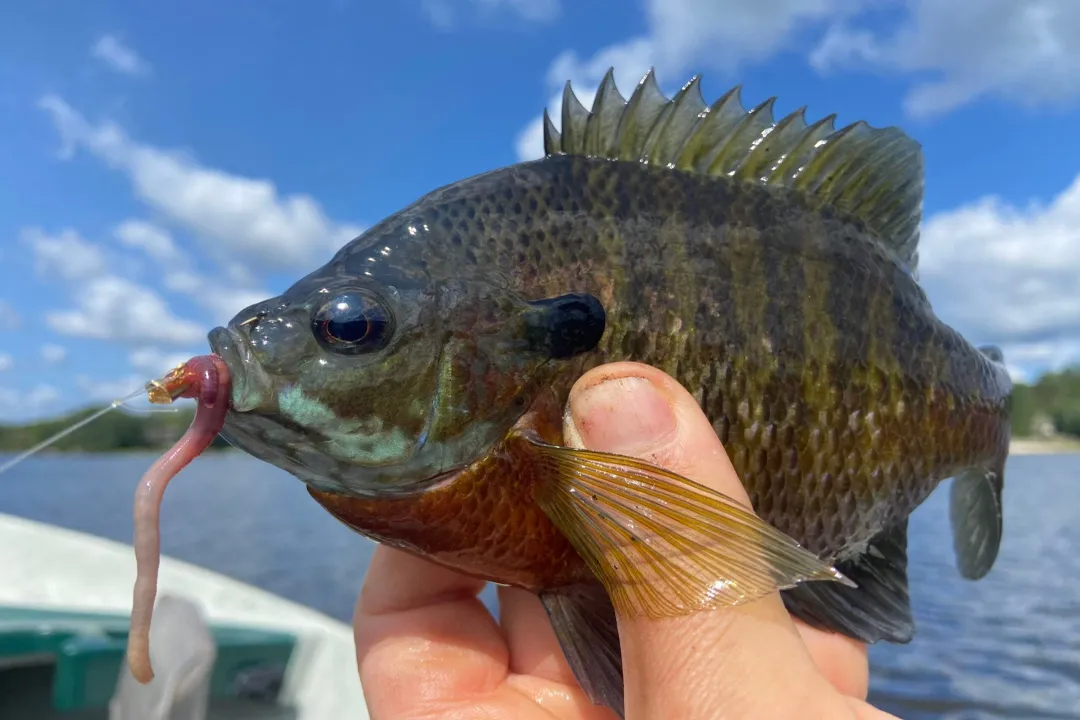
The undisputed champion among natural baits is the worm. [4][5][9] Whether it's a wriggling earthworm or a smaller redworm, their movement, scent, and texture perfectly appeal to the bluegill's instinctual feeding triggers. [4] Following worms closely are other live invertebrates, such as crickets and mealworms. [4][5] The erratic movement of a cricket on the water surface often draws immediate attention, mimicking a terrestrial insect in distress. [4]
When live bait is unavailable or inconvenient, many anglers have success with prepared or artificial baits that capitalize on texture and scent. [5][8] Small, dough-based baits molded onto a hook, sometimes scented or colored brightly, can be very effective, especially during times when bluegill are less actively hunting and more prone to investigate stationary items near structure. [5][8][9] Furthermore, small pieces of cut bait, such as corn kernels or even tiny slivers of hotdog, are often consumed by bluegill looking for easy calories, especially in areas where they are accustomed to seeing scraps. [4][5][8][9] In certain regions or specific ponds, anglers report success with tiny pieces of white bread balled onto the hook, demonstrating the fish's willingness to try novel, soft-textured foods. [4][9]
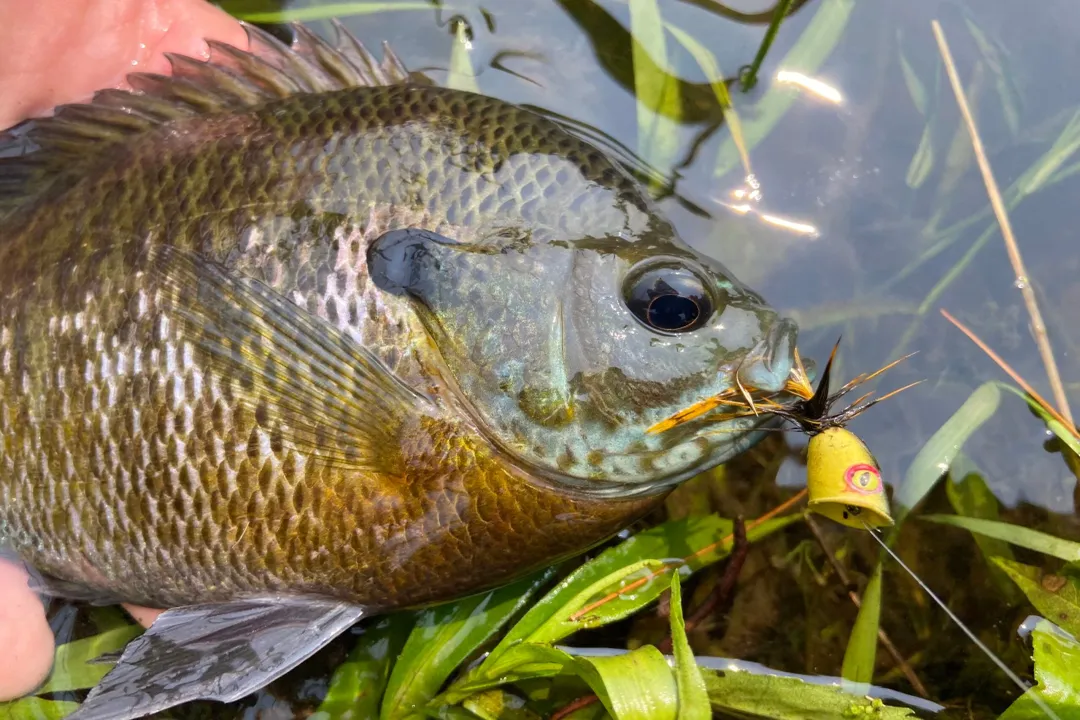
When choosing a bait, a helpful consideration is the water's visual conditions. In murky or stained water, baits that rely heavily on scent or vibration, like a nightcrawler or a pungent dough ball, will often outperform a visually driven bait like a tiny, bright-colored jig. [4] Conversely, on a bright, clear summer day when bluegill are cruising the shallows, a live cricket or a small, lightly presented artificial fly that mimics an emerging insect will likely generate a faster response. [1] This responsiveness to environmental cues highlights that the "favorite" food changes hour by hour, not just season by season.

# Seasonal Shifts
The bluegill's menu is heavily influenced by the calendar year. [1] During the cold months, when insect activity is minimal, bluegill metabolism slows, and they rely on whatever dormant life forms are available, often spending more time near the bottom feeding on slower-moving crustaceans or waiting for easier meals. [1] As spring approaches and water temperatures rise, insect hatches begin, and this sudden influx of high-quality aquatic insects becomes their primary focus. [1]
Summer is often peak feeding time, especially during the pre-spawn and post-spawn periods when energy demands are high. [1] This is when they are most actively pursuing everything from tiny plankton (for the young) to small schooling baitfish (for the large ones). [1][6] The transition into fall sees a continuation of this active feeding as they bulk up before winter, though the specific species of available insects may change based on the local ecosystem's lifecycle. [1]
To maximize your catch, understanding the local cycle of aquatic insect emergence is almost as important as knowing what a bluegill can eat. If you know that the mayfly hatch is peaking in your local reservoir this week, focusing your efforts with fine-tipped hooks tipped with a light jig or a small piece of imitation, rather than defaulting to a worm, will put you directly onto their current preferred meal. [1] The true expert angler learns to read the water conditions for signs of these seasonal food explosions.
Related Questions
#Citations
What Do Bluegill Eat?
What to Feed Bluegill in Your Backyard Pond
Which food would be best for bluegill?
What can catch bluegill? : r/FishingForBeginners
What Bluegill Eat and How It Impacts Your Pond's Health
What Trophy Bluegills Eat
Whats the best food choice for a blue gill???
What kind of fish does a Bluegill eat?
Bluegill in a tank. What do I feed them?