How might Parasaurolophus be considered an ecosystem engineer in its environment?
Answer
By consuming so much woody and fibrous material, it would significantly alter the landscape by clearing undergrowth.
Given the colossal quantity of plant matter—potentially hundreds of pounds daily—that had to pass through an animal of the Parasaurolophus's size, its feeding habits would inherently reshape the local habitat. By consuming significant amounts of woody and fibrous vegetation, it effectively managed the density of the flora, clearing undergrowth and impacting the structure of the plant communities around it. This high consumption rate made it a major factor in altering the landscape, thus qualifying it as an ecosystem engineer.
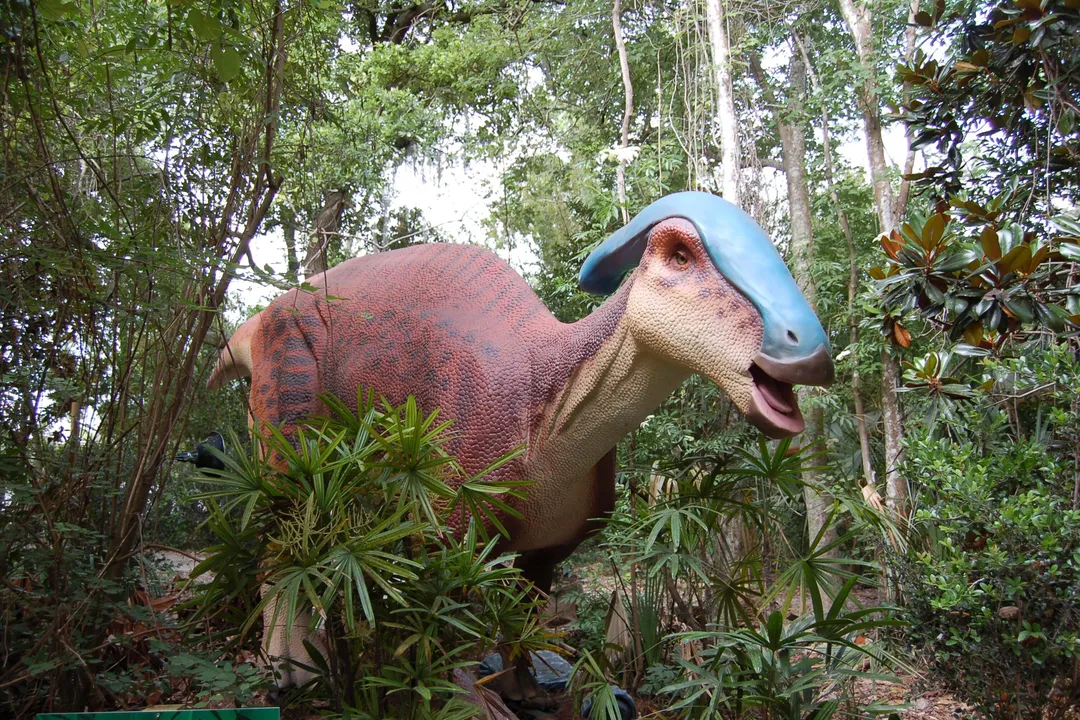
#Videos
parasaurolophus - YouTube
Related Questions
To which dinosaur group does Parasaurolophus, known for its crest, belong?What tough, primitive plants formed the likely staple diet of Parasaurolophus?What function was the characteristic duck-like beak of Parasaurolophus primarily designed for?What specialized dental structure allowed Parasaurolophus to break down fibrous materials?Why was the diet of Parasaurolophus less focused on flowering plants (angiosperms)?What phrase best describes the overall processing method implied by Parasaurolophus's grinding structure?What potential indirect relation might the large cranial crest of Parasaurolophus have to feeding?What necessity dictated the high volume of intake for Parasaurolophus, a large dinosaur?Which specific tough structures required the immense grinding power available in the Parasaurolophus jaw?How might Parasaurolophus be considered an ecosystem engineer in its environment?