What AKC group is a Border Collie?
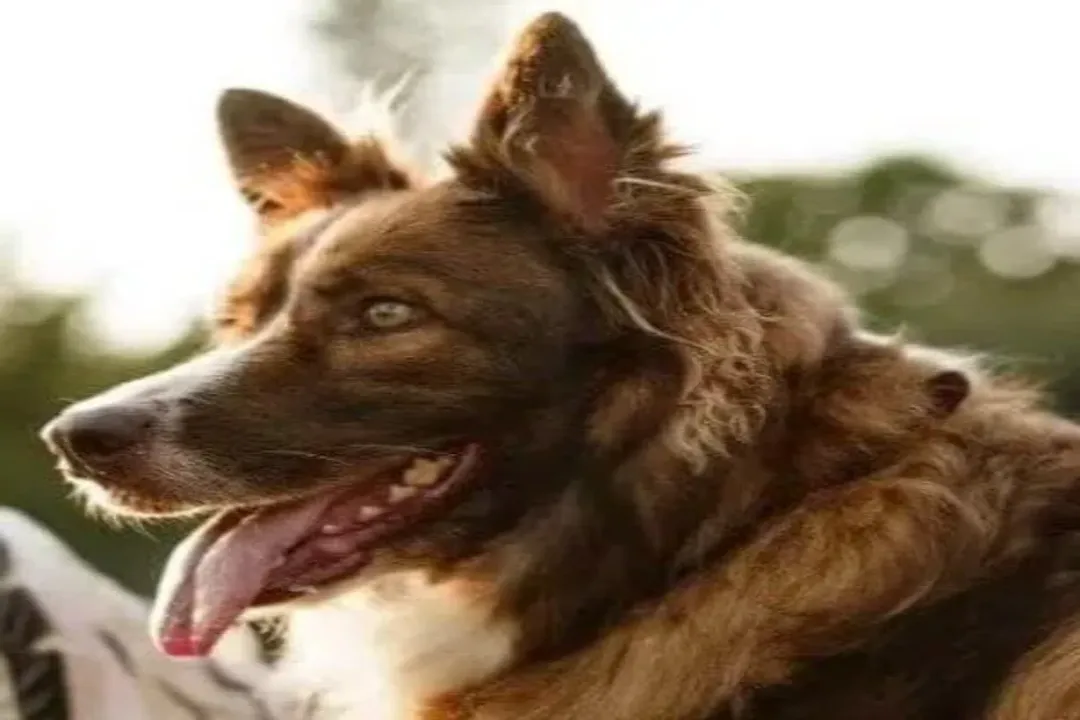
The Border Collie falls squarely within the Herding Group as classified by the American Kennel Club (AKC). This designation is not arbitrary; it speaks directly to the breed’s entire history, its physical structure, and its singular mental drive. The Herding Group itself is relatively new in the grand scheme of AKC classifications, having been established in 1983 after its members were moved out of the former Working Group. Dogs assigned to this category are distinguished by their innate, finely tuned ability to control the movement of other animals, a skill that defines the Border Collie more than almost any other trait.
# Group Context
When considering the AKC structure, understanding the defining purpose of the Herding Group provides immediate insight into the Border Collie’s essence. These dogs were developed to work closely with shepherds, managing livestock such as cattle, sheep, or even reindeer, often with minimal direct instruction. The Border Collie’s contribution to this group is perhaps the most specialized, relying heavily on intense intelligence and a unique physical application of instinct—the famous herding "eye". While many herding breeds utilize barking or nipping to move stock, the Border Collie often commands the flock through a piercing, hypnotic stare. This ability to intimidate and direct movement without constant physical engagement is what sets the breed apart, even within its own working category. It is this mastery of subtle control that the AKC acknowledges by placing them here, having formally recognized the breed in 1995 as the 139th breed.
This specialization in control—directing movement—is a critical differentiator when comparing the Herding Group to others. For instance, the Sporting Group, comprised of pointers, setters, and retrievers, focuses on assisting hunters, often involving water work or retrieving game birds. A Sporting dog’s instinct is to find and bring back; a Herding dog’s instinct is to gather and move according to command. Similarly, the Working Group excels at tasks requiring strength, such as guarding property or pulling sleds. The Border Collie possesses strength and agility, but its primary function is mental application over physical dominance, making the Herding Group classification perfectly suited to its historical role. Even in modern times, where many Border Collies never see a sheep, this instinct translates to herding children or other household pets, a behavior astute owners must manage.
# Appearance Standards
Historically, the drive to develop the Border Collie centered entirely on performance. Originating in the rugged borderlands of Scotland and England, the priority for centuries was keen intelligence and work ethic over standardized looks. This dedication to function means that physical traits, such as color and markings, were historically considered secondary to the dog’s ability to herd efficiently. This history results in a breed with remarkable physical diversity. The AKC standard describes a muscular yet nimble worker, standing typically between 18 and 22 inches at the shoulder, weighing between 30 and 55 pounds.
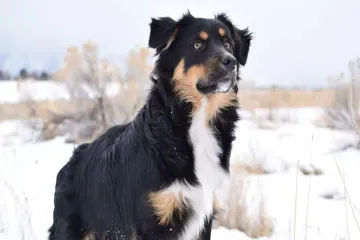
The coat is one of the most visible variables. Border Collies come in two main coat types: the rough coat, which is medium-length and feathered, and the smooth coat, which is shorter and coarser. Both varieties feature a dense, weather-resistant double coat, a necessity for dogs working outdoors in varied British weather. While black and white is the common image, the recognized color palette is vast, including blue merle, red merle, sable, lilac, and even solid colors, often accompanied by white markings or tan points. An equally variable trait is ear carriage, which can range from fully erect to fully dropped or semi-erect. While a breed standard exists within the AKC for conformation events, which specifies an ideal—like the preferred dark brown eye color—the physical conformity is always held beneath the standard of gait and working capability.
# Temperament Demands
To own a Border Collie is to own a dog that ranks among the most intelligent of all canine breeds, a fact often cited by breed enthusiasts and researchers alike. This high intelligence is fundamentally working intelligence—a combination of an eagerness to learn and a speed in mastering new behaviors with minimal repetition. This mental acuity is intertwined with an incredibly high energy level; these are not dogs content to lounge. They are workaholics driven to herd continuously, and if a legitimate job is not provided, they are known to invent their own entertainment, which frequently manifests as unwanted habits like chewing, digging, or excessive barking.
The temperament profile is one of intense dedication and sensitivity. They form deep bonds with their families and can be highly attuned to their owner’s emotions, which is wonderful for companionship but means they respond poorly to harsh training methods; positive reinforcement is essential for success. While generally affectionate with those they know, they often maintain a reserved or cautious demeanor around strangers. This combination of deep intelligence, high energy, and sensitivity dictates that the breed is generally best suited for experienced owners who understand the commitment required to manage a dog whose mind is always "on".
The divergence between breeding for performance and breeding for appearance creates a unique dynamic for modern owners, particularly in the United States. While the AKC recognizes the breed for conformation showing, the primary registry for working lines, the American Border Collie Association (ABCA), prioritizes working ability above all else. This difference is so pronounced that the ABCA voted to delist dogs that attain a conformation championship, emphasizing that for many of the breed's advocates, what the dog does remains far more important than how it looks. For a new owner looking to compete, this presents a clear, practical fork in the road: deciding whether their focus is on the precision of the show ring or the utility of the sheepdog trial, as an AKC pedigree does not satisfy the working registries, and vice versa. Furthermore, understanding that their historical purpose requires a significant time commitment means that even an occasional park visit is insufficient; their need for vigorous mental and physical output requires a dedication of at least two hours per day, minimum. Providing this constant activity is not just about fitness; it is about ensuring the Border Collie remains a balanced and joyful companion rather than a bored problem creator. This level of engagement is far beyond the typical needs of many other groups, such as the Toy Group, whose primary function is companionship.
# A Life of Purpose
Ultimately, understanding what AKC group a Border Collie belongs to reveals the core of the breed’s identity. They are members of the Herding Group because their genius lies in command and control. Their heritage, driven by the legendary progenitor Old Hemp and the demanding landscape of the Anglo-Scottish border, forged a dog whose brain requires as much exercise as its powerful, agile body. A Border Collie’s lifespan averages 12 to 15 years, representing a long-term commitment to providing meaningful occupation. For the dedicated owner willing to embrace their dog’s intensity, intelligence, and need for a job—whether it involves livestock, agility courses, or complex obedience routines—the reward is a partnership with one of the most capable and devoted dogs in the canine world. If the dog doesn't get a job from you, it will find one for itself, and you may find yourself being herded around the living room with that same intense focus used to manage a difficult flock of sheep on a remote hillside.
Related Questions
#Citations
Border Collie - Dog Breeds - American Kennel Club
Border Collie - Wikipedia
Quick Summary of Each AKC Dog Breed Group
About Border Collies
Border Collie Dog Breed and Characteristics - Showsight Magazine
Border Collie Dog Breed | Origin, History, Personality & Care Needs