What family does the bongo belong to?
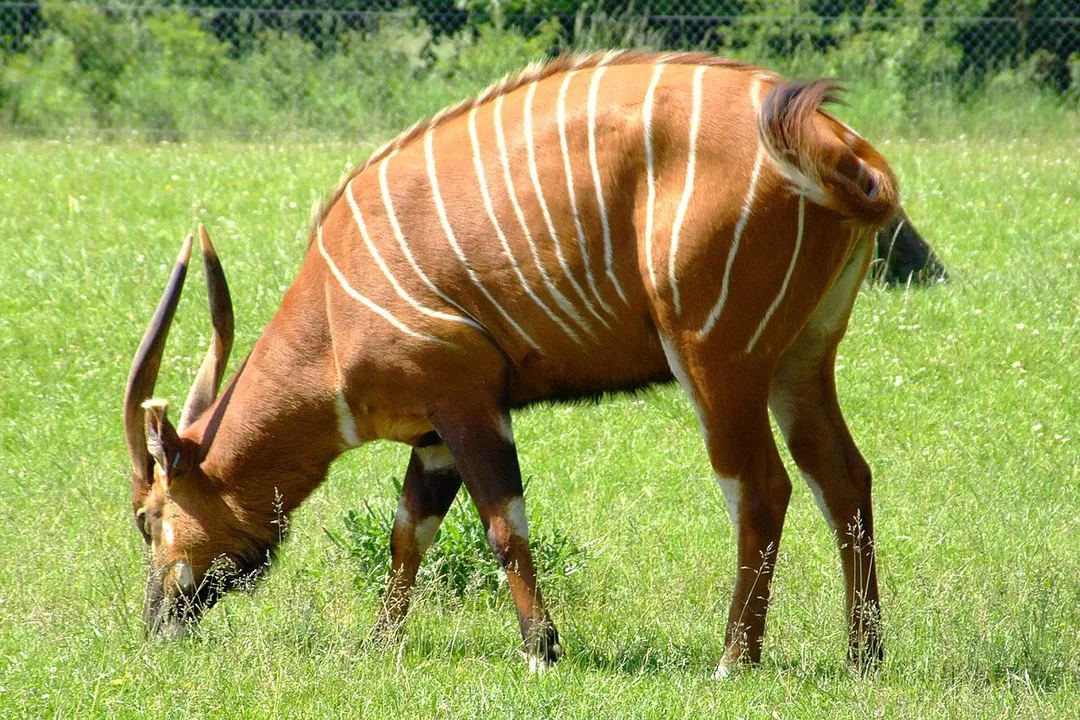
The bongo, one of Africa’s most visually stunning antelopes, holds a distinct position within the animal kingdom's grand classification scheme. This magnificent browser firmly belongs to the Bovidae family, the same large grouping that encompasses cattle, goats, sheep, and buffalo. [1][2][3][5][6][9] More specifically, its scientific classification places it within the genus Tragelaphus, alongside other spiral-horned antelopes like the bushbuck and the greater kudu. [5][8] This placement immediately signals certain shared evolutionary traits, particularly the presence of permanent, spiraled horns in both male and female individuals—a feature that sets them apart from many other antelope species. [1][2][3][6]
# Family Placement
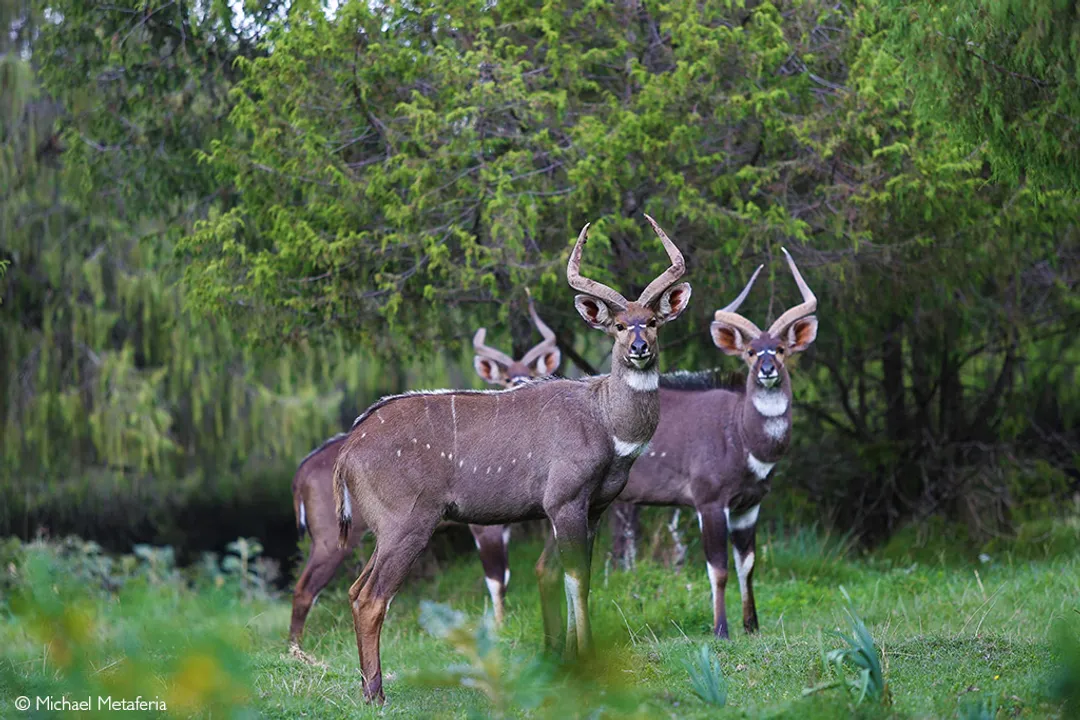
To appreciate the bongo fully, understanding its lineage within Bovidae helps place it contextually among herbivores. [1][2] Bovidae is a massive and widespread family, yet the bongo occupies a specialized niche. Its scientific name, Tragelaphus eurycerus, directly translates aspects of its appearance and form, fitting within the broader tribe Tragelaphini. [8] While its relatives might inhabit savannas or thickets, the bongo is deeply associated with the dense, often dark, understory of equatorial African forests. [2][6][9] Recognizing it as a bovid is the first step; recognizing its specialized forest adaptation is the key to understanding its vulnerability today. [3]
# Striking Features
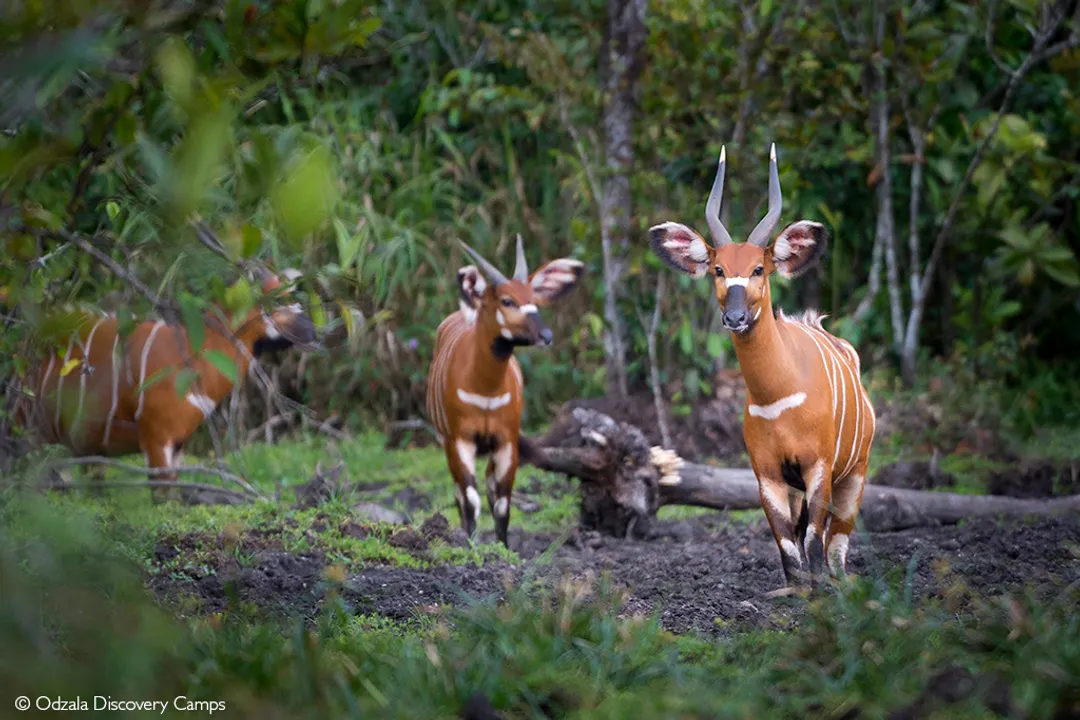
The appearance of the bongo is unmistakable, making it instantly recognizable even to casual observers. [5] Its coat is a vibrant, rich reddish-chestnut color, which provides surprisingly effective camouflage within the dappled light of the forest floor. [1][6] This coloration is overlaid with numerous crisp, vertical white or cream-colored stripes running down its flanks. [1][2][5][6][9] A mature animal typically sports between ten and fifteen stripes, though the exact count can vary. [3]
Beyond the stripes, the bongo possesses several other key physical markers. Both sexes carry the characteristic long, heavily ridged, spiraling horns, which curve backward over the ears. [1][2][3][6] They also exhibit distinct white markings, including chevron stripes on the face, patches on the neck, and white socks on the lower legs. [2][6] A noticeable dewlap hangs from the throat, and the chest often features a patch of darker hair. [2][6] Males generally have a darker coat color than females. [3] A mature bongo stands quite tall, reaching shoulder heights often exceeding one meter. [2] Considering the dense nature of the forests they inhabit, these striking patterns, while seeming obvious in open light, must function exceptionally well as disruptive coloration against the backdrop of heavy shadows and foliage, an evolutionary trade-off favoring forest concealment over open-plains visibility. [1][6]
# Subspecies Division
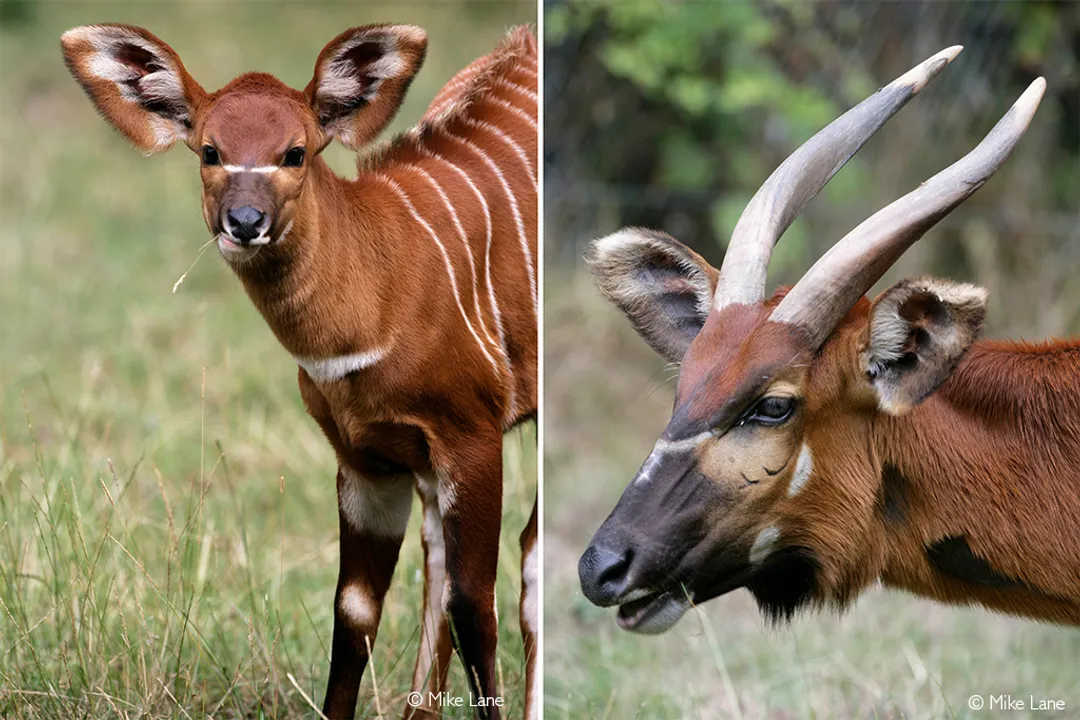
The bongo antelope is not monolithic; it is generally recognized as consisting of two distinct subspecies, though taxonomic classification is sometimes a point of scientific discussion. [4][9]
# Eastern Bongo
The Eastern Bongo (Tragelaphus eurycerus mtumba or sometimes T. e. isaaci) is generally found in the central highlands of Kenya. [4][9] This population is perhaps the most well-known in conservation circles because of its extremely precarious status. [4] Eastern Bongos tend to have a slightly darker coat and are sometimes associated with higher-altitude, montane forests. [4] They are the focus of intensive ex situ (captive) breeding programs intended to safeguard the species from complete extinction in the wild. [4]
# Western Bongo
The Western Bongo (Tragelaphus eurycerus eurycerus) historically ranged across West and Central Africa. [4][9] Their distribution is much broader, encompassing lowland rainforests. [4] While perhaps less publicized than their eastern cousins, the Western Bongo faces severe pressure from habitat destruction and hunting across its larger, yet increasingly fragmented, range. [4] Population data for this subspecies in the wild is often sparse, making a definitive conservation assessment challenging compared to the more closely monitored Eastern populations. [4]
The distinction between the two is important for conservation strategy. A population confined to a small geographical area, like the Eastern Bongo in Kenya, faces localized threats (e.g., disease outbreak or political instability), whereas a widely distributed subspecies like the Western Bongo faces threats that are geographically widespread, such as large-scale deforestation across multiple nations. [4]
# Habitat and Diet
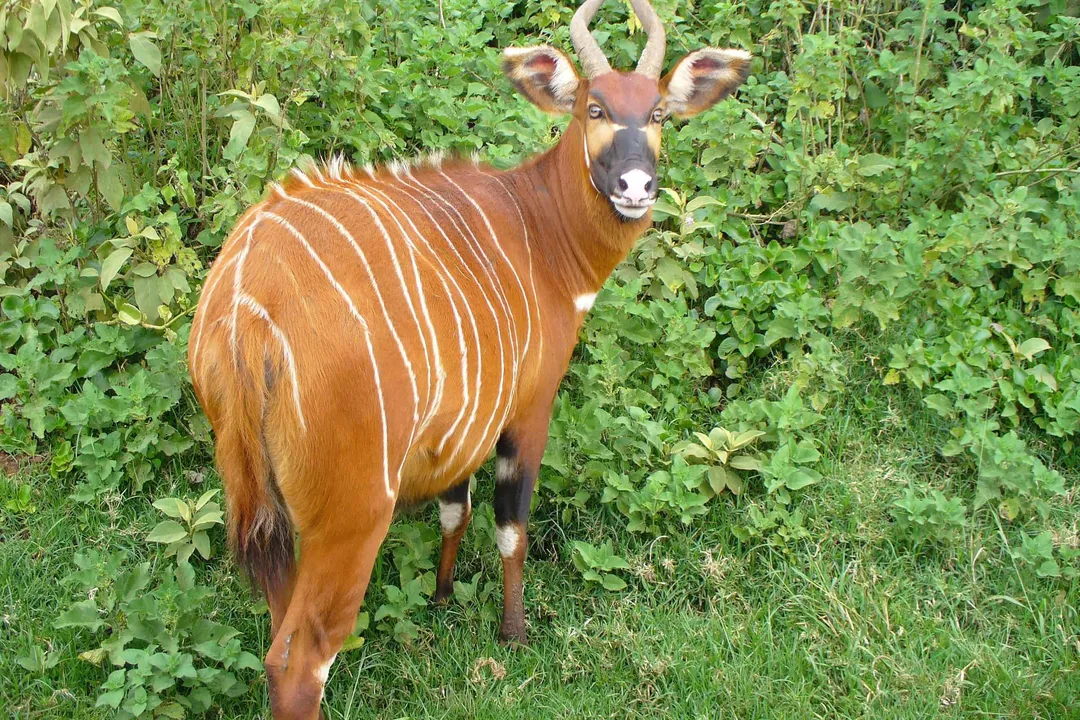
Bongos are creatures of dense cover. [2][3] They are strongly associated with thick forests, which can include both lowland rainforests and montane forests, depending on the subspecies and region. [2][6][9] They prefer areas with dense thickets and ample ground cover, which provides security from predators and harsh weather. [3]
As herbivores, bongos are classified as browsers. [2][3][6] Their diet is varied, consisting mainly of leaves, vines, shrubs, bark, and certain types of fruit. [2][3][6] They are generally secretive and nocturnal or crepuscular (active at dawn and dusk), often feeding during these cooler, lower-light periods to avoid detection. [3] This shy nature contributes to the difficulty researchers face in accurately counting wild populations. [3] An interesting behavioral note is their preference for mineral licks, which they visit regularly to supplement their diet with necessary salts and minerals, often indicating water sources in the process. [6]
# Conservation Crisis
The current situation for the bongo antelope is dire, primarily due to human activity impacting its specialized environment. [3][4] The single greatest threat to survival across both subspecies is habitat loss and fragmentation. [3][4][6] As agricultural expansion, logging, and human settlement encroach upon the primary and secondary forests, the bongos' required dense cover disappears, leaving them exposed and without adequate food sources. [3][4][6]
Secondarily, poaching remains a significant danger, driven by demand for bushmeat and traditional medicine. [3][4][6]
The conservation status reflects this pressure. The Eastern Bongo is officially listed as Critically Endangered. [4] Efforts to save this group have centered heavily on carefully managed captive breeding programs outside of its native range, which act as an insurance policy against extinction in Kenya. [4] For readers interested in supporting conservation, understanding the specific needs of these captive populations—which often require specialized dietary supplements and secure enclosures mimicking forest environments—highlights how complex conservation banking truly is. When an animal is bred off-site, replicating the subtle environmental cues of its native habitat becomes a major commitment for zoos and sanctuaries globally. [4]
The Western Bongo faces similar, if less quantified, threats across Central and West Africa. [4] Ensuring their survival requires multinational cooperation to protect the vast, often poorly surveyed, tracts of rainforest they still inhabit. [4] While the Bovidae family is large, the bongo’s dependence on intact forest structure makes it a bellwether for the health of those specific ecosystems, far more so than wide-ranging savanna bovids. [1][9] Protecting the bongo necessitates protecting entire forest blocks, not just isolated pockets.
# Taxonomy Summary
To consolidate the biological identity of this antelope, here is a brief overview of its placement within the hierarchy, showing its relationship to other common animals:
| Rank | Classification | Example Relative |
|---|---|---|
| Kingdom | Animalia | (All Animals) |
| Phylum | Chordata | (Vertebrates) |
| Class | Mammalia | (Mammals) |
| Order | Artiodactyla | (Even-toed ungulates) |
| Family | Bovidae | Cattle, Sheep, Goats [1][2][3] |
| Subfamily | Bovinae | (Includes cattle and buffalo) |
| Tribe | Tragelaphini | Kudu, Eland [8] |
| Genus | Tragelaphus | Bushbuck [5][8] |
| Species | T. eurycerus | Bongo Antelope [5][8] |
This table illustrates that while the bongo shares a family with domestic livestock, its tribal and generic placement separates it into a distinct lineage of forest-adapted spiral-horned ruminants. [8] The fact that it sits within the Bovidae family solidifies its identity as a true, even-toed ungulate, built for grazing and browsing on fibrous vegetation. [1][2]
Understanding Tragelaphus eurycerus is about recognizing a specialized forest browser that happens to share its most basic family name with animals that thrive in open grasslands and farms. [9] This difference in preferred landscape is the root cause of its current struggle for survival in a world increasingly dominated by open spaces. [3][4]
Related Questions
#Citations
Bongo (antelope) - Wikipedia
Bongo Antelope Facts and Information | United Parks & Resorts
Bongo | African Rainforest Species - Britannica
Eastern Bongo - Denver Zoo Conservation Alliance
Bongo - Tragelaphus eurycerus - A-Z Animals
The African Forest Bongo | Discover Afrika
Bongos are herbivorous, nocturnal forest ungulates - Facebook
Bongo (Tragelaphus eurycerus) - iNaturalist
Tragelaphus eurycerus (bongo) - Animal Diversity Web
The bongo - Africa Geographic