What does a Whimbrel eat?
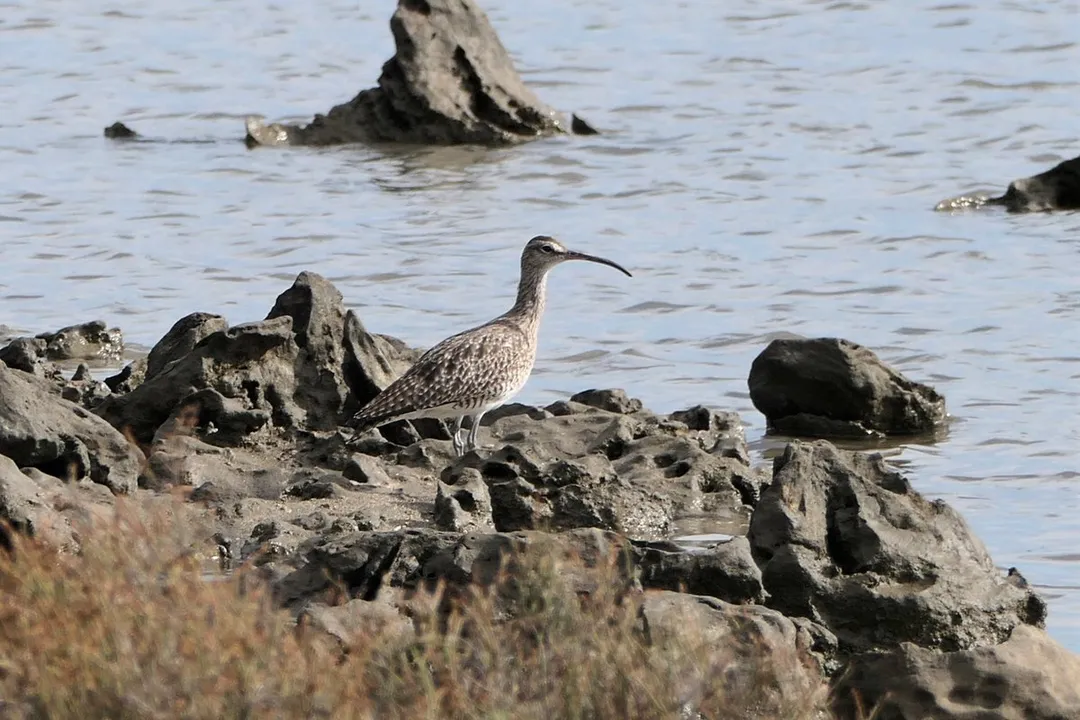
The feeding habits of the Whimbrel, a medium-sized migratory shorebird recognized by its distinctively long, downcurved bill, are surprisingly varied, adapting closely to its environment and the time of year. [1][9] While often associated with coastal mudflats where it hunts for marine life, its diet shifts significantly when breeding inland or during long migratory flights. [5][6] Understanding what this bird consumes offers a direct look into its complex life cycle, dictated heavily by immediate resource availability. [6]
# Coastal Staples
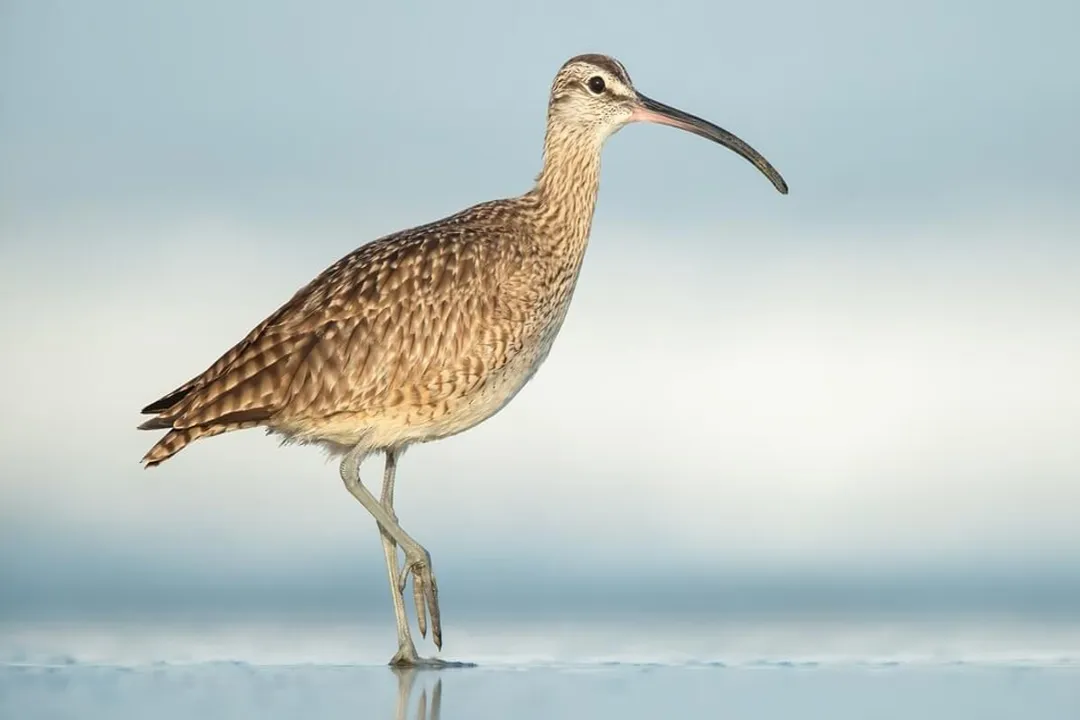
When residing on coastal habitats, estuaries, or mudflats—the typical wintering grounds for many populations—the Whimbrel focuses heavily on invertebrate prey that resides beneath the surface layer. [2][3] The diet here is dominated by small to medium-sized crustaceans, especially crabs, which are a prime target. [6][9] Fiddler crabs often feature prominently in the menu where they are abundant, being unearthed or snatched from the surface during low tide. [3][6]
Beyond crabs, the bird consumes a variety of marine worms, such as polychaetes, which are dug out of the soft substrate. [2][5][6] Mollusks also form a regular part of the coastal diet, including small clams, mussels, and various species of snails. [6][9] The bird’s specialized bill allows it to probe deeply into the substrate, sometimes reaching depths of several centimeters to locate these buried snacks. [2][6] Interestingly, while they consume many marine items, they are not typically found foraging on exposed rocky shores, preferring the soft, yielding mud or sand. [3]
# Probing Technique
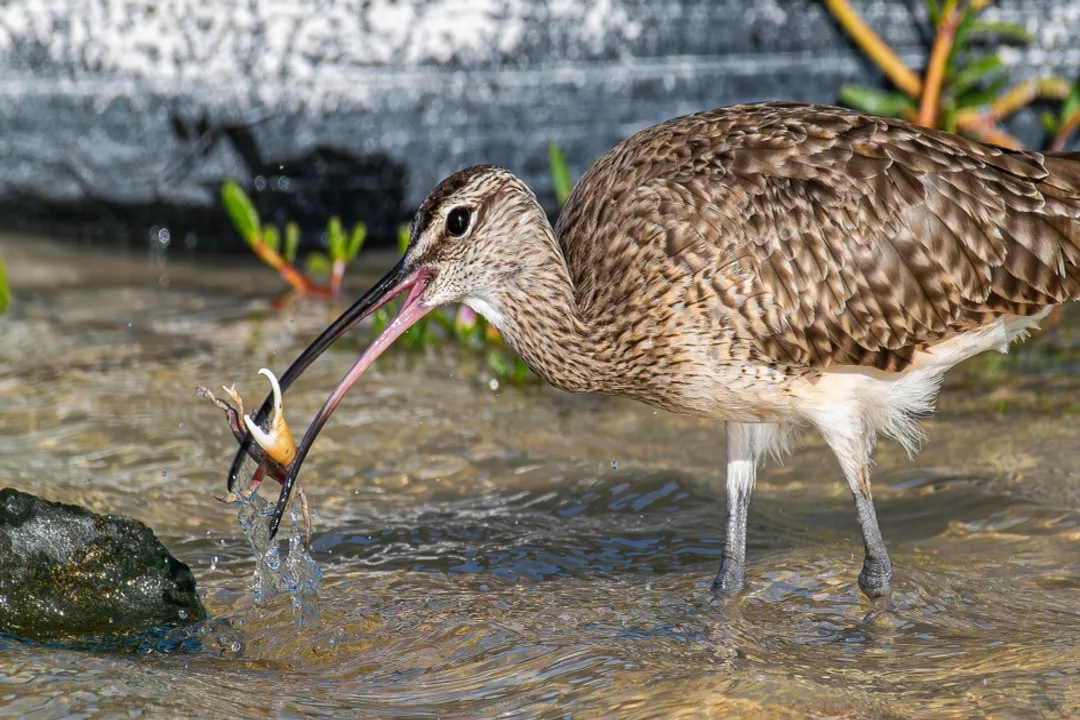
The Whimbrel's most recognizable feature, its decurved bill, is the primary tool for its feeding strategy. [2][6] This bill acts as a highly sensitive probe, allowing the bird to locate prey that is completely hidden from view. [6] When foraging, the bird walks methodically, stabbing the bill into the substrate, sometimes holding it open slightly as it withdraws, feeling for vibrations or resistance that signals a buried invertebrate. [6][9]
This tactile feeding method is crucial because, unlike visual hunters, the Whimbrel can keep foraging effectively even when visibility is poor or when prey is deep down. [6] The length of the bill varies between individuals and subspecies, which subtly influences foraging depth and prey preference; a slightly longer bill might permit access to deeper worms or shellfish that others cannot reach. [5] This specialized physical adaptation means that Whimbrels are generally not competitive with shorter-billed shorebirds for the very surface-level food items, instead carving out a niche in the sub-surface layer. [6]

# Inland Foraging
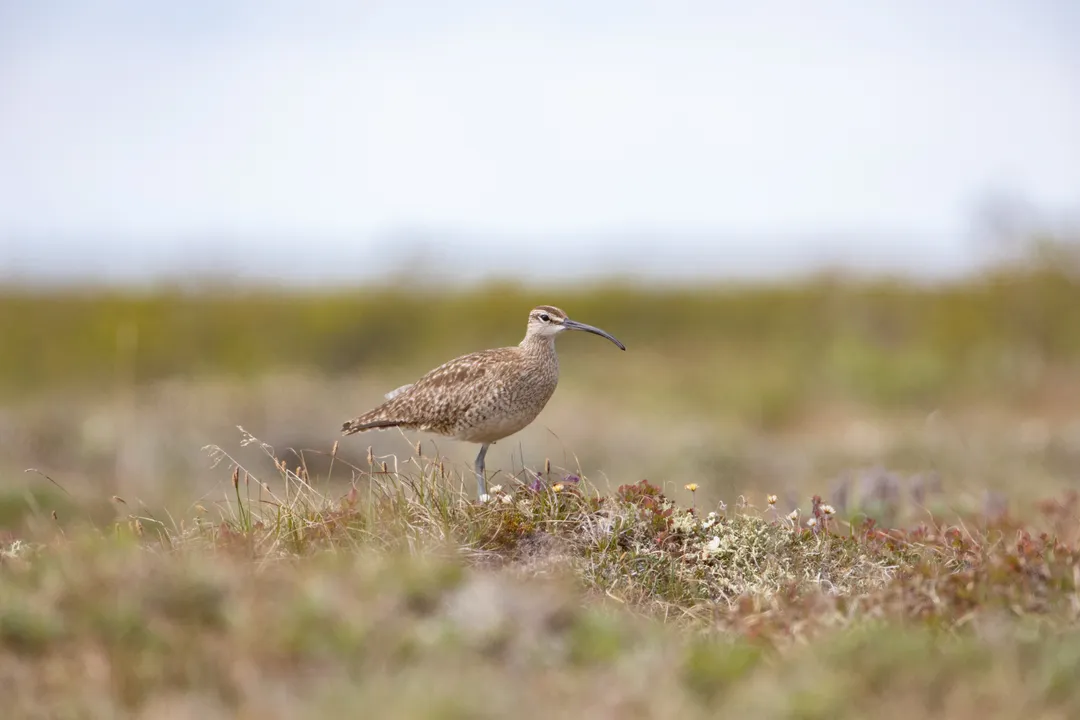
The story of the Whimbrel's diet changes dramatically when it moves away from the ocean during its breeding season or during its transit between breeding and wintering areas. [1][5] On their breeding grounds, typically in open tundra, moorland, or grassy areas, their diet shifts to terrestrial arthropods and plant matter. [1][5][6]
Insects become the main focus, including grasshoppers, caterpillars, large spiders, and various other ground-dwelling bugs. [1][5][6] Earthworms are also consumed when the ground is soft enough to probe. [6] This reliance on terrestrial fare requires a different set of feeding behaviors compared to the coastal probing for crabs and worms. [1]
During migration, especially over land masses, the birds often stop to refuel, and their consumption of local, high-energy plant life becomes noticeable. [5] They have been documented consuming berries found in the areas where they stop to rest and feed. [5] When assessing the energetic needs of a long migration, it makes perfect sense that a bird switches to calorie-dense items like berries when the energy cost of digging for mollusks in a temporary stopover zone is too high, or when those marine staples are simply unavailable. [5]
# Diet Shifts
The flexibility in the Whimbrel’s diet is key to its success as a long-distance migrant, allowing it to exploit food resources across continents. [5][6] One interesting variation observed is between the widely distributed 'Old World' Whimbrel and the smaller 'New World' subspecies, such as the former Hudsonian Whimbrel. [5] While the general pattern holds—marine invertebrates in winter, terrestrial items inland—the exact composition varies based on local ecology. [1][6]
For those interested in finding Whimbrels during their non-breeding season, knowing this dietary split offers a clue about location: look for the bird where the tide exposes wide expanses of soft, wet mud—the prime feeding habitat for crabs and worms. [3] Conversely, if you spot a Whimbrel in a field or marsh edge far from the sea, it is most likely targeting grasshoppers or earthworms, taking advantage of wetter ground that makes probing easier than the hard, dry earth. [1][6] This adaptability in prey selection—from a shelled crab on the coast to a soft berry during a stopover—highlights why this species is so widespread across various global habitats. [5]
Related Questions
#Citations
Whimbrel | Audubon Field Guide
Whimbrel (Numenius phaeopus) | U.S. Fish & Wildlife Service
Whimbrel - Port Royal Sound Foundation
Whimbrel - Eastside Audubon Society
Hudsonian Whimbrel Life History - All About Birds
Diet and Foraging - Eurasian Whimbrel - Numenius phaeopus
The Whimbrel - Cape Cod National Seashore (U.S. National Park ...
Whimbrel - The Australian Museum
Whimbrel (Numenius phaeopus) - SIMoN :: Species Database