What do Ruby-crowned Kinglets like to eat?
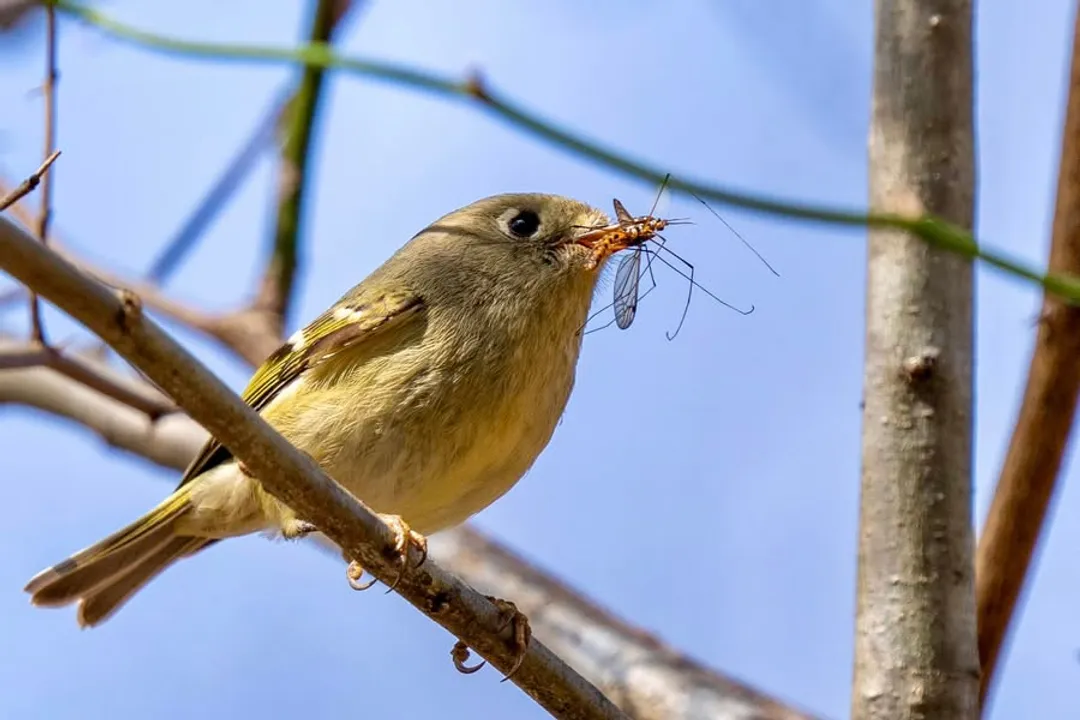
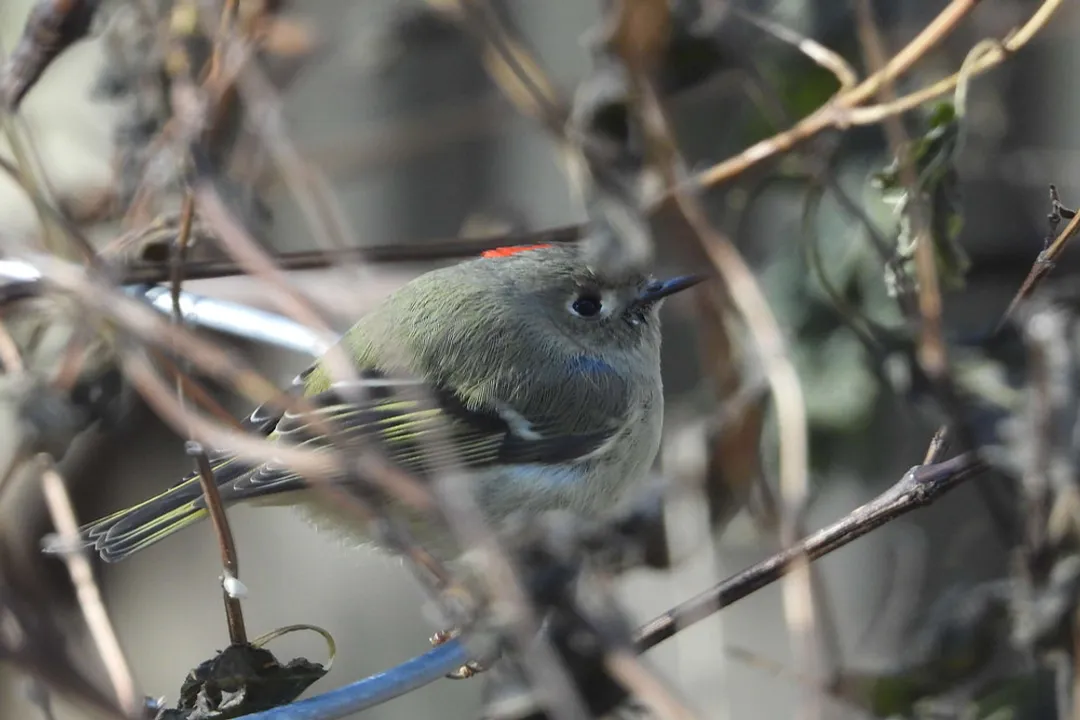
The Ruby-crowned Kinglet, one of North America’s smallest songbirds, keeps itself fueled through an almost ceaseless campaign of foraging that suggests a metabolism running at top speed. [2][3] While their vibrant red crown patch is often hidden, their high-energy lifestyle is immediately apparent in their feeding habits. To understand what this tiny creature needs to survive, especially during migration or the colder months, one must look closely at the microscopic life they pursue among the foliage and bark.
# Arthropod Staples
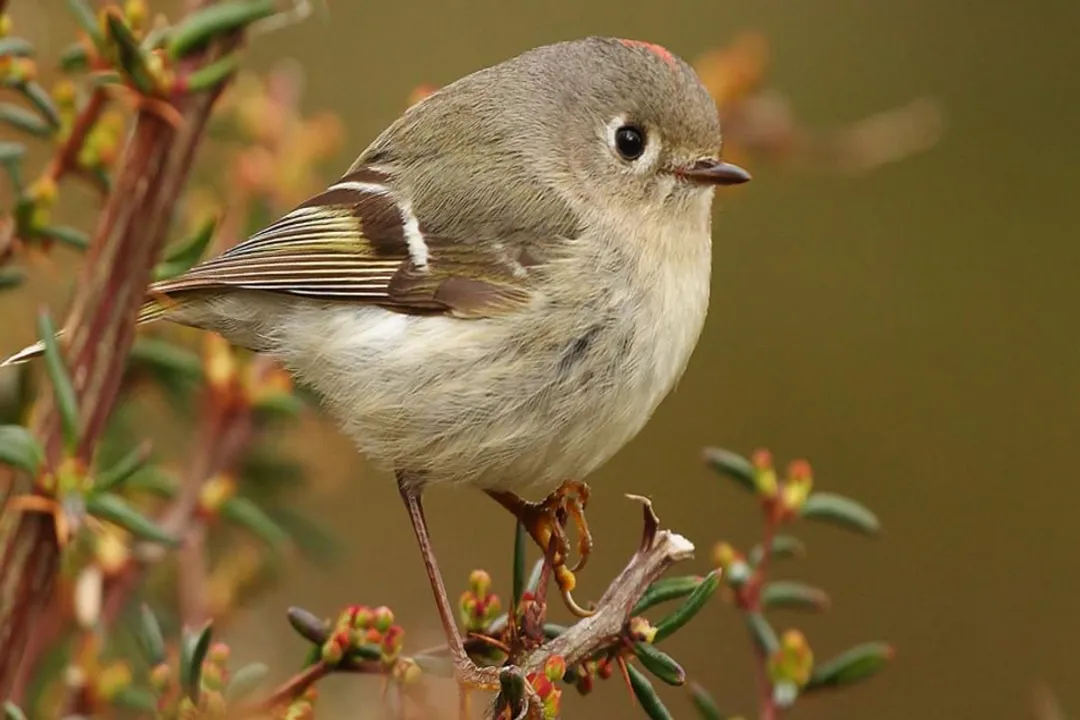
For the vast majority of the year, the diet of the Ruby-crowned Kinglet is overwhelmingly dominated by tiny animal protein: insects and spiders. [1][2][5][8][9][10] Their preference is for the smallest arthropods available, which necessitates a very active search strategy. [3] This bird does not typically wait for food to come to it; rather, it is constantly moving, flicking wings, peering under leaves, and probing crevices to disturb or locate hidden prey. [6]
When describing their menu, experts point to a wide array of minute creatures that often go unnoticed by larger insectivores. Specific prey items cataloged in their diet include caterpillars, gnats, aphids, leafhoppers, weevils, ants, and various types of flies. [2] Beyond these, they also consume insect eggs, demonstrating an ability to target the very beginning stages of insect life cycles. [6] The sheer variety of small insects they consume highlights their specialization as gleaners, picking off prey that might be too small or too well-hidden for other birds to bother with. [1][3]
# Seasonal Variety
While insects and spiders form the bedrock of their caloric intake, the Kinglet is opportunistic, especially when environmental conditions shift the availability of preferred prey. [2] As the breeding season ends and migratory flocks begin moving south, or as winter sets in across their non-tropical ranges, the availability of fresh insects declines sharply. [5] This is when the Kinglet supplements its diet with available plant matter. [8]
The primary substitute food source mentioned is small berries. [2][5] This shift is crucial for survival during periods when constant, high-energy insect hunting becomes impossible due to cold or lack of bugs. [8] While they remain primarily insectivorous, incorporating these sugary or fatty berries allows them to maintain their necessary energy reserves for migration or resting through cold snaps. [2] Comparing this behavior to other small, active migrants, the Kinglet’s reliance on the last available arthropods before switching to berries illustrates a tight coupling between behavior and immediate food availability.
# Foraging Movements
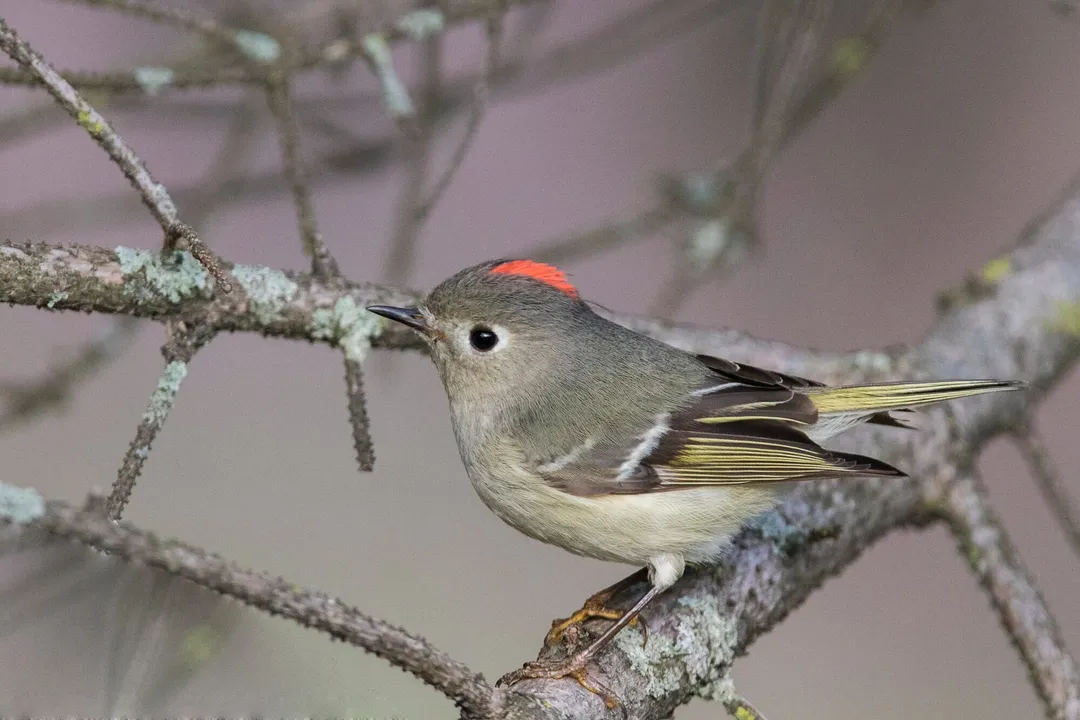
The what of their diet is inseparable from the how they obtain it. Ruby-crowned Kinglets are known for their near-constant motion, rarely sitting still for long periods. [3] Their feeding style is characterized by rapid, darting movements through the canopy and shrub layer of coniferous, mixed, and deciduous woodlands. [2]
They employ a technique known as gleaning, which involves hovering briefly near foliage or bark to pick off an insect or spider directly from the surface. [6] They frequently inspect the undersides of leaves, an area often protected from rain and less disturbed by wind, making it a prime location for small arthropods to shelter. [3] A characteristic behavior noted in the field is the constant, quick flickering or jerking of their wings, which serves the dual purpose of helping them maintain balance during erratic maneuvers and potentially flushing out sedentary insects from hiding spots. [6] This high-activity foraging strategy means they must consume a large volume of food relative to their body weight throughout the day just to meet maintenance needs.
# Attracting the Unattractable
For backyard bird enthusiasts, the Ruby-crowned Kinglet presents a fascinating challenge. Because their diet is so specialized—consisting almost entirely of live, small invertebrates—they are generally considered not to be regular visitors to standard bird feeders stocked with seeds like sunflower or thistle. [7] Their preference is heavily weighted toward protein and fats found in moving insects, not dry grains. [1][6]
However, persistence, combined with an understanding of their preference for high-calorie items, can sometimes yield results. The best strategy if one hopes to offer supplemental food is to provide items that mimic high-energy insect matter. One approach that occasionally works, though success is never guaranteed, is offering suet cakes, especially those containing peanut butter or finely ground nuts, placed in a wire mesh feeder that allows their tiny beaks to pick off small particles. If you see one investigating a feeder, it is far more likely to be interested in a very fine ground-up seed mix or the remnants of an orange slice than a large seed. [7] Furthermore, ensuring your yard or garden has a healthy population of native, year-round insects, such as overwintering spiders or small overwintering gnat populations, provides the most reliable "feeder" for these birds. [2]
# Metabolic Demands
The Kinglet’s diet directly reflects its demanding physical requirements. Due to its minuscule size—weighing only about 0.2 ounces—it has one of the highest mass-specific metabolic rates among birds. [8] This means that gram for gram, it burns energy faster than almost any other bird. A single extended period without successfully capturing enough prey, especially in freezing weather, could be life-threatening.
This high metabolic rate explains why they must spend so much of their waking time foraging. An interesting calculation arises when comparing their activity to the energy in their food; they are essentially running a net-positive energy calculation minute by minute, meaning they must secure enough calories just to power the next minute of searching. This behavior dictates that they will prioritize the most calorie-dense, easily accessible prey found during their constant, acrobatic search patterns. When a small berry is encountered in winter, it offers a concentrated burst of quick energy that supplements the slower, but necessary, work of hunting spiders hidden under bark scales. [5][8] Therefore, while insects are the foundation, the inclusion of berries highlights a survival mechanism tuned to energy efficiency when insect hunting becomes too taxing or unproductive during lean seasons. [2]
Related Questions
#Citations
Ruby-crowned Kinglet | Audubon Field Guide
Ruby-crowned Kinglet Life History - All About Birds
BIRD OF THE WEEK - THE RUBY-CROWNED KINGLET
Ruby-Crowned kinglet having a rather large lunch - Facebook
The Timid Ruby-Crowned Kinglet - Birds Of West Cobb
Ruby-crowned Kinglet | Lyric Wild Bird Food
SPOTTING A RUBY-CROWNED KINGLET AT A FEEDER IS ...
Ruby-crowned kinglet - Wikipedia
Fun Facts About Kinglets - Glen Mills - Wild Birds Unlimited
Bird of the Week: Ruby-crowned Kinglet - Huron-Clinton Metroparks