What breed created the Akita?
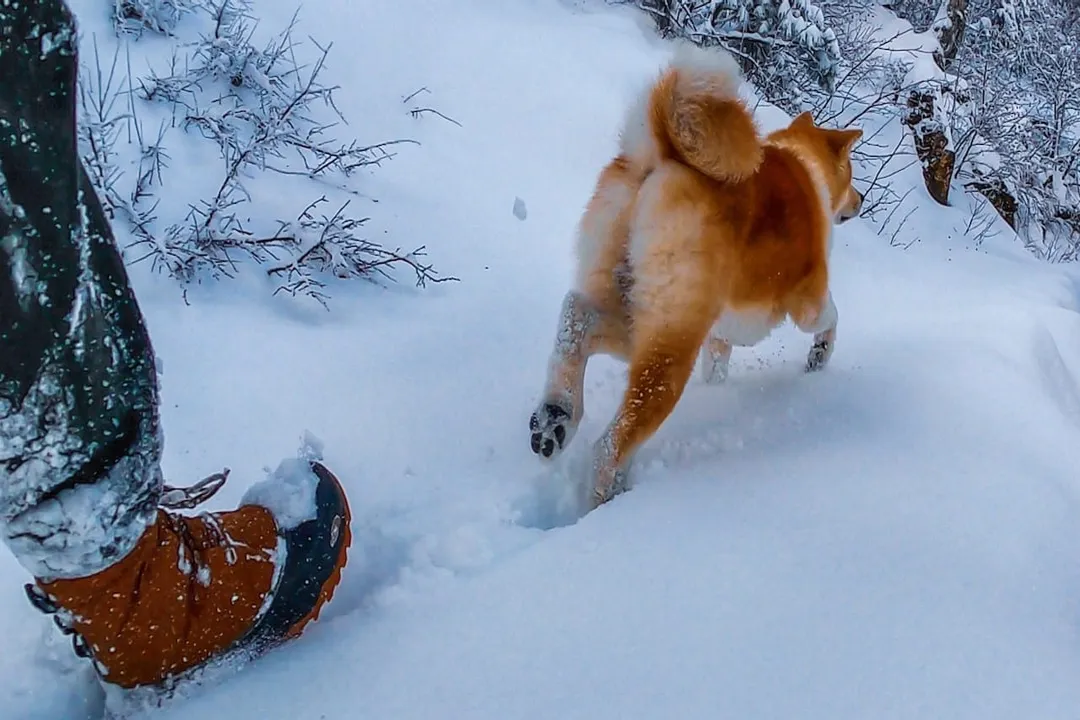
The story of the Akita is less about a single predecessor breed and more about a long, often turbulent evolution within Japan, marked by periods of isolation, aristocratic patronage, and near annihilation. Tracing the lineage of this powerful dog leads back to the ancient hunting dogs of the Japanese archipelago, often referred to as the Matagi-ken or native dogs, which were present even during the Jomon period. [4][7] These early dogs formed the foundation of what would become the modern Akita, existing long before modern kennel club standards dictated breed lines. [7]
# Ancient Origins
The foundation stock for the Akita originated in the Akita Prefecture in the northern part of Honshu Island, Japan. [2][4] These indigenous canines were utilized for hunting large game, such as deer and the Yezo bear. [4][7] This demanding work required a dog with immense strength, courage, and endurance, traits that remain hallmarks of the breed today. [7] For centuries, these dogs developed in relative isolation in the mountainous regions, maintaining their distinct characteristics shaped by their environment and purpose. [4]
The earliest verifiable ancestors are often linked to the Matagi-ken, the hunting dogs used by the Matagi, or traditional bear hunters. [4][7] This deep history suggests that the "creator" was the harsh Japanese environment and the specific hunting requirements, rather than a planned cross with a specific foreign breed in the earliest stages. [7]
# Meiji Era Shifts
The critical turning point that introduces the concept of "created" breeds occurred following the Meiji Restoration (beginning in 1868). [1][4] During this period, Japan opened its borders, and foreign dog breeds began to arrive, sparking an interest in dog shows and crossbreeding among the Japanese elite. [4] Simultaneously, the Japanese government placed heavy taxes on large dogs, and the necessity for dog fur during wartime led to many native dogs being killed for their pelts or meat. [1][2][4] This period placed the native Akita type in significant danger of disappearing entirely. [1][4]
To preserve what was left of the native stock, breeders intentionally crossed the remaining dogs with foreign breeds that were popular at the time. [2][4] This necessity-driven crossbreeding is where the Akita gained traits from other dogs, moving away from the pure Matagi-ken toward the dog we recognize today. [7]

# External Influences
When discussing what breeds created the modern Akita, we are essentially cataloging the breeds introduced during the revival efforts following the initial decline. [1] Several specific foreign breeds are consistently mentioned as having been crossed into the native stock to strengthen the numbers and improve certain characteristics. [2][4]
The primary infusion breeds included:
- Tosa Inu: This large Japanese fighting dog was crossed into the Akita line. [4] This introduction likely contributed to the Akita’s imposing size and powerful build. [2]
- Mastiff Types: Breeds like the Mastiff were also introduced into the gene pool. [4]
- German Shepherd Dogs: This breed, among others, was reportedly crossed in later during attempts to rebuild the population after World War II, specifically influencing the lineage that would eventually become the American Akita. [1][5]
It is important to note the distinction: the resulting dog was not intended to be a completely new breed in the minds of the Japanese fanciers at the time, but rather a way to save the ancestral type by mixing in hardier foreign bloodlines. [4] The goal was to maintain the spirit and general look while ensuring survival. [2]
If you look at the lineage strictly from the perspective of surviving WWII and the subsequent rebuilding, the Akita of the modern Western world owes a significant portion of its current physical structure—particularly the broader head and sometimes different coloring—to the influence of the German Shepherd and Mastiff crosses made when the population was critically low. [1][5] Conversely, the line preserved in Japan focused more intently on breeding back toward the original, purer Matagi-ken look. [1]
# Two Divergent Lines
This necessary crossbreeding and subsequent differing preservation philosophies led to the eventual split that resulted in two recognized types: the Akita Inu (the Japanese standard) and the Akita (the American standard). [1][5] This divergence is key to understanding the "creation" process, as it shows the deliberate choices made by different groups of fanciers after the foundation had been mixed.
# Japanese Preservation
In Japan, breeders were dedicated to restoring the dog to its original appearance, emphasizing the unique Japanese features such as the curled tail, small triangular ears, and specific color patterns (white, brindle, or red/fawn). [1][5] The focus shifted from survival via mixing to achieving breed purity based on the historical ideal. [5] The modern Akita Inu is generally sleeker and lighter-boned than its American counterpart. [1]
# American Development
The dogs that went to the United States, many exported before the strict purity standards were enforced in Japan, carried those mixed genes from the 1930s and 1940s. [1][5] American breeders, often working with dogs returned from service in the Pacific theater, continued to develop the breed independently, sometimes incorporating those foreign elements like the German Shepherd influence more openly. [1][3] This resulted in the American Akita, often larger, heavier-boned, and carrying a broader range of acceptable colors, including those with masking. [1][5] The American line, in effect, was "created" by continuing the survival crossbreeding well past the point where the Japanese line began strict purification. [3]
Thinking about this historical divergence reveals an interesting dynamic: the American Akita's current structure is a more direct continuation of the mixed foundation required for survival, whereas the Akita Inu represents a deliberate, strict selection away from those survival crosses to restore an ancient aesthetic standard. [1][5] Therefore, one cannot point to a single "creator breed"; rather, the Akita is a composite whose final two major iterations were shaped by two different philosophies regarding historical continuity versus practical necessity. [2]
# Breed Recognition
The journey toward official recognition further solidifies the breed's complex ancestry. While the dogs developed in Japan were recognized by the Japanese Kennel Club (JKC) and later the FCI (Fédération Cynologique Internationale) as the Akita Inu, the American version was recognized separately by organizations like the American Kennel Club (AKC). [5]
For instance, the Continental Kennel Club USA (CKC USA) recognizes the Akita and notes the breed’s development from crossbreeding with Japanese fighting dogs and other breeds after the decline of the native dogs. [5] This continued international recognition of two types highlights that the foundational mix was a necessary step, not an accident, in bringing the breed forward into the modern era. [1][4]
# Key Distinctions in Lineage
The best way to summarize the creation story is to view it as a branching tree stemming from the Matagi-ken. [7]
| Feature | Akita Inu (Japanese Type) | Akita (American Type) |
|---|---|---|
| Appearance Goal | Restore original Japanese look [1][5] | Maintain larger, broader structure from survival crosses [1] |
| Head Shape | More refined, less broad [1] | Broader, heavier bone structure [1][3] |
| Color Acceptance | Restricted (Red, Fawn, Brindle, White) [1] | Wider acceptance, including masks [1][5] |
| Ancestral Influence | Heavily selected away from recent mixes [5] | Carries more discernible influence of survival crosses (e.g., GSD/Mastiff traits) [1] |
It’s fascinating to consider how the introduction of the German Shepherd, a breed developed much later in the 19th century for herding, subtly influenced the American line’s structure, while the Japanese line diligently sought to eliminate those physical markers to maintain a line closer to the ancient hunting dogs. [1][5] This demonstrates that the "Akita" breed of today is a product of intentional selective pressure acting upon an ancient base, rather than a simple one-time cross of two existing pure breeds. [2][7] The breed wasn't "created" by one dog, but re-created through necessity and then re-defined through cultural preference. [4]

# Enduring Legacy
Despite the introduction of foreign bloodlines to ensure survival through harsh historical periods, the Akita has retained the core temperament traits valued for centuries: dignity, loyalty, and bravery. [7] The efforts of numerous breeders in Japan and the US ensured that the memory and essence of those original hunting dogs, even when mixed with other stock like the Mastiff or German Shepherd, survived to the present day. [1][4] The Akita stands as a testament not only to its ancient hunting prowess but also to human dedication in preserving a specific canine heritage against incredible odds. [2]
#Videos
ALL ABOUT JAPANESE AKITA INU (PART ONE) - YouTube
Related Questions
#Citations
History of the Akita Breed
Akita History: Hachikō & the Revival of the Devoted Japanese Breed
Why do some people say that the American Akita is “closer ... - Reddit
Akita Inu History: Origins, Culture, and Evolution
Akita Dog Breed Information - Continental Kennel Club
What breed of dog were mixed together to make the akita of today?
Breed History | JACA - Japanese Akitainu Club of America
ALL ABOUT JAPANESE AKITA INU (PART ONE) - YouTube
Breed History - Akita Club of America