Are southern black racers venomous?
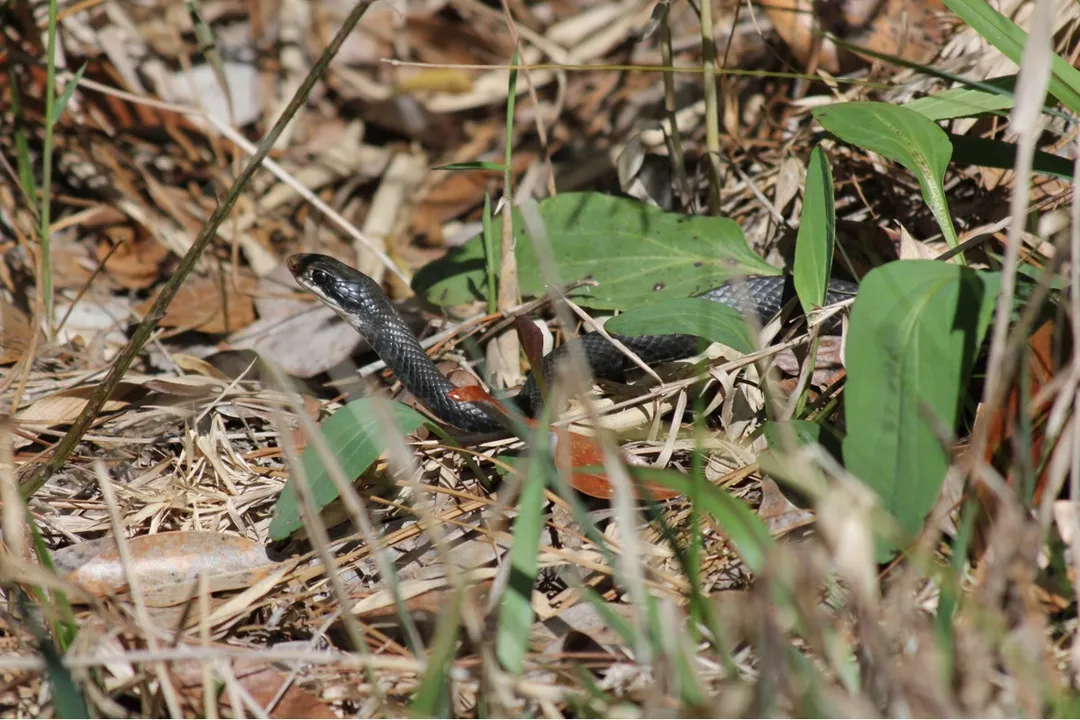
The Southern Black Racer, often seen darting across sun-drenched roads in the Southeastern United States, frequently prompts questions regarding its safety due to its striking appearance and notorious speed. This common native snake, scientifically known as Coluber constrictor constrictor, belongs to a group that inspires caution simply because it is dark and moves quickly through yards and fields across its range. [1][3]
# Not Poisonous
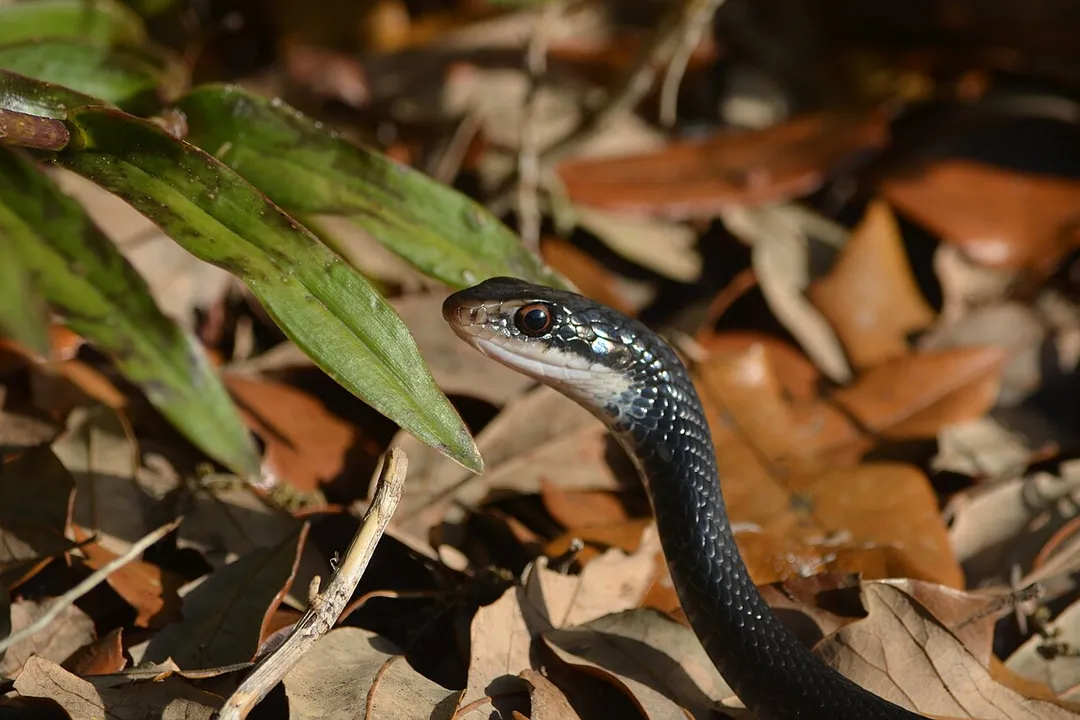
To put the primary concern to rest immediately, the Southern Black Racer is not venomous. [2][3][4] This species belongs to the family Colubridae, and while some members of this large family possess mild venom, the Southern Black Racer is entirely harmless to humans in terms of venom toxicity. [1] They do not possess fangs designed to inject toxins, nor do they pose a threat requiring antivenom. Instead, like many non-venomous snakes, they subdue their prey through constriction, wrapping their bodies around smaller animals to halt breathing or circulation. [1]
# Physical Traits
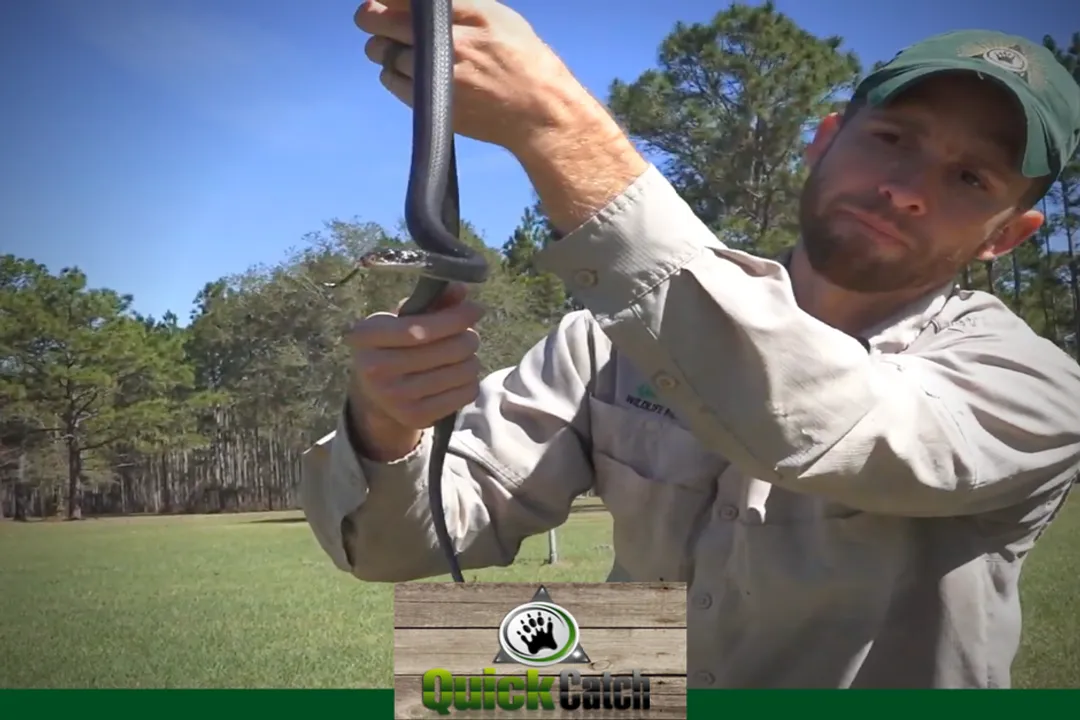
Adult Southern Black Racers are easily identified by their coloration, though variability exists across their habitat. [3] Males and females generally share the characteristic dark appearance, which gives them their common name. [1] Adults typically measure between 3 and 6 feet in length, sometimes exceeding this size, making them one of the longer, more slender snakes in their environment. [3][10] The upper body is usually a uniform black, which is where they get their name, though some sources note that the chin, throat, and belly can sometimes appear grayish or white. [1][10]
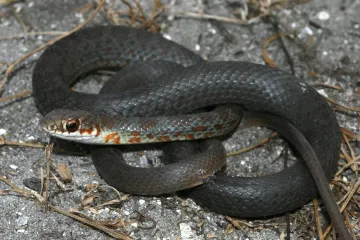
Juvenile coloration provides a stark contrast to the adults. Young racers are distinctly patterned with a grayish or brownish base color marked by dark blotches that run down their backs. [1][3] This mottled pattern provides excellent camouflage when they are small and vulnerable. As they mature, they gradually shed this blotched pattern, transitioning into the solid black adult phase, a process that can take several years. [1] It is helpful for an observer to remember that a small, dark, blotchy snake in the grass is likely a young racer, not an adult, but both share the same non-venomous disposition.
# Incredible Pace
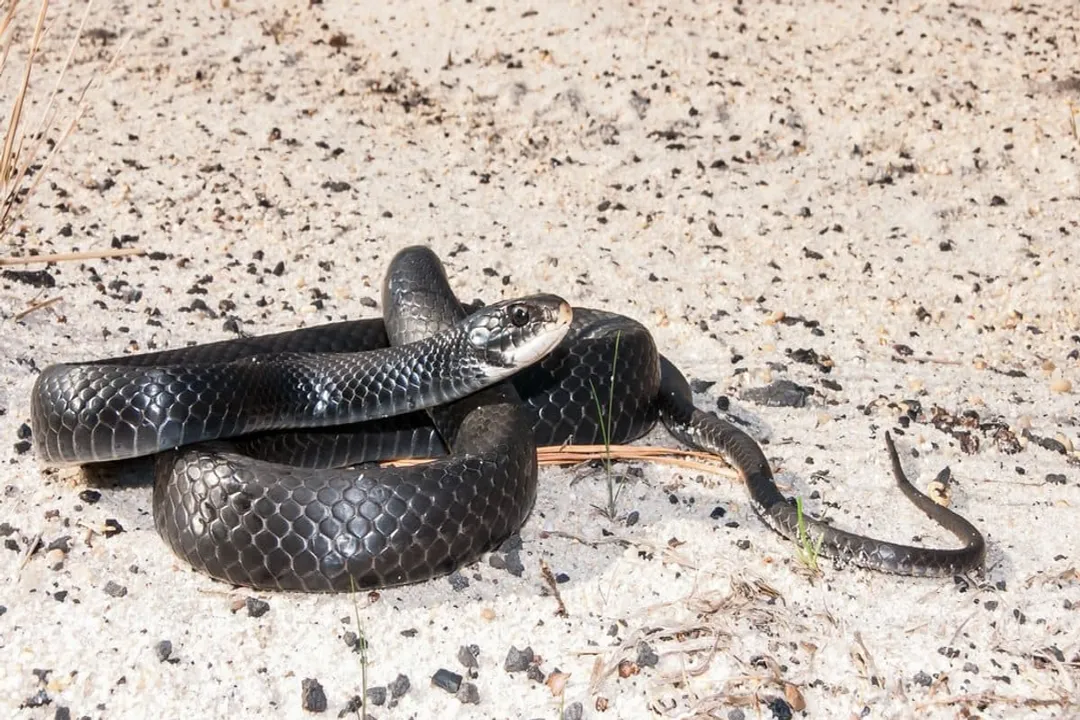
The name "racer" is well-earned, describing perhaps their most famous characteristic: speed. [3][9] These snakes are legendary for their ability to move rapidly across the ground, earning them a reputation as the fastest snake in North America. [3][9] While exact speeds are difficult to measure consistently in the wild, they are capable of moving quickly enough to outpace a casual human observer easily. [3] This velocity is an evolutionary adaptation primarily for escaping predators and catching swift prey. [1]
This need for speed dictates much of their preferred environment. They favor open areas where they can utilize their acceleration, such as fields, roadsides, and the edges of wooded areas. [3][9] If you are observing a Southern Black Racer in an open space, understanding their top velocity reveals a crucial piece of field etiquette: attempting to catch or corner one is almost always futile, as they will be gone before you can react effectively. [3] Their entire survival strategy revolves around rapid flight rather than confrontation.
# Habitat Range
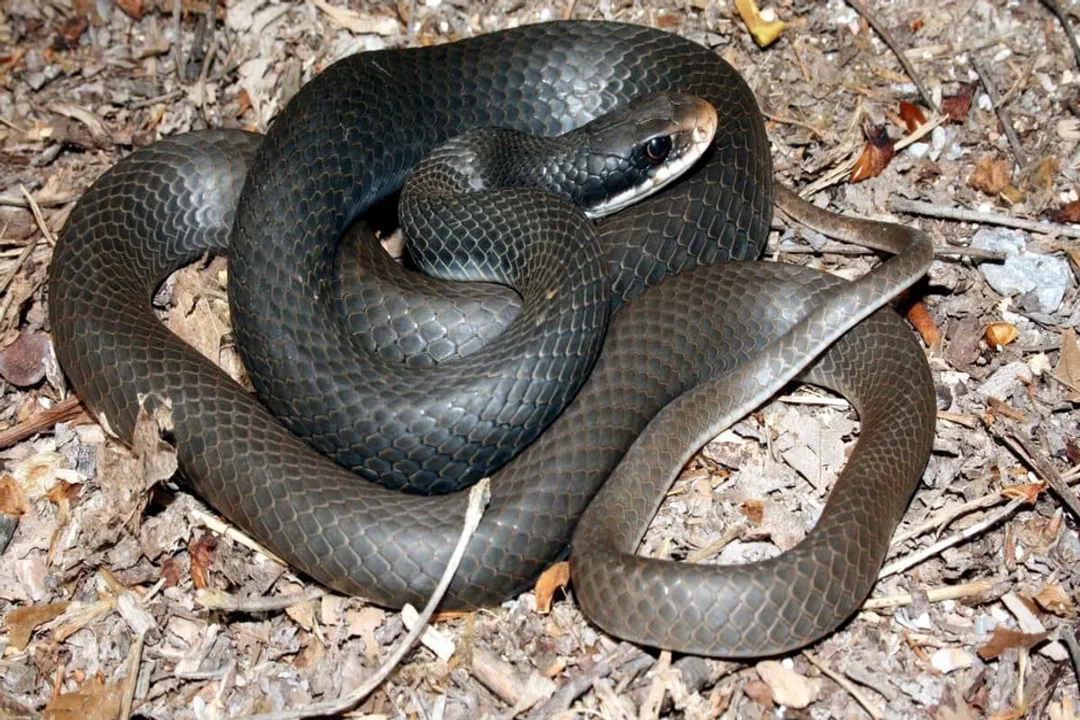
The distribution of the Southern Black Racer is concentrated throughout the southeastern United States. [1] They are particularly common in states like Florida, where they inhabit a wide variety of environments, including pine flatwoods, scrub, marshes, and suburban landscapes. [3][7] They are highly adaptable, often found near water sources or in areas with dense, low-lying vegetation, though they prefer open sunny spots for thermoregulation. [1][7]
In environments where other dark, potentially dangerous snakes like the Eastern Cottonmouth (Water Moccasin) are present, misidentification can be a serious concern for novices. [4] However, the Cottonmouth, being a pit viper, has a much chunkier body, a broader, triangular head shape, and a heat-sensing pit between the eye and nostril—features entirely absent in the slender, long-headed racer. [1] The racer’s smooth scales and lack of obvious heat-sensing pits are key identifiers that separate it from heavy-bodied venomous species. [1]
# Diet and Predation
As active, diurnal hunters, Southern Black Racers consume a varied diet that reflects their pursuit-based hunting style. [1][3] Their primary food sources include small mammals like mice and shrews, lizards, frogs, and even other snakes. [1][3] They are also known to consume bird eggs and nestlings when available. [3] This varied appetite places them squarely in the category of beneficial backyard wildlife, as they help control populations of common pests. [7]
Because they rely on speed and physical overpowering rather than venom, they must be large enough relative to their prey to successfully constrict it. This necessity reinforces their adult size, allowing them to tackle larger rodents that might pose a risk to a smaller, less capable predator. Their presence in an ecosystem is generally an indicator of a balanced environment capable of supporting a diverse range of small vertebrates. [1]
# Human Encounters
When a Southern Black Racer encounters a human, its immediate and overwhelming instinct is to flee, which it usually does with impressive haste. [3] However, if cornered, denied an escape route, or directly handled, the snake will switch to a defensive posture that can be startling. [3] This defense often involves vibrating its tail rapidly against leaf litter or dry vegetation, creating a buzzing sound intended to mimic the warning sound of a rattlesnake. [3] In close quarters, they may also flatten their heads, which gives them a temporary, triangular appearance—a shape unfortunately shared by pit vipers—leading to unnecessary alarm. [4]
A useful observation for anyone spending time outdoors in their range is recognizing the difference between a "play dead" response and a defensive posture. While some snakes feign death, the racer is more likely to engage in vigorous display or attempt to bite defensively if captured, though the bite itself is medically insignificant, amounting only to minor scratches. [1][3] If you spot one across the lawn, the best practice is to stop moving, allow it to assess you as a non-threat, and watch it sprint away unharmed. Chasing it, especially near pavement, often results in the snake being struck by a vehicle as it darts into the road surface, a common fate for these fast travelers. [7]
Considering the energy expenditure required for such rapid movement, a racer will prioritize escape over conflict. An individual that seems highly agitated and aggressive in a confined space is likely already stressed by being blocked in. Giving them a clear path toward dense cover, such as a woodpile or thick shrubbery, is the quickest way to de-escalate the situation and ensure safety for both parties. [7]
Another useful comparison that aids in field identification revolves around their head carriage when moving. When cruising for prey or moving casually, a racer often holds its head high off the ground, surveying its surroundings, contributing to its sleek, purposeful look. [3] This is different from many vipers, which tend to keep their heads low, moving in a more sinuous or sidewinding pattern. The high-held head makes the racer appear more alert and perhaps more threatening to the untrained eye, even though it lacks venom.
Finally, recognizing the seasonal activity can help manage expectations about encounters. Racers are ectotherms, meaning their activity levels are heavily influenced by ambient temperature. [3] You are far more likely to see them actively basking in the sun during the mid-morning or early afternoon in the spring and fall, or moving quickly during cooler parts of the day in the height of summer heat, as opposed to deep winter months when they are hibernating underground. [3] This pattern means that your chances of an observation increase significantly during peak daylight hours when the weather is pleasant.
Related Questions
#Citations
Southern black racer - Wikipedia
Florida Black Snake. Dangerous? : r/herpetology - Reddit
A Speedy Serpent – the Southern Black Racer | Panhandle Outdoors
Southern Black Racer - Coluber constrictor - A-Z Animals
Southern black racer snake identification - Facebook
Southern black racers are not venomous, but they are constrictors ...
Southern Black Racer in Central Florida: Identification & Facts
Southern Black Racer - Snake Snap
Southern black racer Facts for Kids
The Black Racer: All About Florida's Fastest Snake - Quick Catch