Are southern black racers good to have around?
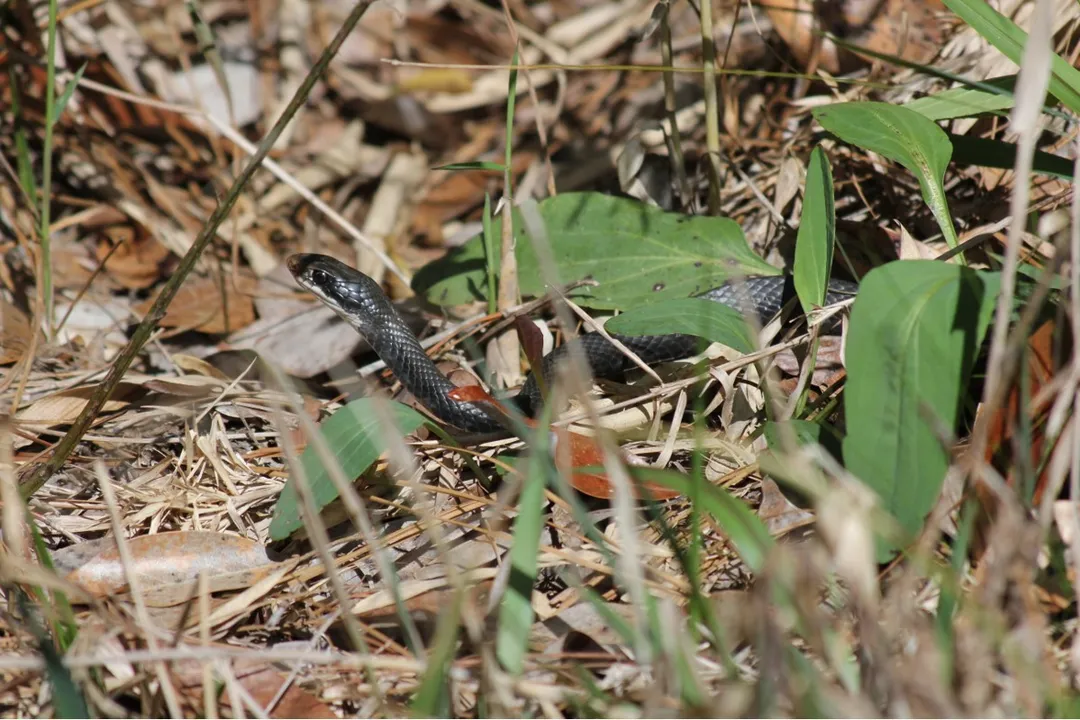
The appearance of a long, dark, whip-thin snake darting across a sunny yard often triggers an immediate reaction, especially in the southeastern United States where the Southern Black Racer (Coluber constrictor priapus) is a common sight. [1][3] While many people are instinctively wary of snakes, understanding this specific reptile reveals a creature that is generally more beneficial than harmful to a property owner. [4] The first important detail to grasp about the Southern Black Racer is that it is non-venomous. [1][3][8] Its reputation for speed—the source of its common name—is well-earned, and its primary instinct when encountering humans is nearly always flight, not fight. [2][4][8] Yet, curiosity or fear often leads to questions about whether these speedy serpents are safe neighbors, particularly when they are seen near outbuildings or crossing roadways. [1][4][7]
# Appearance
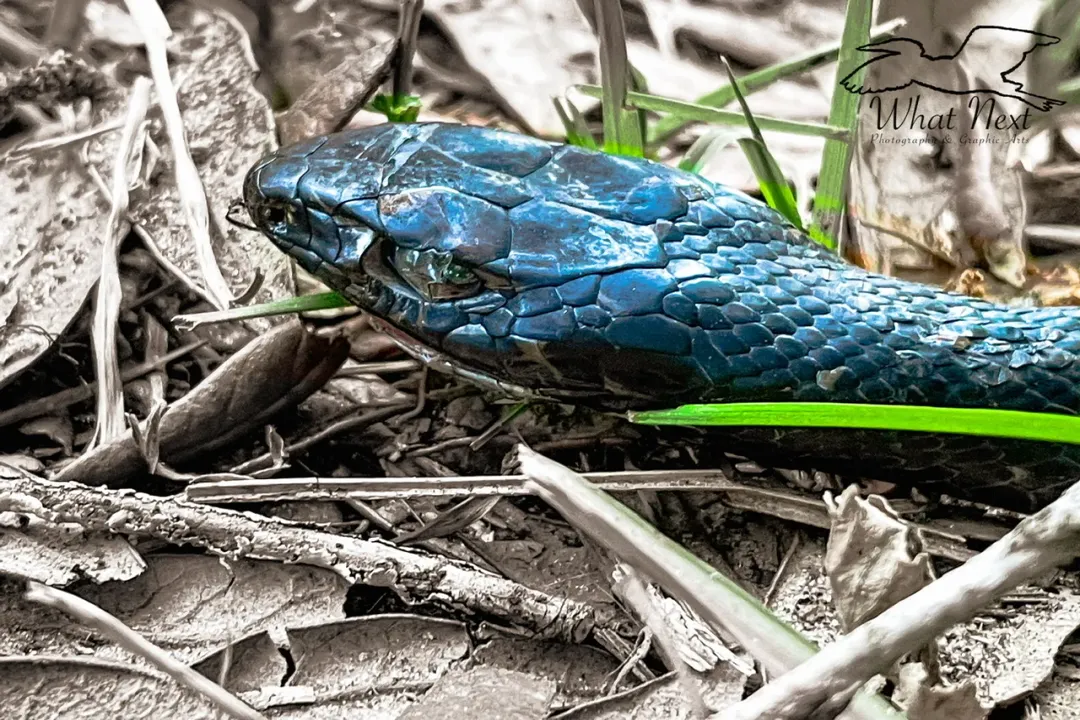
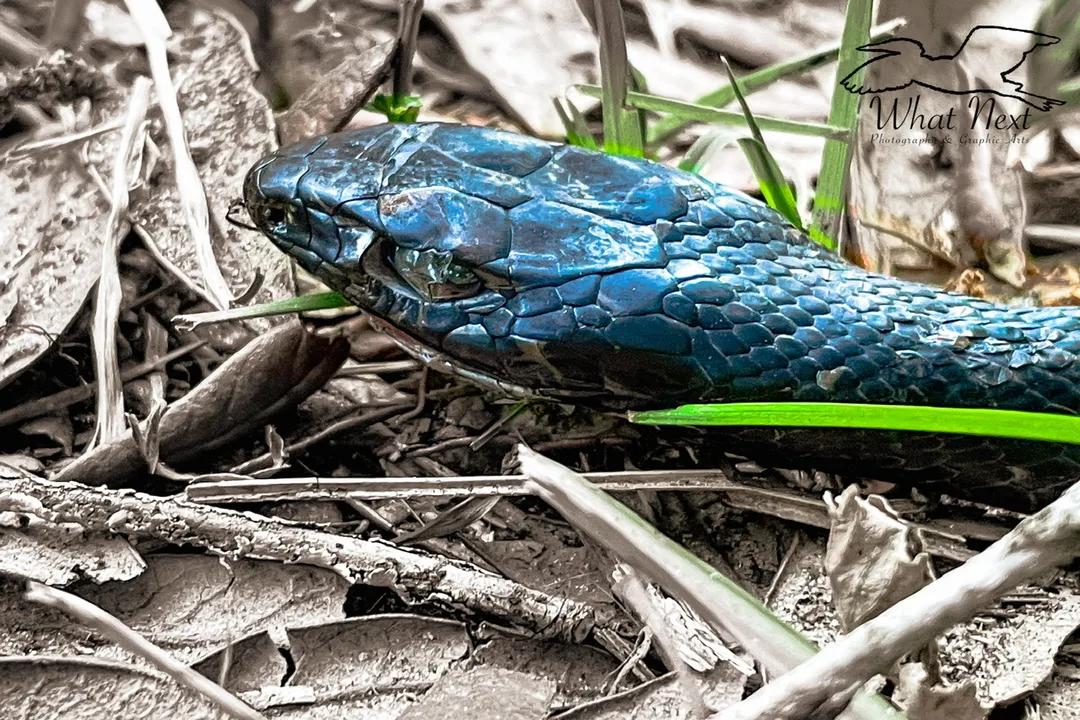
Confirming the identity of a Black Racer is key to knowing how to react to it. [3] The adult Southern Black Racer is a strikingly handsome snake, known for its slender, thin body. [3] Adults typically exhibit solid jet-black scales across their upper body, contrasting sharply with a distinct white chin and often a gray belly. [1][3] They possess smooth scales, which contribute to their sleek look, and have round pupils. [1][3] The length is considerable, often ranging from two to five feet, with some individuals stretching up to six feet long. [1][8]
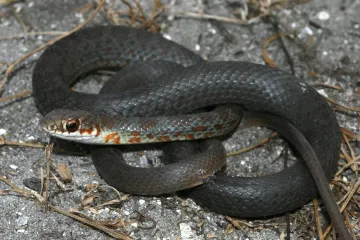
The look of a baby black racer is dramatically different, which often causes confusion and unnecessary harm. [3] Hatchlings, measuring only about six inches, sport a mottled pattern of gray or brown scales interspersed with red splotches. [1][3] This coloration serves as excellent camouflage in their initial habitats, such as leaf litter or scrub. [1] Over time, through several molts, they transition to the uniform black of adulthood. [2][3] This visual transformation is a vital point for property owners; mistaking a juvenile for another species, such as a pygmy rattlesnake, can lead to the death of a helpful predator. [3]
# Identification

Distinguishing the Black Racer from other dark or similarly shaped snakes is crucial, especially in areas where venomous species overlap in territory. [3] A common point of confusion is the Cottonmouth (Water Moccasin). [3][8] The Racer is long and thin, whereas the Cottonmouth has a shorter, thicker body. [3] Furthermore, Cottonmouths have a dark mask extending through the eye and, crucially, a white lining inside their mouth, a feature racers lack. [3][8] Another large snake in the region is the Eastern Indigo Snake; while both are long, the Indigo typically has a reddish-orange chin, unlike the racer’s white or gray one. [3] Even the Coachwhip, a close relative, differs by being a light tan color with a dark head and neck, rather than the adult racer’s solid black. [3]
# Speedy Habits
As their name implies, speed is the Black Racer’s greatest asset. [2] They have evolved to be quick hunters and even quicker escape artists. [1] While their top speed might be estimated around 4 miles per hour, this is exceptionally fast for a snake, allowing them to easily outpace many predators and their prey. [8] Racers are diurnal, meaning they are most active during the daylight hours, which increases the frequency of human sightings as they are out hunting or basking to regulate their body temperature. [3][8] They are not confined to the ground either; these reptiles are also noted as expert swimmers and capable climbers, often seen in shrubs and trees, or even draped over structures like fences or the side of a house. [1][3]
# Natural Diet
The diet of the Southern Black Racer underscores why they are considered valuable members of the local ecosystem, particularly for landowners managing pest populations. [4][8] They are active, opportunistic carnivores. [3][8] Their menu includes a wide array of small creatures: rodents, moles, lizards, frogs, toads, and various types of birds and their eggs. [1][3][8] Young racers may supplement their diet with insects. [2] For those dealing with mice, rats, or even invasive species like the Cuban tree frog, the presence of a Black Racer is a natural form of pest control. [7][8]
Interestingly, despite their scientific name Coluber constrictor, they do not subdue prey in the classic constrictor manner—coiling around and squeezing to death. [3] Instead, the racer relies on its speed to ambush and quickly overpower its meal, then crushes or pins the victim to the ground until it suffocates before being swallowed whole. [2][3]
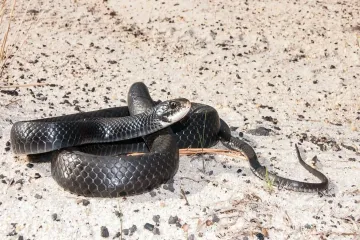
# Temperament and Defense
The primary reason many residents are comfortable having these snakes around is their fundamentally timid and shy nature. [1][2] When a Black Racer detects a threat, its default programming dictates an immediate retreat. [2][4] They do not intentionally seek out confrontation with humans or pets. [4]
However, if an escape route is blocked, or if the snake feels cornered, it will defend itself fiercely. [2][3][8] This defense can escalate quickly:
- Vocalization/Display: They may freeze initially to avoid detection. [3]
- Musk Release: A foul-smelling musk is often emitted as a warning. [3]
- Tail Vibration: They may vibrate their tail rapidly; in dry leaf litter, this can sound remarkably like a rattlesnake, though it is purely a bluff. [3][8]
- Biting: If forced, they will strike, sometimes repeatedly. [3][8] While the bite is non-venomous, it can be painful and may draw blood, requiring basic first aid like washing with soap and warm water to prevent infection. [1][3][8]
A persistent misconception is that snakes, particularly racers, chase people. [4] This is generally false; if a snake moves in your direction, it is usually because that is the shortest path to cover, or because you have inadvertently stepped between it and a safe hiding spot. [4] Moving out of the way will typically result in the snake continuing on its path, ignoring you completely. [4]
# Coexistence Practices
For homeowners who find Black Racers inhabiting barns, woodpiles, or yards, the best strategy is appreciation from a safe distance. [2][4] Since they are active hunters during the day and spend nights in burrows or trees, they are frequently encountered near fields or wooded edges. [3][8] If you spot one and wish to keep it around for its rodent control services, remember that direct interaction is what elicits defensive behavior. [2][7]
One excellent way to maintain a positive co-existence when you find a racer near a dwelling, such as a chicken coop, is to manage the immediate perimeter. [7] Snakes often seek cover near structures; by keeping weeds, bushes, and debris piled against the foundation trimmed back, you create a less inviting "edge habitat". [7] If a snake is regularly seen near a sensitive area like a coop, the most humane and effective action is to gently encourage it toward an area of the property where rodent activity is higher, like a shed or barn, rather than attempting to capture or kill it, which is when bites are most likely to occur. [7][8] If you must move a snake from a high-traffic area, an actionable tip is to use a long-handled broom or stick to gently nudge it in the desired direction from several feet away; this utilizes your height advantage, minimizes startling the animal, and respects its natural aversion to close human contact, thus avoiding provocation. [2]

# Lifecycle Notes
The life cycle of the Southern Black Racer involves seasonal changes and specific nesting habits. [3] Like other cold-blooded reptiles, they rely on external heat sources to regulate their internal temperature. During the cold winter months, they enter brumation, seeking shelter underground in communal dens, sometimes alongside other snake species, often near hillsides or rock crevices. [1][3] They re-emerge in the spring, active for breeding. [1] Females lay clutches of eggs, usually between 6 and 23, which they hide under rocks, bark, or boards. [1][3] The young hatch in late spring or early summer. [3] A key analytical observation for the general reader is that the juvenile's cryptic pattern of gray, brown, and red splotches provides superb camouflage, yet this very appearance is what often condemns them, as people mistake them for venomous species like pygmy rattlesnakes, a scenario that robs the environment of future natural pest controllers. [3]
# Mortality Factors
Despite their speed and effectiveness as predators, Black Racers face significant mortality risks, and surprisingly, humans represent their greatest threat. They are frequently killed by vehicles when attempting to cross roads, as their rapid movement is not always enough to avoid fast-moving traffic. [1][3] Additionally, many are intentionally killed out of residual fear or misidentification. In the wild, their natural enemies include birds of prey, such as various hawks, which rely on keen eyesight to spot them from above, effectively neutralizing the ground-level advantage of speed. [3] There is even a recorded case of a Great Horned Owl killing a racer, only to be strangled by the snake in return, demonstrating the surprising defensive capability even in death. [3]
Overall, for property owners concerned about rodents and other common pests, the Southern Black Racer offers a service that is both continuous and natural, demanding respect for its space rather than fear. [4][8] By recognizing its harmless status and understanding its avoidance behavior, residents can allow this speedy serpent to keep populations of less desirable critters in check. [7]
#Videos
Are Black Racers DANGEROUS? - Up Close With a FAST and ...
Related Questions
#Citations
There's a lot of black racers around my house... : r/snakes - Reddit
A Speedy Serpent – the Southern Black Racer | Panhandle Outdoors
Black Racers are Beautiful, Helpful Garden Snakes
Are Black Racers DANGEROUS? - Up Close With a FAST and ...
The Black Racer: All About Florida's Fastest Snake - Quick Catch
Black Racer snake around my coops. Need Advice!
Southern Black Racer - Coluber constrictor - A-Z Animals
Southern black racer - Wikipedia