Weaver Birds Locations
The sheer intricacy displayed in the construction of a weaver bird's nest often places them at the apex of avian builders, earning them the title of nature’s master architects. These small birds, belonging to the family Ploceidae, are not merely content with a cup or a simple cavity; they fashion complex, woven structures, often using materials like grasses, reeds, and twigs, sometimes sealed with mud. The resulting homes are not just shelter but are deeply integrated with their social lives, mating rituals, and defense against predation. Observing these constructions, whether hanging delicately from a thorny acacia or clustered densely in a massive communal structure, reveals an innate engineering ability that rivals human craftsmanship in its specific context.
# Avian Engineering
The common name "weaver" perfectly describes the core activity of these birds: weaving. This is an entirely learned or genetically programmed skill passed down through generations, resulting in structures that are remarkably durable and tailored to their environment. The construction process itself is highly specific. For many species, the male takes the lead, sometimes building the entire entrance tube or the foundational part of the nest, which serves as a display to attract a female. If the female approves of the initial work, she assists in finalizing the structure, often turning it into a secure, enclosed chamber.
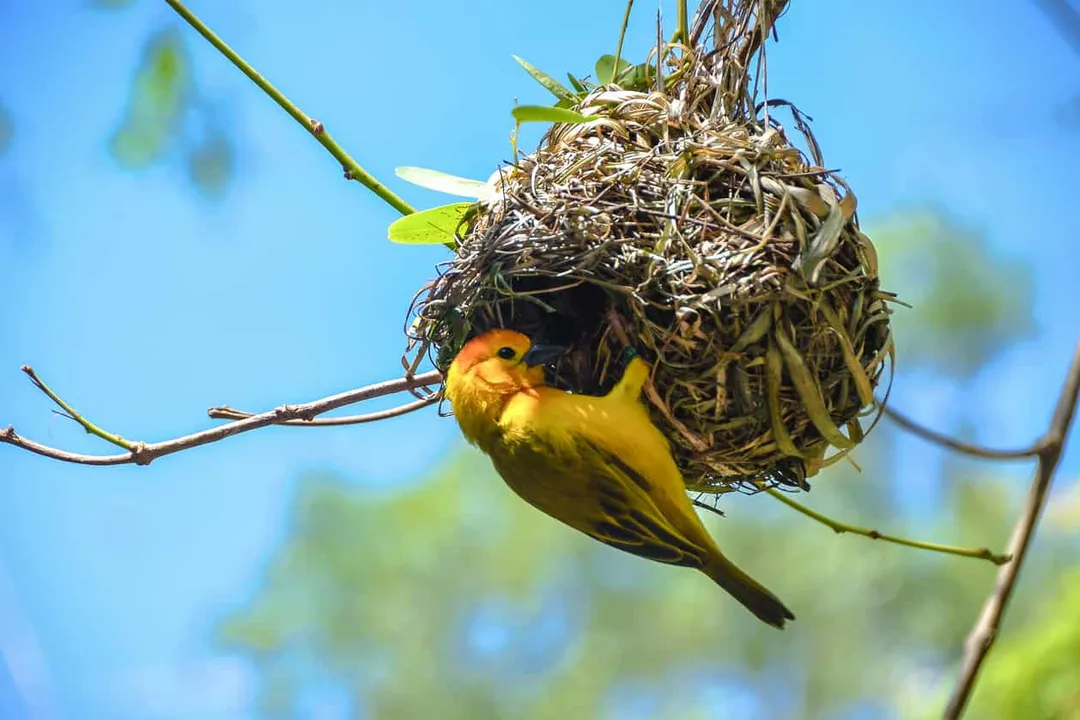
A key feature in many weaver nests is the entrance design. Instead of an exposed opening, many species construct long, downward-pointing tubes or tunnels leading into the nesting chamber. This design is an active defense mechanism; it makes it very difficult for predators, such as snakes or monkeys, to gain access to the eggs or chicks inside. The entire process relies on dexterity and precision, where strands are interwoven so tightly that the finished product can often withstand significant weather events. It is worth noting the efficiency of their material use; unlike generalist builders that might use a broader, less specialized array of debris, weavers often select specific lengths and types of flexible grasses, indicating a high degree of material specialization that optimizes both flexibility and tensile strength for their unique weaving technique.
# Geographic Range
Weaver birds are almost exclusively found in the Old World, with the vast majority inhabiting the continent of Africa, though several species are also native to Asia. Their distribution often correlates with environments that offer abundant, pliable grasses and reeds suitable for their intricate building projects, as well as the necessary thorny trees or reeds to anchor their hanging creations safely.
In Africa, weaver populations are widespread, inhabiting savannas, grasslands, and riverine woodlands across sub-Saharan Africa. Different regions host distinct groups, ranging from the small, solitary builders to the massive colonial nesters. For instance, the sociable weavers, known for their immense, apartment-like structures, dominate the drier regions of Southern Africa.
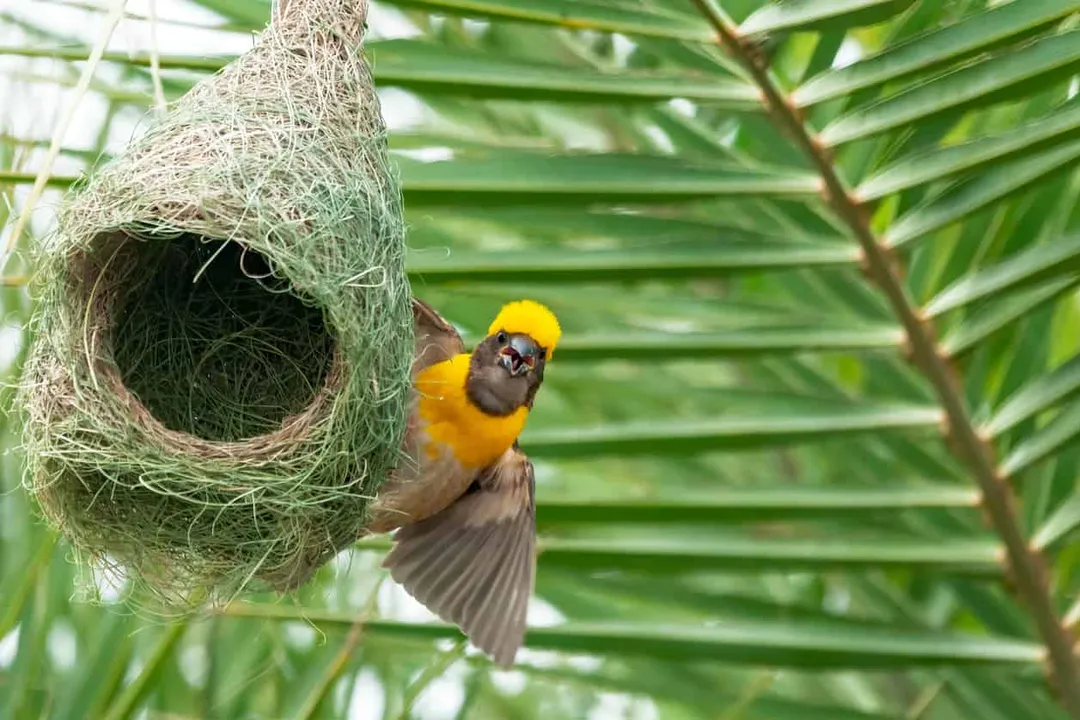
Across Asia, the distribution is more localized but includes some of the most recognizable species, such as the Baya Weaver, which is common across the Indian subcontinent and parts of Southeast Asia. These birds often build their nests suspended from palm fronds or roadside trees, bringing their architectural feats close to human habitation. While the core mechanics of weaving remain similar, the local availability of materials—such as specific types of reeds or thorny acacia branches—influences the final texture and shape of the nest from one geographic locale to the next.
The following table summarizes general location data across the two main continents:
| Continent | Predominant Habitat Type | Nesting Style Observation |
|---|---|---|
| Africa | Savannas, Grasslands, Woodlands | High diversity, includes massive communal nests |
| Asia | Sub-Himalayan regions, Southeast Asia | Often seen near human settlements, using palm fronds |

# Species Specificity
While the family is defined by its construction skills, there are significant variations in how different species approach architecture. Understanding these differences provides a clearer picture of the family's architectural range.
# Colonial Nests
Some of the most dramatic examples are seen in colonial species, where hundreds or even thousands of nests are built adjacent to one another, often on a single large tree. The Sociable Weaver (Philetairus socius) of Southern Africa is the standout here. Their structures are not merely individual hanging pods; they are massive, thatched communal roofs that can measure several meters across and last for years, providing shared insulation and defense for numerous breeding pairs inside. This communal approach, where the colony shares the structural support, creates a unique micro-environment. This reliance on the colony's sheer mass effectively shifts the survival risk calculation away from the failure of one small nest toward the overall resilience of the large, shared edifice, offering a protection level far exceeding what a solitary nest could achieve.
# Solitary Weavers
In contrast, many other species, like the various Euplectes species or the Ploceus genera, build discrete, individual nests. The Baya Weaver (Ploceus philippinus), common in India, exemplifies this. The male Baya Weaver's construction is a stunning spectacle, often beginning with an intricate upside-down retort shape. The commitment to this individual effort is high; the male may build several incomplete nests before a female selects one to complete. The final nest is a functional sphere with a vertical entrance tube, frequently anchored to the slender, swaying branches of trees, which is itself a feat of physics designed to deter climbers.
# Mating and Location Choice
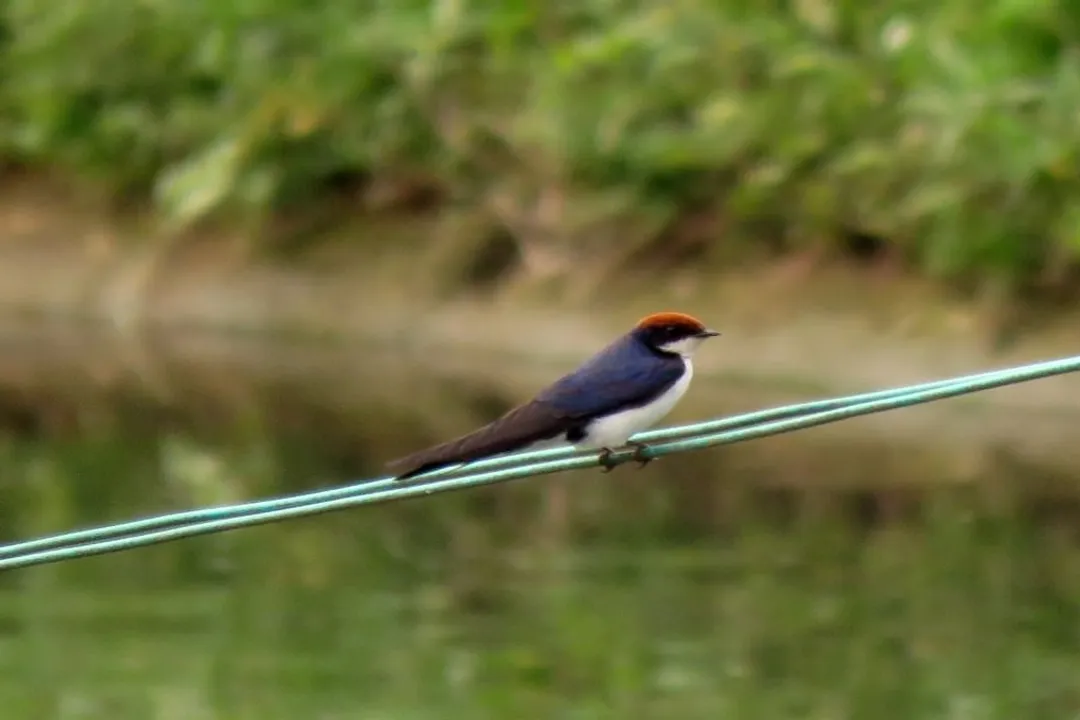
For the weaver bird, the location and quality of the nest are inextricably linked to reproductive success. The architecture isn't just about safety; it's a performance. The male uses the structural integrity and aesthetic appeal of his nearly completed work as a primary method of courtship. A poorly woven knot or a weak anchor point signals low fitness to a prospective mate.
The selection of the construction site is as important as the building technique itself. Weavers frequently choose locations that offer natural deterrents, such as thorny trees or overhanging cliffs, to supplement their woven defenses. Building over water, where predators cannot easily access the base of the anchoring branch, is another common strategy employed by certain riparian species. When observing a large colony, one can often discern patterns in site selection—perhaps prioritizing southern exposure for morning sun or choosing the highest, most exposed branches for maximum visibility of the male’s display. This deliberate choice of geography and anchor point demonstrates that "master architecture" involves site analysis as much as material handling. The construction, location, and subsequent acceptance by a female determine whether a breeding season is successful for that individual male.
#Videos
The Architect of Nature | Weaver Bird Species - YouTube
Related Questions
#Citations
Weaver Birds: Nature's Master Architects Bird Facts - A-Z Animals
Meet “The Village Weaver” – The Greatest Architect in the Bird World
Weaver Birds – Nature's Top Architects | KFBG Blog
Meet the Nature's Architects: Baya Weavers of Wonders - Instagram
Avian Builders and the Complexity of Bird Nests
The Architect of Nature | Weaver Bird Species - YouTube
Discover the Sociable Weaver: Nature's Bird Architects | TikTok