Weaver Birds Diet
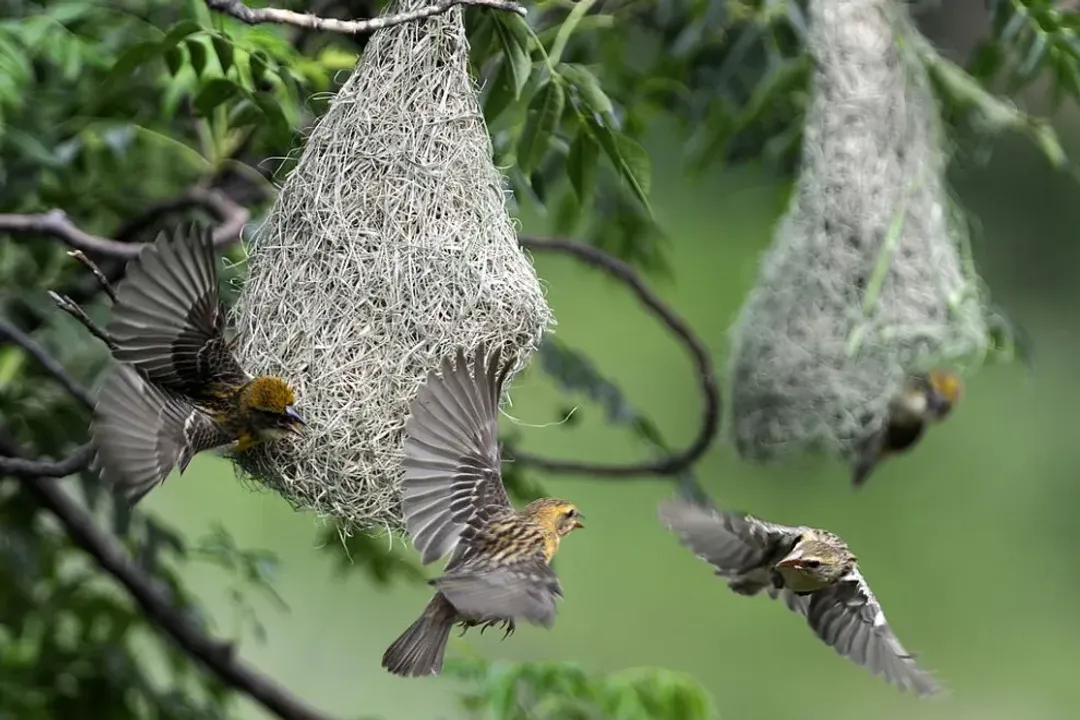
This family of songbirds, renowned globally for its architectural prowess, possesses a diet just as varied as the intricate nests it crafts. Weaver birds, belonging to the family Ploceidae, are generally classified as omnivores. [1] Their feeding habits are not static; they shift depending on the specific species, the season, and, most fascinatingly, the social structure in which they live. [3][4] A quick glance at their dietary staples reveals a mixture of plant and animal matter, including seeds, grains, insects, and even small animals like frogs. [1]
# Beak Strength
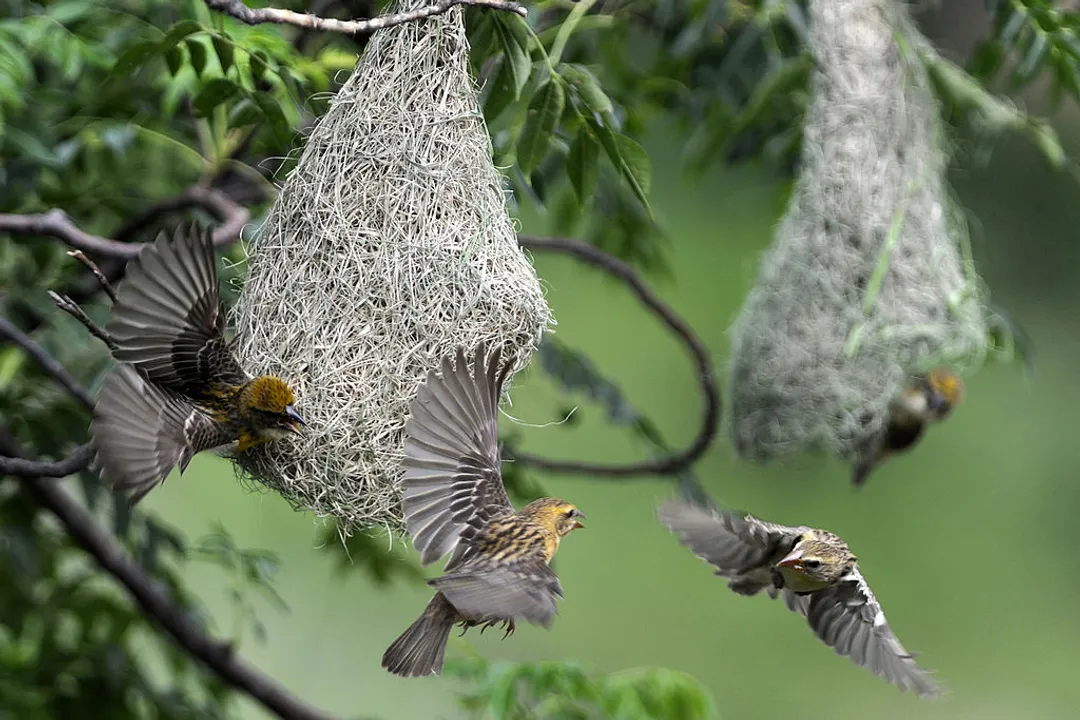
The physical tools these birds possess reflect their varied menu. Many weaver species rely heavily on seeds and grains, which often come protected by hard outer casings. To access this energy-rich food source, weavers have developed large beaks capable of effectively cracking open the thick shells that encase their preferred seeds. [1] This mechanical strength is a clear adaptation to a granivorous component of their omnivorous diet.
# Habitat Influence
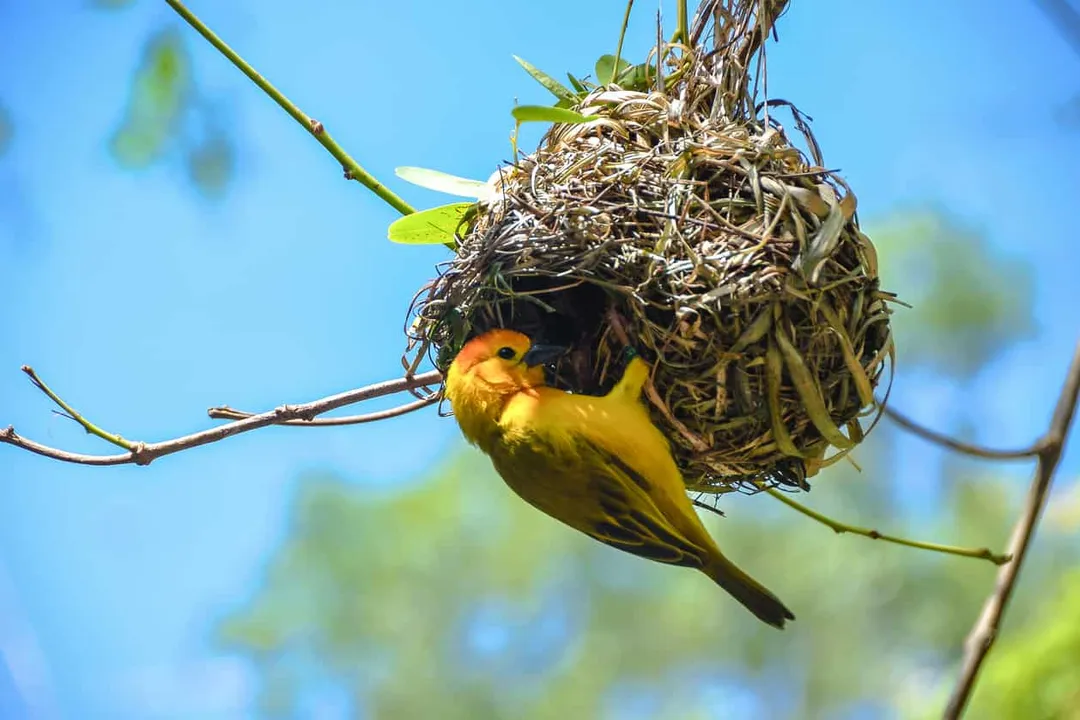
While the general classification is omnivorous, the day-to-day reality of what a weaver bird consumes is deeply tied to where it builds its home. The geographical setting—whether open savanna or dense forest—dictates food availability and, consequently, dietary specialization. [3][4] This specialization drives significant behavioral differences within the family. [4]
# Savanna Seeds
Weavers inhabiting the open savanna environments show a marked preference for a diet consisting largely of seeds. [3][4] In these wide-open landscapes, finding concentrated patches of seeds is crucial for efficient foraging. When food is found in abundance, it is advantageous for the birds to feed together. This leads to the development of large, cooperative feeding groups or flocks. [3][4] Flocking provides the added benefit of safety in numbers against predators common in open areas. [3]
# Forest Insects
In contrast, weaver species residing in forests lean more heavily toward an insect diet. [3][4] Insects are not usually found in massive, stationary patches like seeds; rather, they are more widely distributed throughout the forest understory and canopy. [3] This distribution necessitates that the insect-eaters search over a much wider area for their prey. [3] This requirement for dispersed foraging aligns with a less colonial, more solitary lifestyle when it comes to hunting.

# Social Diet Link
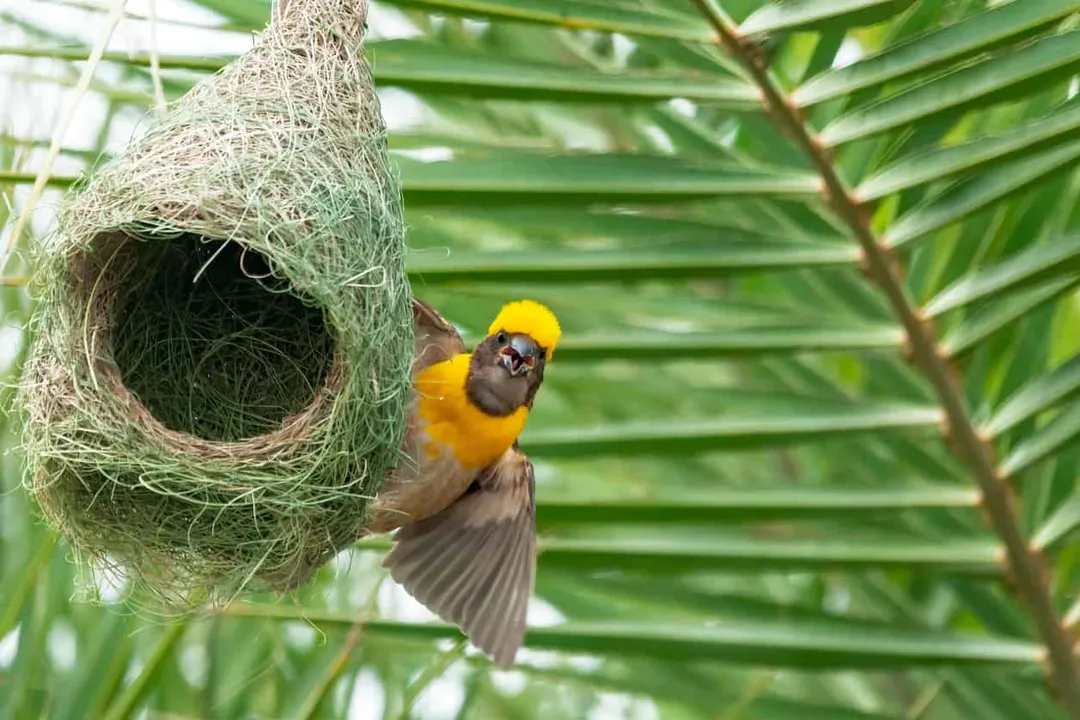
The connection between diet and social behavior is so pronounced it forms a central theme in the study of these birds, essentially confirming a theory first proposed decades ago. [4] The resource availability dictates the social strategy, which in turn affects mating systems.
For the savanna seed-eaters, the need to stay together to locate and exploit localized, abundant seed patches fosters colonial nesting. [3][4] Since nesting sites can be limited in open areas, competition can increase, driving these colonial groups toward polygamous breeding systems, where one male mates with several females within the colony. [3][4]
Conversely, the forest-dwelling, insect-eating birds, needing to cover extensive ground individually to secure enough insects, do not gain the same benefit from tight flocking for foraging. [3] The closed forest habitat offers ample, safer territory for building individual nests, meaning they do not need to cluster together. [3] This more spread-out existence correlates with a preference for monogamous pairing, where birds often remain with the same partner throughout the breeding season. [3][4] The availability of one type of food (seeds) encourages aggregation and plural mating, while the scattered nature of another food source (insects) encourages reduced social structure and pair-bonding.
If we consider the energetic demands, seed specialists are consuming a more predictable, high-carbohydrate food source that can fuel the high activity required for mass nest construction and territorial defense common in colonial species. Insectivores, on the other hand, consume a high-protein diet, which might favor a more consistent, long-term partnership (monogamy) to ensure reliable chick-rearing, as the protein-heavy diet is essential for growing nestlings. [4] This is an interesting evolutionary trade-off: high-reward, easily clustered food promotes competition and polygamy, while dispersed, perhaps less calorically dense food supports cooperation and pair-bonding.
# Culinary Conflict
The dietary habits of weavers also place them in direct conflict with human agricultural interests in many regions. When large flocks of seed-eaters descend upon fields, the resulting damage can be significant. The Red-billed Quelea, for example, is infamous as one of the most numerous wild birds on the planet, and its habit of raiding farmlands means it is widely regarded as a serious agricultural pest. [1] This level of consumption, driven by massive population sizes and a seed-centric diet, causes considerable economic hardship in areas where they congregate. [1]
However, this relationship is not universally antagonistic. In locations like Nabang, Yunnan, where the Baya Weaver is a rare sight, conservation efforts have actively involved the local community in supporting the weavers’ diet. [2] Members of the local birdwatching society have returned to planting rice and corn specifically to provide a reliable food source for these "feathery neighbours". [2] This shows that the very grains that lead to pest status elsewhere can become a point of ecological partnership when population pressures are lower, habitats are managed, and the birds are valued for ecotourism and local biodiversity. [2] The distinction between a pest and a welcome resident often lies not in what they eat, but how many of them are eating it and what value the local human population places on their presence.
# Diet Variation
It is worth noting that while the seed/insect dichotomy linked to social life is a major finding, the general omnivorous description holds true across the entire family. [1] For instance, the White-headed Buffalo Weaver actively seeks out insects disturbed by large mammals like buffalo, illustrating a unique foraging strategy tied to larger fauna in its habitat. [1] Furthermore, even within the forest-dwelling groups, while insects may be preferred, supplementary food sources, especially during non-breeding times or shortages, will certainly be sought out, reinforcing their omnivorous baseline. [1] The key takeaway is that social behavior reflects the dominant, most reliable food source of the habitat, not necessarily the entirety of the diet across the calendar year.
The adaptability of the weaver family—from the billions-strong Quelea to species with only a few thousand individuals—is underscored by their flexible diet, which allows many species to thrive across varied African and Asian landscapes. [1] While their mouths are adapted to crack shells and their stomachs can process insects, their society is built around whether they are chasing scattered grubs or gathering in massive flocks over a reliable grain field.
Related Questions
#Citations
Weaver Birds: Nature's Master Architects Bird Facts - A-Z Animals
Weaver Birds – Nature's Top Architects | KFBG Blog
Diets of weaver birds are influenced by their social lives - Earth.com
Social Lives of Weaver Birds Linked with Diet and Biology, Study Finds