Waimanu Facts
The name Waimanu brings to mind two vastly different subjects: an ancient creature that swam the prehistoric seas and a secluded, rugged landscape on a modern island. Both carry a sense of the wild and the untouched, separated by millions of years and thousands of miles. One represents a critical turning point in avian evolution, the other, a pocket of pure, untamed nature. Understanding the facts surrounding both entities reveals fascinating details about deep time and the enduring character of remote places.[1][3][6]
# Ancient Bird
The genus Waimanu holds a significant place in paleontology as the oldest known relative of modern penguins. [3][7] These creatures existed during the early Paleocene epoch, specifically between approximately 60 and 56 million years ago. [1][3] This places them shortly after the massive extinction event that wiped out the non-avian dinosaurs. [1] The discovery of their fossils in New Zealand provides crucial evidence about the early diversification of penguins. [1][3]
# Species Types
The fossil record identifies several species within the Waimanu genus. Key examples include Waimanu wintonensis and Waimanu manneringi. [1] These early forms belonged to the extinct family Waimanuidae, which branched off from the lineage leading to today's penguins, classified in the family Spheniscidae. [1] This separation is important; Waimanu was not a direct ancestor in a straight line to the Emperor or Adélie penguins we know today, but rather a close cousin that occupied a different branch of the evolutionary tree shortly after the group separated from other flying birds. [1][5]
# Physical Form
When comparing Waimanu to its modern descendants, the differences are subtle but telling, suggesting a creature in transition. While Waimanu was roughly the size of a contemporary penguin, its anatomy shows features that had not yet been fully specialized for modern aquatic life. [1] For instance, its flippers retained a structure that was more bird-like, suggesting they were not as stiff and purely wing-like as those of modern penguins. [1][5]
The most compelling anatomical distinction lies in the mouth. Unlike modern penguins, which have specialized tongues and smooth bills designed to swallow fish whole, Waimanu possessed teeth. [1] These teeth suggest a different feeding strategy, perhaps involving grasping slippery prey before swallowing, or consuming a different type of food altogether than the fish and krill that dominate the modern penguin diet. [1][5] If we were to sketch out the evolutionary pathway, one might imagine Waimanu as a slightly more awkward swimmer than its descendants, still retaining some flight-era morphology in its limbs while adapting rapidly to a fully aquatic niche. [5]
# Evolutionary Timing
The very existence of Waimanu so soon after the Cretaceous–Paleogene boundary event speaks volumes about the speed of adaptation in avian life following the mass extinction. [1] With many large predators gone, various groups of birds, including the ancestors of penguins, were able to expand into new ecological roles quickly. [1] The fossil evidence strongly implies that the penguin lineage diversified rapidly in the period between about 60 and 56 million years ago, establishing distinct branches like the Waimanuidae before the fully streamlined Spheniscidae lineage took over the dominant roles we recognize today. [1] It serves as a fossil snapshot of an evolutionary experiment that settled on the highly efficient form we see in Antarctic penguins centuries later.
# Hawaiian Wilderness
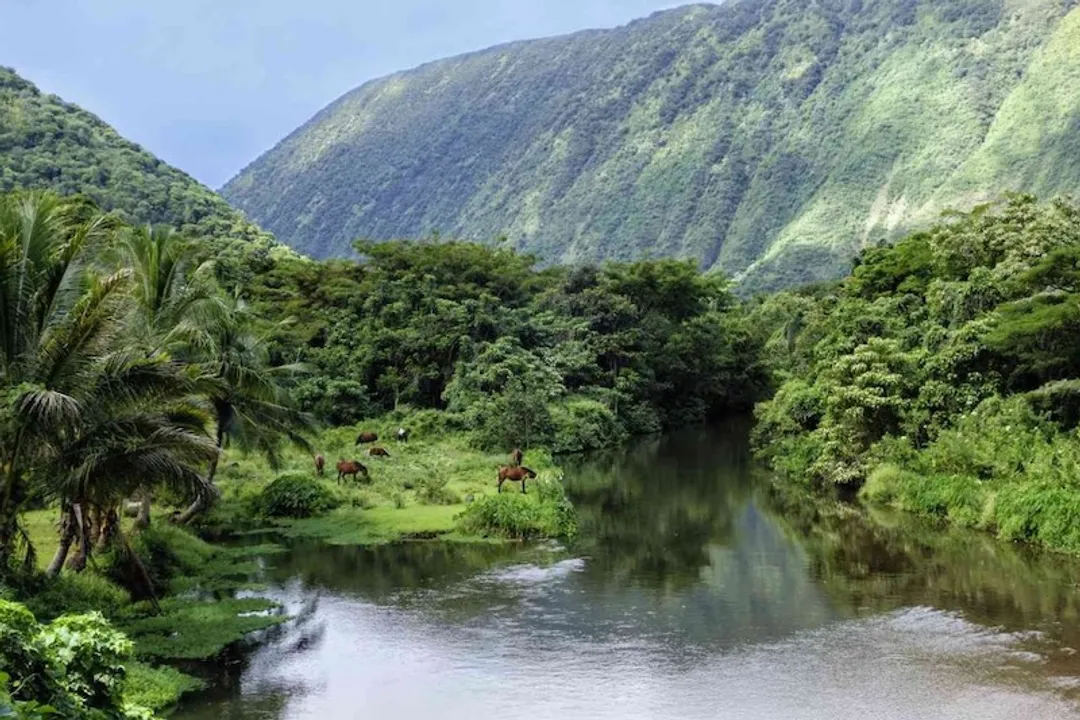
Shifting focus entirely from deep time to the present day, Waimanu is also the name given to a remote and strikingly beautiful valley found on the island of Hawaiʻi, often called the Big Island. [6][8][9] This valley is frequently lauded as one of the most inaccessible and pristine areas remaining in the state, often described as Hawaii's last true wilderness. [6] The presence of this name in a completely separate context highlights how often powerful, evocative names—whether describing ancient birds or untouched nature—get applied to places of significance. [10]
# Difficult Trek
Reaching the floor of Waimanu Valley is not a casual undertaking; it requires significant physical preparation and commitment. [8] Access is entirely on foot, involving a challenging round-trip hike that spans roughly 12.8 miles. [8][9] The trail itself is notorious for its difficulty, traversing uneven and often muddy terrain, demanding sturdy footwear and a good level of fitness from those who attempt the crossing. [8] The remoteness is compounded by the fact that the valley sits at the base of steep sea cliffs along the famed Kohala Coast. [6] This arduous route naturally limits the number of visitors, which paradoxically helps maintain the valley's isolated character. [8] Considering the relative ease of access to other Hawaiian beauty spots, the sheer effort required to reach Waimanu acts as a natural barrier, preserving its ecological integrity in a way paved paths never could.
# Valley Features
Once the challenging hike is completed, visitors are rewarded with a landscape of exceptional beauty that feels worlds away from developed areas. [6] The valley floor is a sanctuary characterized by its lush, vibrant greenery, indicative of a tropical environment receiving ample rainfall. [9] A prominent feature is the beach, which often faces the powerful open ocean. [8] Additionally, the valley walls are scarred by dramatic waterfalls that cascade down into the lush interior. [6][9] These falls feed into streams that meander through the valley floor before eventually reaching the sea.
The management of Waimanu Valley leans toward conservation. While technically part of the broader area, the valley floor is largely untouched by modern development. [6][9] There is a small, self-sufficient community presence often associated with maintaining the land or engaging in traditional practices, but the overall impression is one of raw, powerful nature dominating the landscape. [6][9]
# Comparative Analysis
The contrasting facts of the two Waimanus offer an interesting perspective on what it means for a place or creature to be a "pioneer." The ancient Waimanu bird pioneered a new ecological role, adapting quickly in the aftermath of a global catastrophe, shaping the future of flightless sea birds. [1] Waimanu Valley, on the other hand, pioneers a form of modern wilderness experience—one that demands physical sacrifice from the visitor to access a place that has largely resisted the encroachment of modern civilization. [6][8] Both represent successful, enduring forms in their respective contexts, one through evolutionary success and the other through geographical isolation.[1][6]
Related Questions
#Citations
Waimanu - Wikipedia
Waimanu manneringi - A-Z Animals
Waimanu - 60-million year old penguins from New Zealand
Waimanu Facts for Kids
Waimanu, the first penguin - March of the Fossil Penguins
Waimanu Valley: Hawaii's Last True Wilderness - Arnott's Lodge
Waimanu, the oldest penguin known from the fossil record, lived
Hawaii: Waimanu Valley
Waimanu Valley - Big Island Hikes