Is the ashy mining bee rare?
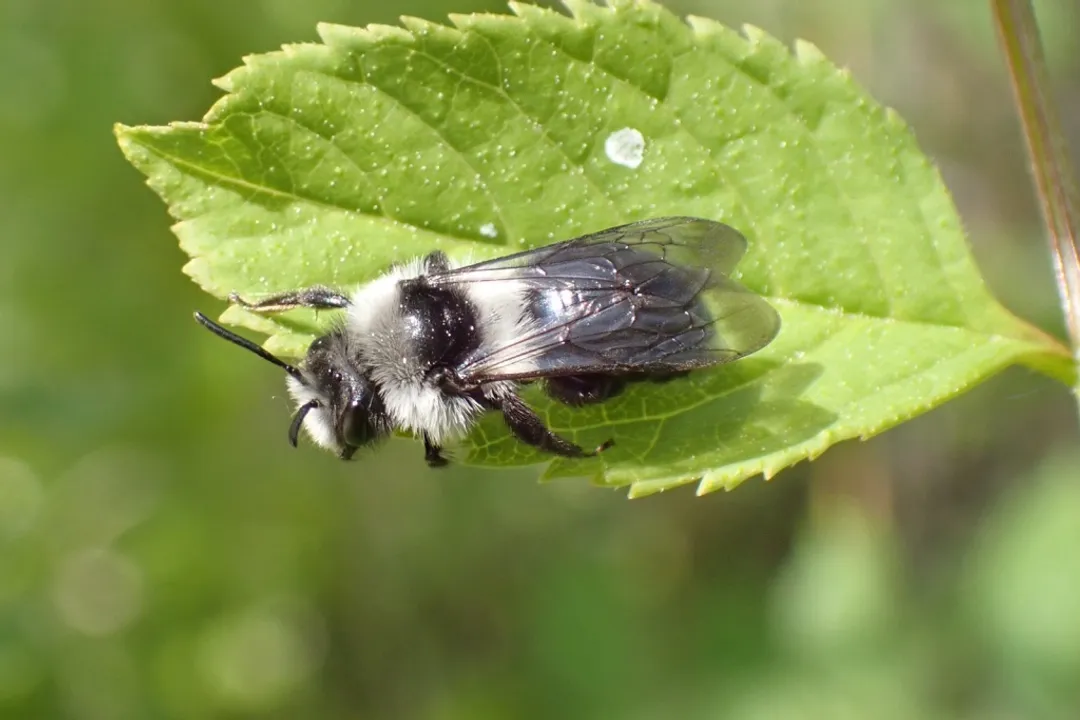
The question of whether the ashy mining bee is rare is one that often arises among gardeners and amateur naturalists, largely because its presence is confined to a very specific window of the year. This particular species, scientifically known as Andrena cineraria, is a fascinating member of the Andrena genus, which contains many solitary mining bees. [9] While its visibility is brief, suggesting scarcity to the casual observer, its actual distribution tells a slightly different story concerning its commonality across its range.
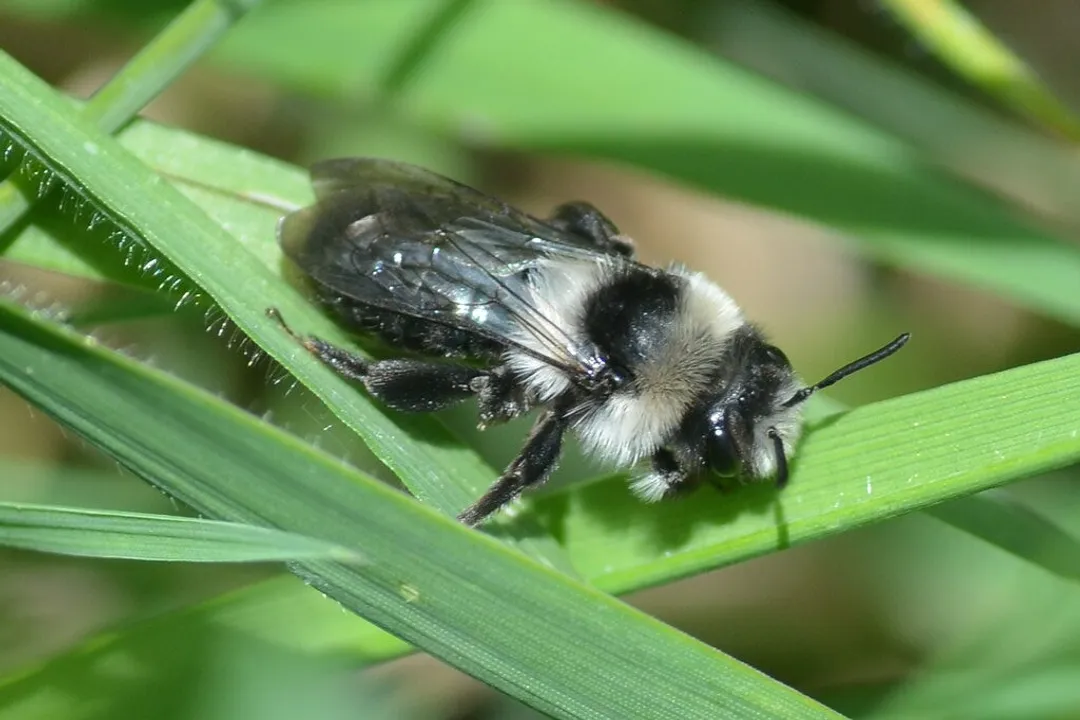
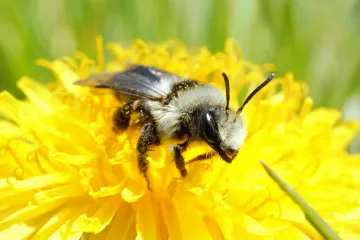
This species is instantly recognizable for its distinct coloration, which gives it its common name. The female Andrena cineraria possesses striking greyish-white bands or stripes across her thorax and abdomen. [1][4] This dense covering of pale hair gives the bee its characteristic "ashy" or "grey" appearance. [7][8] While the females are quite noticeably striped, the males tend to exhibit less distinct markings, which can sometimes make identification a bit more challenging when trying to differentiate them from other similar species of solitary bees. [3] They are medium-sized insects, typically measuring between 10 to 13 millimeters in length. [1] Knowing these visual cues is the first step in determining if one has been spotted in a garden or local patch of earth.
# Distribution Status
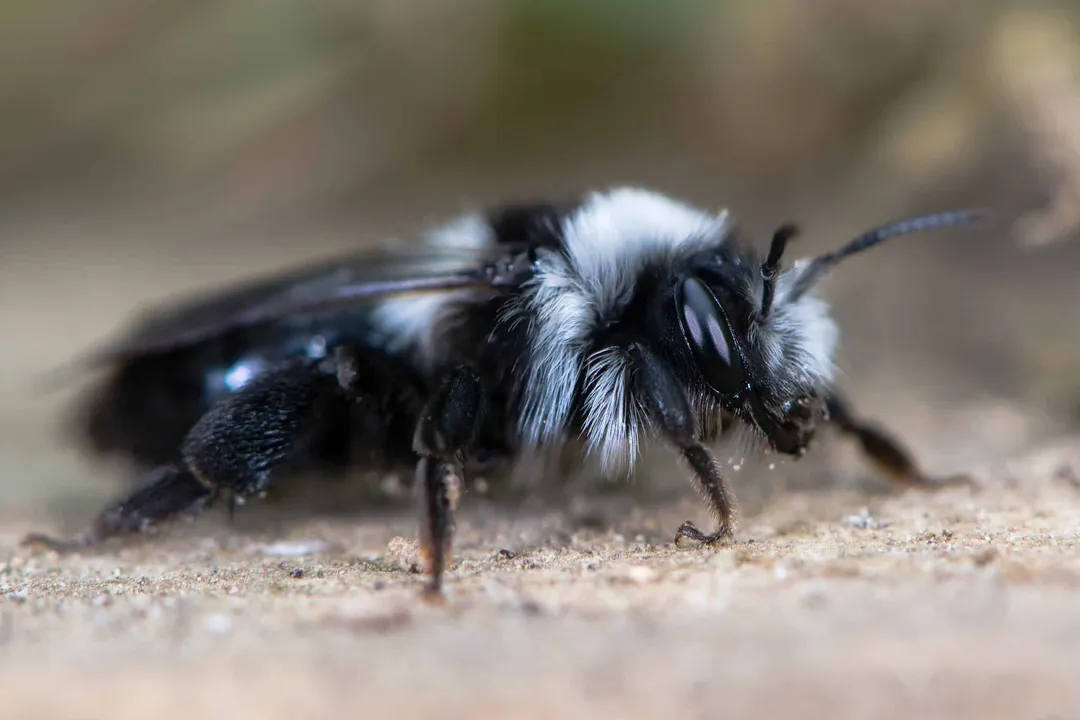
Determining the rarity of the ashy mining bee depends heavily on geography. In many parts of its established range, it is not considered globally rare; rather, it is a regular, though perhaps locally abundant, spring visitor. [7][8] The species has a broad distribution across Europe. [9] In the United Kingdom, for instance, it is frequently recorded and generally considered common and widespread, though its appearance is strictly seasonal. [7] Similarly, records from Ireland suggest it is present, with profiles noting its characteristic features and habitat preferences there as well. [8]
However, perceptions of rarity can be skewed by its specialized lifestyle. Unlike bumblebees, which might be seen buzzing around flowers throughout the warmer months, the ashy mining bee has a very short flight season, typically active from spring through early summer, roughly from March until early June. [1][8] If you are looking for it in July or August, you will indeed conclude it is rare or gone for the year. Furthermore, because it is a solitary species, its nests are not clustered into massive, highly visible colonies like those of social bees, leading to lower perceived population density. [2]
A point worth noting when assessing its status is the comparison between records and reality. For instance, in areas where it is well-documented, such as in the UK, the sheer volume of sightings reported through citizen science programs suggests a healthy population base, even if individuals are spread out. [7] It is not currently listed as a species of high conservation concern in most of the regions where it is monitored, suggesting its population is relatively stable, unlike some other specialized solitary bee species. [7][8]
# Ground Nesting
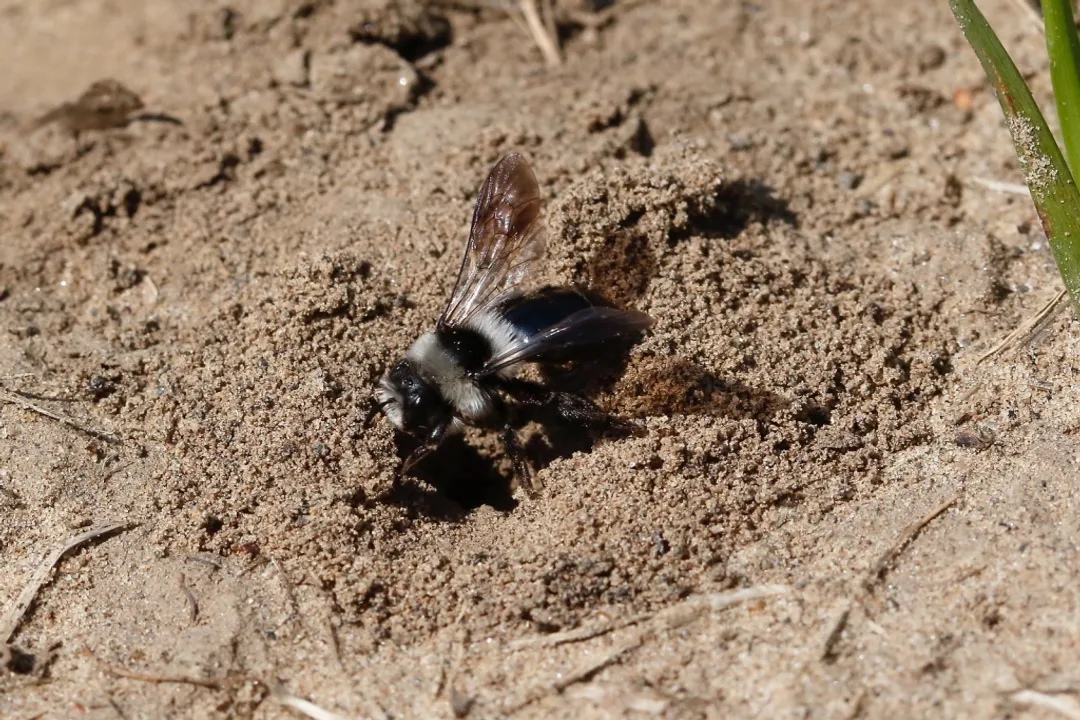
The reason for the "mining" in its name lies in its nesting habits. The ashy mining bee is a ground-nesting, solitary insect. [2][8] This means that each female bee excavates her own individual burrow, usually in bare or sparsely vegetated ground. [5] They do not use existing cavities like hollow stems or man-made bee hotels, which often leads people to overlook them entirely, especially if they are primarily focused on providing nesting sites for cavity nesters. [2]
The burrows themselves are small, often just barely noticeable holes in the soil, sometimes with a tiny volcano-like rim of soil around the entrance. [5] These bees are not typically aggressive; stinging is very rare as females only possess a sting for nest defense, and they are generally docile when foraging. [1][4] The construction and use of these nests are concentrated in the spring months. The female provisions the nest cells with a mixture of nectar and pollen, lays an egg in each cell, and seals it off before moving to the next, never interacting with her offspring once the egg is laid. [2]
When looking for evidence of their presence, paying attention to sunny, south-facing slopes or patches of bare earth near foundations or paths can be very revealing, especially during March and April. [5]
An interesting ecological observation arises when comparing their habitat requirements to common gardening practices. While many people actively try to maintain a perfectly manicured lawn, the ashy mining bee prefers ground that is somewhat exposed or has short vegetation. In gardens with very dense, thick turf or heavy mulching, the likelihood of finding their nest entrances is significantly reduced. Therefore, a small, undisturbed patch of bare soil or very short grass can act as an unlikely, yet vital, population hub in an otherwise dense suburban landscape. [5]

# Flight Season Specificity
The brevity of their active season is perhaps the single biggest contributor to the public perception that the ashy mining bee is rare. They are one of the earlier bees to emerge in the year, often appearing before many other pollinators are active. [1][8] The males emerge first, and females follow shortly after, with both sexes actively foraging from March through May or early June. [1][8]
This early emergence means they are highly dependent on early spring flowering plants. Sources highlight their preference for early sources like Dandelion (Taraxacum), Coltsfoot (Tussilago farfara), and various fruit tree blossoms. [1][8] If a garden lacks these early nectar and pollen sources, the bees may not linger, further contributing to the feeling that they are infrequent visitors. They are essentially performing their entire reproductive cycle within a two-to-three-month window. [2] Once the summer heat and the main bloom of mid-season flowers arrive, the adults have usually completed their life cycle, and the next generation is developing underground in the sealed brood cells. [2]
# Distinguishing Features
For those interested in identifying this species accurately, particularly since many mining bees look alike, focusing on the thoracic and abdominal markings is key. Beyond the grey banding, look for the overall structure. They are generally a medium-sized bee, and while the grey hairs are prominent, the underlying body structure is dark. [1][4]
One helpful, though subtle, differentiator mentioned in ecological guides relates to the male's facial markings compared to the female’s overall ashiness. Furthermore, when handling or observing them closely (which is not recommended for casual viewers), the arrangement of the hair tufts (scopa) on the hind legs of the female, used for carrying pollen, can be diagnostic, though this is best left to expert observation. [8] For the general observer, the bold, contrasting grey stripes against the dark body in good spring sunlight are usually sufficient proof of identification against other smaller, darker Andrena species.
It is worth remembering that mistaken identity is common. Many smaller, darker bees might be present, and if they are not exhibiting the clear, thick grey/white striping, they are likely a different species within the vast Andrena genus, which contains dozens of similar-looking ground nesters. [9]
# Citizen Science Engagement
The prevalence of online forums and citizen science reporting suggests that while the bee might be common, its fleeting nature leads to many questions about its sightings. When people ask if it is rare, they are often asking if their personal observation is unusual. [3] The answer is usually that the observation is special because it is time-specific, not because the species is endangered.
If you are keen to support this species, understanding its needs is simple. Since they nest in bare ground, consider leaving a small patch of your garden un-raked or un-planted during the winter and early spring months. This provides the perfect substrate for overwintering females to emerge and begin digging burrows without competition from dense root systems. [5] Furthermore, ensuring a continuous supply of early spring nectar is more helpful than planting masses of summer blooms for this particular species. A few early-flowering shrubs or hardy perennials that bloom before April ends can provide the necessary fuel for the females to provision their nests. [1]
A practical step for encouraging ground-nesting bees like A. cineraria is to create small variations in ground surface texture. If you have paved areas with small gaps or gravel patches that receive good sun, do not seal them completely. The slight disturbance and warmth found near rock edges or slightly uneven paving often mimics the natural, well-drained, sunny banks these bees favor for nesting. This subtle habitat creation costs nothing but offers excellent foraging and nesting habitat right next to human structures.
In summary, the ashy mining bee is not rare across its widespread European distribution; it is a common and reliable feature of the spring pollinator community. [7][8] Its reputation for rarity stems from its very short flight period, its preference for ground nesting which makes it less obvious than cavity nesters, and the striking, yet brief, appearance of its distinctively grey-banded females. [1][2][3] Paying attention during the early spring months should reveal this handsome insect going about its business before it vanishes until the next year.
Related Questions
#Citations
Ashy Mining Bee - Beevive
Ashy mining bee - Bumblebee Conservation Trust
How rare is the Ashy Bee? : r/allthemods - Reddit
Ashy Mining Bee Insect Facts - Andrena cineraria - A-Z Animals
This Ashy Mining Bee today, scarce local species, was the 27th ...
Ashy Mining Bee - Natural History Society of Northumbria
[PDF] Information Sheet ASHY MINING-BEE (Andrena cineraria)
[PDF] Species: Grey (or Ashy) Mining Bee
Ashy mining bee - Wikipedia