How rare is a Bullfinch?
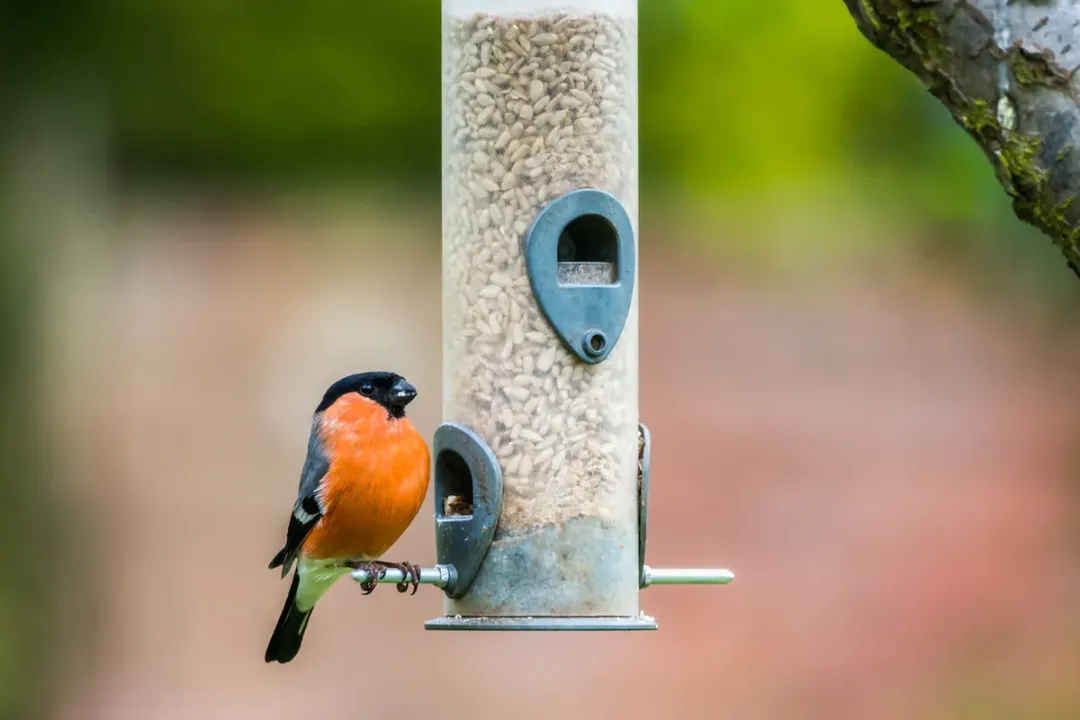
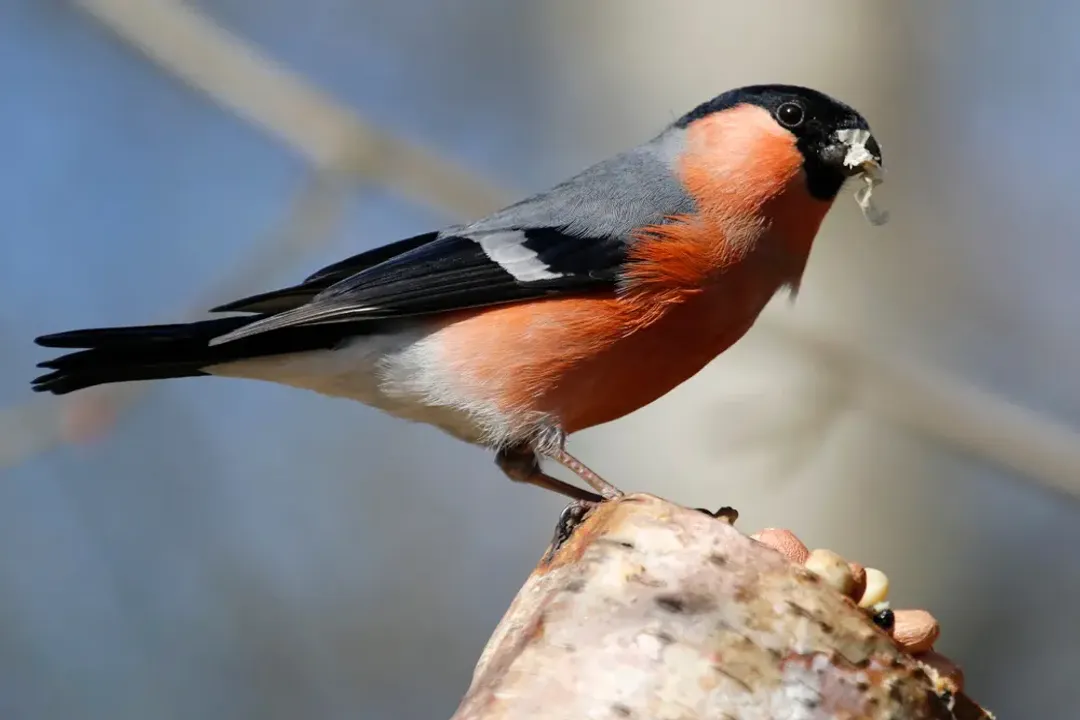
The sight of a Bullfinch is often instantly recognizable, marked by the male’s exceptionally vivid, rosy-pink breast contrasting sharply with its black cap and grey back. This plump, stocky little bird, scientifically known as Pyrrhula pyrrhula, [2] possesses a character that seems almost deliberately eye-catching against the muted greens and browns of winter foliage. [5] Yet, the question of how rare this colourful species truly is depends heavily on where you happen to be standing at the time.
# Striking Plumage

The physical characteristics of the Bullfinch are key to identifying it, though only the male displays that famous burst of colour. Males sport that unmistakable bright red or pink underparts, [1] while the female is much more subdued, featuring greyish-buff underparts instead. [5] Both sexes share a distinctive appearance: they have a stout build, a relatively short tail, and a noticeable black cap that covers the top of the head. [1][5]
Perhaps the most functionally important feature is the bill. Bullfinches possess a remarkably short, thick, and strong bill. [5] This tool is perfectly engineered for crushing seeds and plucking buds from branches, a primary component of their diet alongside fruit and small insects. [2] Their preferred food sources influence where they choose to reside; they are typically found in areas with plenty of shrubbery, orchards, or well-treed gardens where this specific foraging material is available. [1][6]
# Geographic Status
The Eurasian Bullfinch has a vast historical range, covering much of Europe and extending across Asia. [2] In its broadest sense, it is not a globally scarce bird; however, this general statement masks significant regional variations in population health, which is why the perception of its rarity varies so widely.
In several parts of its extended territory, the species remains relatively common, thriving in diverse woodlands, parks, and scrubland environments. [1][2] The presence of the species in North America is generally not reported, as the name Eurasian Bullfinch suggests a distribution rooted in the Old World, though specific local records in eastern Europe or Asia might be less frequently cited than those in Western Europe. [7]
The true concern regarding rarity crystallizes when focusing on specific countries, particularly in the United Kingdom. There, the narrative has shifted dramatically over the past few decades. The Bullfinch is often cited as a “disappearing bird” within the British landscape. [4] This localized scarcity is significant enough that the species has been officially designated as a UK Priority Species. [9] This designation acknowledges that, despite a wide historical range, the local decline warrants focused conservation attention. [9]
It is fascinating to compare this localized trouble with continental recovery. While some areas struggled, conservation initiatives elsewhere have shown dramatic positive results. For instance, substantial, concerted efforts in parts of the European Union have managed to pull one of Europe’s rarer birds back from the brink of local extinction, showcasing that vulnerability is often addressable through targeted action. [3] This geographical disparity in fortunes is perhaps the most telling aspect of the species’ current status: rarity is a matter of management, not just global numbers.

# Population Pressures

Understanding why a bird that is stable in one region becomes critically scarce in another requires looking closely at the pressures exerted on its habitat and food supply. The decline observed in the UK, for example, is generally attributed to adverse environmental changes that affect both breeding success and overwinter survival. [4]
One major contributing factor historically implicated in declines across many farmland bird species, including the Bullfinch, is the modernization and intensification of agricultural practices. [4] This often translates into the removal of hedgerows—vital corridors for movement and shelter—and the reduction of mixed woodland areas that provide essential food resources throughout the year. [4]
Bullfinches rely heavily on buds, especially during the late winter and early spring when other food sources dwindle. [5] If orchards or woodlands are managed too aggressively—for instance, through heavy pruning or the use of certain pesticides that impact insect availability—the bird’s specialized diet becomes compromised. [2]
A potential compounding factor, often overlooked when looking only at habitat loss, is the specific nature of their foraging behaviour. Because they use that powerful bill to expertly extract seeds and buds, they are highly sensitive to changes in the availability of preferred woody food sources, making them less able to switch entirely to common garden seeds compared to more generalist species, unless those alternative sources are provided reliably. [5]
# Garden Ecology

Despite being classed as a declining species in some contexts, the Bullfinch remains a welcome visitor to many bird feeders, suggesting they can persist in suburban and semi-rural gardens that offer suitable resources. [1][6] Their appearance at a feeder is often an indicator of a relatively healthy local environment with enough cover nearby for security. [6]
When attempting to encourage these shy birds, providing the right fuel source is more effective than simply scattering general birdseed. Given their preference for seeds and buds, a high-oil, high-energy offering is usually most appreciated, particularly when natural sources are locked under frost or rain. While standard sunflower seeds are fine, offering unprocessed sunflower hearts or niger seeds during the lean months of late winter can provide the necessary high-calorie boost without the mess or the waste shells that might attract less desirable visitors. This concentrated, easy-to-handle energy closely mimics the dense nutritional profile they seek in natural buds, directly supporting their energetic needs when foraging success is low. [5][2]
# Recovery Efforts
The efforts made to save populations that have plummeted are diverse, ranging from legislative protection to changes in land management policy. [3] The success story mentioned in the context of the European Union demonstrates that targeted ecological intervention works. [3] Such efforts often revolve around encouraging biodiversity on agricultural land, such as promoting the retention of dense, varied hedgerows and maintaining small, unmanaged patches of scrub or woodland. [4]
In garden settings, the most direct action an individual can take relates to the feeding tips mentioned above and ensuring safe spaces. Bullfinches prefer cover and are less likely to visit feeders that are completely exposed, so placing feeders near dense shrubs or trees—even if they are slightly further away than ideal for viewing—provides the necessary safe retreat zones. [6] Their shy nature means that disturbance can be as detrimental as habitat loss; patience is key when waiting for a glimpse of this magnificent bird. [1] The continued monitoring by organizations like the BTO helps track whether these local conservation inputs are translating into measurable population upticks or stabilization across different regions. [1]
Related Questions
#Citations
Bullfinch - BTO
Eurasian bullfinch - Wikipedia
How LIFE pulled one of Europe's rarest birds back from extinction
The Disappearing Bullfinch UK – Decline of a Garden Favourite
All you need to know about the bullfinch - Discover Wildlife
Bullfinch - Bird Factfile | Vine House Farm
Eurasian Bullfinch - Species Information and Photos
Bullfinch Bird Facts - RSPB
Pyrrhula pyrrhula Eurasian or Common Bullfinch - Habitas