What structural feature of Arsinoitherium suggests display or male combat?
Answer
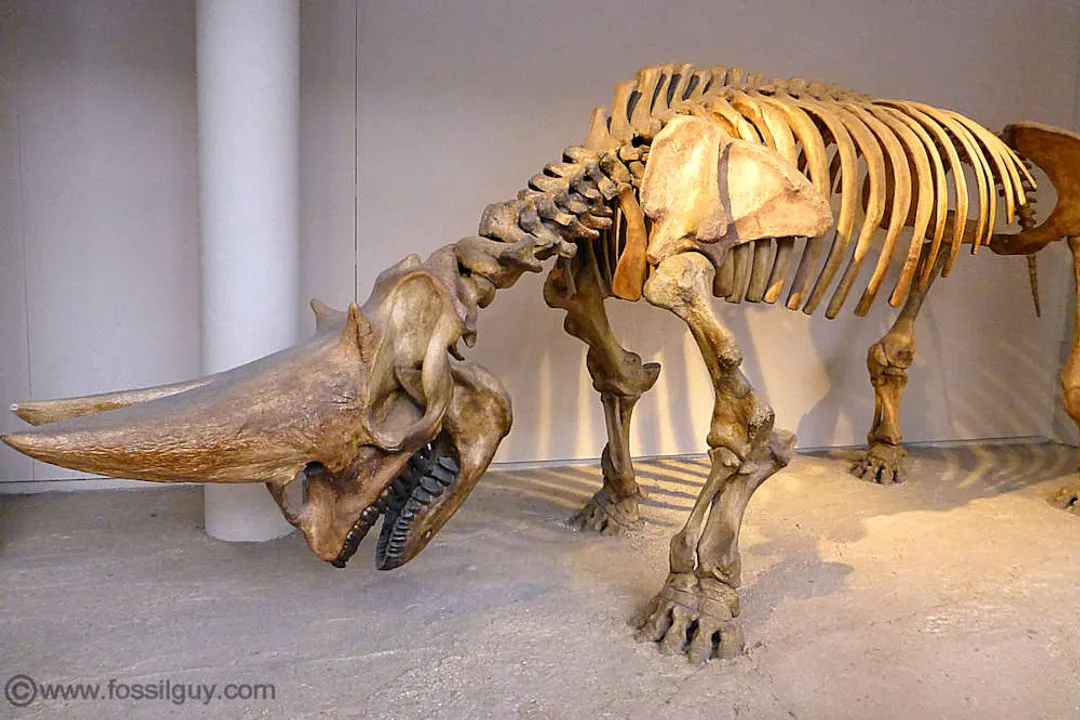
Pair of parallel horns
The pair of prominent horns possessed by Arsinoitherium offers indirect insight into its social behavior. Researchers suggest these horns, due to their structure and placement, were primarily intended for display purposes or for engaging in shoving matches between males, similar to modern rhinoceroses. These kinds of competitive interactions necessitate clear visibility and stable footing to effectively contest strength. If the animal spent significant time submerged or fighting in deep mud, the effectiveness of such large, keratinous structures would be considerably reduced, favoring different types of weaponry or behaviors suited for waterborne conflict.
Related Questions
What structural feature of Arsinoitherium suggests display or male combat?What specific environments characterized the habitat where Arsinoitherium fossils are found?How did the substantial size and structure of Arsinoitherium affect its movement on firm ground?What is the central behavioral question paleontologists debate regarding Arsinoitherium's lifestyle?What anatomical feature, often seen in obligately aquatic animals, was found to be inconclusive or lacking in Arsinoitherium?What synthesized view defines Arsinoitherium's established role concerning wetlands and feeding?Which modern animal's niche is suggested as being similar to Arsinoitherium's specialized ecological role?Why do the massive horns of Arsinoitherium argue against a constantly submerged lifestyle?What role did the abundant forage in the water's edge ecosystem likely play for Arsinoitherium?What is the implication of Arsinoitherium's short legs and wide stance when moving across muddy soil?