What role did the abundant forage in the water's edge ecosystem likely play for Arsinoitherium?
Answer
It provided superior forage and relief from the Eocene sun's heat
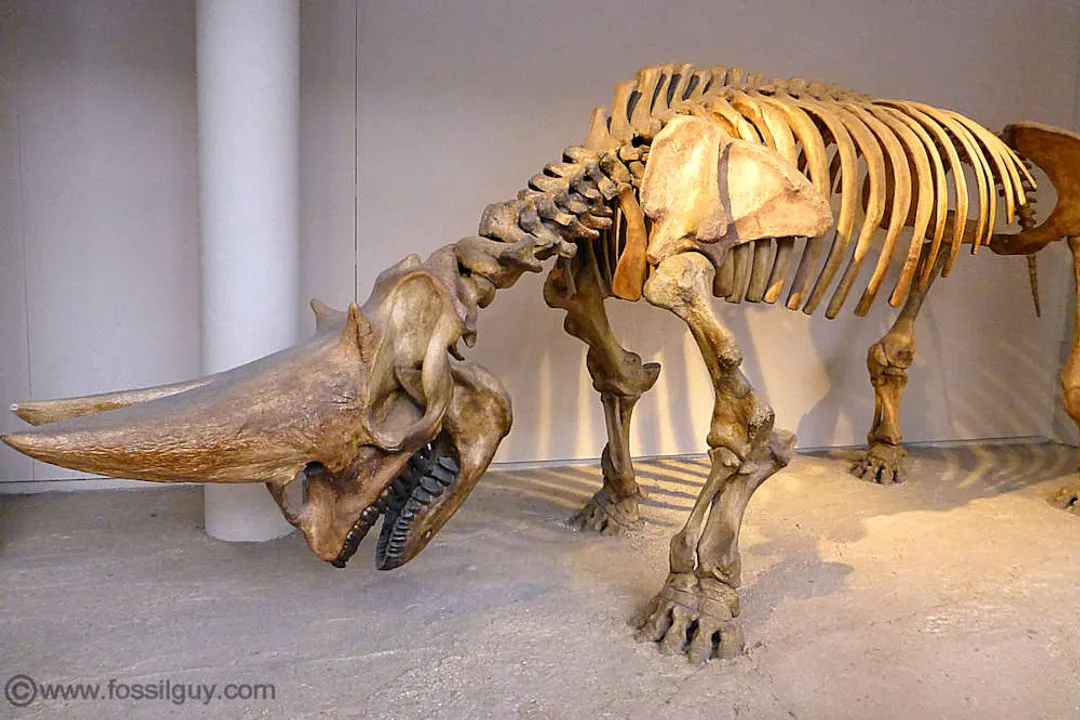
While the physical evidence might argue against Arsinoitherium being fully aquatic, its specialization in wetland environments was undoubtedly beneficial for survival. The water's edge, including margins of rivers and swamps, offered access to superior, lush forage—water-loving vegetation—that supported its large body mass. Furthermore, given the sheer bulk of the animal, which could predispose it to overheating, utilizing the proximity of water sources for cooling off and seeking relief from the intense heat of the Eocene sun provided significant ecological advantages, even if it did not swim.
Related Questions
What structural feature of Arsinoitherium suggests display or male combat?What specific environments characterized the habitat where Arsinoitherium fossils are found?How did the substantial size and structure of Arsinoitherium affect its movement on firm ground?What is the central behavioral question paleontologists debate regarding Arsinoitherium's lifestyle?What anatomical feature, often seen in obligately aquatic animals, was found to be inconclusive or lacking in Arsinoitherium?What synthesized view defines Arsinoitherium's established role concerning wetlands and feeding?Which modern animal's niche is suggested as being similar to Arsinoitherium's specialized ecological role?Why do the massive horns of Arsinoitherium argue against a constantly submerged lifestyle?What role did the abundant forage in the water's edge ecosystem likely play for Arsinoitherium?What is the implication of Arsinoitherium's short legs and wide stance when moving across muddy soil?