What is the implication of Arsinoitherium's short legs and wide stance when moving across muddy soil?
Answer
To disperse weight across muddy soil adjacent to water bodies, preventing sinking
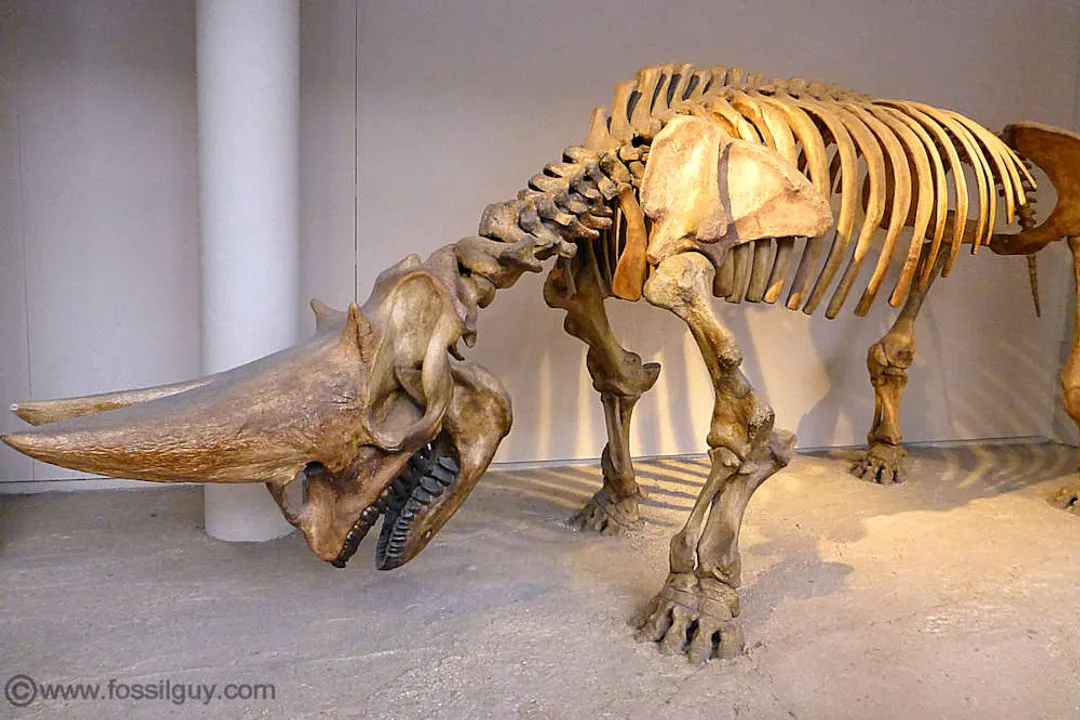
The combination of Arsinoitherium's short legs and broad stance is interpreted as an adaptation specifically suited for negotiating the challenging terrain found at the margins of wetlands. Because the environment was characterized by soft earth, mud, and saturated ground near rivers or swamps, a wider stance helps to distribute the immense body weight over a larger surface area. This weight dispersion is critical to prevent the massive animal from sinking deeply into the soft substrates, thereby enabling effective movement between feeding patches within the dense vegetation lining those muddy edges.
Related Questions
What structural feature of Arsinoitherium suggests display or male combat?What specific environments characterized the habitat where Arsinoitherium fossils are found?How did the substantial size and structure of Arsinoitherium affect its movement on firm ground?What is the central behavioral question paleontologists debate regarding Arsinoitherium's lifestyle?What anatomical feature, often seen in obligately aquatic animals, was found to be inconclusive or lacking in Arsinoitherium?What synthesized view defines Arsinoitherium's established role concerning wetlands and feeding?Which modern animal's niche is suggested as being similar to Arsinoitherium's specialized ecological role?Why do the massive horns of Arsinoitherium argue against a constantly submerged lifestyle?What role did the abundant forage in the water's edge ecosystem likely play for Arsinoitherium?What is the implication of Arsinoitherium's short legs and wide stance when moving across muddy soil?