What anatomical feature, often seen in obligately aquatic animals, was found to be inconclusive or lacking in Arsinoitherium?
Answer
Splayed toes or paddle-like feet optimized for propulsion in water
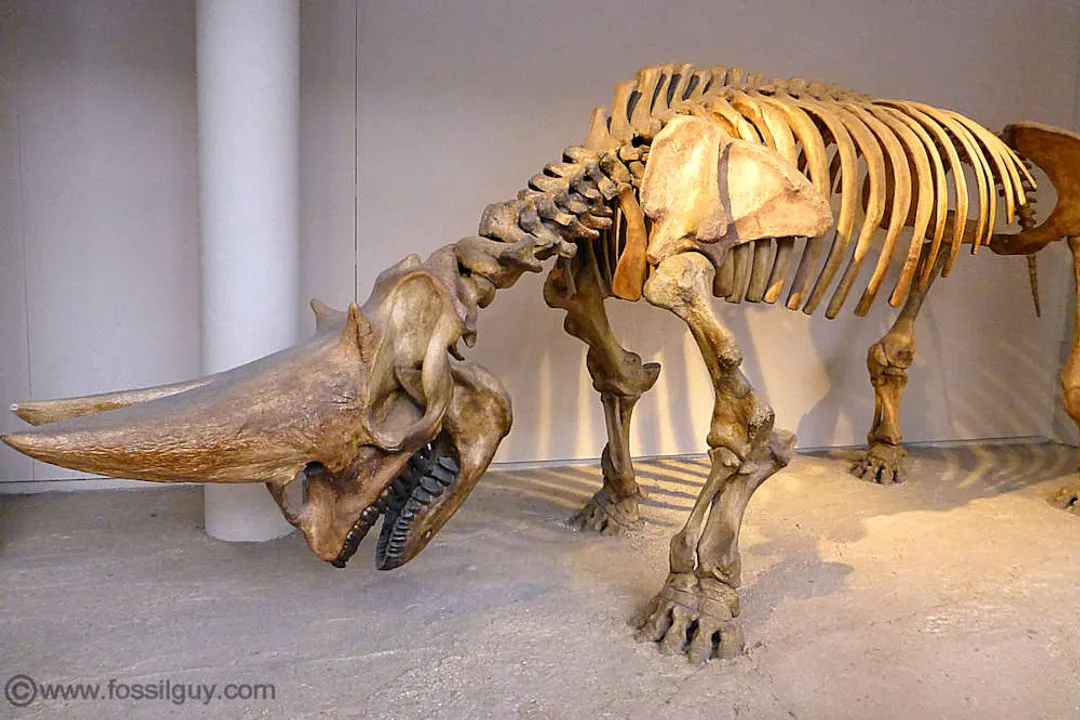
When assessing an animal's commitment to an aquatic lifestyle, paleontologists look for specific morphological adaptations in the limbs and feet. Truly amphibious or fully aquatic creatures often display splayed toes or feet shaped like paddles to aid in propulsion through water or to spread weight effectively on very deep, soft mud. For Arsinoitherium, while it had a wide stance that might offer some stability in soft substrates, analyses indicated that its foot structure was not definitively optimized for deep wading or swimming in the manner expected of a true amphibious resident, leading to inconclusive evidence regarding deep aquatic commitment.
Related Questions
What structural feature of Arsinoitherium suggests display or male combat?What specific environments characterized the habitat where Arsinoitherium fossils are found?How did the substantial size and structure of Arsinoitherium affect its movement on firm ground?What is the central behavioral question paleontologists debate regarding Arsinoitherium's lifestyle?What anatomical feature, often seen in obligately aquatic animals, was found to be inconclusive or lacking in Arsinoitherium?What synthesized view defines Arsinoitherium's established role concerning wetlands and feeding?Which modern animal's niche is suggested as being similar to Arsinoitherium's specialized ecological role?Why do the massive horns of Arsinoitherium argue against a constantly submerged lifestyle?What role did the abundant forage in the water's edge ecosystem likely play for Arsinoitherium?What is the implication of Arsinoitherium's short legs and wide stance when moving across muddy soil?