How did the substantial size and structure of Arsinoitherium affect its movement on firm ground?
Answer
It implied a slow gait due to substantial size and relatively short legs
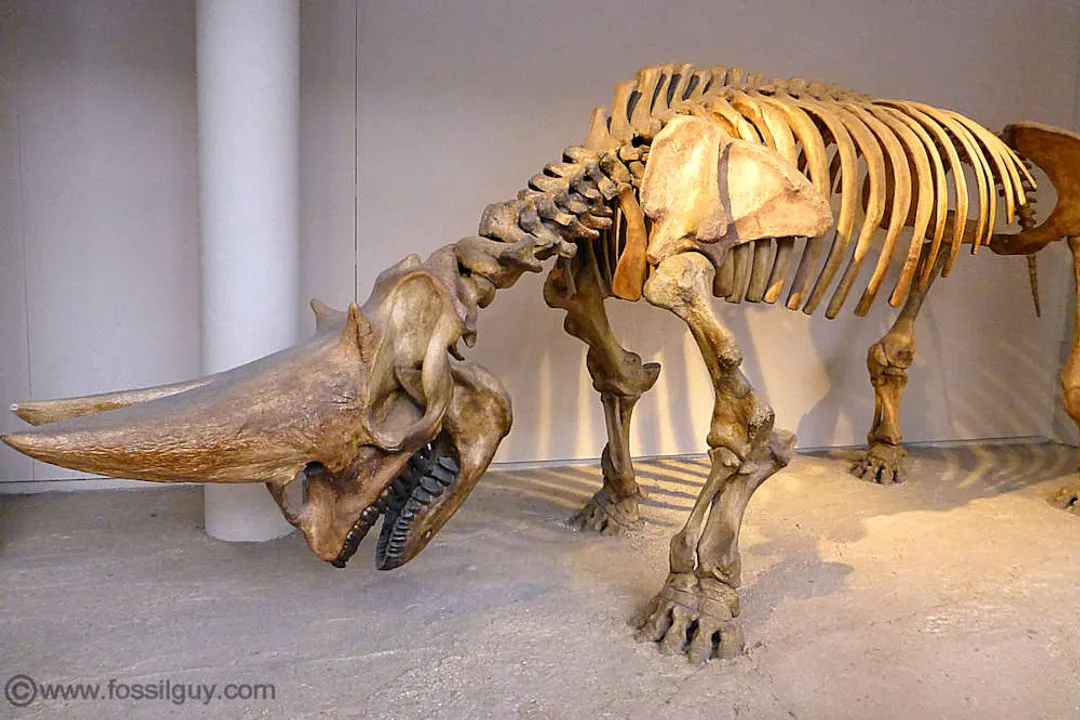
Arsinoitherium was substantial in size, possessing short, stout limbs necessary to support its great mass, coupled with a wide stance. This combination of features strongly implied that its locomotion on dry, firm ground would have been slow. The heavy body combined with shorter legs suggests that maintaining speed on terrestrial surfaces was difficult, which in turn fueled speculation that access to water might have been a necessity rather than just a preference, possibly for thermal regulation or easier movement than its slow gait on dry land allowed.
Related Questions
What structural feature of Arsinoitherium suggests display or male combat?What specific environments characterized the habitat where Arsinoitherium fossils are found?How did the substantial size and structure of Arsinoitherium affect its movement on firm ground?What is the central behavioral question paleontologists debate regarding Arsinoitherium's lifestyle?What anatomical feature, often seen in obligately aquatic animals, was found to be inconclusive or lacking in Arsinoitherium?What synthesized view defines Arsinoitherium's established role concerning wetlands and feeding?Which modern animal's niche is suggested as being similar to Arsinoitherium's specialized ecological role?Why do the massive horns of Arsinoitherium argue against a constantly submerged lifestyle?What role did the abundant forage in the water's edge ecosystem likely play for Arsinoitherium?What is the implication of Arsinoitherium's short legs and wide stance when moving across muddy soil?