What posture did E. haydeni evolve, contrasting earlier borophagines?
Answer
Digitigrade
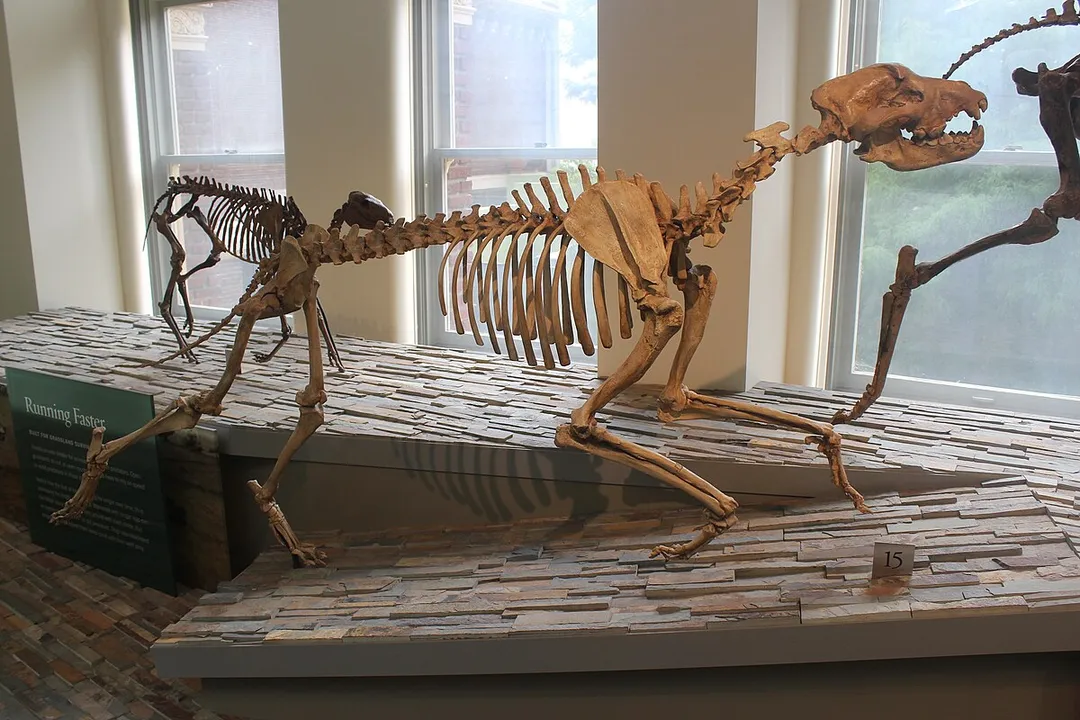
The analysis of the overall body structure of *Epicyon haydeni* indicates specific adaptations related to locomotion. Unlike some of the preceding, slower members of the borophagine subfamily, which retained a plantigrade posture—meaning they walked flat-footed—*E. haydeni* had evolved a digitigrade posture. This adaptation means the animal walked and ran predominantly on its toes, a trait shared with modern dogs and wolves, suggesting improved efficiency for covering ground. This structural shift demonstrates a move toward more advanced canid locomotion, despite limitations imposed by the creature's overall size and mass.
Related Questions
What was the estimated shoulder height of Epicyon haydeni?How heavy was the largest single Epicyon haydeni specimen discovered?What posture did E. haydeni evolve, contrasting earlier borophagines?To which modern animal was the overall bulk of E. haydeni more comparable?What defining capability characterizes the Borophaginae subfamily?What is the accurate translation of the name Epicyon?During which geological time frame were fossils of Epicyon haydeni found?What locomotion strategy was E. haydeni suggested to be less suited for?Which other known Epicyon species were closer in size to a modern grey wolf?What specific prey animals did E. haydeni's height and apex role allow it to target?