How tall was Epicyon?
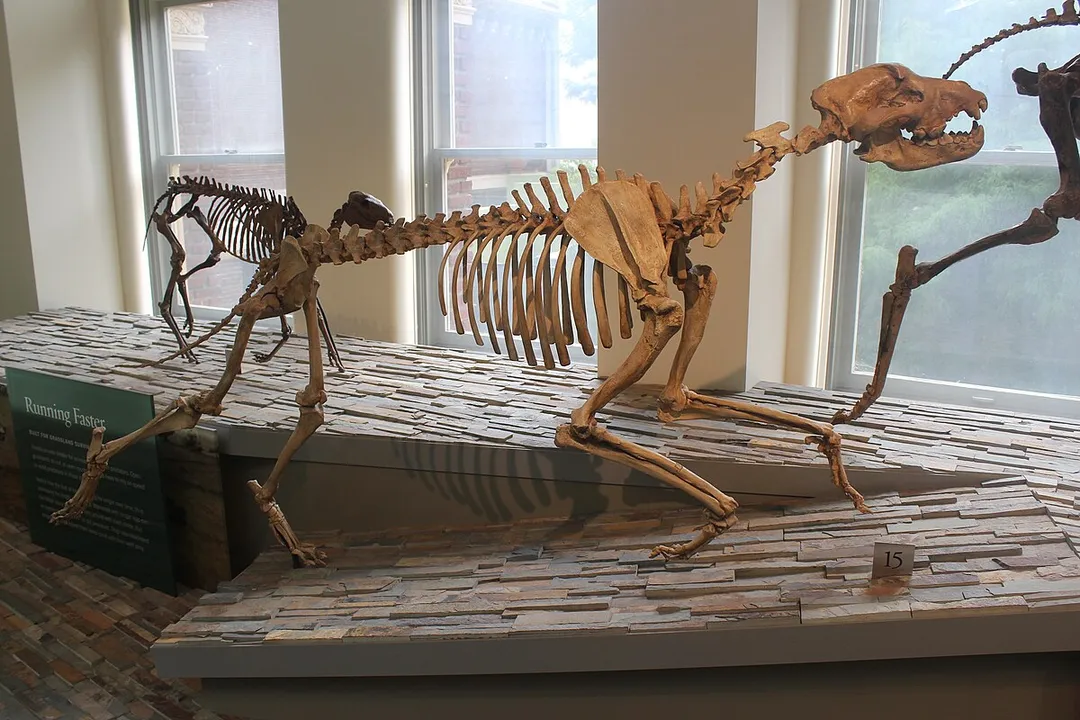
The magnificent fossil record of prehistoric North America frequently reveals creatures that dwarf their modern counterparts, but few comparisons are as striking as that of Epicyon. This massive extinct canid, whose very name translates aptly to "more than a dog", held the undisputed title of the largest dog species to ever walk the earth. While popular imagination often conjures images of massive wolves, Epicyon haydeni occupied a different, heavier, and more robust category entirely, suggesting an evolutionary path drastically different from the ancestors of today's familiar domestic companions. Understanding Epicyon's true scale, particularly its vertical dimension—how tall it stood—helps paint a clearer picture of this Miocene apex predator.
# Giant Stature
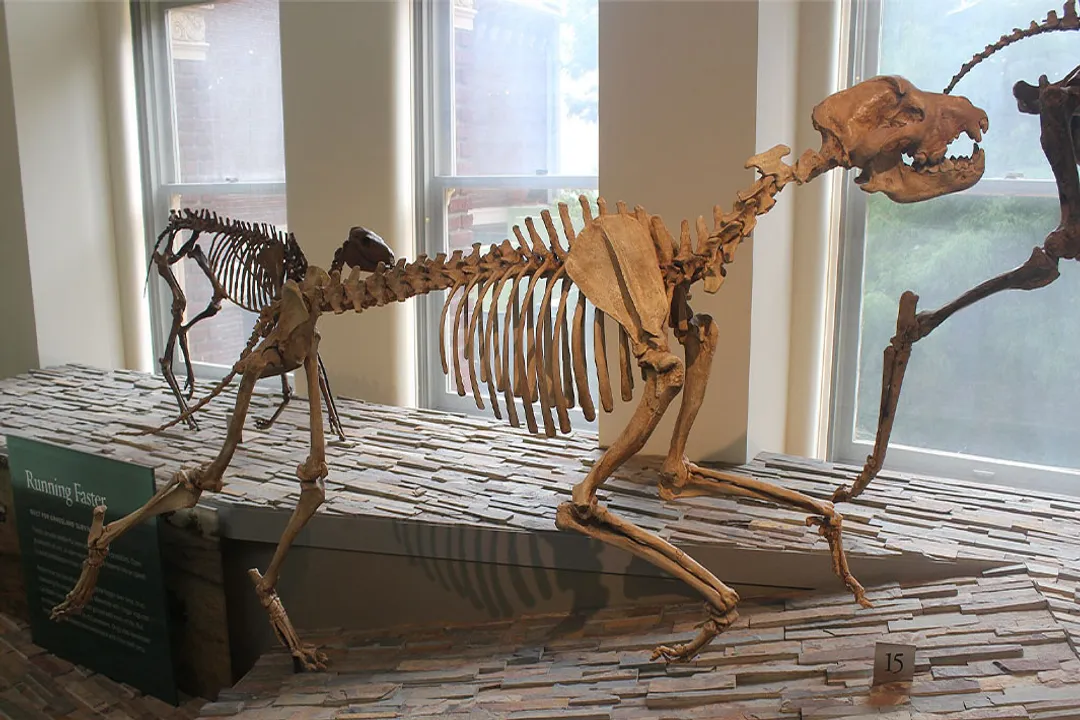
The sheer scale of Epicyon haydeni is what immediately separates it from any living canine. It was not merely a big wolf; it was a creature that rivaled modern mammalian carnivores in bulk. Fossils of this creature, spanning from the Early Miocene until the Early Pliocene, approximately 12 to 5 million years ago, are found across a broad swath of North America, from Alberta down to Florida. This vast range suggests a highly successful, if specialized, predator adapted to the varied landscapes of the Miocene, which often featured open grasslands and scattered trees.
When trying to conceptualize the size of E. haydeni, comparisons to modern animals are essential, as direct observation is impossible. This giant hound was considered more comparable in size to a brown bear than the common Labrador retriever. Furthermore, its estimated length rivaled that of a modern Komodo dragon. This combination of immense length, significant height, and considerable mass paints a picture of a formidable animal that towered over its contemporary canids.
# Size Metrics

The specific measurements recovered from the fossil record offer precise figures for the species E. haydeni, which is the type species and the largest of the three Epicyon species identified.
For the question of height, the available evidence points toward a significant stature. Estimates suggest that E. haydeni stood approximately 90 cm (35 inches) at the shoulder. Another reference suggests a height of 1 meter, while a third lists the height as 35 inches. Given that is just over 35 inches, these figures align closely, indicating that this massive predator stood quite tall, easily surpassing the shoulder height of a large modern grey wolf, which averages about .
To fully appreciate this vertical measurement, consider that a modern Great Dane, one of the tallest domestic breeds, often stands between 71 and at the shoulder. Therefore, Epicyon haydeni was likely as tall as, or slightly taller than, the tallest Great Danes today. Where it truly outclassed modern dogs, however, was in overall mass. While the average body mass for E. haydeni is estimated around 100–125 kg (220–276 lb), the largest single specimen discovered is estimated to have tipped the scales at a colossal 170 kg (370 lb). This top-end weight significantly exceeds even the heaviest recorded modern dogs; for instance, the heaviest dog ever recorded, an Old English Mastiff named Zorba, weighed . The immense bulk packed onto that 90 cm shoulder height is what defined Epicyon as a true giant among canids.
We can place this on a small comparative spectrum. If we estimate shoulder height based on a general mammalian ratio (where length is often about 1.5 to 2 times the shoulder height for a cursorial animal), a long animal with a shoulder height fits a pattern of being long and relatively powerfully built, rather than excessively leggy.
# Smaller Relatives
It is important to remember that the title of "largest canid ever" belongs specifically to Epicyon haydeni; the genus Epicyon encompassed other species which were significantly smaller, though still formidable compared to contemporary canids. The other known species, Epicyon aelurodontoides and Epicyon saevus, were closer in size to a modern grey wolf.
For instance, E. saevus is estimated to have had a shoulder height reaching up to (22 inches) and weighed up to (147 lb). This makes the difference between the two primary species vast: E. saevus was perhaps closer in size to a large modern coyote or a medium-sized dog breed, while E. haydeni was an order of magnitude heavier and noticeably taller. The overall borophagine subfamily, to which Epicyon belongs, showed massive diversity, ranging from these giants to the earliest, more primitive members which were no larger than modern foxes. This evolutionary explosion in size within the borophagines—the "bone-crushing dogs"—is a key feature of their time on the North American landscape.
# Limb Structure
The overall body structure of E. haydeni reveals clues as to how it carried its impressive height and weight, and how it moved across its environment. Unlike some of the earlier, slower borophagines that retained a flat-footed (plantigrade) posture, E. haydeni had evolved a digitigrade posture, meaning it walked and ran on its toes, much like modern dogs and wolves. This adaptation suggests an ability to cover ground and chase prey, a common feature among advanced canids.
However, its massive size imposed certain physical limitations. Researchers suggest that due to its sheer mass and relatively heavier skeleton compared to E. saevus, E. haydeni was less cursorial—less built for long-distance running—than modern canids or even hyenas. Instead of marathon pursuit, the skeletal evidence points toward relying on short bursts of speed and explosive power to secure prey.
When we consider this shoulder height combined with the less-endurance-focused limb structure, it suggests a predator that engaged its prey with overwhelming immediate force rather than relying on sustained chasing. Imagine a massive, powerfully built animal that could close the distance quickly, using its sheer weight and height advantage in a direct confrontation, rather than outlasting its target over miles of terrain. This contrasts sharply with the ecological specialization of its later, more gracile canid cousins who would eventually thrive through endurance running.
# Predator Niche
The answer to Epicyon's size is deeply tied to its diet and ecological role. E. haydeni was a hypercarnivore, consuming over 70% meat. Its defining characteristic, shared by the entire Borophaginae subfamily, was its remarkable bone-crushing capability. This was achieved through a massive head, powerful jaws, and specialized, enlarged cheek teeth resembling those of hyenas. This capacity allowed Epicyon to access nutrient-rich marrow inside bones, a resource largely unavailable to contemporaries lacking such dental equipment.
Its height contributed to its role as an apex predator capable of targeting large herbivores such as rhinos like Teleoceras, camels like Aepycamelus, and various ancient horses. To take down prey of this magnitude, an animal needed not just strong jaws, but the physical presence to subdue a large quadruped. Being tall meant it could effectively challenge and overwhelm prey that a modern wolf might only harass. The debate remains whether this bone-crushing behavior was purely for scavenging or part of its active hunting strategy, but the physical adaptations strongly suggest it was built to dominate carcass resources when they became available, whether through its own kill or that of another predator.
# Extinction Pressure
The evolutionary story of Epicyon is ultimately one of intense competition, which helps contextualize why maximizing size, including height and mass, became a survival tactic. As the bone-crushing dogs became specialized for grappling and bone processing, they entered a direct ecological arms race with migrating cat lineages, particularly the saber-toothed cats.
The big cats, equipped with retractable claws and powerful forelimbs ideal for grappling, often held the upper hand in direct physical contests over large carcasses. Epicyon's strategy, reliant on powerful initial impact and crushing force, proved less adaptable than the cats' grappling prowess or the later canids' specialized pursuit endurance. The pressure to grow taller and heavier to secure or defend resources may have been a response to this competition, but it ultimately led to an anatomy better suited for short, powerful encounters rather than the long-term environmental shifts that favored other hunting styles. The magnificent height of E. haydeni represents a peak of specialized carnivorous evolution within the canid family, a giant that succumbed when the environmental pressures shifted toward different forms of predatory expertise.
Related Questions
#Citations
Epicyon - Wikipedia
This prehistoric monster is the largest dog that ever lived and was ...
Epicyon haydeni was the largest canid to ever exist : r/Naturewasmetal
Ancient eight-foot long “bone-crushing” dog was the largest ever
Epicyon haydeni Animal Facts
The world's biggest-ever dog was a prehistoric monster the size of a ...