What locomotion strategy was E. haydeni suggested to be less suited for?
Answer
Long-distance running (cursorial adaptation)
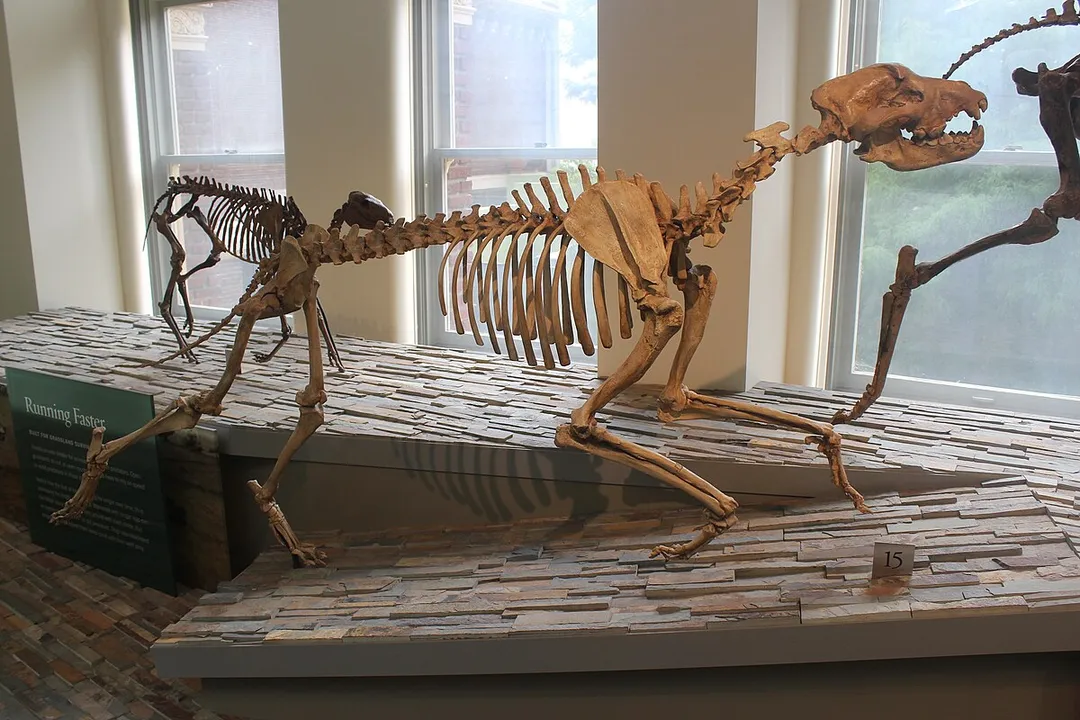
Despite its digitigrade posture, which is typical for active canids, *Epicyon haydeni*'s sheer bulk imposed distinct physical constraints on its movement patterns. Researchers suggest that because of its considerable mass and a relatively heavier skeleton compared to smaller relatives like *E. saevus*, *E. haydeni* was less cursorial. Cursorial refers to adaptation for sustained running, meaning *E. haydeni* was not built for marathon pursuit over long distances like modern canids or hyenas. Instead, its skeletal evidence points toward a strategy relying on short bursts of speed and explosive power needed to close the distance quickly and utilize its immediate strength against prey.
Related Questions
What was the estimated shoulder height of Epicyon haydeni?How heavy was the largest single Epicyon haydeni specimen discovered?What posture did E. haydeni evolve, contrasting earlier borophagines?To which modern animal was the overall bulk of E. haydeni more comparable?What defining capability characterizes the Borophaginae subfamily?What is the accurate translation of the name Epicyon?During which geological time frame were fossils of Epicyon haydeni found?What locomotion strategy was E. haydeni suggested to be less suited for?Which other known Epicyon species were closer in size to a modern grey wolf?What specific prey animals did E. haydeni's height and apex role allow it to target?