During which geological time frame were fossils of Epicyon haydeni found?
Answer
Early Miocene until the Early Pliocene
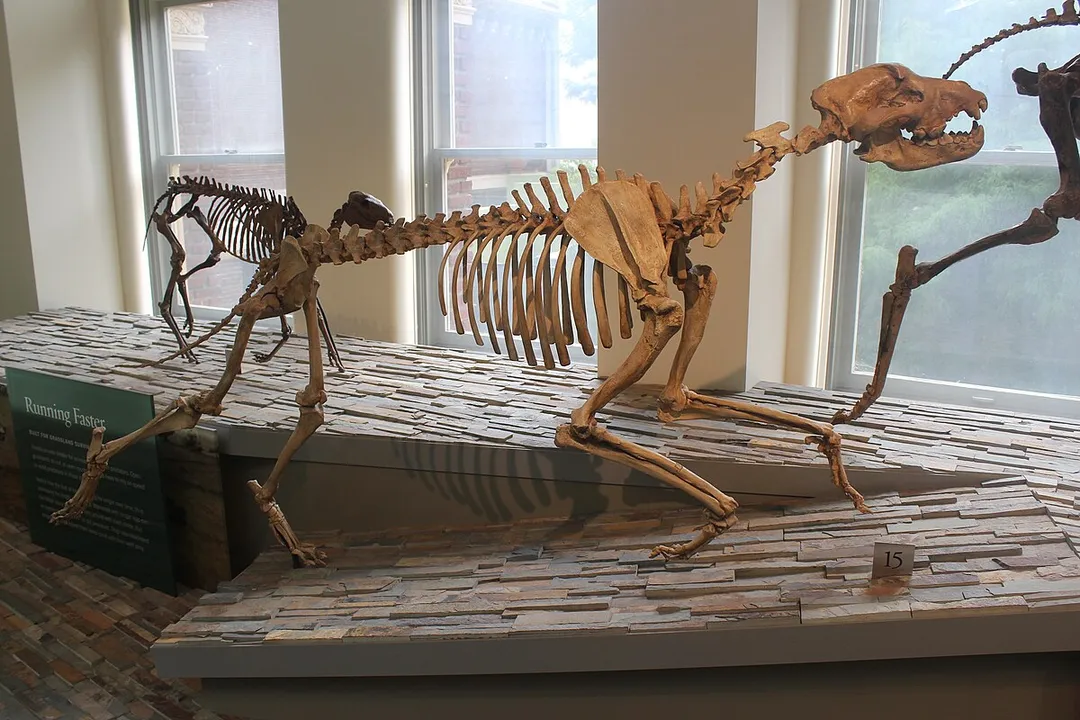
The fossil evidence for *Epicyon haydeni* spans a considerable duration in North American prehistory, demonstrating its long-term success as a predator adapted to changing Miocene environments. The timeframe during which fossils are found stretches from the Early Miocene epoch up to the Early Pliocene epoch. This temporal range corresponds approximately to the period between 12 million years ago and 5 million years ago. This longevity indicates that *E. haydeni* was a highly successful, though specialized, apex predator dominating its environment for millions of years before the pressures of competition and environmental shifts led to its decline.
Related Questions
What was the estimated shoulder height of Epicyon haydeni?How heavy was the largest single Epicyon haydeni specimen discovered?What posture did E. haydeni evolve, contrasting earlier borophagines?To which modern animal was the overall bulk of E. haydeni more comparable?What defining capability characterizes the Borophaginae subfamily?What is the accurate translation of the name Epicyon?During which geological time frame were fossils of Epicyon haydeni found?What locomotion strategy was E. haydeni suggested to be less suited for?Which other known Epicyon species were closer in size to a modern grey wolf?What specific prey animals did E. haydeni's height and apex role allow it to target?