How does the physical morphology of the Harris Hawk compare to classic *Accipiters*?
Answer
It exhibits features suggesting an intermediate form, optimized for sustained flight during group efforts
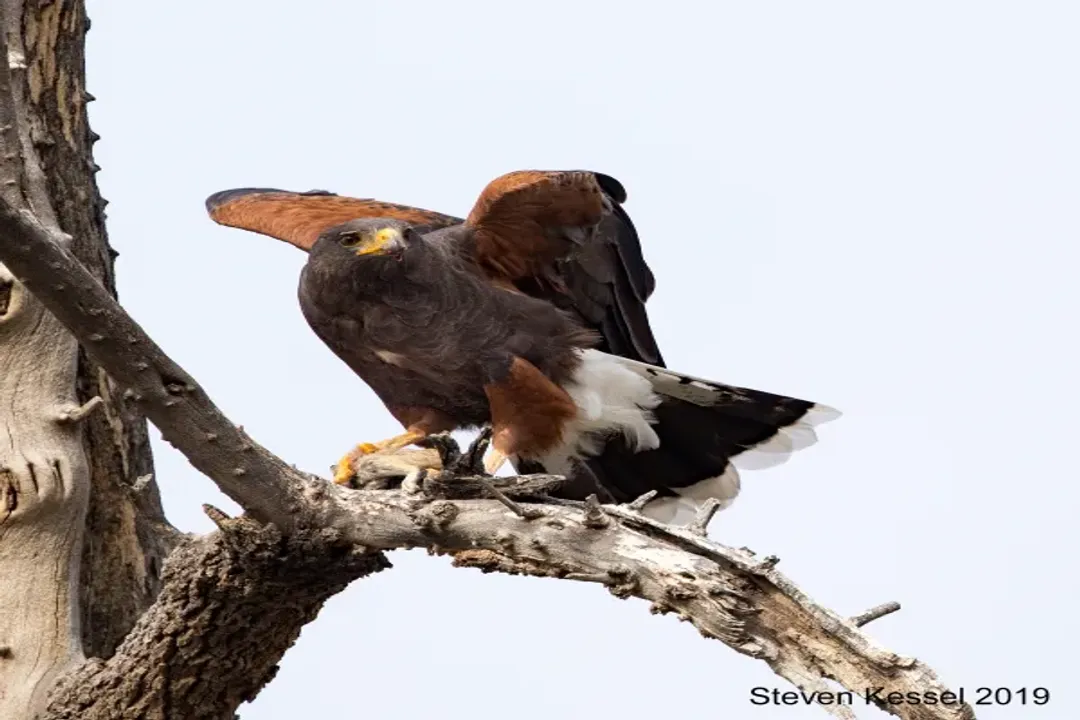
The Harris Hawk's wing loading and tail length facilitate sustained flight during group efforts, representing a middle ground between the agility-focused *Accipiter* and the soaring-focused *Buteo*.
Related Questions
To which taxonomic family does the Harris Hawk (*Parabuteo unicinctus*) belong?What is the scientific genus designation for the Harris Hawk?What physical characteristics are typically adapted for true *Accipiters* to navigate dense forest undergrowth?What extraordinary behavior defines the Harris Hawk and separates it from typical solitary accipiters?In which taxonomic order is the family Accipitridae placed?What is a defining feature of the Harris Hawk's hunting style, contrasting with *Accipiter* methods?Which geographical regions primarily host the Harris Hawk population?What behavioral cue is the most reliable indicator that an observer is seeing a Harris Hawk family group?How does the physical morphology of the Harris Hawk compare to classic *Accipiters*?What key physical characteristic contrasts with the Harris Hawk's dark plumage?What kind of prey-flushing strategy do Harris Hawks utilize within dense cover like mesquite thickets?