Do pinstripe potoroos live in groups?

Potoroo behavior, whether referring to the general group or specific species like the Long-nosed Potoroo, offers a fascinating look into the social life of small Australian marsupials. The prevailing pattern suggests that these animals generally prefer a solitary existence rather than living in structured, cohesive family units or large groups. [1][4] This tendency toward independence shapes nearly every aspect of their daily lives, from how they seek food to how they establish their territory within the undergrowth.
# Social Solitude
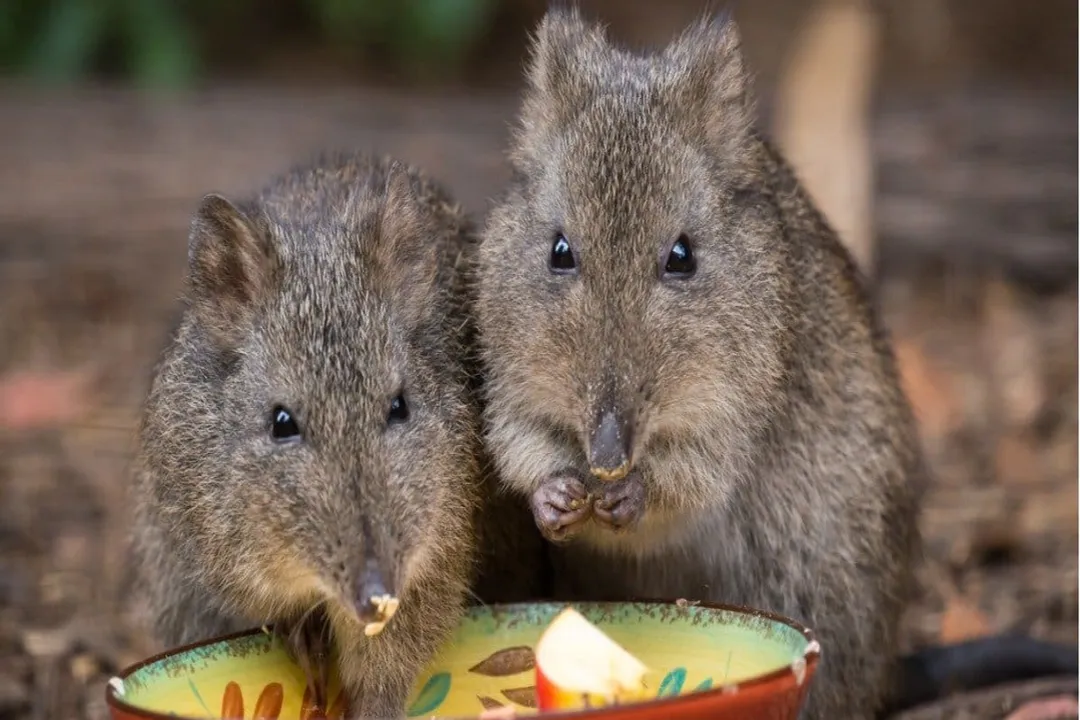
The typical potoroo maintains a life of relative isolation. While they are not strictly hermits, spending most of their time alone is the norm, particularly outside of breeding periods or when a mother is raising her young. [5][10] This contrasts sharply with some of their larger macropod relatives, like certain wallaby species, which often form visible mobs or groups for protection and communal grazing. [8] The potoroo’s lifestyle suggests that the benefits of pooling resources or sharing vigilance against predators are outweighed by the costs associated with competition for food or mates when living in close proximity. [4]
It is important to clarify that "solitary" does not mean they never cross paths or that their territories do not overlap. In areas where resources are abundant—like patches of desirable fungi or sheltered dens—several potoroos might occupy adjacent home ranges, leading to incidental contact. [10] However, their interactions are typically brief and non-cooperative. They are generally not known for the complex social bonds or hierarchical structures seen in more gregarious mammals. [5]
# Defining Territory
Understanding where a potoroo lives helps explain why grouping might not be advantageous. Potoroos are generally described as having well-defined home ranges, which they patrol and utilize regularly. [10] For the Long-nosed Potoroo, the extent of this range can vary significantly depending on habitat quality and resource availability. [5][7] Where food is plentiful and the physical environment provides good cover, the home range might be relatively small, perhaps just a few hectares. [10] In contrast, poorer habitats necessitate larger foraging areas to secure enough sustenance. [7]
When considering the density of population, if you map out the territories of several individuals across a favorable landscape, you might find several distinct scent markings or resting sites belonging to different potoroos within a small area. Yet, active foraging during the night is usually a solo affair. [1] The territory serves as a personal larder and refuge, managed by one animal rather than shared by a collective. This individual ownership minimizes direct, daily competition for the patchy, dispersed food sources they rely upon. [5]
It is often the case in ecology that solitary animals maintain these home ranges through scent marking or by creating visible runways through the leaf litter, essentially broadcasting ownership without needing aggressive, face-to-face confrontations common in group living. [10] A keen observer tracking potoroos might note that while one individual consistently uses a particular burrow for sleeping, another might use a nearby one, but they rarely occupy the same space simultaneously, reinforcing the pattern of individual habitation.
# Dietary Needs and Foraging

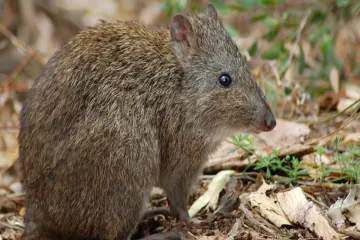
The specialized diet of potoroos acts as a strong driver for their non-gregarious habits. [6] These small marsupials are primarily mycophagous, meaning they have a strong preference for eating subterranean fungi. [1][6] They use their keen sense of smell to locate these buried truffle-like fungi, digging them up with their strong forelimbs. [6] In addition to fungi, their diet includes insects, roots, and other small invertebrates. [1][5]
Fungi, by their nature, do not grow in easily countable, predictable patches that support a group; they occur sporadically throughout the soil profile. [6] For a group of, say, five potoroos to forage successfully together, they would either need an extraordinarily rich and dense food supply, or they would constantly be competing for the same small subterranean meal, leading to increased energy expenditure and potential injury. [5] A solitary forager can move across its established range, sampling various spots at its own pace, minimizing direct interference from conspecifics. This lifestyle is highly efficient for locating and consuming scattered, high-value food items like truffles. [6]
If one were to imagine the resource landscape from the potoroo's perspective, a patchy forest floor looks more like a collection of individual hidden treasures than a communal buffet, naturally favoring the lone seeker over the group hunter. This foraging strategy contrasts with grazing herbivores, whose food source—grass—is continuous and often benefits from group defense while feeding.
# Reproduction and Family Units
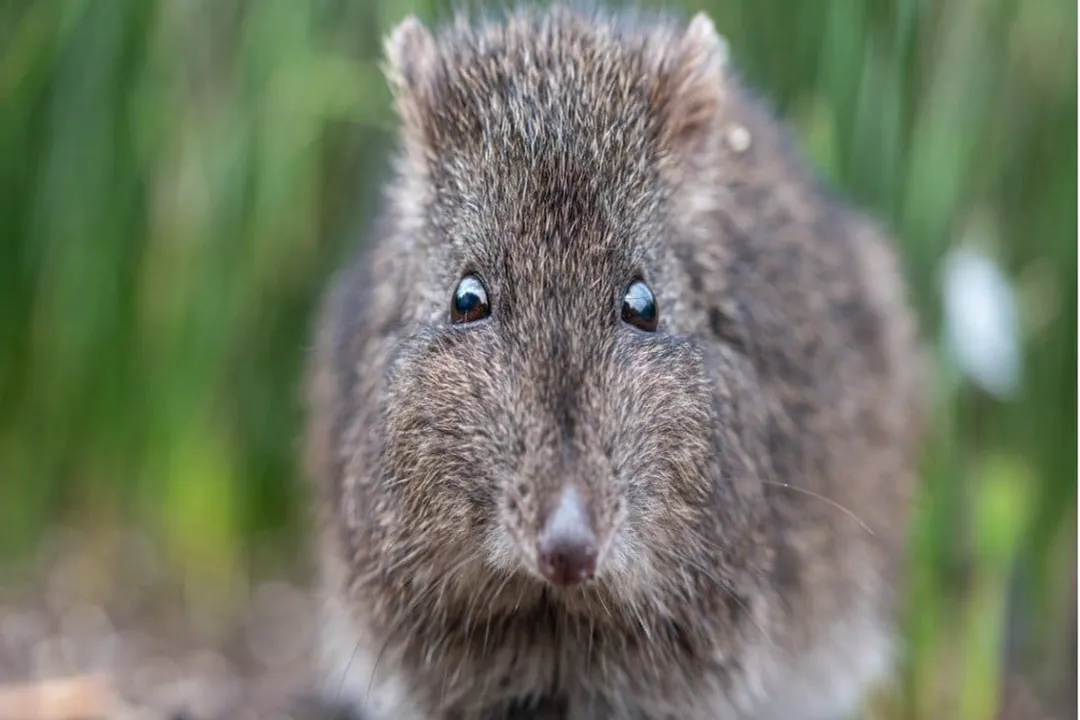
The primary exception to the solitary rule involves reproduction and early development. The most intimate social bond occurs between a mother and her single young, or joey. [1] Like all marsupials, the underdeveloped joey is born and immediately crawls into the mother’s pouch, where it remains attached to a teat for several months while it develops. [1][5]
Once the young potoroo is large enough to emerge from the pouch, it continues to stay close to the mother, gradually spending more time outside while still dependent on her for nourishment. [1] This period of dependency, while not a true social group, involves prolonged, necessary interaction. The duration of this post-pouch dependency varies slightly by species, but eventually, the young animal must disperse and establish its own territory to survive independently. [5]
For a brief period during courtship, males and females will interact more frequently to mate, but these encounters are temporary compared to the permanent associations found in group-living species. [4] After mating, the pair separates, returning to their solitary routines until the next reproductive cycle begins. Thus, while social contact is necessary for perpetuating the species, it is brief and functionally oriented rather than sustained for group benefit.
# Ecological Niche
The solitary life of the potoroo places it into a specific ecological niche within the Australian bushland. They fill a specialized role as small, ground-dwelling ecosystem engineers whose digging activity helps aerate the soil and potentially spread fungal spores, which is vital for forest health. [7][10]
If potoroos did live in groups, we might expect to see evolutionary pressures favoring specialized communication or defense mechanisms for managing group dynamics, similar to those seen in wombats or some wallabies. The lack of extensive evidence for complex social signaling strongly suggests that the energy required to maintain group cohesion is an unnecessary expense given their lifestyle and diet. [4] Their survival strategy relies more heavily on crypsis (avoiding detection), quick movement, and effective use of their individual home range rather than relying on the strength in numbers. This makes them a unique example among small marsupials where isolation is the default setting for daily existence.
Related Questions
#Citations
Potoroo Animal Facts - Potorous tridactylus
Long-nosed potoroo facts and habitat information - Facebook
The long-nosed potoroo is a small marsupial native to ... - Reddit
Potoroo | marsupial - Britannica
Long-nosed potoroo - Wikipedia
Potoroo - an overview | ScienceDirect Topics
Fast Facts on Long-nosed Potoroos - Conservation Ecology Centre
Mammals - Backyard Buddies
SPECIES The macropod (big foot) family - Kangaroo Footprints
There's no place like home for a potoroo - Australian Museum