Do coelacanths have eyes?
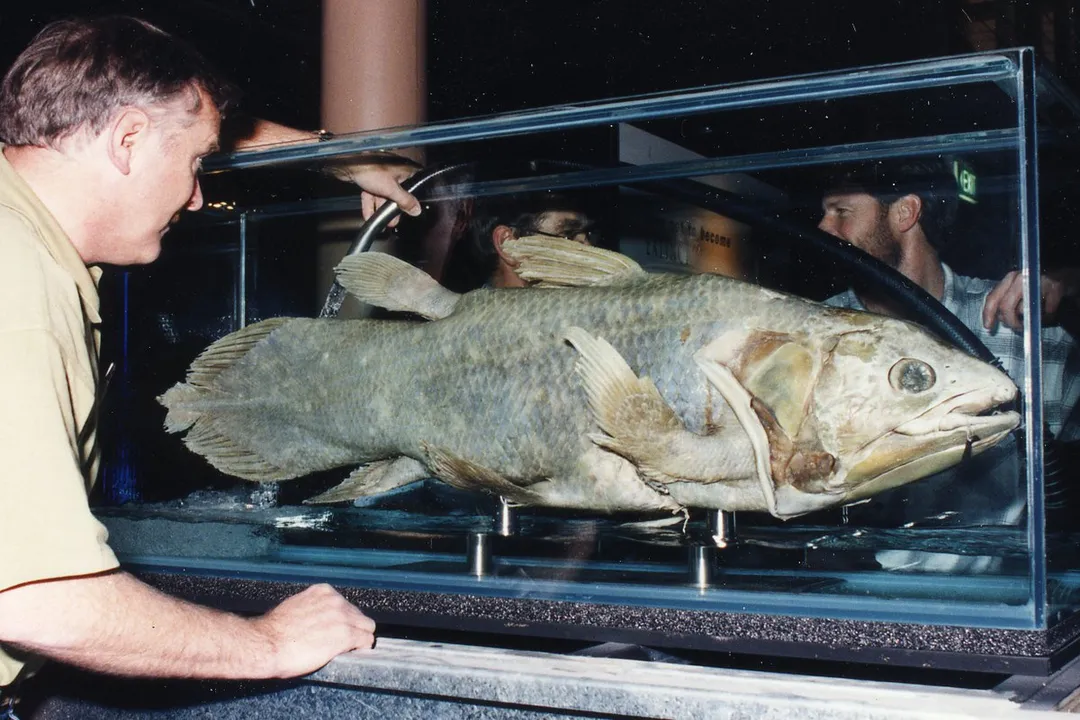
The question of how an ancient creature, thought extinct for 66 million years until its rediscovery in 1938, perceives its surroundings is naturally fascinating, and the answer involves its surprisingly well-developed eyes. [5] These fish, belonging to the genus Latimeria, possess eyes that are markedly large in proportion to their heads, a feature immediately noticeable upon examination of specimens or detailed images. [1][2][3][5][6][9] Their visual apparatus is not merely rudimentary; it is a complex structure adapted for the perpetually dim environment where these lobe-finned fishes reside. [1]
# Eye Characteristics
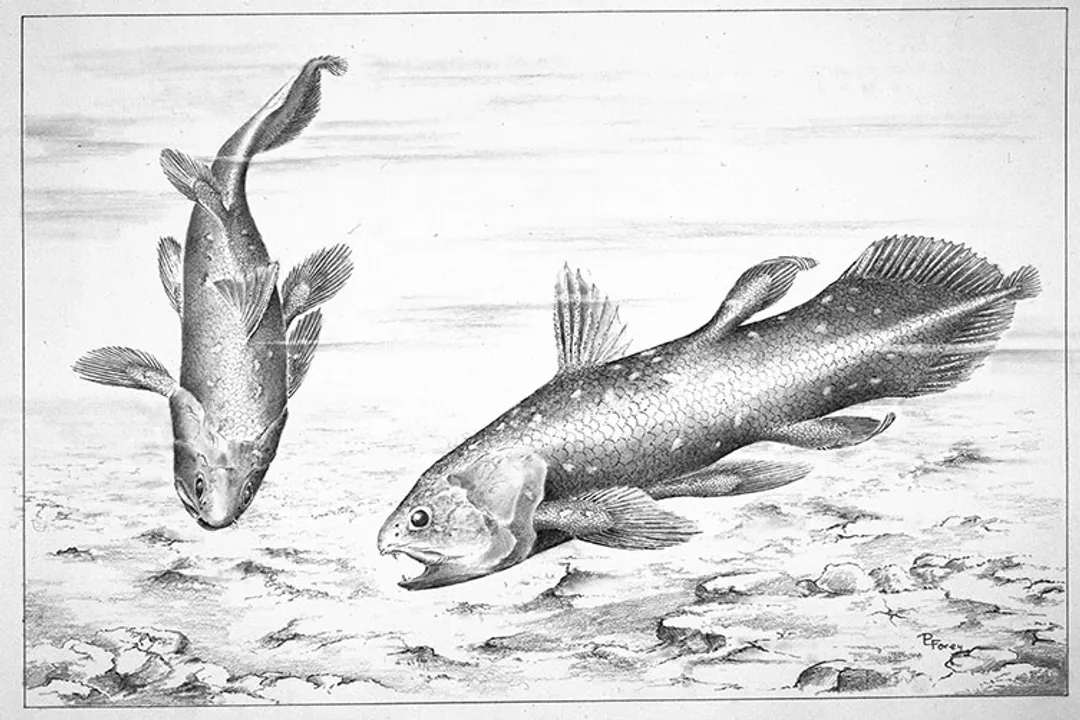
The eyes of the coelacanth are indeed present, and they are large. [1][2][3][5][6][9] Within this structure lies a specialized component common in many nocturnal or deep-sea animals: the tapetum lucidum. [1][9] This reflective layer is situated behind the retina, acting like a mirror to bounce light that has passed through the light-sensitive cells back through them a second time, effectively maximizing light capture. [1][9] The presence of a functional retina, coupled with this light-amplifying structure, strongly indicates that vision is, or was, a viable sense for the coelacanths in their natural habitat. [1]
However, this sophisticated low-light hardware comes with a trade-off. The very adaptation that makes their vision excellent in the gloom renders it useless, or nearly useless, when exposed to brighter conditions. [1] Historical accounts and observations suggest that coelacanths brought to the surface, or studied under intense artificial light, appear to be functionally blind in that intense illumination. [1] This fragility highlights an acute sensitivity; the same structures that gather the scant photons available in the deep sea are easily overwhelmed by even moderate light levels. [5]
# Deep Habitat Sensory World
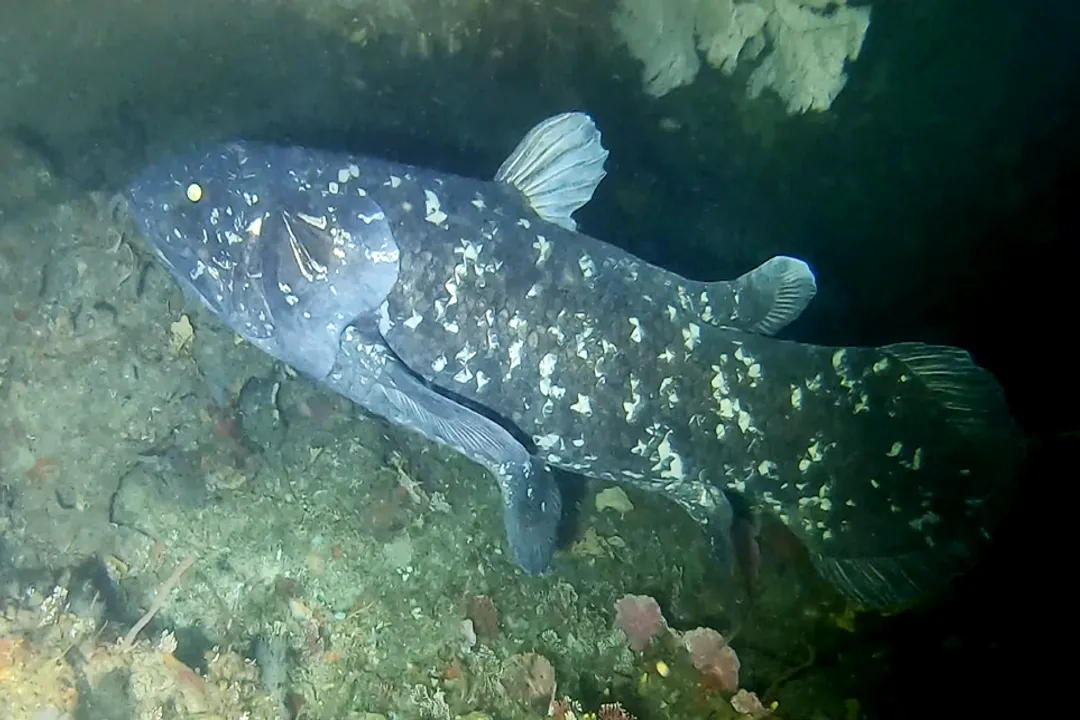
Coelacanths are inhabitants of the deep, residing near the bottom of the continental shelves and slopes, often at depths between 100 and 400 meters. [2] In this zone, sunlight penetration is minimal, creating an environment where vision, as humans understand it, is severely limited. [2] Given this light scarcity, it stands to reason that the coelacanth would not place its primary reliance on sight alone for navigation, hunting, or avoiding predators. [2]
This leads to a crucial point regarding the coelacanth's sensory ecology. While the eyes are clearly present and specialized for low light, published research emphasizes that these fish likely depend more heavily on their electrosensory system. [2] They possess a network of pores along their snout, connected to an internal network, that allows them to detect the faint electrical fields generated by other organisms. [2] Imagine navigating a pitch-black room; while having eyes that can just barely detect a candle flicker (the coelacanth's vision) is helpful for general awareness, being able to "feel" the exact location and movement of a nearby object via electrical impulses provides much more precise, real-time tactical information for predation or evasion. In the deep sea, where the electrical background noise is relatively low, this "feeling" system becomes the primary tool for close-range interaction, perhaps making the eyes supplementary rather than dominant in moment-to-moment survival. [2]
It is interesting to consider the evolutionary pressure that led to this sensory split. If the coelacanths were frequent, active hunters in shallower waters millions of years ago, their eyes would have been paramount. Their continued existence in the deep suggests a sensory specialization trade-off: maintaining the complex, energy-intensive visual hardware (the large eyes and tapetum lucidum) while simultaneously developing and relying upon the electroreception system. [1][2] This balance suggests that the light they do occasionally encounter, perhaps bioluminescence or faint downwelling light, is just significant enough to warrant keeping the visual system, but not significant enough to prevent electroreception from taking the lead role. [2] For instance, a prey animal might emit a single, weak bioluminescent flash; the coelacanth's sensitive eye might register the location, but the electroreceptors would confirm its identity and proximity, allowing for an accurate strike when the visual cue fades.

# Ancient Lineage Features
As one of the few surviving examples of an ancient fish group, the coelacanth is often termed a "living fossil". [6] The features of its eye, therefore, offer a glimpse into the vision capabilities of fishes from the Devonian period, over 400 million years ago. [6] The presence of a well-formed, specialized eye structure—even if adapted to deep water now—suggests that complex sight was a capability present in their ancestors relatively early in vertebrate history. [1][9]
If we look across diverse deep-sea fauna today, we see varied solutions to the darkness problem: some fish lose their eyes entirely, others evolve enormous, tube-like eyes oriented upward to catch silhouettes against the faint downwelling light, and others, like the coelacanth, retain moderately large eyes with a reflective layer. [1][5] The coelacanth's eye structure, particularly the tapetum lucidum, appears to be a conserved feature, indicating that the ancestral lineage that gave rise to Latimeria already possessed this light-gathering mechanism. [1][9] The fact that they have not evolved the upward-facing tubular eyes seen in some other deep-sea species suggests that their primary habitat—the steep slopes and caves—may not favor a purely silhouette-based hunting strategy, reinforcing the need for the omnidirectional sensory input provided by their electroreceptors alongside their general, low-level light vision. [2]
To put their vision into a tangible context, consider the light levels. At 200 meters, the light is less than 1% of surface light, and the spectrum shifts toward blue. [2] The coelacanth's eye is built to process the very few photons that make it this deep. If we were to quantify their light sensitivity against a surface fish like a goldfish, whose vision is optimized for bright, full-spectrum light, the coelacanth's eye sensitivity might be orders of magnitude greater in the blue/green spectrum, but practically zero above the photic zone limit. This specialization is a perfect example of evolutionary constraint: the need to preserve ancient morphology that still functions in the current niche, even if that niche does not demand peak performance in every original faculty.
# Eye and Modern Encounters
The very characteristics of the coelacanth's eyes—their sensitivity and their preference for the dark—have complicated scientific study since the initial 1938 find. [5] The massive shock of being hauled from the darkness into the light of a boat deck likely causes immediate distress and potentially irreparable damage to their delicate visual tissues, which is another reason why studying them alive is so challenging. [5]
Furthermore, modern threats, such as the expansion of deep-water fishing practices like gillnetting for sharks, have inadvertently brought more coelacanths into human view. [7] When these ancient, light-sensitive creatures are caught and brought up from their specialized depth, their eyes, along with the rest of their system, are subjected to a fatal environmental shift, making post-capture observation a study of damaged specimens rather than fully functioning organisms. [7]
Ultimately, the coelacanth does have eyes, and they are magnificent structures in their own right—large, equipped with a reflector to steal every last ray of light, and finely tuned to an environment almost entirely alien to us. [1][9] Yet, they share their world with a more sensitive "sixth sense," the electrical field detection system, which appears to handle the critical tasks of daily life in the ocean depths. [2] The eye is a stunning relic, telling a story of ancient adaptation that is still functional, but perhaps no longer the boss of the sensory kingdom. [2]
Related Questions
#Citations
Latimeria - Wikipedia
Coelacanth | Smithsonian Ocean
Coelacanth, Latimeria chalumnae Smith, 1939 - Australian Museum
Coelacanths: Evolutionists Still Fishing in Shallow Water
Coelacanths: the fish that 'outdid' the Loch Ness Monster
Living Fossils: The Coelacanth - Steemit
Ghost fish: after 420 million years in the deeps, modern gillnets from ...
Coelacanth: The transitional fossil that wasn't · Creation.com