Are tree vipers aggressive?
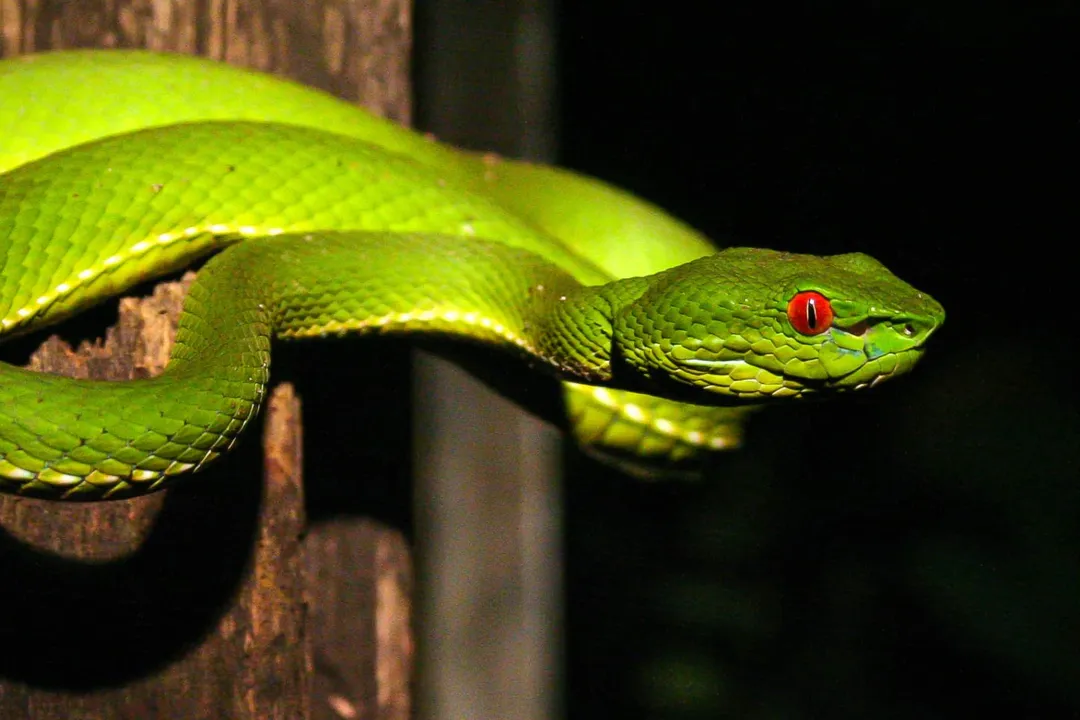
The disposition of tree vipers—those often brilliantly colored snakes inhabiting the branches and canopy—is a frequent source of concern for people encountering them in gardens or natural settings. Generally speaking, these arboreal pit vipers are not characterized by unprovoked aggression; rather, their reactions are overwhelmingly defensive when they feel threatened or cornered. [1][4] Understanding why they strike, rather than if they strike, provides a much clearer picture of their typical behavior in the wild. [3]
# Viper Species
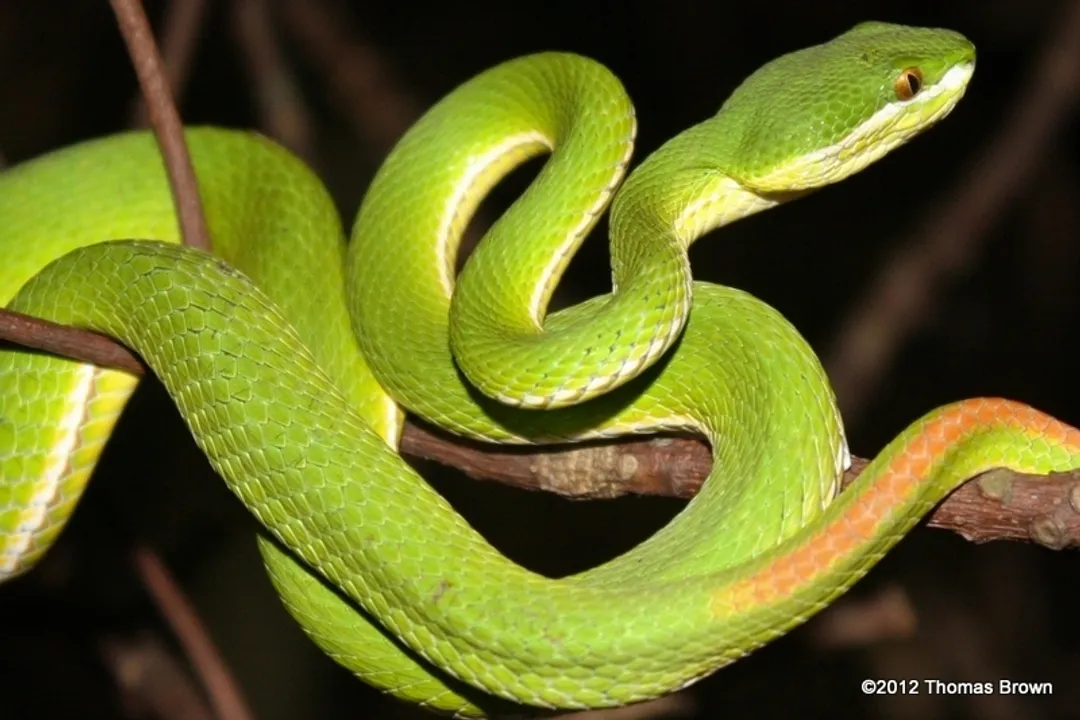
The term "tree viper" often refers to various species within the Trimeresurus genus, commonly known as pit vipers, many of which possess the characteristic green coloration that helps them blend into foliage. [1] Examples frequently cited in Asian contexts include the White-lipped Pit Viper (Trimeresurus albolabris), [3] the Green Pit Viper (Trimeresurus trigonocephalus), [4] and Wagler's Pit Viper (Tropidolaemus wagleri). [7] While some general viper characteristics apply across the board—like possessing heat-sensing pits and potent venom—their temperaments can vary slightly based on the specific species and their environment. [1][8]
In contrast to strictly terrestrial vipers, such as the Asp Viper found in the Dolomites, which primarily resides on the ground and might react defensively to being stepped on, [6] tree vipers spend most of their lives aloft. This arboreal existence influences their primary defense strategy: avoiding detection or retreating vertically when disturbed. [1]
# Defensive Behavior
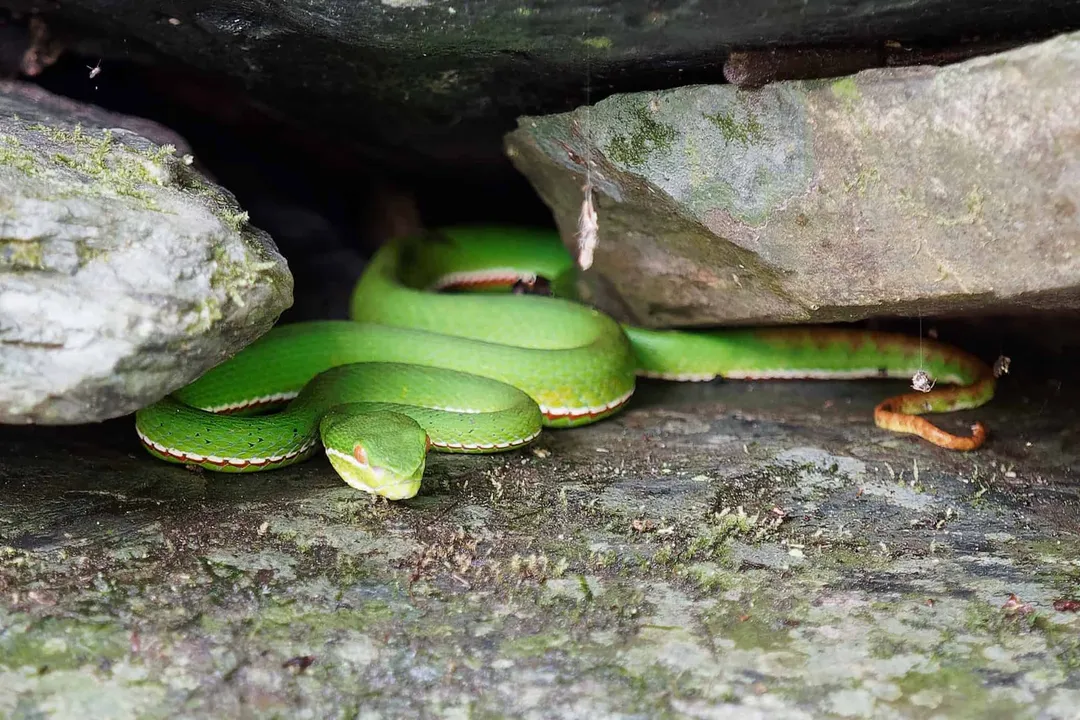
When a tree viper feels its space is being invaded, its initial reaction is usually to freeze, relying on camouflage for protection. [1] If pressed further, they often resort to conspicuous warning displays before escalating to a strike. These displays are critical behavioral indicators that a human observer should recognize as a final warning.
For many of these species, the defensive posture involves coiling the body tightly, often raising the head and neck into an S-shape, ready to strike if the perceived threat continues its approach. [3][7] The White-lipped Pit Viper, for instance, will often display this characteristic coiled posture when threatened. [3] Wagler's Pit Viper also exhibits this readiness to strike when disturbed. [7]
It is important to note that the behavior observed in a captive setting might differ from that in the wild. Snakes accustomed to human interaction or those kept by experienced handlers may appear less defensive than their wild counterparts. [7] Furthermore, an individual snake's temperament can be influenced by factors like hunger, time of day, or previous negative experiences with humans. [3]
# Grounded Reactions
Interestingly, even arboreal snakes will adopt different tactics if they are surprised on the ground. If a tree viper is dislodged or found low to the ground, it may react with heightened defensive behavior because its primary escape route—climbing—is less immediately available. [1] One observation noted by individuals encountering these snakes in residential areas suggests that while they might retreat when given space, a cornered snake, regardless of its usual habits, will defend itself aggressively. [2] This suggests that the context of the encounter heavily dictates the snake’s apparent aggression level.
# Species Variations
While general defense mechanisms are shared, slight variations in disposition exist among the different arboreal vipers.
# White-Lip Actions
The White-lipped Pit Viper, often found in shaded areas, is noted for being somewhat slow-moving and generally not aggressive unless provoked or handled. [3] Its main defense is its camouflage and remaining motionless. Bites typically occur when people attempt to pick them up or accidentally step too close. [3]
# Wagler Traits
Wagler's Pit Viper, known for its distinctive patterned appearance, is often described as being relatively placid when undisturbed but certainly capable of a quick defensive strike if harassed. [7] They are known to sit coiled and wait for prey, a behavior that translates into a fixed, defensive posture if a human approaches too closely while they are resting. [7]
# Green Pit Viper
The Green Pit Viper, such as T. trigonocephalus, also exhibits defensive behaviors when threatened, frequently adopting the characteristic S-shaped striking pose. [4] Anecdotal reports regarding general Green Pit Vipers suggest they are more likely to give clear warnings through posture before biting, often preferring to flee if an easy escape route exists. [9] This preference for escape over confrontation aligns with the general understanding of many viper species. [8]
# Venom Context
The reason these defensive behaviors elicit such caution is the potency of their venom. Tree vipers, particularly pit vipers, possess hemotoxic venom designed to break down tissues and blood cells. [8] While a general viper's bite is rarely fatal to a healthy adult human if treated promptly, the effect is severe, causing intense pain, swelling, and potential tissue damage. [6][8] The venom composition and yield can vary between species, making any bite a serious medical event requiring immediate attention. [3][9] This inherent danger dictates that humans should treat any perceived defensive display as a serious warning, rather than merely a bluff. [1]

# Safety Measures
When navigating environments where these snakes are known to reside, preparation and awareness are far more valuable than attempting to categorize the snake as "aggressive" or "docile." A simple rule of thumb is recognizing that a snake only feels "aggressive" when you are perceived as an immediate threat to its survival. [1]
To minimize risk, particularly in areas where these snakes may rest on low-hanging branches or dense undergrowth, always look before reaching or stepping. [3] A practical checklist for hikers or gardeners in known viper territory might look like this:
- Wear appropriate footwear: High boots protect against accidental ground-level encounters. [6]
- Use a walking stick: This tool can be used to gently probe dense vegetation or test footing before committing weight. [1]
- Maintain distance: If you spot a snake displaying a warning posture (coiled, head raised), freeze. Slowly back away, creating space between yourself and the snake to allow it to retreat to safety. [3][7]
One insight drawn from comparing the habits of these arboreal species is the importance of vertical awareness. Terrestrial snakes are usually identified by what is on the path ahead; tree vipers demand attention directed upward as well. A snake coiled on a branch that overhangs a trail might drop when startled, confusing a hiker who is only scanning the ground ahead. Recognizing that the danger doesn't always come from eye level is a key adjustment for those sharing territory with these reptiles. [1] Another consideration, often overlooked, is the impact of habitat modification. As human development encroaches on natural habitats, the frequency of encounters increases, naturally leading to more perceived defensive interactions simply due to higher overlap in shared space. A snake that might previously have encountered only birds or small mammals now regularly encounters humans, potentially making it more reactive to sudden movements near its resting or hunting spot. [2][4]
Related Questions
#Citations
Tree Viper (Bamboo Viper) - Trimeresurus stejnegeri - A-Z Animals
An other snake in my garden, is it dangerous. I m going to ... - Reddit
White-lipped Pit Viper - Reptiles and Amphibians of Thailand
Green Pit Viper (Trimeresurus trigonocephalus) • Lifespan ...
Stejneger's Pit Viper - Facts, Diet, Habitat & Pictures on Animalia.bio
"Viper: let's learn to defend ourselves from this poisonous snake.
Wagler's Pit Viper - Tropidolaemus wagleri - Ecology Asia
Viper Snake Species Are Always Venomous | HowStuffWorks
Is a green pit viper harmful? - Quora