Xenoposeidon Diet
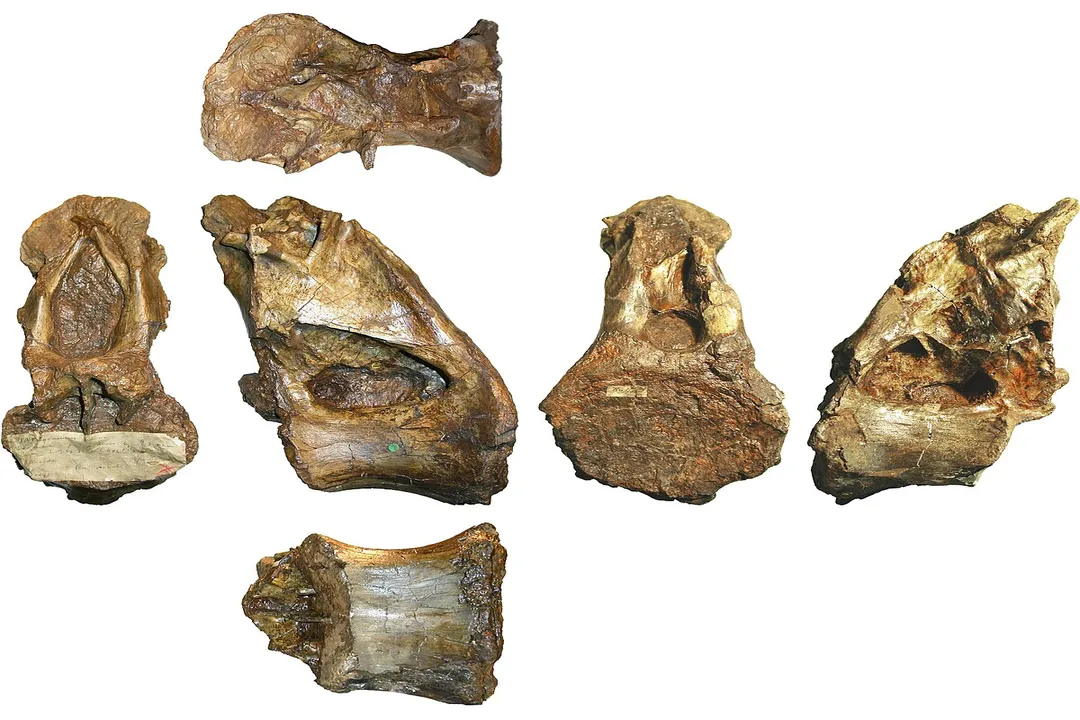
The feeding habits of Xenoposeidon must be reconstructed primarily through understanding its place within the larger family of sauropod dinosaurs, specifically its classification as a rebbachisaurid. As one of the earliest known members of this group, dating back to the Early Cretaceous period, Xenoposeidon possessed a body plan geared toward massive, continuous herbivory. [1][6][7] While direct fossilized stomach contents are rarely preserved for any dinosaur, the anatomy of its skull and teeth provides the strongest clues about how this giant managed its caloric needs. [1]
# Classification Context
Xenoposeidon belongs to the Sauropoda, the group encompassing the long-necked giants of the Mesozoic Era. [4][6] More precisely, it falls within the Rebbachisauridae clade, a lineage characterized by unique skeletal features, including distinctively shaped vertebrae. [2][6][7] This classification immediately places it among the largest terrestrial animals known to science, suggesting an enormous requirement for plant matter on a daily basis. [4] Understanding its diet requires looking at what makes rebbachisaurids distinct from contemporaries like the massive titanosaurs or the diplodocoids. [2]
# Tooth Mechanics
The teeth are perhaps the most telling feature regarding how Xenoposeidon processed its food. Unlike the robust, peg-like teeth suited for stripping vegetation found in some contemporary sauropods, or the spoon-shaped teeth of other groups, rebbachisaurids possessed peculiar dentition. [1][3] Their teeth were often described as peg-like or specialized, sometimes being oriented more forward in the jaw. [1][3] This morphology suggests they were not designed for grinding or chewing in the way mammals do, nor were they perhaps as efficient at shearing large amounts of tough, woody material as brachiosaurids. [1]
The function inferred from these teeth is generally one of cropping or raking vegetation rather than chewing it into small particles. [3] The teeth likely functioned as a shearing mechanism or a simple rake to pull foliage into the mouth cavity. Once inside, the material would be swallowed relatively whole, relying on a massive digestive tract to extract nutrients through fermentation and mechanical breakdown further down the line. [1] If we compare this system to modern large herbivores, it resembles the bulk intake strategy of elephants or rhinos, where high throughput minimizes the time spent gathering food, offsetting the low efficiency of initial processing.
# Food Acquisition
The neck posture and overall build of sauropods dictate the feeding envelope—the area where the animal could comfortably reach food. [4][5] While precise reconstructions of Xenoposeidon's neck mobility vary among paleontologists, the general sauropod blueprint suggests a wide feeding range, both vertically and horizontally. [5] Being a rebbachisaurid, it likely had relatively more vertical neck flexibility compared to some other sauropod lines, though perhaps less than the extreme vertical reach of brachiosaurs. [5]
The inferred cropping strategy, coupled with its likely height, suggests that Xenoposeidon was primarily a high browser, taking foliage from trees and tall shrubs. [4] However, given the sheer size and the need for massive caloric intake, it almost certainly supplemented this high browsing with substantial ground-level grazing when necessary. [4] The ability to feed across a vertical range of several meters allowed it to exploit diverse food sources throughout its habitat, reducing direct competition with smaller herbivores operating only at ground level. [5]
# Cretaceous Flora
To determine the actual diet, one must consider the available vegetation during the Early Cretaceous period in the region where Xenoposeidon lived. While the exact locale is debated in some reports, the environment would have been dominated by gymnosperms, including conifers, cycads, and ginkgoes, alongside the emerging angiosperms (flowering plants). [6][8]
This flora presents a nutritional challenge. Conifers and cycads often possess tough, resinous, or silica-rich tissues that are difficult to digest and may contain chemical defenses. [8] The large digestive capacity of Xenoposeidon was essential for processing this low-quality, high-fiber diet. A significant portion of its daily routine would have been dedicated solely to ingestion, possibly spending most daylight hours eating. [7] The assumption that it preferred softer, broad-leafed angiosperms over tougher conifers is plausible, but its survival likely mandated consuming whatever was most abundant at the time, requiring a very generalist approach to its palate. [8]
# Intake Volume
When considering the sheer scale of Xenoposeidon, the volume of food required becomes astonishing. Although there is some debate regarding the exact mass of this species compared to giants like Argentinosaurus, it was certainly a superlative megatheropod. [7] A modern analogy helps frame this: massive modern herbivores like elephants must consume enormous quantities relative to their body weight to sustain their mass, even with more efficient digestion. [7]
If we estimate a very conservative metabolic rate for such a colossal reptile, and factor in the relatively poor digestive efficiency conferred by its cropping teeth, the daily food requirement would likely measure in the tens of tons of plant matter. This necessity for throughput—getting food in and moving it through the system rapidly—would have driven every aspect of its feeding behavior. It suggests that Xenoposeidon prioritized quantity over nutrient extraction efficiency in any single bite, making the rate of ingestion critical. [7]
The energy required to power such a large body mass also implies a need for relatively consistent access to preferred, easily processed foods. An environment prone to prolonged dry seasons where only tough, dry conifers remained would have placed immense stress on Xenoposeidon, potentially forcing it into competition with other herbivores or requiring massive migrations to follow the green front, much like modern large ungulates do in African savannas.
# Internal Processing
Given the limited pre-mastication performed by its peg-like teeth, the bulk of nutrient extraction and mechanical breakdown occurred internally. This is a hallmark of sauropod biology: a gigantic fermentation vat powered by gut microbes. The long intestinal tract of Xenoposeidon would have housed diverse bacterial colonies capable of breaking down cellulose and lignin. [1]
This reliance on internal microbial action means that the food was not chewed, but fermented. The time food spent passing through the system would have been very long, sometimes weeks, allowing maximum extraction of energy from low-quality forage. Furthermore, like many other sauropods, Xenoposeidon likely swallowed stones, known as gastroliths, which helped grind tough plant matter in the muscular stomach (gizzard). [1] The presence and size of these gastroliths would be directly correlated to the toughness of the diet it faced in its daily environment. If the environment offered more soft foliage, the need for these grinding stones might have lessened, but when consuming drier, high-lignin material, their role would have become essential for mechanical particle reduction prior to microbial action. [1] In essence, the stomach of Xenoposeidon was a slow-moving, rock-assisted biological refinery designed to wring every last bit of energy from the abundant but fibrous flora of the Early Cretaceous landscape.
Related Questions
#Citations
Xenoposeidon: Facts, Habitat, and Prehistoric Dinosaur Insights
Xenoposeidon - PaleoCodex
Xenoposeidon - - Dinos and Designs
Xenoposeidon - Prehistoric Wildlife
Xenoposeidon - Nature Web
Xenoposeidon - Wikipedia
How much poop did Argentinosaurus produce in a day?
(PDF) Xenoposeidon is the earliest known rebbachisaurid sauropod ...
Xenoposeidon - Mindat