Wirehaired Pointing Griffon Physical Characteristics

The Wirehaired Pointing Griffon presents an immediately recognizable silhouette, one that speaks directly to its heritage as a versatile hunter built for resilience. This is a dog that is sturdy and medium-sized, intentionally crafted to work tirelessly in thick cover and through water. Unlike some breeds built for sheer speed or bulk, the Griffon’s overall physique is balanced, often described as having a rectangular shape, meaning they are usually slightly longer than they are tall.
# Size and Structure
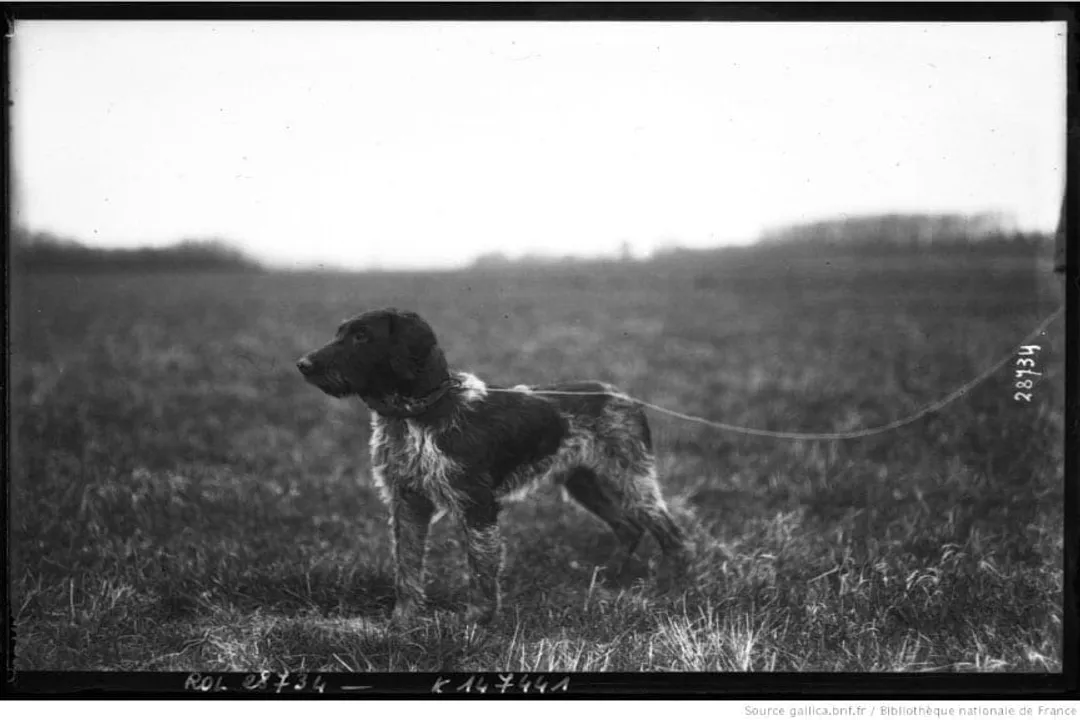
The goal of the breed's founder, Eduard Karel Korthals, was an adaptable dog, which is reflected in a size that is manageable yet substantial enough for rigorous field work. You will notice a distinct difference in size between the sexes. Males are generally taller and heavier than their female counterparts.
According to several general standards, an adult male stands between 22 to 24 inches at the shoulder, carrying a weight in the range of 50 to 70 pounds. However, other reports suggest a slightly broader range for males, listing heights from 23 to 26 inches and weights up to 69 pounds. For females, the typical height falls between 20 to 22 inches, with weights ranging from 35 to 50 pounds. This places them firmly in the medium-sized category, making them excellent for transport while ensuring they have the necessary power and stamina for a full day afield. Their bodies are muscular, supported by strong limbs designed to carry them through demanding environments without faltering.
# Coat Characteristics
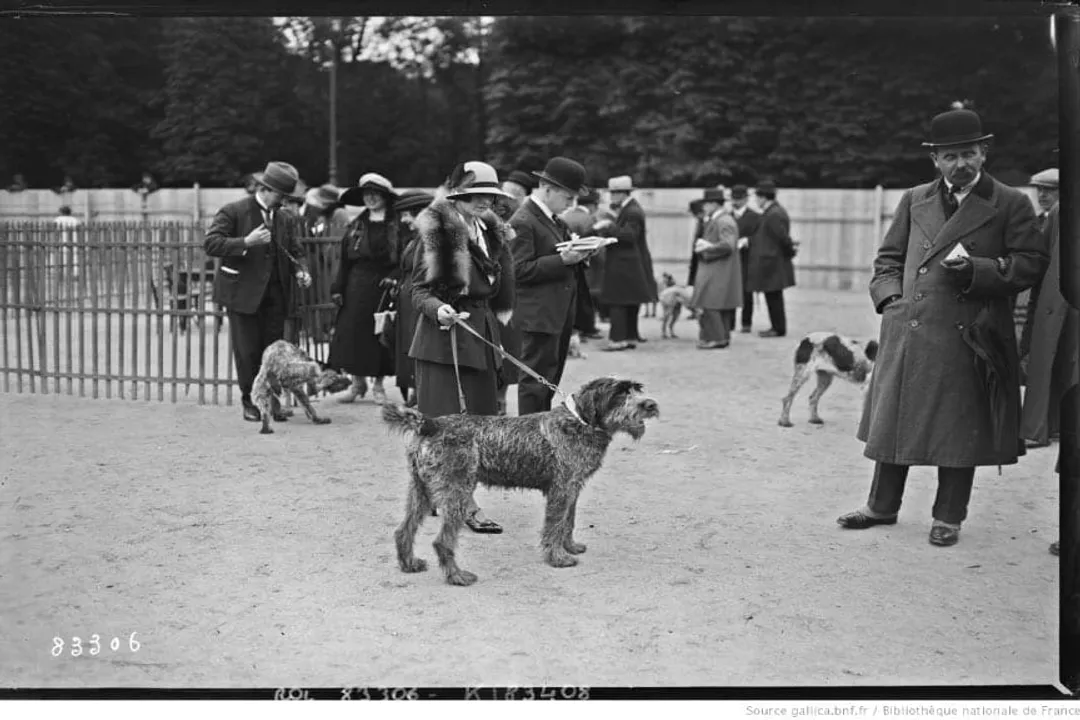
The most defining physical attribute of the Wirehaired Pointing Griffon is undoubtedly its coat. This is not a dog that blends into the manicured show ring with effortless smoothness; instead, its appearance is intentionally rugged and somewhat unkempt, which owners often find endearing.
The coat is a double coat, which is essential for its function. It consists of two layers designed for protection:
- The Undercoat: This layer is fine, dense, and soft, offering critical insulation against cold water and weather.
- The Outer Coat: This is the signature part—it is harsh, wiry, and coarse. Some breed descriptions note that the ideal texture reminds one of the feel of a wild boar’s bristles. The wiry texture serves to shed water and protect the skin from briars and harsh undergrowth.
It is important to note that the Griffon’s coat can exhibit more variation in length and harshness than perhaps any other wire-haired breed. While the ideal leans toward coarse, some dogs may appear to have shorter coats, and others might have coats that lean slightly longer or more woolly. The breed enthusiasts generally aim to preserve that harsh texture, as trimming the body with clippers can ruin the coat’s water-repellency and texture, causing the wiry hair to grow back softer and fuzzier. A weekly brushing is usually sufficient to remove loose dirt, but occasional trimming might be necessary, especially around the eyes, to maintain clear vision.
Contrary to some popular belief, Griffons are not non-shedding, though they do shed considerably less than many other breeds, which is why many allergy sufferers find them tolerable.
# Color and Markings

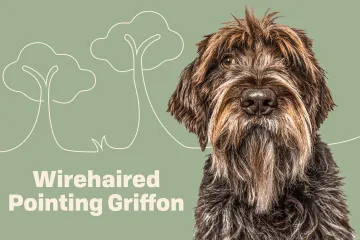
In terms of color, the Wirehaired Pointing Griffon typically presents a muted, natural palette that suits a hunting dog. The preferred color across several standards is steel gray, often seen with brown markings.
The coloring is frequently described as roan, which means the coat has a speckled or mottled appearance created by an interspersing of brown and white hairs. Other accepted combinations mentioned in standards include:
- Chestnut brown
- White and brown
- Roan
- White and orange
It is worth noting that preferences can vary slightly depending on the registering body. For instance, while all the above are generally acceptable, a uniformly brown coat, an all-white coat, or a white and orange coat may be considered less desirable by the American Kennel Club standard. A black coat is a disqualification. Historically, patterns like ticking (small spots of color) were also associated with the breed, and roan patterns remain common today.
# Head and Facial Furnishings
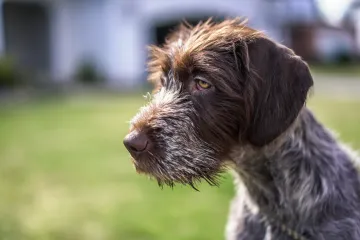
The head structure is purposeful, designed to complement the dog’s working nature. The skull is described as square and should be in proportion to the rest of the dog’s body, terminating in a squared muzzle. The ears are medium-sized and are set fairly high on the skull, lying close to the head.
The facial hair is as important to the breed’s appearance as the body coat. The Griffon must sport prominent eyebrows and a full beard and mustache. These furnishings are extensions of the undercoat and contribute significantly to the breed's expressive, somewhat shaggy look. An essential, non-negotiable trait mentioned consistently across profiles is the nose color: the nose must be brown.
The eyes add character to the face. They are generally described as large and rounded. Their expression is noted for conveying obvious intelligence and alertness. Eye color can vary, typically ranging from dark yellow to brown.
# Movement and Stance
A properly constructed Wirehaired Pointing Griffon moves with efficiency and elegance, a characteristic so distinct that it once earned them the nickname "Korthals Cats" in the last century. This feline movement is particularly evident when the dog is actively searching or "roading" toward game.
The movement should be characterized by a steady, sustained gallop for dogs working at a medium range, though some European lines are known to run faster and wider. The key is efficiency—they move with determination and drive, using a medium pace that conserves energy for all-day hunting efforts. A hallmark of their point is tension and rigidity: the head and nose are aligned with the back, the body is tense, and the tail is rigid and held straight without flagging. As the dog closes in on the scent, it crouches lower and lower, sometimes ending with its belly nearly touching the ground.
# Other Distinguishing Features
While not immediately apparent on a quick glance, several other physical traits highlight the Griffon’s specific adaptations for a versatile hunting role, particularly involving water. For instance, the breed is reported to have webbed feet, an adaptation that assists them significantly in swimming and water retrieving tasks. Their overall build is one of power and endurance rather than speed, allowing them to work consistently in difficult cover and water. If you are assessing a puppy's potential, observing their early movement and natural desire to move close to the handler can give you an early indication of their eventual field style, though even in Europe, where fast hunting styles are common, some lines are distinctly more methodical and close-working. The overall impression should always be one of a hardy, strong dog prepared for the rigors of the field, not a delicate companion breed.
Related Questions
#Citations
Wirehaired Pointing Griffon: Breed Characteristics & Care
Wirehaired Pointing Griffon Information, Character, Form, and History
What To Know About Wirehaired Pointing Griffons - WebMD
Wirehaired Pointing Griffon: Care, Nutrition & Training Tips | The Mill
Wirehaired Pointing Griffon Facts - Dog Breeds - Wisdom Panel
Wirehaired Pointing Griffon Facts For Kids | AstroSafe Search
Wirehaired Pointing Griffon - Wikipedia
Dog Breed Profile: Wirehaired Pointing Griffon — What You Need t