What two breeds make a Bullmastiff?

The creation of the Bullmastiff breed stems directly from the strategic combination of two established, powerful canines: the Mastiff and the Bulldog. [1][3][4] This intentional crossbreeding took place in England during the 19th century, driven by a very specific working requirement. [4] The goal was not merely to create a large dog, but to engineer a loyal, formidable, and relatively quick deterrent for gamekeepers protecting estates from poachers. [1] The resulting blend gave rise to the dog known today as the Bullmastiff. [3]
# Breed Genesis
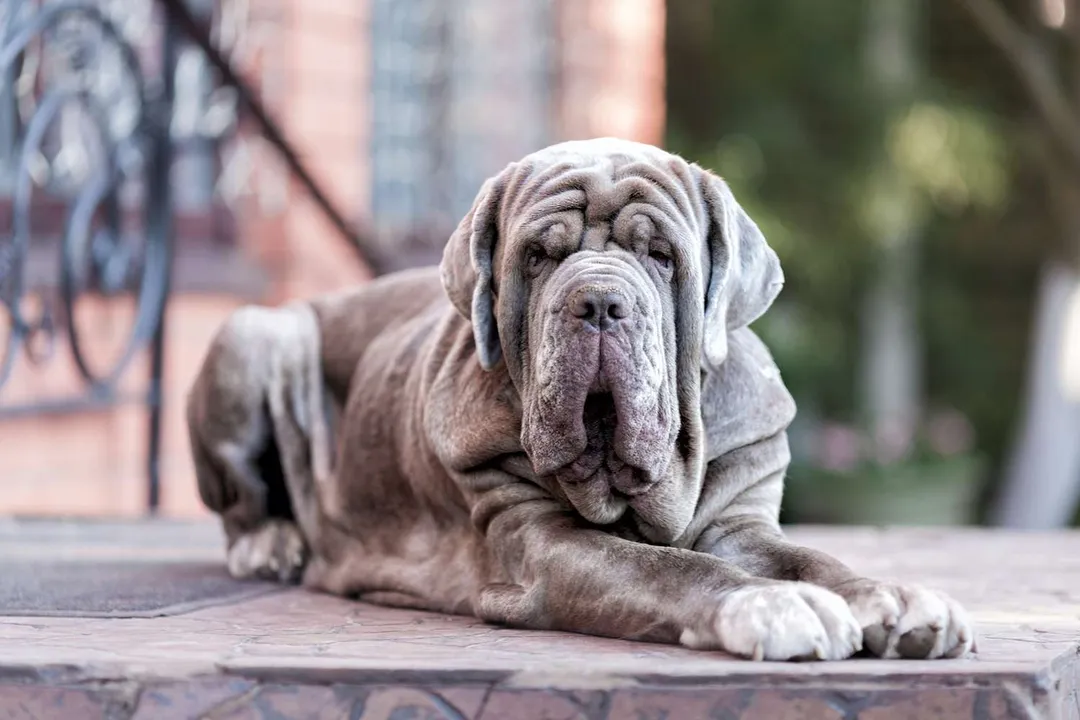
The development of the Bullmastiff was a calculated act of selective breeding, aiming to harness the best protective traits of its ancestors while mitigating some of the less desirable characteristics of the time. [1] The parent stock was not the modern, more placid English Bulldog seen today, but rather the older, more formidable Old English Bulldog. [1] This distinction is important when tracing the temperament and physical attributes that were blended together.
# The Mastiff Influence
The Mastiff side of the pedigree provided the sheer bulk, impressive stature, and inherent protective instincts necessary for the role of estate guardian. [8] Historically, Mastiffs have been known for their massive size and powerful build, often serving as guard dogs for centuries. [8] In the Bullmastiff cross, the Mastiff contributed its imposing presence, suggesting an animal that was naturally inclined to deter threats through its appearance alone. It is worth noting that the term "Mastiff" encompasses several distinct breeds today, such as the Bullmastiff itself, the Neapolitan Mastiff, and others, all sharing a common lineage of large guardian dogs. [8] This ancestral tie is what links the Bullmastiff to that broader family of large working dogs. [5]
# Bulldog Traits
The inclusion of the Bulldog, specifically the Old English variety, served a critical function in the genetic equation. [1] While the Mastiff provided size, the Bulldog offered tenacity, courage, and a lower center of gravity, often associated with a more compact, powerful frame. [1] This crossbreed required a dog that could silently track and hold a poacher without necessarily inflicting severe harm—a 'gamekeeper's night dog'. [1] The Bulldog's influence helped temper the sheer size of the pure Mastiff, making the resulting dog quicker and more agile than its larger parent, allowing it to move silently and quickly subdue a trespasser through sheer weight and grip, rather than prolonged fighting. [1]
If one were to look at the sheer mass, the Mastiff undeniably dominates the profile of the modern Bullmastiff, often accounting for the breed’s deep chest and heavy bone structure. [2] However, the famous 'mask' and the shorter muzzle, which contributes to a more brachycephalic structure than a pure Mastiff, owe much to the Bulldog genetics. [1]
# Historical Purpose
The context in which the Bullmastiff was developed heavily influenced its standardized look and temperament, which is the direct outcome of the two parent breeds working in tandem for a singular purpose. [4] The breed was designed in the mid-1800s to be a silent, formidable guard dog for hunting preserves. [1][4]
# The Night Dog
Gamekeepers needed a dog that possessed the necessary bulk to stop a man, but they could not afford the noise or excessive aggression of a dog that would attack at a distance. [1] The ideal dog had to be intimidating enough to cause a poacher to stop in their tracks or, if necessary, pin them to the ground until the gamekeeper arrived. [1] This explains why the Bullmastiff is often described as an even-tempered, loyal family companion today; their inherent guarding instinct is controlled and reserved, a characteristic achieved by balancing the Mastiff's natural watchfulness with the Bulldog's controlled determination.
An interesting consideration when examining this history is the required level of physical restraint. While both parent breeds are strong, the need to hold rather than maul meant that a dog with incredible strength, but a controlled bite and a powerful pinning ability—characteristics often associated with the Bulldog’s working history—was essential alongside the Mastiff’s sheer presence. This specific mandate is what differentiates the Bullmastiff from other Mastiff crosses or guard breeds; it is a specialist guardian bred for non-lethal apprehension. [1]
# Comparing the Lineage
Understanding the genetic input from the Mastiff and the Bulldog helps explain the mature Bullmastiff's physical and temperamental profile. While specific percentages of inheritance are impossible to calculate, the traits are generally observable. [1]
| Trait Category | Mastiff Contribution | Bulldog Contribution | Resulting Bullmastiff Trait |
|---|---|---|---|
| Size/Mass | Very large, imposing stature | Compact power, dense build | Large, powerfully built, relatively shorter than some Mastiffs [1][8] |
| Head | Broad skull, deep muzzle | Shorter muzzle, strong jaws | Broad skull, pronounced stop, dark mask [1] |
| Temperament | Inherently protective, loyal | Tenacious, courageous | Quietly protective, reliable, brave [1] |
| Movement | Powerful stride | Lower center of gravity, strong drive | Agile enough to track silently, but heavy-boned [1] |
When comparing modern offspring, one might observe littermates where one pup shows the more classic, square head shape reminiscent of the Bulldog influence, while another exhibits a slightly longer muzzle and perhaps a more laid-back demeanor inherited more heavily from the Mastiff line. Owners selecting a puppy for specific working traits often look for the keen alertness that suggests the Bulldog’s focus, balanced by the Mastiff’s calm confidence.
# Beyond the Origin
While the Bullmastiff is a purebred dog today, its history as a deliberate cross means it belongs to a specific subgroup of canines. It is important to recognize that even though it shares ancestry with the Mastiff, it is distinctly separate from the Bulldog family in modern kennel club classifications, though the Bulldog remains a foundational element of its existence. [5] The Bullmastiff is not considered part of the Bulldog family in the same way that a Pitbull or a modern English Bulldog might be grouped, highlighting its unique position as a crossbreed that achieved purebred status. [5]
The resulting dog is one that often exhibits a quiet dominance. It is not typically a dog that barks unnecessarily; instead, it uses its imposing presence as the first line of defense. [7] This reserved nature is a hallmark of its careful development, contrasting with breeds bred solely for aggression. The Bullmastiff carries the weight of its history as a guardian—a dog trusted to make sound judgments about threats on vast properties—a trait that owners value highly in a family protector today. [7] For new owners bringing home a Bullmastiff puppy, understanding this parentage provides a roadmap: expect the size and loyalty of the Mastiff, tempered by the courage and quiet watchfulness derived from the Bulldog. Early socialization is key to ensuring the inherited protective drive is channeled appropriately within a domestic setting, allowing the dog to assess strangers calmly rather than reacting impulsively, a necessary skill for a dog bred to work closely with its master. [1]
#Videos
All About Bullmastiffs - Powerful Bulldog x Mastiff Crossbreed
BULLMASTIFF VS BOERBOEL - YouTube
Related Questions
#Citations
Bullmastiff - Wikipedia
All About Bullmastiffs - Powerful Bulldog x Mastiff Crossbreed
National - As its name suggests, the Bullmastiff breed ... - Facebook
The Bullmastiff, a cross between the Mastiff and the Bulldog, was ...
Are Pitbulls and Bulldogs part of the Mastiff family? - Quora
Doubull-Mastiff | Dog Breed Facts and Information - Wag! Dog Walking
13 Mastiff Breeds and How to Tell Them Apart - Daily Paws
Which Mastiff do you all have and what do you recommend? - Reddit