What group is the Pharaoh Hound in?
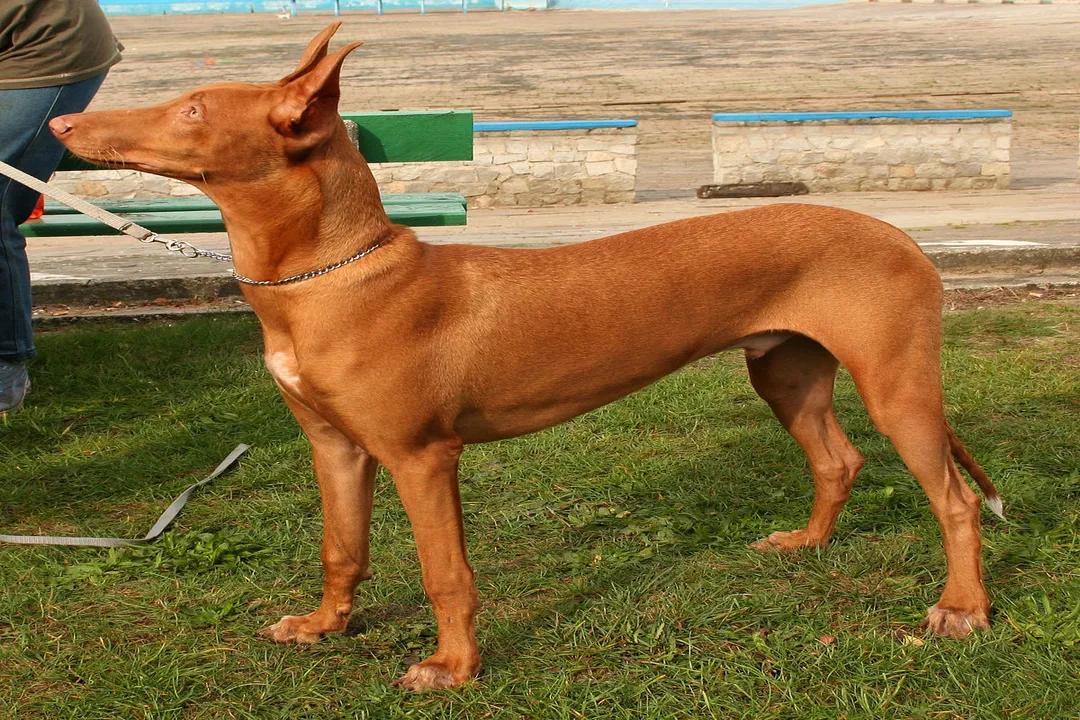
The Pharaoh Hound, or Kelb tal-Fenek in its native Maltese, presents a fascinating study in canine classification, one that reveals less about the dog’s essence and more about the organizational structures of global kennel clubs. When one seeks to place this elegant, swift breed into its proper category, the answer shifts depending on the map being consulted. This breed is an exquisite example of a coursing hound—sleek, noble, and built for high-speed pursuit—yet its designation can land it in groups as diverse as the Primitive types or the Hounds, depending on whether the judging body prioritizes perceived ancestry or modern function.
# Group Identity Contrasts
The fundamental difference in grouping rests between the Fédération Cynologique Internationale (FCI) and many of the major registries prevalent in English-speaking countries, such as the American Kennel Club (AKC) and the United Kennel Club (UKC).
For the FCI, the Pharaoh Hound, which officially originates from Malta, is placed squarely within Group 5: Spitz and primitive types. This classification suggests an emphasis on the breed's ancient appearance and supposed lineage, placing it alongside breeds that share a common, albeit debated, ancestral structure. The Section within this group is specifically listed as "Primitive type". This categorization acknowledges the dog's long history on the island and its lack of significant structural alteration over millennia.
In contrast, major American registries focus on the dog’s purpose. The AKC definitively places the Pharaoh Hound in the Hound Group. Similarly, the United Kennel Club (UKC) classifies it within the Sighthound & Pariah Dog Group. Dogs Queensland, representing the Australian standard, also places the breed in Group 4 - Hounds. Even DNA testing specialists recognize its functional identity, often grouping it with other Sighthounds. This functional grouping tells the prospective owner immediately what the dog was made to do: hunt by sight and speed.
The UKC’s grouping of the breed alongside Pariah dogs is also noteworthy, suggesting a recognition of its relatively isolated development on Malta, where it thrived as an indispensable hunting partner for centuries.
# Sighthound Lineage
Regardless of whether the organization labels the breed "Primitive" or "Hound," the Pharaoh Hound’s true calling is that of a sighthound. These dogs are engineered for grace, speed, and the ability to give chase across punishing, rocky terrain, which aligns perfectly with their traditional role hunting rabbit in Malta. Sighthounds rely on their keen eyesight to spot moving prey, followed by explosive acceleration to capture it.
What makes the Pharaoh Hound somewhat unique among its sighthound relatives is its competence with both sight and scent. While built like a courser, it possesses a keenness for hunting that incorporates scent detection, a necessity when tracking prey in broken, rocky landscapes where visual lines of sight are frequently interrupted. During a traditional Maltese hunt, the hounds use scent to locate the rabbit, then bark to alert the hunter to its position before the quarry goes to ground. The large, highly mobile ears, a hallmark of the breed, are crucial here, helping them pinpoint the slightest sound, even underground.
Physically, this function dictates their structure. They are medium-sized dogs described as elegant yet rugged, possessing clean-cut lines, a deep brisket, and a lithe body that is slightly longer than it is tall, allowing for powerful, ground-covering movement. This structure is not for bulk but for endurance and speed, characteristics shared with other dogs in the functional Hound or Sighthound groupings.

# Temperament in the Pack
Understanding the group placement—especially the Sighthound or Hound designation—provides essential insight into the Pharaoh Hound’s typical temperament and handling requirements. These dogs are inherently independent thinkers, intelligent, and possess an intense prey drive. While described as affectionate, friendly, and playful with their families, this independence means they are often self-willed in training.
Owners must understand that no amount of prior obedience training can reliably override the instinct to chase when a suitable target—be it a rabbit, squirrel, or neighborhood cat—crosses their path. This is a critical point for anyone considering the breed, as it directly influences management strategies: they should never be allowed to exercise off-leash in an unenclosed area. The excitement of the chase overrides recall commands, making containment a primary ownership concern.
Their social nature is another important breed characteristic. They are known to be intelligent and happy dogs that thrive as part of the family unit and generally do not fare well when isolated. An appealing quirk common to the breed is their tendency to "blush"—their nose and the inside of their ears turn a rosy pink when they become excited or happy.
# Grouping Philosophy
The divergence between the FCI's classification and that of the AKC/UKC highlights a difference in preservation philosophy. The FCI often groups dogs based on perceived ancient type and shared physical characteristics associated with early domestication, which is why the Pharaoh Hound ends up with the Spitz types. This places a premium on maintaining the look of an ancient hound type, even if modern genetic data suggests a more recent divergence from breeds like the Sicilian Cirneco dell'Etna.
In contrast, the AKC’s grouping by function—the Hound Group—is designed to keep dogs that perform similar jobs together for competitive uniformity and historical context related to their use. For a new owner, the functional grouping is usually more actionable, as it groups dogs that share similar exercise needs, energy levels, and instinctual drives, like the need for secure fencing common to many sighthounds.
An interesting contextual point arises when considering the broader Mediterranean hound complex. Modern DNA studies suggest the Pharaoh Hound is a development from European hunting dogs, and may not have a direct connection to the dogs depicted in Ancient Egypt, despite popular lore. However, the functional grouping as a Sighthound places it in association with other Mediterranean coursing breeds like the Podenco Ibicenco and the Cirneco dell'Etna, sharing an aerodynamic build optimized for speed. The group separation is almost political—is the dog defined by its potential ancestral grouping (Primitive) or its proven historical job (Hound/Sighthound)?
# Practical Implications of Group Placement
The Pharaoh Hound’s identity as a high-speed courser—a characteristic emphasized by its Sighthound or Hound group placement—demands specific considerations that might differ from other breeds grouped within the broader Hound category. While scent hounds in the AKC Hound Group (like Beagles or Bloodhounds) prioritize tracking, the Pharaoh Hound’s primary weapon is speed and sight.
For instance, while most hounds require significant exercise, the intensity of that exercise is where the Sighthound specialization becomes apparent. The AKC notes that a Pharaoh Hound needs at least 20 minutes of running twice daily, ideally in a secure area that is a minimum of 50 by 50 feet, if the dog is not a natural "self-runner". This requirement for bursts of full, unencumbered speed is distinct from the steady, investigative trot expected of many true scent hounds. A general Hound Group guide might suggest long walks, but for the Pharaoh Hound, those walks must be supplemented with opportunities for high-speed sprints to maintain physical conditioning and mental satisfaction. If this need for high-velocity exercise is not met, the breed’s natural intelligence, described as "independent, creative thinkers," may lead them to devise their own projects, which are seldom desirable to the owner.
Furthermore, while the breed generally has low grooming needs—a short, glossy coat that rarely smells—its physical structure also brings sensitivity points related to its primitive build. For example, like many slender sighthounds, they are sensitive to barbiturate anesthetics, a crucial piece of veterinary knowledge. Their large, thin ears, while excellent for sound detection, are also prone to frostbite in colder climates, a practical consideration not always highlighted when discussing the "Hound Group" in general terms. This specificity underscores why understanding the Sighthound subset of the group is more valuable than just knowing the broad "Hound" label.
# The Malta Connection
The breed’s group placement also ties into its national identity. It is recognized as the national dog of Malta, where its traditional use for hunting hare cemented its place in the local culture. This history, which some trace back to dogs depicted in Egyptian tombs, gives the breed its romantic appeal, even if modern science questions the direct ancient link. This rich history is likely why the FCI defaults to a "Primitive" grouping, attempting to honor that deep, albeit perhaps embellished, heritage.
In summary, while the Pharaoh Hound may reside in the FCI’s primitive corner, its true classification, confirmed by the UKC, Wisdom Panel, and the US-based major clubs, is functional: it is a Sighthound within the broader Hound Group. This functional identity dictates everything from the required acreage for safe exercise to the need to manage an intense, sight-driven prey drive, offering a clearer picture of ownership responsibility than a more abstract ancestral label can provide. For those who appreciate an ancient beauty that still performs the job it was bred for thousands of years ago, the Pharaoh Hound remains a loyal, energetic companion, provided its need for speed is respected.
Related Questions
#Citations
Pharaoh Hound - Wikipedia
Pharaoh Hound - Dog Breeds - American Kennel Club
Breed Standards : Pharaoh Hound | United Kennel Club (UKC)
Pharaoh Hound Breeds - DOGS QLD
Pharaoh Hound | USRCC - Utah Sighthounds Racing & Coursing Club
Pharaoh Hound Facts - Dog Breeds - Wisdom Panel
Pharaoh Hound - The Westminster Kennel Club
PHARAOH HOUND - FCI breeds nomenclature