Are Ibizan Hounds primitive?

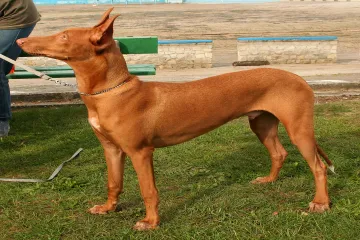
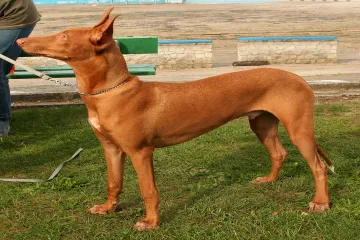
The Ibizan Hound presents a silhouette of undeniable antiquity, an elegant, lean frame topped by enormous, mobile ears that seem perfectly tuned to catch whispers from the past. When the question arises about their status as a primitive breed, it isn't just idle speculation; it's a discussion supported by archaeological evidence, breed classifications, and the very way this dog evolved to survive on rugged islands. To call them primitive is to suggest a direct, relatively untainted line stemming from dogs of antiquity, a concept that sparks debate in modern canine science but aligns perfectly with their historical narrative.[5][8]
# Ancient Lineage
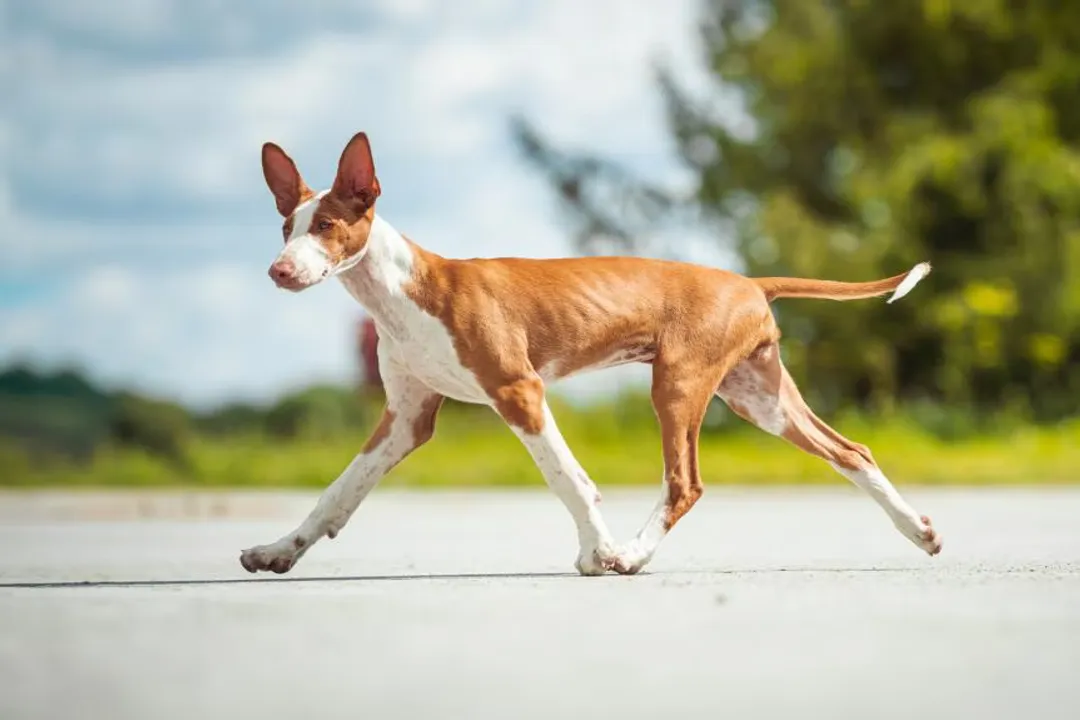
The claim that the Ibizan Hound is an ancient dog breed is not a recent marketing spin; it is deeply rooted in historical record. Depictions of dogs with morphology strikingly similar to the modern Ibizan—slender bodies, erect ears, and lean profiles—adorn Egyptian tombs and artifacts dating back as far as 3100 B.C.. [2][5][7] Some sources even suggest that the head of the Egyptian god Anubis bears a resemblance to this breed. [2] This historical documentation places their ancestral type contemporary with the era of the Pharaohs, making them one of the oldest known dog types still in existence today. [2][5]
This ancient stock, believed by many experts to have evolved from the tesem, the ancient Egyptian hunting dog, then began a remarkable migration. [8] It is theorized that Phoenician traders, utilizing vast Mediterranean trade routes, brought these early hunting dogs to the Balearic Islands, particularly Ibiza, between 800 and 600 B.C.. [5][7] This relocation marked the beginning of their isolation, a crucial factor in maintaining an older lineage.
# Island Preservation
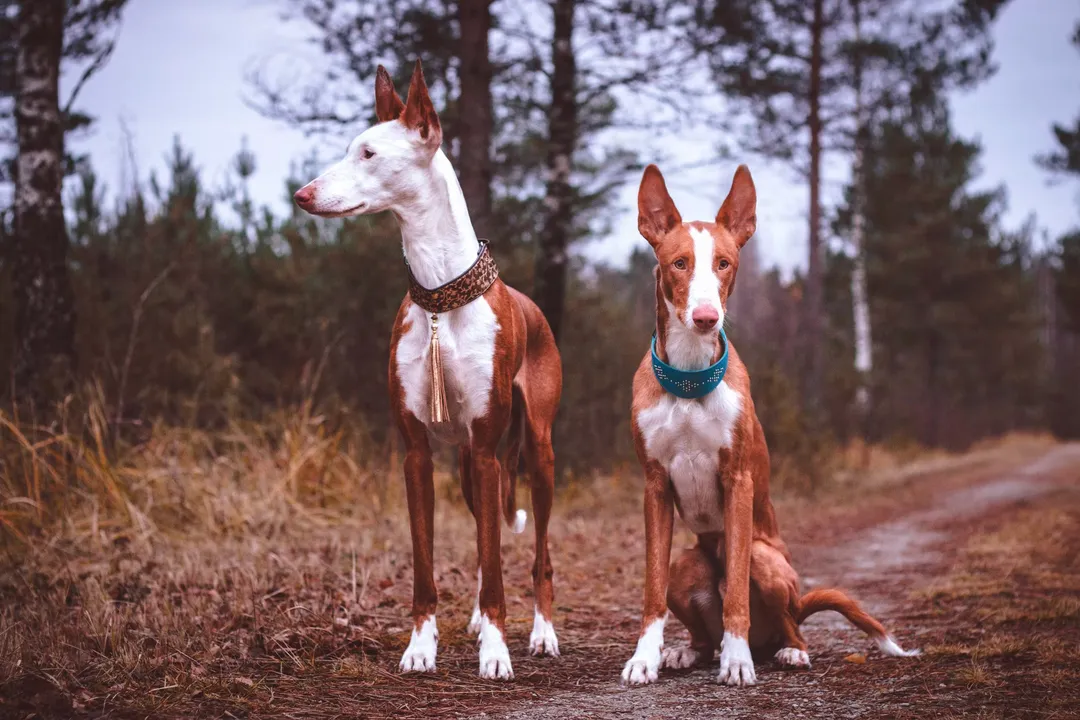
Once settled on the rocky terrain of the Balearic Islands, the Ibizan Hound, or Podenco Ibicenco, was molded by necessity rather than aesthetics. [8] They were not just companions; they were livestock, tasked with the vital job of securing fresh meat, primarily rabbits and hares, for the farmers’ families. [2] This environment acted as a severe, natural selection filter. Hunters maintained only the keenest and strongest hunters, ruthlessly culling any dog that lacked the necessary speed, agility, or instinct. [2] While this environment demanded high performance, it also kept the gene pool relatively closed, preserving traits from their Egyptian ancestors over two millennia. [2] Even today, some in Spain still regard them more as working stock than pets, a testament to their functional past.
It is this isolation and rigorous selection for function that often leads enthusiasts to use the term "primitive." Unlike breeds that were extensively manipulated in the Victorian era to fit specific aesthetic ideals, the Ibizan Hound’s form followed its harsh, hunting function for thousands of years.
# Official Grouping

For those seeking external validation of their ancient status, the breed’s classification within major kennel clubs is telling. While the American Kennel Club (AKC) places the Ibizan Hound in the Hound Group, the Fédération Cynologique Internationale (FCI) takes a more definitive stance, placing them in Group 5: Spitz and Primitive Types; Section 7: Primitive Type-Hunting Dog. [5][7] This FCI categorization directly labels the breed as fitting a "primitive type," suggesting a closer relationship to ancient dog forms than many more recently developed breeds. [7]
However, the Ibizan Hound shares this "primitive type" designation with several other Mediterranean sighthounds, including the Pharaoh Hound and the Cirneco dell'Etna. [8] This grouping acknowledges their ancient structure and specialized hunting role, setting them apart from breeds developed much later for purely visual standards or highly specialized modern tasks. [5][8]
# Hunting Strategy
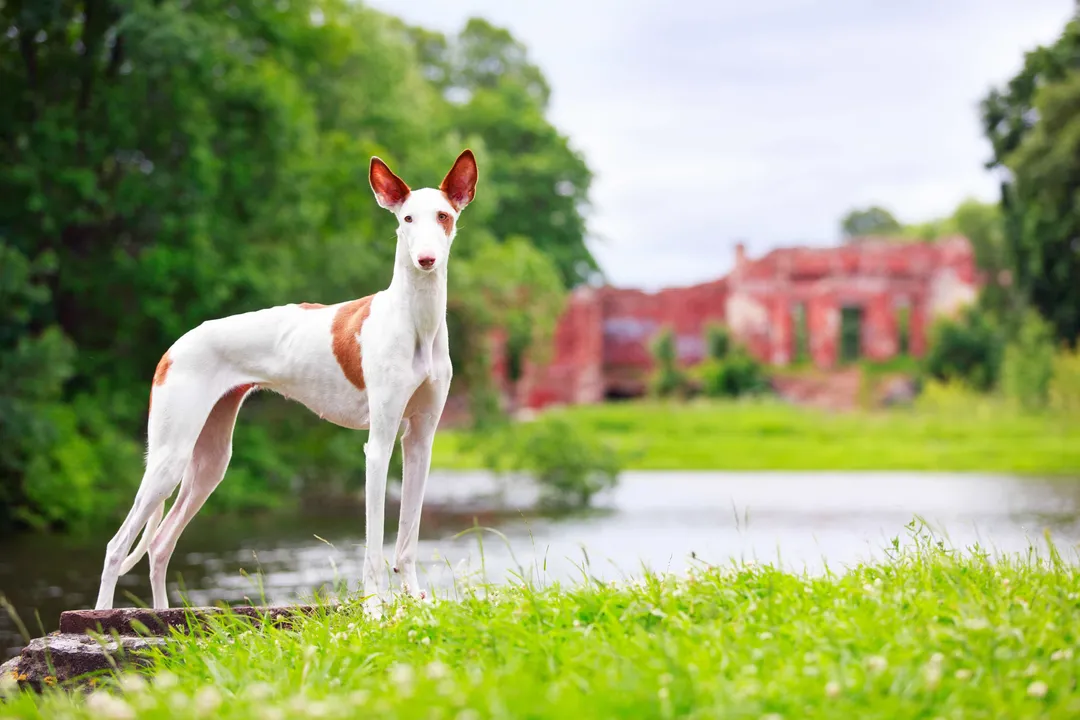
The Ibizan Hound fits the sighthound mold in silhouette, built sleek and racy for speed and stamina. [4][5] Yet, their actual hunting method reveals a complexity that hints at an older, more holistic approach to the chase. While they possess keen sight, they are not sight-only hunters like a Greyhound, whose entire focus is the visual pursuit of prey. [4][8]
Ibizan Hounds are described as utilizing all of their senses. [4][8] They begin by scanning the environment using their powerful sense of smell to detect prey, then use their large, mobile ears to orient the exact location of the quarry. [4][8] Only once detected and located do they engage in the chase sequence. [4] This three-part sensory reliance—scent, sound, and then sight—is a more generalized and potentially older method of hunting compared to the singular focus of strictly sight-driven breeds. [8]
The way they hunt in packs, often composed mainly of females, further speaks to an ingrained, cooperative working style. [4][8] They are evaluated on their ability to track carefully, signal correctly, give tongue at the right time, and cooperate within the colla (brace). [8] This ingrained, task-oriented intelligence, where they must make decisions about tracking versus chasing, marks them as something distinct from modern, highly specialized breeds. [5][8]
If we consider the Greyhound as the pure sprinter, the Ibizan is the adaptive tracker, built for the unpredictable, rocky landscape where relying on one sense alone would lead to exhaustion or failure. [3] Their ability to leap huge heights from a standing position, coupled with their agile maneuvering mid-air, speaks directly to the selective pressures of that rugged terrain, favoring dogs that could navigate obstacles as efficiently as they chased rabbits. [1][3][5]
# Genetic Counterpoint
For all the compelling historical and functional evidence, the discussion about "primitiveness" must address modern genetic science. A recent DNA analysis involving broad genetic comparisons did not find supporting evidence to place the Ibizan Hound among the very first, or most basal, identified ancient dog breeds. [8] This finding suggests that while they are ancient compared to, say, a Golden Retriever, their lineage may have diverged or mixed in ways that obscure a direct, unbroken path to the earliest dog populations when viewed through current genotyping tools. [8]
However, this scientific finding comes with an important scientific caveat. The lead author of that original study has acknowledged that their initial findings do not definitively prove the Ibizan Hound isn't ancient. [8] They posited that with the development of superior genetic tools, it would likely be possible to trace a continuous lineage stretching back thousands of years for many breeds, including the Ibizan. [8] Furthermore, the rapid evolution seen in other populations suggests that even a few hundred years of intense, localized selective breeding—as occurred on Ibiza—can significantly alter a breed's genetic profile in ways that mask deeper history from standard tests. [8]
# The Primitive Mindset Today
Whether the label is confirmed by the latest DNA marker or by tomb paintings, the Ibizan Hound retains a temperament heavily influenced by its ancient, utilitarian role, which owners must respect. They are often described as being graceful and reserved, carrying an air of nobility, yet they possess an independent streak. [2][5] They are intelligent and quick to learn but can also be strong-willed or stubborn if training lacks consistency. [3][5]
Their high prey drive is perhaps the most overt link to their hunting origins; they are notorious for chasing anything that moves swiftly, necessitating extremely secure enclosures—a six-foot fence is often not enough, given their impressive leaping ability. [1][3] They thrive when they have a job, whether through organized sports like Lure Coursing or through interactive play that engages their minds. [5][7] When left alone, this need for mental engagement can lead to undesirable behaviors like anxiety or destruction. [5][7]
When working with an Ibizan Hound, trying to force compliance through harshness is counterproductive; the breed is sensitive and responds best to positive reinforcement using praise, treats, and play. [3][5] This responsiveness to reward aligns with an ancestral need to work cooperatively with a human partner rather than merely submitting to commands. [3]
For the modern owner, understanding this ingrained independence is vital. When teaching new commands or setting boundaries, the key is not suppression but channeling. If an Ibizan demonstrates an independent thought process—for example, by momentarily ignoring a recall cue because a squirrel presented a more immediate challenge—the owner should view this as an expression of the breed’s historical fitness for survival. The actionable advice here is to build value into compliance. Instead of expecting blind obedience, create scenarios where following the handler is always the most rewarding choice. This might mean practicing recall in increasingly distracting environments, but always rewarding the return with a higher-value treat than the chase would have offered. This approach honors their heritage as decision-makers while ensuring safety in a domestic setting. [3][5]
# Final Assessment
The Ibizan Hound occupies a fascinating position in the canine world. Genetically, the conversation is ongoing, tempered by the limits of current DNA analysis on extremely old populations. [8] Functionally and historically, however, the evidence for "primitive" status is overwhelmingly strong. They are direct descendants of Egyptian hunting dogs, preserved through millennia of harsh, isolated selection on the Balearic Islands, and formally classified by the FCI as a Primitive Type-Hunting Dog. [2][5][7] Their physical structure, from their deep chest built for stamina to their unique multi-sensory hunting technique, reflects an ancient, functional blueprint. [3][4][8] While they have adapted to modern life, becoming affectionate companions recognized by organizations like the AKC since the late 1970s, their core identity remains tied to that long, uninterrupted working history. [2][5] They are, in essence, a living archaeological find wearing the coat of a modern sighthound.[5]
Related Questions
#Citations
Ibizan Hound Dog Breed Information - Continental Kennel Club
Ibizan Hound Dog Breed and Characteristics - Showsight Magazine
Ibizan Hound Dog Breed Health and Care - PetMD
History of the Ibizan Hound
All about Ibizan Hound breed - Animalia
Ibizan Hound - Europetnet
Ibizan Hound Facts - Dog Breeds - Wisdom Panel
Introduction and History of the Breed - About Ibizan Hounds