Is a Pharaoh Hound a Podenco?
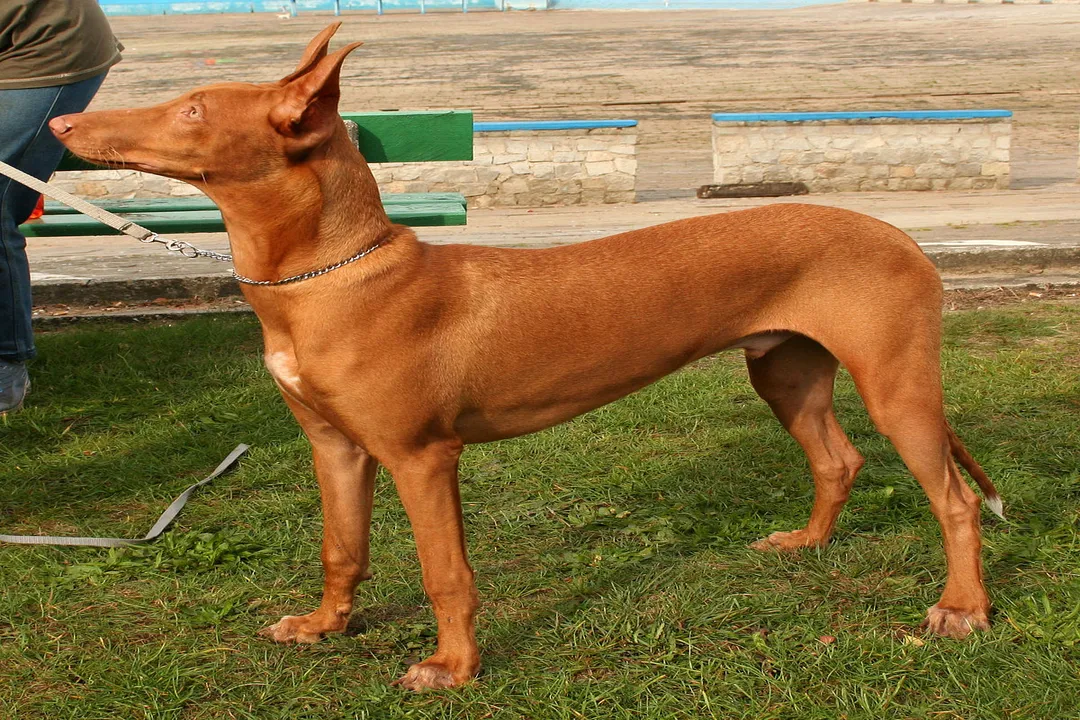
The close resemblance and shared history between the Pharaoh Hound and the various dogs known collectively as Podencos often leads to confusion regarding their precise relationship. They both hail from the Mediterranean region and share striking physical characteristics, suggesting deep ancestral ties that span millennia. [1][3][5] To understand if a Pharaoh Hound is a Podenco, one must first dissect what each term signifies: one is a formally recognized breed, while the other describes a distinct, ancient type of canine. [2][4]
# Defining Type

The term Podenco itself is generally not treated as a singular breed name by international kennel clubs, but rather as a collective description for a group of ancient hunting dogs native to the Iberian Peninsula and the Balearic Islands. [2][4] These dogs are often described as primitive, possessing keen eyesight and an exceptional ability to hunt by scent, often working in rough, rocky terrain. [2][5]
Specific examples that fall under this general umbrella include the Podenco Ibicenco (Ibizan Hound), the Podenco Canario, and the Podenco Andaluz. [2][6] These dogs share a recognizable look: large, mobile, erect ears; lean, athletic bodies; and a general sighthound elegance that speaks to their hunting background. [6] While the Ibizan Hound, for instance, has its own specific breed standard recognized by major organizations, the term "Podenco" remains the common language used to group them based on geography and historical function. [6] In many rescue organizations, "Podenco" becomes a useful descriptor for any dog exhibiting these characteristics, even if its precise lineage is mixed or unconfirmed. [4]
# Breed Status
In contrast to the broad grouping of the Podenco type, the Pharaoh Hound maintains a specific and established identity within the world of purebred dogs. [1][3] Originating from Malta, the breed is officially recognized by the Fédération Cynologique Internationale (FCI) and the American Kennel Club (AKC). [1][9] They are perhaps the most firmly established and highly regarded of the Mediterranean primitive breeds in terms of formal breed registry. [8]
Key characteristics that define the Pharaoh Hound include their graceful, almost regal appearance, their large, amber-colored eyes that often appear lighter against their short, fine coat, and their characteristic ability to "blush" when excited or pleased—their nose and ears turning a deep rose color. [3][5][9] While they share the upright ears and lean build with other Mediterranean hunters, their unique history, particularly their deep roots in Malta, gives them a distinct official standing. [1] Modern DNA testing services can now confirm lineage, often showing their closeness to these ancient Mediterranean populations. [7]

# Shared Ancestry
The core of the connection lies in their shared deep ancestry, placing both the Pharaoh Hound and the Podenco types within a very old lineage of Mediterranean hunting dogs. [4][8] The Pharaoh Hound is often noted as one of the oldest domesticated dog breeds still existing, sometimes tracing its roots back thousands of years to ancient Egypt, though its development into the modern breed occurred largely on Malta. [1][3]
It is highly probable that dogs like the Pharaoh Hound and the ancestral stock that eventually evolved into the various Podenco breeds dispersed across the Mediterranean basin from common stock millennia ago. [8] This shared heritage explains why the physical blueprints are so similar: strong legs for covering ground, a deep chest for endurance, and large ears for pinpointing sound in the field. [6] When comparing the Pharaoh Hound directly to the Podenco Ibicenco, for example, while they are distinct, officially recognized breeds, the visual and functional overlap is substantial, suggesting they are close cousins separated by island isolation and selective breeding focus over centuries. [1][6] It is this shared "sighthound of the isles" characteristic that causes the frequent conflation of the terms. [8]
# Classification Nuances
So, to directly address the relationship: A Pharaoh Hound is not typically called a Podenco in formal breed registries, but it belongs to the broader type of dog that includes the Podencos. [8]
If you look at the structure used by breed organizations like the FCI, the Pharaoh Hound is classified under Group 5, Primitive Types and Spitz Types, Section 7, Primitive type dogs, with a specific breed standard. [8] While the term "Podenco" itself might not be an official classification category, the dogs it describes often share the same primitive classification.
This distinction is important for prospective owners. If one seeks a purebred Pharaoh Hound, they will look for registration papers verifying that specific Maltese lineage. [1] If one is adopting a rescued dog from a Mediterranean source that is labeled simply "Podenco," that dog might be a pure Ibizan Hound, a Podenco Canario, or a mixed-breed dog sharing that strong Mediterranean hunting profile. [2][4]
One point of analysis is how naming conventions influence perception. For the average enthusiast, recognizing the Pharaoh Hound as part of the larger Podenco family tree simply makes evolutionary sense, acknowledging a common, ancient heritage across the islands. [8] However, for competitive breeders or those focused on specific breed standards, maintaining the Pharaoh Hound’s unique identity is paramount to preserving the Maltese-developed lines distinct from, say, the lines developed on Ibiza. [1][6]

# Practical Owner Insights
Understanding this ancestral connection translates directly into practical ownership considerations. Because the Pharaoh Hound shares its core DNA with working Mediterranean hunters, prospective owners need to manage expectations regarding temperament, regardless of the official registration papers. [2][5]
A practical consideration for anyone interested in this type of dog—be it a recognized Pharaoh Hound or a Podenco mix—is recognizing the prey drive. These dogs were bred to hunt independently, using both sight and scent across varied terrain. [5] This ancient wiring doesn't simply disappear because the dog now lives in a suburban home. A common failure scenario for new owners who underestimate this trait is assuming the dog will reliably recall off-leash in an open field. Therefore, a proactive measure for any owner of a Pharaoh Hound or a closely related Podenco type is investing heavily in secure fencing and consistently practicing recall training in safe, enclosed environments from day one. [2]
Furthermore, given the arid, rocky environments these dogs historically adapted to, their bodies are incredibly lean and resilient, often requiring less rich food than breeds developed for heavier farming or pulling work. [5] An owner should pay close attention to body conditioning. A simple, actionable tip is to use the rib check method often employed by sighthound owners: when running a hand down the dog’s side, you should be able to easily feel the ribs without pressing hard. If you have to press to find them, the dog is likely carrying too much weight, which can stress their elegant, lean structure more than it would a stockier breed. [5] This attention to their primitive build is crucial for long-term health.
Ultimately, the Pharaoh Hound stands as a distinct, recognized breed that shares a common, powerful genetic background with the broader family of dogs known as Podencos. They are, in essence, specialized cousins within the ancient, talented Mediterranean hunting dog clan. [8]
Related Questions
#Citations
Pharaoh Hound - Wikipedia
About Podenco dogs
Breed of the Week: Pharaoh Hound - Paws Playgrounds
Podencos are considered to be one of the oldest dog breeds ...
Ibizan Hounds and Podencos
About Pharaoh Hounds - XO Dogs
Pharaoh Hound - Dog breed genetic test - Koko Genetics
Pharaoh Hound - Europetnet
Pharaoh Hound - Worldly Dogs