What category of dogs are Dalmatians?

The defining category for the striking, spotted Dalmatian can vary slightly depending on which international kennel club you consult, but the breed’s classification generally places it outside the primary working, sporting, or herding groups. In the United States, the American Kennel Club (AKC) recognizes the Dalmatian as belonging to the Non-Sporting Group. [2] This grouping is often a catch-all for breeds that don't neatly fit into other established categories based on their traditional work or specialized function. [9]
Across the Atlantic, the Kennel Club in the United Kingdom places the Dalmatian in the Utility Group. [4] This British grouping is also diverse, typically encompassing breeds with specialized historical uses that don't align with the Gundog, Working, or Terrier groups. [4] This difference in formal categorization—Non-Sporting versus Utility—highlights how different organizations structure their breed standards, yet both agree the Dalmatian’s heritage is too unique or varied to slot into the more common function-based groups like retrieving or guarding. [2][4]
# Historical Roles

To understand why the Dalmatian landed in these broader categories, one must look back at its remarkable history, which is rich with associations often centered around transportation and spectacle. The breed is most famously known as the coach dog. [1][2][10] This designation is not merely a historical footnote; it speaks directly to their enduring physical capabilities and temperament. [10] Dalmatians historically developed a strong affinity for horses, running alongside or beneath horse-drawn carriages, protecting the horses and the occupants from traffic and highwaymen. [1][10] This running capability, covering great distances, is an essential aspect of their lineage. [1]
The breed’s presence became iconic in the livery of wealthy owners and nobility, often trotting proudly alongside carriages. [1][10] This close association with transportation is the thread that ties together many of their documented historical roles. [1]
# Firehouse Connection
A key element of the Dalmatian's modern public image stems from their adoption by fire departments, particularly in the United States. [2][10] This relationship evolved from their historical role as coach dogs. When horse-drawn fire carriages became prevalent, the Dalmatians were already conditioned to run with them. [2] They served a vital function in the chaos of the firehouse environment: they kept other horses calm, guarded the equipment at the scene of a fire, and cleared a path for the engine to get through traffic. [1][10] When motorized fire engines replaced the horses, the breed’s legacy often earned them a permanent, ceremonial spot in the station, leading to their status as unofficial mascots. [2][10] While the Utility or Non-Sporting label reflects their lack of a single modern job, their experience as loyal companions to working teams is undeniable. [2][9]
# Physical Profile
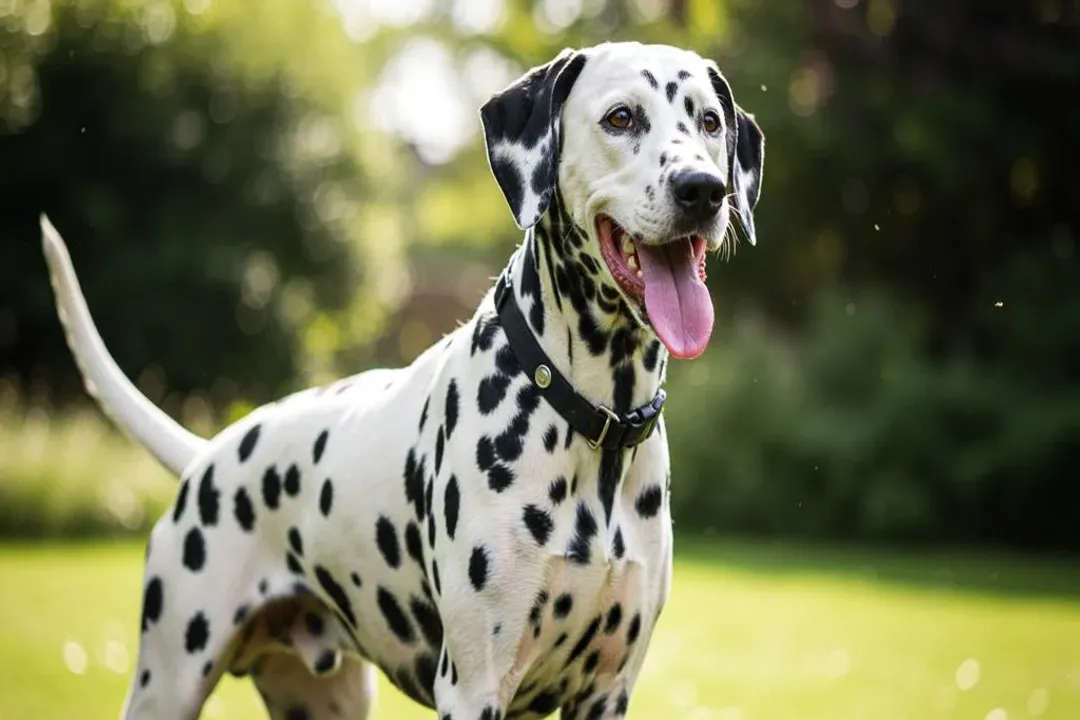
Dalmatians are instantly recognizable due to their distinctive white coat punctuated by sharply defined black or liver-colored spots. [1][2] This unique pattern is a defining characteristic of the breed. [1] They are medium-sized, muscular dogs, built for endurance and speed, which is consistent with their history of running miles alongside carriages. [1][2]
# Coat and Spotting
The spots themselves follow specific guidelines recognized by breed standards. The spots should ideally be well-defined, circular, and evenly distributed across the body. [1] The color of the spots can only be black or liver (a reddish-brown color). [1][2] Blue, tan, or badger markings are considered faults by breed clubs. [1] A key point of interest for new owners is that Dalmatian puppies are born completely white; the spots begin to appear within a few weeks of birth, though the final pattern can take up to two years to fully develop. [1][10] It is worth noting that a small percentage of Dalmatians are born with colored patches instead of distinct spots; these are referred to as "patches" and are less common than the classic spotted variety. [1]
# Temperament and Energy
Understanding a breed's category is only half the story; their temperament dictates suitability for a potential owner. [5] Dalmatians are known for being intelligent, highly energetic, and sometimes quite independent. [2][5] They possess a very high energy level, a trait linked directly to their history of running long distances as coach dogs. [10] This is perhaps the most crucial point for prospective owners to internalize: a Dalmatian requires significant, sustained daily exercise—not just a quick walk around the block. [5][10] Their need for activity means they thrive when given a purpose or a job to do, whether that is intense daily running, canine sports, or structured long hikes. [5]
They are generally sensitive dogs that form strong bonds with their families. [2] Early and consistent socialization is vital, as they can be reserved with strangers. [2][5] Because they are so intelligent, they also require mental stimulation to prevent boredom, which can lead to destructive behaviors. [5]
It is important to consider the inherited traits of the breed when comparing them to other groups. Unlike many pure Sporting dogs whose drive is focused on retrieving or hunting, the Dalmatian’s instinctual drive, honed through history, seems centered on guarding and keeping pace with their charges. [10] This translates today into a dog that needs to feel part of the family action or pack structure. [5]
# Health Considerations
Like many purebred dogs, Dalmatians have specific health concerns that owners must be aware of. [5][6] A significant hereditary issue in the breed is deafness. [1][5][6] Responsible breeders screen for this condition, and while it can affect one or both ears, it underscores the need for vigilant early training and socialization for those affected. [5][6]
Another crucial health topic unique to this breed is their metabolism of uric acid. [5][6] Dalmatians possess a unique metabolic pathway that causes them to excrete high levels of uric acid, similar to humans, which puts them at a higher risk for developing urate stones (urinary stones). [5][6] This condition is known as hyperuricosuria. [5]
This metabolic difference is not an issue found in most other recognized breeds and necessitates specific dietary management. [5][6] For instance, owners must ensure the dog drinks plenty of fresh water throughout the day to keep the urine dilute, reducing the risk of crystal formation. [6] Feeding a low-purine diet, which minimizes foods high in purines (like organ meats or certain fish), is often recommended by veterinarians specializing in the breed. [5] Considering this specific metabolic requirement, one can see why they are kept separate from groups like Terriers or Hounds; their specific needs often require specialized care that aligns better with the more general care requirements associated with the Non-Sporting category. [9]

# Grooming and Maintenance
Maintaining the appearance of the Dalmatian requires a commitment to managing their shedding. Although they have short coats, Dalmatians are known to be heavy shedders year-round. [1][5] The characteristic white coat with black spots means that even small amounts of shed hair are highly visible on furniture, clothing, and dark carpets. [5]
Regular grooming is necessary:
- Brushing: A rubber curry brush or shedding blade used several times a week will help remove dead hairs and keep the coat healthy. [5]
- Bathing: Bathing frequency should be determined by need, but consistent brushing is often more important than frequent washing. [5]
- Spot Check: Because their coat is short, regular skin checks are easy to perform, which can help catch minor irritations quickly. [5]
For a dog with such a high exercise requirement, grooming is often the easier part of ownership compared to meeting their daily physical demands. [10] Many new owners underestimate the sheer stamina of this breed. A common scenario, which speaks to their historical role, is that a Dalmatian that has not had its long-distance running need met will often try to create its own exercise by chewing furniture or digging, mistaking the living room for an empty stretch of road beside a carriage. [1][5]
# Contextualizing the Category Divide
The fact that the Dalmatian resides in the Non-Sporting or Utility group speaks volumes about the history of dog classification itself. These groups tend to capture breeds whose original purposes have either faded away (like specialized coach-running guards) or whose function is inherently varied. [9] Consider the contrast with the Sporting Group, which is dedicated to dogs bred to assist hunters (retrievers, pointers). [2] The Dalmatian's historical value was tied to escorting and guarding a mode of transport, not retrieving game. [10]
If we analyze the breeds within the AKC Non-Sporting Group, we see an extremely mixed bag: Bulldogs, Poodles, Shiba Inus, and Dalmatians. [2] There is no single unifying characteristic other than the fact that they don't fit elsewhere. [9] This lack of a single defining historical task—like pointing birds or herding sheep—is precisely why the Dalmatian ends up here. They were specialized for a task (accompanying carriages) that became obsolete with technological change, leaving them categorized by their unique history rather than a current function. [2][9]
This separation from the Working Group is also telling. While they certainly worked historically, the Working Group is typically reserved for breeds developed for guarding property, performing water rescues, or pulling sleds—tasks generally requiring massive strength or guarding instincts that differ from the Dalmatian’s role as a high-end escort. [2] Their primary focus was loyalty and endurance alongside a person or vehicle, not heavy pulling or protecting a fixed location. [1][10]

# Final Thoughts on Breed Suitability
Ultimately, whether one looks at the Dalmatian under the Utility banner or the Non-Sporting classification, the core requirement for the owner remains consistent: this is a dog that needs an active lifestyle and dedicated companionship. [2][5] Anyone considering bringing this distinctive breed into their home must be prepared to dedicate significant time not just to grooming, but to daily, vigorous physical and mental exercise to satisfy the spirit of the historical coach dog that still resides within this beautiful, spotted companion. [10][5] They are not couch potatoes, despite what the general "Non-Sporting" label might imply to the casual observer. [2][9] They are performers whose stage has changed from the dusty road beside a carriage to the local park or agility ring.: [1] https://en.wikipedia.org/wiki/Dalmatian_dog: [2] https://www.akc.org/dog-breeds/dalmatian/: [3] https://www.purina.co.uk/find-a-pet/dog-breeds/dalmatian: [4] https://www.royalkennelclub.com/search/breeds-a-to-z/breeds/utility/dalmatian/: [5] https://www.hillspet.com/dog-care/dog-breeds/dalmatian: [6] https://www.orvis.com/dalmatian.html?srsltid=AfmBOopkuUvJaxhEw9bAKxBzpO5yOhlBFdzHZiI2Wr3vZb4oOF8Em2Fj: [7] https://www.reddit.com/r/dalmatians/comments/983qyc/dalmatian_dog_breeds_history_traits_health_care/: [8] https://mywoof.com/blogs/articles/dog-breed-profile-dalmatian?srsltid=AfmBOooJo8Ewaa8idrS8cr8a5DAtZ0G9MyoJIiJ9j5wMH09cLxisCifP: [9] https://www.britannica.com/animal/non-sporting-dog: [10] https://www.akc.org/expert-advice/dog-breeds/dalmatian-history/
Related Questions
#Citations
Dalmatian dog - Wikipedia
Dalmatian Dog Breed Information - American Kennel Club
Dalmatian Dog Breed Information | Purina UK
Dalmatian | Breeds A to Z - The Kennel Club
Dalmatian Dog Breed - Hill's Pet Nutrition
Dalmatian - All About Dogs - Orvis
Dalmatian dog Breeds History, Traits, Health Care and Training
Dog Breed Profile: Dalmatian - Woof
Non-sporting dog | Britannica