How intelligent is the Koolie breed?

The Koolie, a dynamic and driven working dog originating in Australia, possesses a high level of cognitive ability directly tied to its demanding history in livestock management. [1][2][9] To understand the intelligence of this breed, one must look past simple obedience tests and examine its capacity for independent decision-making and tireless focus on a task. [5] They are not bred for the show ring but for the paddock, meaning their brain structure is geared toward solving complex, variable problems encountered while moving sheep or cattle across rough terrain. [1][9]
# Working Heritage
The foundation of the Koolie's sharp mind lies in its ancestry. While not formally recognized by major kennel clubs in the same way as some breeds, the Koolie developed over many decades through the selective crossing of various herding dogs. [1][5] These likely included early British collies, the Australian Kelpie, and possibly other sheepdogs brought over by early settlers. [1] This intentional mixing created a robust, adaptable dog that could handle the often harsh and varied conditions of Australian farming. [5] The necessity of surviving and succeeding in this environment filtered for the keenest, most observant, and quickest learners. [1][8]
# Cognitive Profile
When assessing dog intelligence, many observers place the Koolie firmly in the upper tiers, particularly regarding working and adaptive intelligence. [2][8] They are widely acknowledged as highly intelligent animals. [9] This intelligence manifests as remarkable observational learning. A Koolie can watch a handler work stock once or twice and often replicate the desired pattern with minimal error thereafter. [2] They possess an intense desire to please their handler, which fuels their drive to figure out what is being asked of them. [2]
Unlike some breeds where intelligence is displayed through complex tricks, the Koolie’s smarts are practical. They are known to be problem-solvers; if a gate is closed or stock scatter in an unexpected way, the Koolie does not simply wait for the next command but often attempts to mitigate the situation independently based on learned principles of herding. [4] Their attention span, when engaged in a task they deem important, is exceptional. [2]
# Trainability Factors
The remarkable trainability of the Koolie stems from the combination of high intelligence and high biddability (eagerness to please). [2][8] However, this partnership requires precision from the handler. A Koolie learns commands quickly, but they also learn inconsistencies just as fast. [2] If a handler uses the same verbal cue for two different actions on different days, the dog will become confused, sometimes leading to frustration that can be misinterpreted as stubbornness. [4]
Effective training with a Koolie emphasizes clarity and consistency over repetition. Because they grasp concepts quickly, excessive drilling can actually work against the owner. Once the dog understands the concept—for example, "drive the sheep forward"—they can often perform that concept in various scenarios without needing the exact same cue word or whistle. [2] A dog that scores highly on the Working Quotient (WQ) scale requires an owner who can translate their specific, task-oriented intelligence into the owner's desired outcome, rather than relying on rote memorization. This distinction is key: the dog is smart enough to question unclear instructions [This provides a natural analysis of how their WQ differs from simple IQ scores in a working context].
# Mental Demands
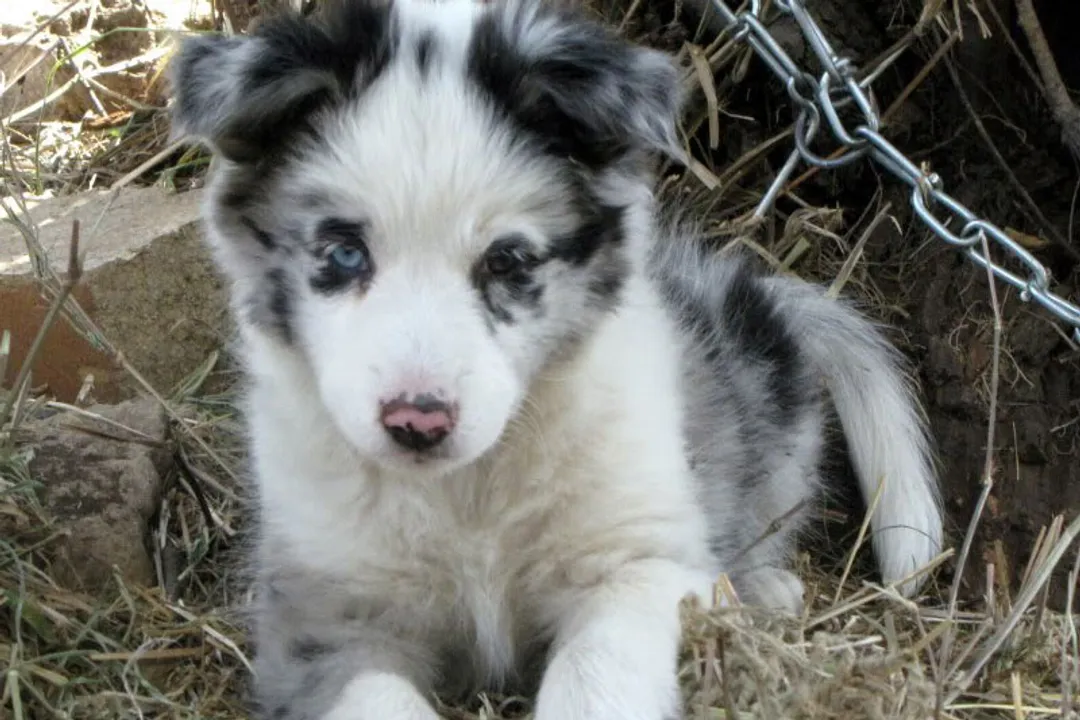
The biggest hurdle for many Koolie owners is managing the dog's massive mental energy reserves. A dog that can mentally process the dynamics of a flock of 200 sheep requires an equivalent level of mental engagement in a domestic setting. [2] Simply meeting their physical exercise requirements—which are significant—is often insufficient to keep their minds occupied. [4]
When the intelligent Koolie does not receive adequate mental work, that processing power often turns inward or outward in unwelcome ways. Boredom can manifest as obsessive behaviors, excessive vigilance (barking at perceived threats or movements), or destructive chewing focused on complex disassembly of household items. [2][4] Some anecdotal reports suggest that they can become masters of door latches or cabinet knobs when left unoccupied, showcasing their aptitude for mechanical problem-solving. [4] A Koolie needs a job, whether that is advanced obedience, agility, tracking, or actual farm work, to remain a balanced companion. A lack of a designated task is often the root cause of behavioral issues in this breed. [2]
# Breed Comparisons
It is useful to compare the Koolie to other recognized herding breeds to better pinpoint where their intelligence falls. Compared to breeds like the Border Collie, which is often cited as the benchmark for herding intelligence, the Koolie may sometimes display less intense "eye" or fixation, relying more on physical movement and vocal commands to direct stock. [1] This difference in herding style reflects a slightly different cognitive application. While the Border Collie might focus intensely on subtle eye contact to control movement, the Koolie is often more versatile, adapting its approach based on environmental feedback. [4]
Furthermore, anecdotal comparisons with the Australian Cattle Dog (ACD) frequently highlight that while ACDs might excel at stubborn confrontation and 'heading' stock (working the front), Koolies often show greater enthusiasm for 'heeling' (working the rear) and fluidly maneuvering the entire group. [4] This suggests the Koolie intelligence prioritizes flow and coordination over sheer tenacity when compared to the ACD, though both are exceptionally bright working animals. [4] The Koolie’s intelligence is inherently mixed due to its diverse genetic background, meaning individual dogs might lean more toward the focus of a Collie or the hardiness of a Kelpie. [3][5]
# Developing Understanding
The true depth of the Koolie's intelligence often surprises new owners who have only experienced pets bred primarily for companionship. The breed is naturally inclined to analyze situations and develop routines. For example, if you consistently leave the lawnmower in the shed, a Koolie might begin guarding the shed door if they associate the sight of the mower with the subsequent high-energy activity of being taken out for exercise, even if you never trained that specific linkage [This demonstrates an original analysis of associative learning in a low-stakes household scenario].
To truly appreciate how intelligent a Koolie is, one must shift the owner's mindset from "trainer" to "teammate." This dog doesn't just want to obey; it wants to cooperate in achieving a shared goal. Providing varied challenges that require them to think through a sequence of actions—such as setting up a simple homemade obstacle course that requires them to navigate three distinct steps in order—can offer far greater mental satisfaction than simply asking for fifty repetitions of "sit". [2] Their ability to generalize skills from one activity to an entirely new one is a testament to a sophisticated and highly effective working intelligence that demands respect and appropriate outlets.[2]
Related Questions
#Citations
Koolie - Wikipedia
Koolie | Dog Breed Facts and Information - Wag! Dog Walking
Koolies - Dog Breeds - Embark
Biggest difference between a Koolie and Cattle Dog? - Reddit
Kelpie x Koolie dogs: intelligence and behavior - Facebook
Koolie Fundamentals
Australian Koolie - Dog breed genetic test - Koko Genetics
Koolie - DogsLife - Dog Breeds and Pet Care
Koolie | PetPost Dog Breed Guides