How intelligent is a shoebill?
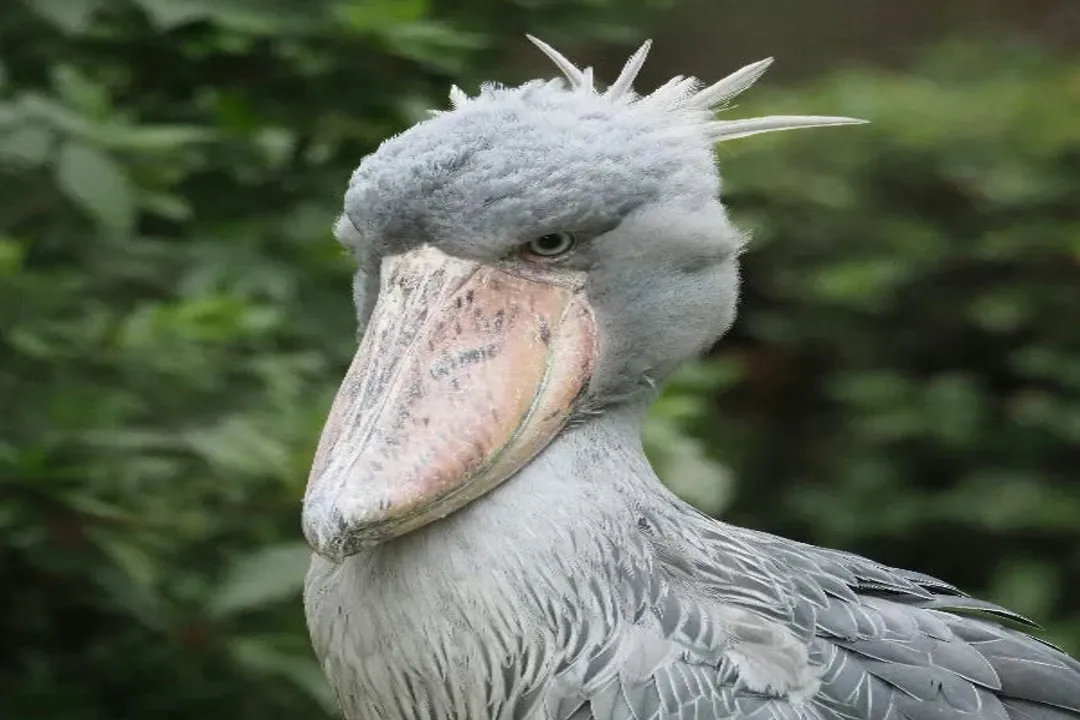
The perception of the shoebill, that magnificent, prehistoric-looking inhabitant of East African swamps, is often split between awe and bewilderment. This large, grey bird, formally known as Balaeniceps rex, is sometimes labeled quite unfairly as unintelligent. [1][4] However, closer examination of its unique survival strategies reveals a creature possessing a highly specialized form of cognitive ability centered around extreme patience and stealth. [1][6]
# Misplaced Labels
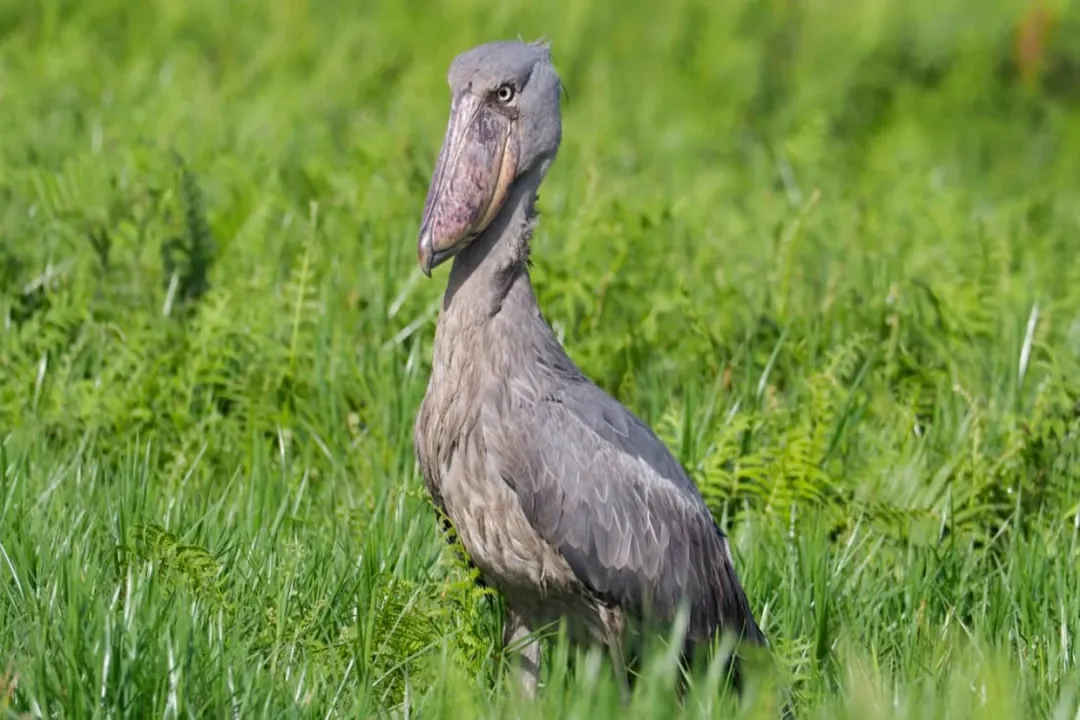
The notion that the shoebill is "stupid" stems almost entirely from its hunting style, which is dramatically different from more active avian predators. [4] When observed by visitors or researchers, the bird frequently stands perfectly still for exceptionally long durations. [6] It might remain motionless for an hour or more, appearing unresponsive or entirely lacking in initiative. [4] This profound inactivity, especially when contrasted with birds that constantly patrol or forage actively, can easily lead an observer to judge its intellect as low. [4] In fact, this behavior is so pronounced that it has earned the bird a reputation for appearing vacant or slow-witted in some circles. [4]
# Hunting Mastery

What an observer perceives as a lack of intelligence is, in reality, a highly developed, calculated approach to securing a meal in a challenging environment. [7] The shoebill's primary diet often consists of creatures like lungfish, eels, and snakes that inhabit dense, muddy waters. [2] Active searching through thick reeds expends significant energy and alerts prey. Instead, the shoebill employs a deliberate sit-and-wait ambush strategy. [7]
This method requires immense focus and an almost superhuman level of stillness, qualities that require significant cognitive control. [1] The bird needs to maintain an alert posture while suppressing any extraneous movement that might betray its presence to the wary fish below the water's surface. [6] Once the target is in the perfect position—often after the bird has located it visually—the bird executes a sudden, powerful lunge, snapping its massive, shoe-shaped bill shut with incredible force. [7][10] The success rate of this tactic is directly proportional to the bird's capacity for sustained, motionless waiting. It is a testament to its ecological specialization, demonstrating an intelligence optimized for energy conservation and precision strike capability within its specific wetland niche. [2]
If we compare this to the generalized problem-solving intelligence seen in highly social corvids or parrots, the shoebill’s intellect appears narrow, yet within its specific ecological requirements, it demonstrates expert-level mastery. [1] Where one bird solves problems with tool use or complex social maneuvering, the shoebill solves the problem of living in a dense, scarce food environment through behavioral refinement. [7]

# Cognitive Signs

Beyond its primary hunting behavior, anecdotal evidence suggests cognitive capacities that place it above the "stupid" categorization. [1] Shoebills have been reported to mimic human sounds. [1] While research on avian vocal learning is extensive for parrots and corvids, documentation of mimicry in a large, solitary bird like the shoebill is significant, suggesting a capacity for sound processing and repetition that points toward higher learning abilities. [1]
# Physical Presence
Understanding the bird’s intelligence also requires appreciating its imposing physical structure. The shoebill is a substantial bird, capable of growing up to about five and a half feet tall. [7] Its enormous bill, which gives it its name, is heavy and acts as a specialized tool for both capture and killing. [10] In their swamp habitats, like those found across countries like Uganda, these birds are often solitary, further reinforcing the need for self-reliance in their complex survival strategy. [6][8]

# Unique Vocalizations
While silence is a key hunting tool, communication is achieved through a distinct sound often described as a loud clattering. [6][8] This is produced by the rapid striking together of the upper and lower mandibles of the bill. [8] This specialized communication method, which differs significantly from songbirds or parrots, fits the overall picture of a bird whose cognitive energy is directed toward survival logistics rather than broad vocalization or social interaction. If you are lucky enough to observe a pair interacting, perhaps during courtship or territorial disputes, you are witnessing a highly focused communication system that relies on impact rather than melodic complexity. [8]
Considering the demands of its habitat—surviving in isolated, often difficult-to-navigate swamp systems—the shoebill's intelligence manifests as deep, ingrained behavioral programming built around maximum efficiency for minimal effort. For instance, understanding the relationship between the cost of movement in a dense wetland and the energy gained from a successful lunging strike offers a framework for appreciating its evolved cognitive priorities. A hunter that moves unnecessarily risks scaring off its prey while burning vital calories needed for the next long wait; thus, the shoebill’s greatest intellectual asset is its ability to remain perfectly still when the situation demands it. [7] This is not unintelligence; it is perfect situational awareness applied through behavioral restraint.
Related Questions
#Citations
The shoebill is a very smart bird, it is known for its slow movement ...
Shoebill - Wikipedia
The World's Dumbest Bird #Nature #WildlifeFacts #Animals - YouTube
Why is the Shoebill bird branded as "stupid"? | Times of India
Shoebill stork description and behavior - Facebook
10 Surprising Facts About Shoebill Storks - Mental Floss
7 Revealing Facts about Shoebills | San Diego Zoo Wildlife Alliance
Shoebill Stork Facts: Size, Height, Habitat: Complete Guide
Shoebill Stork: Bird Named For Its Beak Shape | PeckPerk